Amusement parks and family entertainment centres · Follow up systems
Answer the group enquiry, then keep answering until it is booked or closed.
A follow-up system for an amusement park or family entertainment centre is the set of replies, reminders and check-ins that move a group or party enquiry to a booking. GullySales builds the steps so the desk does not rely on memory in a busy week.
Scope, fee, reporting and term are agreed in writing after we have read your brief and spoken to you.
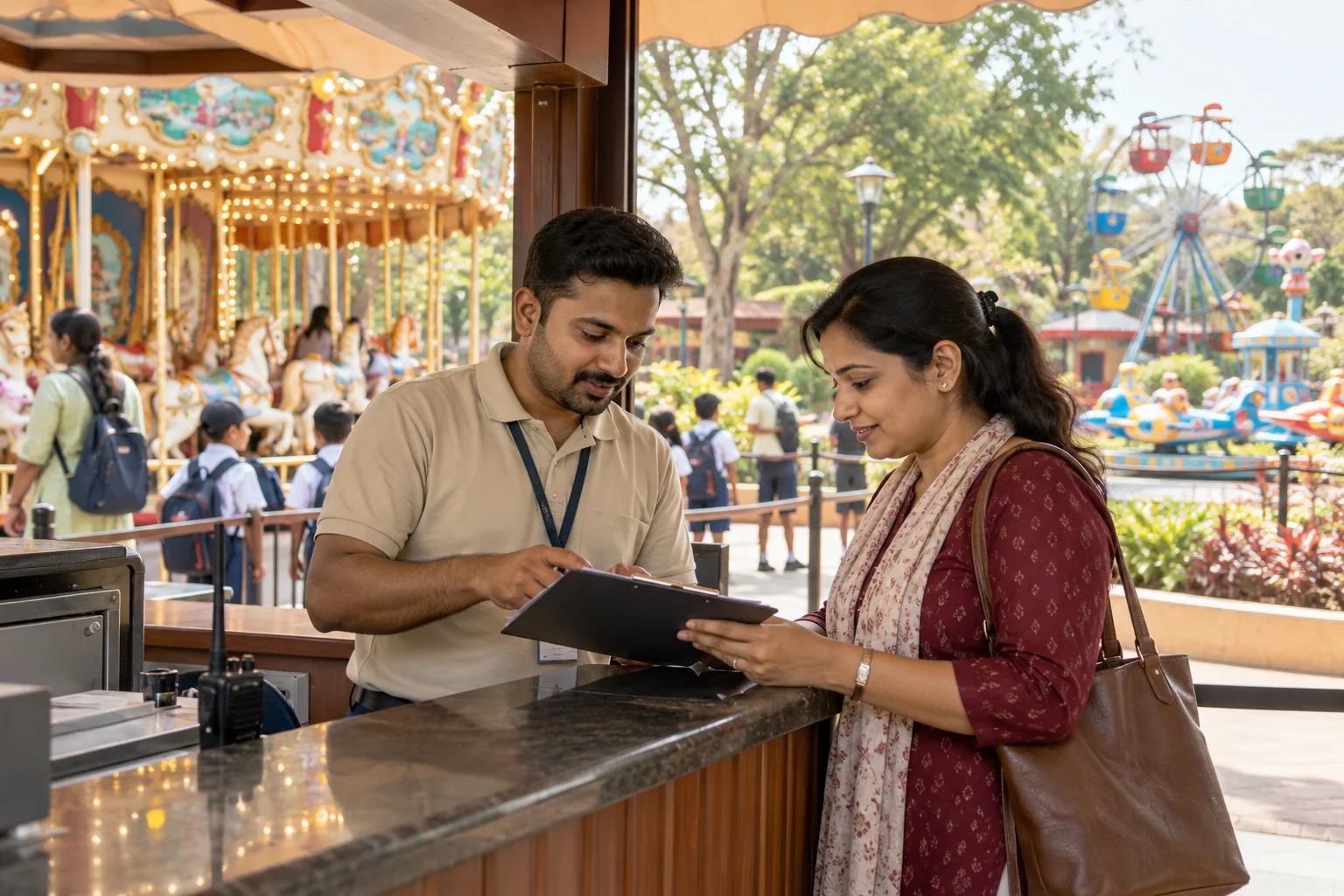
What follow up systems means
A follow-up system is the set routine for calling, messaging or emailing an enquiry more than once, since most buyers do not decide on the first conversation. GullySales sets the number and timing of follow-ups so an undecided buyer keeps hearing from you until they decide either way.
Also for amusement parks and family entertainment centres
- Lead generation for amusement parks and family entertainment centres
- CRM for amusement parks and family entertainment centres
- SEO for amusement parks and family entertainment centres
- Local SEO for amusement parks and family entertainment centres
- Social media marketing for amusement parks and family entertainment centres
- Content marketing for amusement parks and family entertainment centres
- Buyer personas for amusement parks and family entertainment centres
- WhatsApp marketing for amusement parks and family entertainment centres
Sales and marketing for amusement parks and family entertainment centres, the overview.
Last updated 14 Nov 2026.
For amusement parks and family entertainment centres
Where it usually goes wrong, and what we would do.
“The first reply sets the tone”
A teacher who gets a brochure, a rate and a named contact is already comparing you favourably. A teacher who gets a one-word answer is looking elsewhere.
“The decision-maker is someone else”
The coordinator asks, a committee approves. A follow-up should help the coordinator take the offer to the committee, with a summary they can forward.
“After the visit is the second sale”
A thank-you note to the organiser, a request for feedback and a mention of the next season open the next booking. Without it, each visit is a one-off.
“Weather and delays need proactive messages”
Booked groups should hear about closures and changes from you before they travel. A message prepared in advance for rain or maintenance saves complaints.
What we do
What we deliver for amusement parks and family entertainment centres.
The work available for this need. We agree the deliverables and responsibilities for your engagement in writing.
Enquiry reply template set
Replies for school, corporate, society and birthday enquiries, with fields for date, headcount and package.
Result: Every enquiry gets a complete first reply.
Follow-up schedule by stage
A set of messages for quote sent, no reply, confirmed and after the visit.
Result: The desk knows what to send at each stage.
Organiser summary sheet
A one-page summary of the offer that a coordinator can forward to a committee.
Result: The offer travels to the people who approve it.
Disruption messages
Prepared notices for closures, weather and changes, ready to send to booked groups.
Result: Booked groups hear before they arrive.
After-visit routine
A thank-you and feedback request sent to the organiser, with a link to book the next visit.
Result: Each visit leads to a conversation about the next.
How the result is measured
- Follow-up completion rate
- Average number of follow-ups before close
- Enquiries closed after repeat follow-up
Recorded as a baseline before work starts, so every later report has an honest comparison.
What to capture or send
Send these follow-ups from a group enquiry to a repeat visit.
- Quote with a held date
- A message with the price, the inclusions and the date held. State when the hold ends so the organiser knows what to decide.
- Reminder to a school or office that went quiet
- A short message offering the next open weekday. Planners wait on a committee, so ask who else must approve.
- Pre-visit instructions
- Gate, parking, timings, what to carry and the contact on the day. It prevents a late start and a confused arrival.
- Thank-you and review request
- Sent the same evening to the organiser or the parent, with a Maps link. They remember the day best that night.
- Invitation for the next season
- Sent to a school or society that visited, offering the next open dates for their group. It makes a one-off booking a regular one.
Who it is for
This is written for these amusement parks and family entertainment centres.
- Theme parks and water parks on the outskirts of large cities
- Mall-based family entertainment centres with games and soft play
- Trampoline, adventure and kids activity parks
- Amusement parks attached to resorts and farmhouses
- Fairs, exhibitions and seasonal carnival grounds
- Snow-themed and indoor attraction parks
- School and college picnic organisers
- Corporate outing and employee family-day planners
- Residents' associations and apartment societies planning group trips
- Birthday and kitty party hosts
Before you decide
When this may not be the right fit.
- You do not yet have a firm rule for holding a date, so a follow-up message would promise something staff may not honour.
- Group enquiries come in a handful each season and the owner answers each by hand, so a set of timed messages adds nothing.
Before you decide
Agree the work. Know how to judge it.
Follow-up systems for amusement parks and family entertainment centres: use these checks to prepare, choose the scope, and review what changes.
Bring the right evidence
Trace recent enquiries from arrival to the last recorded action. Include a won enquiry, an unsuitable one, and one that went quiet, with personal details removed for the initial discussion.
Make the scope clear
Agree who accepts each enquiry, what makes it qualified, and how ownership changes. Include a rule for missed replies and a clear reason for closing an enquiry.
Check the work in use
Pick an enquiry at random and ask the team to find its owner, latest conversation, and next action. Check that the record agrees with what actually happened.
Know when to change course
If no one has capacity to respond, assign that responsibility before buying more leads. Automation can support the owner, but it cannot replace an unresolved handover.
These are discussion points, not a fixed package. GullySales confirms the deliverables, responsibilities, fee, and term in writing after reading your brief and speaking with you.
Before we start
What to have ready before the work starts.
The records, access and decisions this work needs from amusement parks and family entertainment centres. Anything missing is noted in the written scope, with who will supply it.
- A sample of past group enquiries
- Bring ten or more past enquiries with the replies that were sent, personal details covered. Mixed outcomes are best. Without real examples we write replies from general knowledge, and the desk finds them stiff and stops using them after a busy week. Include a few that went quiet, because those are the ones where the follow-up needs the closest care.
- The date-hold and refund position
- Write down what the park does when a school cancels, when rain closes the water area and when a deposit is late. Your adviser may need to review it. Without a position, reminders stay vague, and the desk improvises answers that differ between organisers. The desk then uses one sentence every time, so no organiser hears a different answer.
- WhatsApp and email accounts in use
- Tell us which numbers and mailboxes the desk uses to answer organisers, and who can see them. If personal phones are used, say so. Without the list, follow-up messages go from a channel the organiser does not recognise, and some are ignored. Organisers answer fastest on the channel where they first wrote, so we match the reply to that route.
- A day-of-visit contact for organisers
- Name the person an organiser can reach on the day of the visit, with the number they should save. Without one, delays and bus problems reach whoever picks up, and the follow-up after the visit begins with an apology. A mobile number saved before the visit prevents a call to the front desk that nobody can resolve on a busy morning.
- The list of groups who visited and left
- Share names of institutions that visited once and never came back, if the diary shows them. We build the after-visit routine on this list. Without it, the second-sale message has no one to go to, and the park relies on chance for repeat bookings. Even a short list lets us write one thank-you message with a date offer.
How it works
How the follow up systems work runs
The work itself, in order. How an engagement starts, from your brief to a written scope, is set out on our method page.
- 1
Review the replies already sent
We read a sample of the messages and call notes the desk sent to schools, offices and party hosts, with names covered. You tell us which went well and which were never answered. This shows where enquiries stall and gives the baseline for what we later compare. Nothing is sent to anyone while we read, and personal details stay covered in our notes.
- 2
Decide who owns each stage
We list the stages from first enquiry to after the visit and you name a person for each. A teacher waiting on a quotation should know whose reply is coming. Where two people could answer, you pick one, so no enquiry sits between desks. Gaps are written down plainly, and if one desk covers two stages, we say so and ask for backup.
- 3
Write the reply set with the desk
With the front-desk team we draft the first reply, the quotation note, the date hold reminder, the thank-you after the visit and the message for a delayed group. You approve the wording, and the desk replaces any line that does not sound like them. Short messages are preferred, since a teacher reads on a phone between classes and replies to a clear question.
- 4
Set rules for holding a date
You decide how long a date is held for a school and what happens if a deposit does not arrive. We write that into the reminders as a plain sentence. The rule is yours, and we keep it the same for every organiser so none feels singled out. The rule is written on the same page as the reminder, so the desk never wonders what to say.
- 5
Test the reminders on a live enquiry
We run one real enquiry through the whole set with the desk, checking that each reminder reaches the right person at the right stage. You see a missed reminder and a duplicate on a real record and we correct the rule before the team depends on it. Anything that confuses the desk is rewritten on the spot before we move on.
- 6
Compare replies and bookings with the baseline
Later we set the number of enquiries answered, dates confirmed and groups returning against the sample read at the start. You decide which messages to keep, rewrite or drop, and whether a stage needs a different owner before the next busy season. We read the lapsed enquiries too, because a date lost to silence tells you as much as a date confirmed.
Where this fits
Three pieces of sales work, in this order.
This work sits inside sales process design, at stage 2, qualification. The audit comes before it, and sales management keeps it running.
Step 1
Sales audit
Find where deals are being lost and what to fix first.
Start here if you cannot say where orders are lost.
Step 2 · you are here
Sales process design
One written way to sell, from first enquiry to repeat order.
Start here if every salesperson sells differently.
Step 3
Sales management
A target, a review routine and someone who owns the number.
Start here if the team has targets and no routine.
FAQ
Questions owners ask before they call.
Not here? More answers, or ask on WhatsApp.
How persistent should we be?
Should messages be on WhatsApp or email?
What do we say about refunds?
How long should we hold a date for a school?
How do we handle a school that goes silent after the quotation?
Who decides when the desk stops chasing an enquiry?
How much does it cost?
How long is the contract?
Who will actually do the work?
What do you need from us?
More for amusement parks and family entertainment centres
Related work to consider.
Closest to this: leads and follow-up
Also for amusement parks and family entertainment centres
- SEO for amusement parks and family entertainment centres
- Local SEO for amusement parks and family entertainment centres
- Social media marketing for amusement parks and family entertainment centres
- Content marketing for amusement parks and family entertainment centres
- Buyer personas for amusement parks and family entertainment centres
- WhatsApp marketing for amusement parks and family entertainment centres
Or start from the overview: sales and marketing for amusement parks and family entertainment centres.
Your next practical step
Tell us what you are trying to grow, and we will read it before we call.
Eight short steps, mostly taps. Skip anything you would rather answer on the call.