Amusement parks and family entertainment centres · Buyer persona
Know whether the booker is a teacher, a parent or an HR lead.
A buyer persona for an amusement park or family entertainment centre describes the person who decides, books and pays for a visit, and what they need to hear. GullySales builds these from your booking records and front-desk calls.
Scope, fee, reporting and term are agreed in writing after we have read your brief and spoken to you.
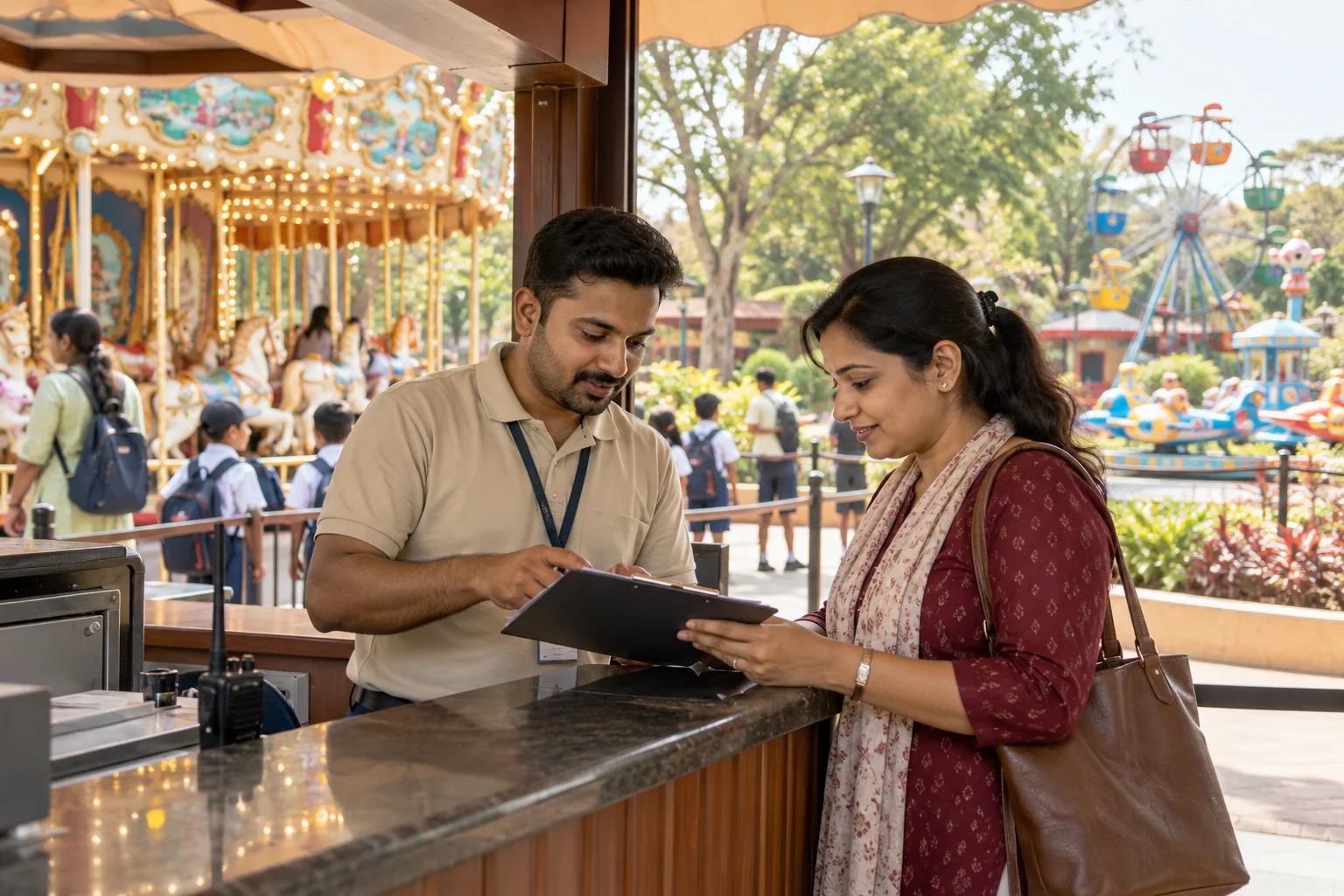
What buyer persona means
A buyer persona is a plain description of the kind of customer who actually buys from you. It includes what they search, what worries them and who else they ask before deciding. GullySales builds this from real enquiries and past sales rather than a generic template, then uses it to write every page and advert.
Also for amusement parks and family entertainment centres
- Digital marketing for amusement parks and family entertainment centres
- Lead generation for amusement parks and family entertainment centres
- SEO for amusement parks and family entertainment centres
- Local SEO for amusement parks and family entertainment centres
- Social media marketing for amusement parks and family entertainment centres
- Content marketing for amusement parks and family entertainment centres
- CRM for amusement parks and family entertainment centres
- Follow-up systems for amusement parks and family entertainment centres
Sales and marketing for amusement parks and family entertainment centres, the overview.
Last updated 14 Nov 2026.
For amusement parks and family entertainment centres
Where it usually goes wrong, and what we would do.
“The person who books is not the person who visits”
A teacher books for forty children, a parent books for a party and an HR manager books for staff families. Each makes the decision for others and worries about different things.
“The teacher worries about supervision and safety”
The group leader needs to know about staff, first aid, rules and how a head count is managed. Your message should say what you do, in the words you can stand behind, and not promise standards you cannot confirm.
“The parent worries about the child, the budget and the other parents”
A birthday host wants no surprises, a clear package and a venue that handles children well. The decision is also made in the presence of other parents who will judge it.
“The corporate organiser needs paperwork”
A company asks for an invoice, a tax detail and a confirmed headcount. An enquiry handled without these loses the booking to a venue that has them ready.
What we do
What we deliver for amusement parks and family entertainment centres.
The work available for this need. We agree the deliverables and responsibilities for your engagement in writing.
Booking history review
A summary of past group and party bookings by buyer type, size and season.
Result: You see who actually books and when.
Persona pages for four buyers
Short profiles for teacher, parent, corporate organiser and society committee, with needs, worries and words they use.
Result: The team shares a picture of each booker.
Reply scripts by persona
First replies for each buyer type, covering what to ask and what to send.
Result: Each enquiry gets a reply that fits the booker.
Page and brochure mapping
A note on which page or document suits which persona.
Result: Each persona sees material written for them.
Review routine
A prompt to revise the personas after each season.
Result: Personas follow your real bookings.
How the result is measured
- Enquiry match to persona
- Conversion rate by persona
- Content aligned to persona
Recorded as a baseline before work starts, so every later report has an honest comparison.
Who is asking
These are the people who write to a park or play centre, and what each needs first.
- Parent with a toddler and an older child
- Wants to know which rides suit both ages, where an adult can sit, and whether food from home is allowed.
- School teacher booking a picnic
- Needs a group rate, the supervision rule, a place for packed lunches and a proforma invoice for the school office.
- HR coordinator planning a family day
- Needs a headcount quote, food arrangements for adults and children, and a GST invoice with the company name.
- Parent planning a birthday
- Wants room capacity, the cake rule, decoration allowed and whether another family's party shares the space.
- Secretary of a housing society
- Wants a single price for a group of families, a transport suggestion and a payment plan that the committee can approve.
Who it is for
This is written for these amusement parks and family entertainment centres.
- Theme parks and water parks on the outskirts of large cities
- Mall-based family entertainment centres with games and soft play
- Trampoline, adventure and kids activity parks
- Amusement parks attached to resorts and farmhouses
- Fairs, exhibitions and seasonal carnival grounds
- Snow-themed and indoor attraction parks
- School and college picnic organisers
- Corporate outing and employee family-day planners
- Residents' associations and apartment societies planning group trips
- Birthday and kitty party hosts
Before you decide
When this may not be the right fit.
- You have not yet hosted group bookings, so a persona for schools or offices would be guesswork about people you have not served.
- Your park serves one kind of visitor, such as walk-in families, and no one else asks, so a persona set adds little.
Before you decide
Agree the work. Know how to judge it.
Buyer personas for amusement parks and family entertainment centres: use these checks to prepare, choose the scope, and review what changes.
Bring the right evidence
Write the decision the research must support, such as entering a market or choosing a buyer group. Separate what you know from sales records from what the team currently assumes.
Make the scope clear
Agree which buyers to speak to, which sources to review, and what access you can provide. Include lost enquiries and people who chose another supplier, where they are willing to take part.
Check the work in use
Look for source dates, sample limitations, and evidence that disagrees with the preferred answer. A recommendation should show how it follows from the findings.
Know when to change course
Do not treat a few positive conversations as proof of demand. Test the proposed offer with an actual buying decision before committing to a wider launch.
These are discussion points, not a fixed package. GullySales confirms the deliverables, responsibilities, fee, and term in writing after reading your brief and speaking with you.
Before we start
What to have ready before the work starts.
The records, access and decisions this work needs from amusement parks and family entertainment centres. Anything missing is noted in the written scope, with who will supply it.
- Booking diary with the buyer's role
- Bring the diary or sheet showing who booked, in what role, for how many and on which date. Roles matter more than names. If the diary lacks roles, we ask the desk to recall them, but memory fades, and the persona may then describe a buyer who is only partly real. A plain table with five columns is enough for us.
- Three or more organisers willing to talk
- Name at least three people who booked or enquired and would speak to us for a short call. You make the first request. With no willing contacts, the personas rest on records and the desk's view alone, and we mark them as a first draft. They should be people the desk trusts, since an awkward call can lose a booking that would have repeated.
- Complaints and compliments from groups
- Gather messages, forms or notes where a teacher, parent or office coordinator praised or complained. Remove contact details. These show what buyers fear and enjoy in their own words. Without them, our wording of their worries may miss what actually moves them. One sentence from a real teacher about supervision is worth more than a page of our own wording.
- The front desk's own list of questions
- Ask the desk to write down the ten questions they answer again and again, in order. A phone note will do. Without it, we guess the order of buyer worries, and the reply scripts may answer the wrong question first. Even rough wording shows the order in which worries come up, and the scripts should answer in that order.
- A decision on who the park wants more of
- Decide which buyer type the park wants to grow, such as weekday school groups or office outings, and which it can host well. Without the decision, personas stay balanced across buyers, and the next steps scatter instead of aiming at the group you want. This choice also decides which two personas get the fullest pages and which get a short note.
How it works
How the buyer persona work runs
The work itself, in order. How an engagement starts, from your brief to a written scope, is set out on our method page.
- 1
Pick the four buyers worth describing
We start with your booking records and the front desk's memory to list who really books: a class teacher, a parent hosting a birthday, an HR coordinator, a society committee member. You choose the four the park needs to understand first, and we leave the rest for later. Anyone not chosen is kept on a short list for a second round of pages.
- 2
Open the booking records for patterns
You share the booking diary, enquiry forms and any messages, with personal details covered. We read for who asked what, which dates they chose and what made them hesitate. This gives the first draft of each buyer before anyone is interviewed. We note gaps, such as a missing role or an unclear date, and ask the desk to fill them from memory before interviews begin.
- 3
Choose people to talk to, with their consent
You suggest a few organisers who have booked or enquired, and ask each if they will speak to us briefly. We write the questions with you, covering how they found the park, what they feared and what made them decide. No one is contacted without your say. You also name any organiser who should not be disturbed, for example after a complaint.
- 4
Compare what buyers said with what the desk believes
We lay the interview notes beside the desk's own view of the buyer. Where they differ, we show you the words used. You decide which view the persona follows. A teacher worried about supervision may care little about the thrill rides the desk keeps mentioning. Quotes from buyers go in unchanged with names removed, so the page carries evidence.
- 5
Review each persona page with the team
We bring the persona pages to a short meeting with the sales desk and operations lead. They correct details such as who signs the invoice and who the real decider is. The pages are revised until the people who face these buyers say they ring true. Where the desk and the buyers disagree, we keep both views until a record settles it.
- 6
Apply the personas to scripts and pages
We choose the first places to use them: the group page, the reply script, the brochure and the party package page. You decide the order. The final check is whether enquiries and bookings recorded before the work began now move differently by buyer type. We also note which personas lack enough evidence yet, so no script treats a weak guess as a settled fact.
Where this fits
Three pieces of sales work, in this order.
This work sits inside sales process design, at stage 0, foundation. The audit comes before it, and sales management keeps it running.
Step 1
Sales audit
Find where deals are being lost and what to fix first.
Start here if you cannot say where orders are lost.
Step 2 · you are here
Sales process design
One written way to sell, from first enquiry to repeat order.
Start here if every salesperson sells differently.
Step 3
Sales management
A target, a review routine and someone who owns the number.
Start here if the team has targets and no routine.
FAQ
Questions owners ask before they call.
Not here? More answers, or ask on WhatsApp.
Do we need research with buyers?
How many personas do we need?
Can personas help with pricing?
Do we need a separate reply for each type of visitor?
Can a persona be built if we have few bookings?
Will personas change how we price the park?
How long is the contract?
How soon will we see results?
Who will actually do the work?
What do you need from us?
More for amusement parks and family entertainment centres
Related work to consider.
Closest to this: strategy and research
Also for amusement parks and family entertainment centres
- Lead generation for amusement parks and family entertainment centres
- SEO for amusement parks and family entertainment centres
- Local SEO for amusement parks and family entertainment centres
- Social media marketing for amusement parks and family entertainment centres
- Content marketing for amusement parks and family entertainment centres
- CRM for amusement parks and family entertainment centres
Or start from the overview: sales and marketing for amusement parks and family entertainment centres.
Your next practical step
Tell us what you are trying to grow, and we will read it before we call.
Eight short steps, mostly taps. Skip anything you would rather answer on the call.