Amusement parks and family entertainment centres · Lead generation
Bring in the school trips, office outings and party hosts that fill a quiet weekday.
Lead generation for an amusement park or family entertainment centre means finding the organisers who book a block of tickets at once, such as teachers, HR teams and society committees, as well as the parents who book for a birthday. GullySales builds the group page, the outreach lists and the enquiry log that make those bookings reachable.
Scope, fee, reporting and term are agreed in writing after we have read your brief and spoken to you.
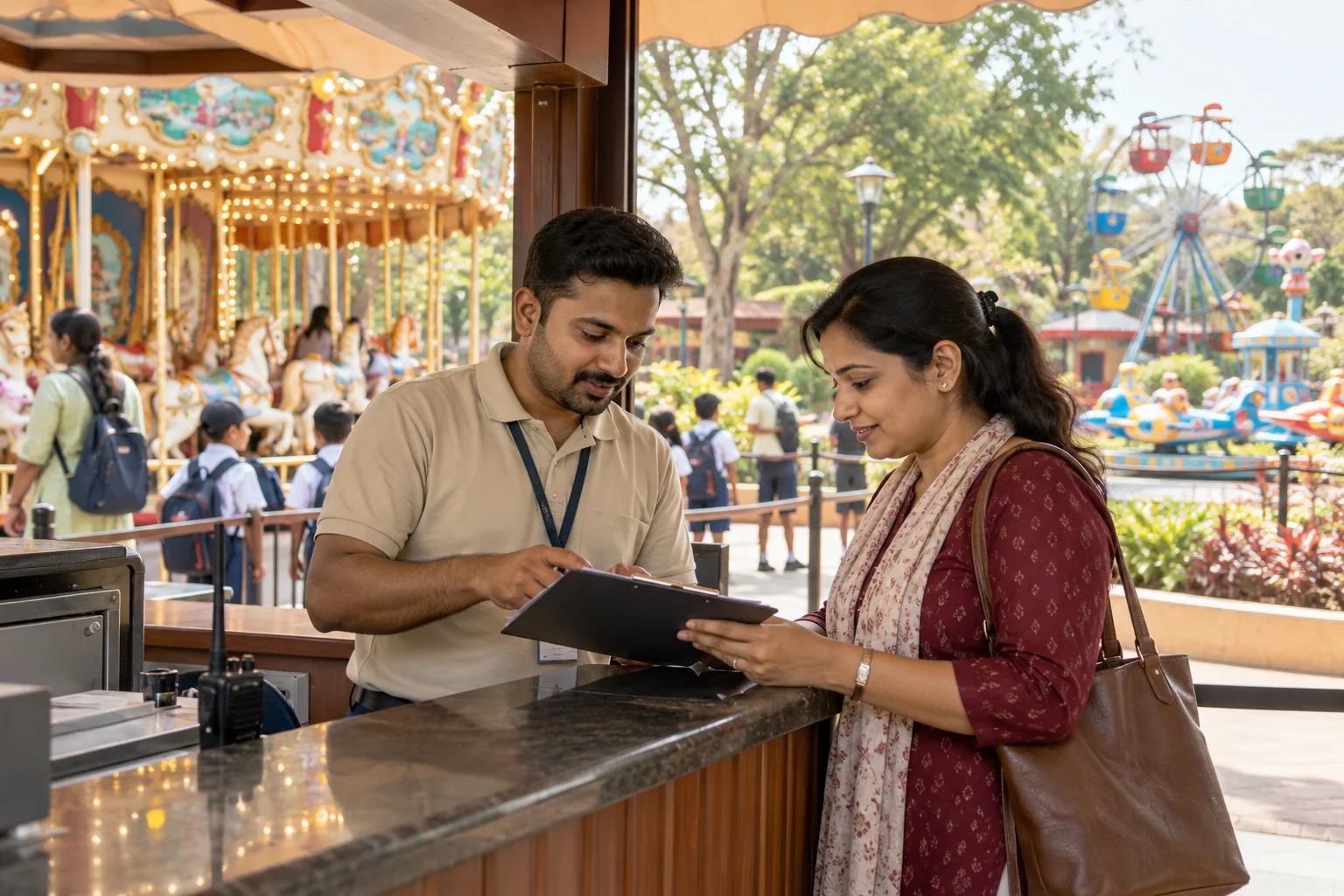
What lead generation means
Lead generation is the combined work of every channel that brings in a new enquiry, whether from search, adverts, referrals or a stall at an exhibition. GullySales runs these channels together and reports the number of enquiries each one produced, not the activity behind it.
Also for amusement parks and family entertainment centres
- CRM for amusement parks and family entertainment centres
- Follow-up systems for amusement parks and family entertainment centres
- SEO for amusement parks and family entertainment centres
- Local SEO for amusement parks and family entertainment centres
- Social media marketing for amusement parks and family entertainment centres
- Content marketing for amusement parks and family entertainment centres
- Buyer personas for amusement parks and family entertainment centres
- WhatsApp marketing for amusement parks and family entertainment centres
Sales and marketing for amusement parks and family entertainment centres, the overview.
Plan the next part of the work
Last updated 21 Nov 2026.
For amusement parks and family entertainment centres
Where it usually goes wrong, and what we would do.
“Group buyers are a different audience from walk-in families”
A teacher planning a picnic and an HR executive planning a family day need a rate card, a safety note and a contact who replies. They do not scroll an ad. They search, ask a colleague, or get a call from someone who knew to ring.
“Weekday demand sits in institutions”
Schools, colleges, offices and housing societies have weekdays free in a way families do not. Someone has to own the list of these institutions, the first call and the follow-up, or the weekday stays empty.
“Birthday enquiries arrive in bursts around holidays”
Parents look for party venues close to the date, and the first venue that replies with a package and a menu wins. A late reply sends the host to the next park.
“Aggregator listings bring tickets, not groups”
A listing site sells single tickets well. A group booking needs a person to talk to. If the park's own page does not make that route clear, group enquiries go elsewhere.
What we do
What we deliver for amusement parks and family entertainment centres.
The work available for this need. We agree the deliverables and responsibilities for your engagement in writing.
A group-booking page and enquiry form
A page for schools, offices and societies with what is included, the details you need and a form that asks for date, headcount and age group.
Result: An organiser can ask for a group rate in one step.
Institution outreach list
A named list of schools, colleges, companies and societies in your catchment, with the right person and a short introduction.
Result: Outreach goes to named people, not a general inbox.
Birthday and party package page
The party room, what is included and how to book, written for the parent who is comparing venues.
Result: Parents find what they need to choose without a call.
Enquiry log with source
Every enquiry recorded with where it came from and what happened next.
Result: The owner sees which routes produce bookings.
Seasonal outreach calendar
A plan that times outreach to school terms, exam breaks and festival periods.
Result: Effort is placed ahead of each booking season.
How the result is measured
- Relevant enquiries by source
- Duplicate and unsuitable enquiries
- Time to the first response
- Accepted enquiries reaching an agreed next step
Recorded as a baseline before work starts, so every later report has an honest comparison.
What to capture or send
Capture these details from every group or party enquiry.
- Type of group
- School, office, society, birthday or kitty party. Each needs a different quote, a different contact and a different first reply.
- Headcount split by adults and children
- Ticket price, food and supervision depend on the split. A school trip also needs the number of teachers who enter free, if you offer it.
- Preferred date and a second date
- Weekday dates are easier to give than a Sunday. A second choice lets you offer the quiet day instead of losing the group.
- Party room, food and cake needs
- Ask at the first call whether they want a room, a menu and outside cake. These items change the price and the staff you roster.
- Who decides and who pays
- A teacher, an HR head or a parent may be asking for someone else. Note the decision-maker, so the quote reaches the right person.
Who it is for
This is written for these amusement parks and family entertainment centres.
- Theme parks and water parks on the outskirts of large cities
- Mall-based family entertainment centres with games and soft play
- Trampoline, adventure and kids activity parks
- Amusement parks attached to resorts and farmhouses
- Fairs, exhibitions and seasonal carnival grounds
- Snow-themed and indoor attraction parks
- School and college picnic organisers
- Corporate outing and employee family-day planners
- Residents' associations and apartment societies planning group trips
- Birthday and kitty party hosts
Before you decide
When this may not be the right fit.
- Nobody on the team can quote group prices or confirm dates on the same day the call comes in, so more enquiries would only be lost.
- Your party rooms and school slots are fully booked on the dates people want, so adding more leads would only create refusals.
Before you decide
Agree the work. Know how to judge it.
Lead generation for amusement parks and family entertainment centres: use these checks to prepare, choose the scope, and review what changes.
Bring the right evidence
Define the organisations or buyers you can serve and the reasons they would consider a conversation. Bring examples of accepted and rejected prospects so the selection rule is visible.
Make the scope clear
Agree the research sources, contact approach, qualification rules, and handover. Clarify which meetings count as accepted and what happens to replies that are not ready to buy.
Check the work in use
Review why a prospect was selected and what was learned from the response. Count held, relevant conversations separately from contacts found, messages sent, or meetings booked.
Know when to change course
If the same objection appears repeatedly, adjust the offer or buyer group before increasing outreach. Respect a request to stop contact and keep the exclusion in the record.
These are discussion points, not a fixed package. GullySales confirms the deliverables, responsibilities, fee, and term in writing after reading your brief and speaking with you.
Before we start
What to have ready before the work starts.
The records, access and decisions this work needs from amusement parks and family entertainment centres. Anything missing is noted in the written scope, with who will supply it.
- Last season's booking diary or sheet
- We need the diary, spreadsheet or ticketing export that lists group and party bookings with dates and the organiser's type. It can be untidy, but names and dates must be readable. Without it we plan from memory, and the outreach list has no proof of who really books.
- A named owner for group enquiries
- One person must own every group enquiry, with a phone that gets answered and a cover colleague on days off. The page and list only work if replies come from someone who knows rides, capacity and rates. Without a name, enquiries sit in a shared inbox and schools move on.
- Current group rates and inclusions
- Bring the rate sheet for schools, offices and parties as it stands, with what each includes: lunch, locker use, ride access, guides. It can be a printout if it is current. If it is missing, the form collects details but the desk cannot answer, and trust drops on the first call.
- Room and slot limits for each date
- We need the number of guests the park can host at once, how many party rooms exist and which dates are blocked for maintenance or events. A rough chart is enough. Without limits we may send outreach for dates that cannot be sold, and the desk ends up refusing.
- Photographs of party rooms and picnic areas
- Share recent photographs of the party rooms, picnic lawns, food counter and washrooms, taken as they look today. Phone pictures are fine if they are sharp. Without them the group page carries stock-style images, and an organiser who visits finds the place differs from the page. Sharp pictures beat a large set.
How it works
How the lead generation work runs
The work itself, in order. How an engagement starts, from your brief to a written scope, is set out on our method page.
- 1
Read last season's group bookings
We sit with whoever takes group calls and read the booking diary for the last season. We mark which entries were schools, offices, societies and birthday hosts, and how each found you. You tell us which weekday dates stood empty and which rides the groups asked about.
- 2
Choose which groups to chase first
From that reading you pick the institution types worth a push, with our advice on fit. A school picnic and a company family day need different food, staff on the floor and parking, so you decide what the park can host before we write a single message.
- 3
Draft the group page and form
We write the group-booking page and its form with your front-desk lead, using the questions the desk already asks on calls: headcount, age range, bus parking, food and invoice details. You approve the wording, and we test that the form opens cleanly on a phone.
- 4
Build the outreach list by institution
We list schools, colleges, offices and residents' associations within reach of the gate, starting with names that have booked before. Each entry carries a contact role, not a guess at a person. You strike off anyone you would rather not approach, and the final list stays yours. We update it when you tell us.
- 5
Send a test enquiry through the desk
We submit a trial group enquiry and a trial birthday enquiry, then watch who sees each one, who replies and what is written in the log. You learn from a real example whether the desk copes with a busy Monday morning before any outreach goes to institutions. Nothing is sent outside until it works.
- 6
Read sources against the old diary
Once outreach is running we compare the enquiry log with last season's diary: group calls, form entries, birthday requests and the source noted against each. You decide which sources to keep feeding and which to drop, judging by booked dates rather than by messages sent. Your own diary stays the final record.
Where this fits
Three pieces of sales work, in this order.
This work sits inside sales process design, at stage 1, prospecting and lead generation. The audit comes before it, and sales management keeps it running.
Step 1
Sales audit
Find where deals are being lost and what to fix first.
Start here if you cannot say where orders are lost.
Step 2 · you are here
Sales process design
One written way to sell, from first enquiry to repeat order.
Start here if every salesperson sells differently.
Step 3
Sales management
A target, a review routine and someone who owns the number.
Start here if the team has targets and no routine.
FAQ
Questions owners ask before they call.
Not here? More answers, or ask on WhatsApp.
Where do we find the right contact at a school or company?
Should we offer a discount to groups?
Can lead generation fix a bad weather week?
How do we fill the slow weekdays with group bookings?
Who should reply when a school fills in the group form?
What should the enquiry log record besides the name?
How much does it cost?
How long is the contract?
How soon will we see results?
Who will actually do the work?
More for amusement parks and family entertainment centres
Related work to consider.
Closest to this: leads and follow-up
Also for amusement parks and family entertainment centres
- SEO for amusement parks and family entertainment centres
- Local SEO for amusement parks and family entertainment centres
- Social media marketing for amusement parks and family entertainment centres
- Content marketing for amusement parks and family entertainment centres
- Buyer personas for amusement parks and family entertainment centres
- WhatsApp marketing for amusement parks and family entertainment centres
Or start from the overview: sales and marketing for amusement parks and family entertainment centres.
Your next practical step
Tell us what you are trying to grow, and we will read it before we call.
Eight short steps, mostly taps. Skip anything you would rather answer on the call.