Amusement parks and family entertainment centres · Search engine optimisation
Be the answer when a family searches for what to do this Sunday.
SEO for an amusement park or family entertainment centre makes your pages appear when families, teachers and organisers search for a day out, a school picnic or a party venue. GullySales works on page content, structure and photographs so the right visitor finds the right page.
Scope, fee, reporting and term are agreed in writing after we have read your brief and spoken to you.
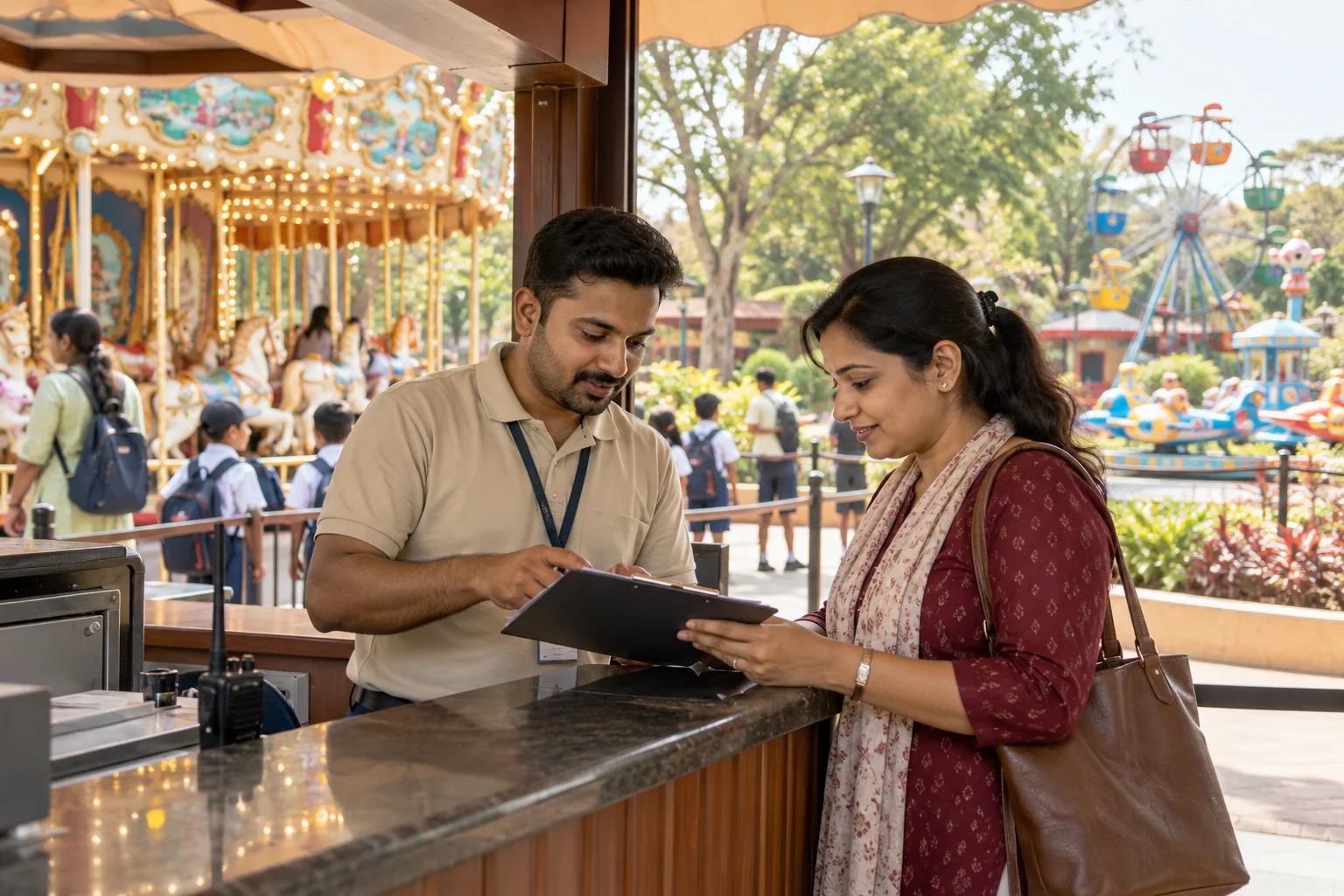
What search engine optimisation means
Search engine optimisation (SEO) is the work of getting your website to appear when a buyer searches Google for what you sell. GullySales builds pages around real search terms, fixes technical issues that block ranking, and tracks which searches actually bring enquiries.
Also for amusement parks and family entertainment centres
- Local SEO for amusement parks and family entertainment centres
- Website for amusement parks and family entertainment centres
- Lead generation for amusement parks and family entertainment centres
- Social media marketing for amusement parks and family entertainment centres
- Content marketing for amusement parks and family entertainment centres
- Buyer personas for amusement parks and family entertainment centres
- CRM for amusement parks and family entertainment centres
- Follow-up systems for amusement parks and family entertainment centres
Sales and marketing for amusement parks and family entertainment centres, the overview.
Last updated 14 Nov 2026.
For amusement parks and family entertainment centres
Where it usually goes wrong, and what we would do.
“Families search by occasion, not by park name”
Phrases about a birthday venue, a school picnic spot or a weekend outing with children are how new visitors arrive. A site that only talks about the park name misses all of them.
“Ticket and ride information is searched constantly”
Visitors look for opening hours, ride heights, ticket combinations and what is closed. If your page does not answer, an aggregator or an old blog post does, possibly with outdated facts.
“Photographs must be recent and honest”
Search engines and parents both read old images as a sign that the park has not changed. A gallery of current rides, food areas and party rooms, with captions, is both a ranking aid and a booking aid.
“Seasonal pages are neglected”
A water park page on a rainy day, or a monsoon note on an adventure park, earns attention that a static home page does not. Pages should change with the seasons, not stay frozen.
What we do
What we deliver for amusement parks and family entertainment centres.
The work available for this need. We agree the deliverables and responsibilities for your engagement in writing.
Search map by occasion
A list of the phrases for outings, picnics, parties and corporate days, matched to pages.
Result: Each occasion has a page built for it.
Ticket, timing and ride pages
Clear pages for prices you supply, timings and ride information, with a note of the last update.
Result: A visitor gets facts that match what happens at the gate.
Group and party landing pages
Dedicated pages for school trips, corporate days and birthdays.
Result: Organisers land on pages written for their task.
Image and caption refresh
A set of current photographs, captioned and sized to load on a phone on a phone.
Result: The site shows the park as it is now.
Technical clean-up
Mobile layout, speed, structured data for opening hours and events, and broken links fixed.
Result: Fixes are listed and re-checked on the live site.
How the result is measured
- Ranking positions
- Organic traffic
- Enquiries from organic search
Recorded as a baseline before work starts, so every later report has an honest comparison.
Searches your buyers type
These are the searches that bring families and organisers to a park or play centre.
- water park ticket price
- A tickets page with the current rates, entry rules and what each ticket covers, kept dated so the searcher does not leave for a portal.
- school picnic places near me
- A page for teachers, with group rates, supervision rules, food arrangements and a booking form. It stands apart from the family page.
- birthday party venue for kids
- A party rooms page with capacity, what the package includes, the cake policy and a photo gallery from real parties.
- corporate family day outing
- A page for HR heads with headcount handled, food options and invoice details, so the planner can request a quote.
- is [park name] open today
- Opening hours and weather closures on the page and the Maps profile. A rain closure left unposted creates angry visitors at the gate.
Who it is for
This is written for these amusement parks and family entertainment centres.
- Theme parks and water parks on the outskirts of large cities
- Mall-based family entertainment centres with games and soft play
- Trampoline, adventure and kids activity parks
- Amusement parks attached to resorts and farmhouses
- Fairs, exhibitions and seasonal carnival grounds
- Snow-themed and indoor attraction parks
- School and college picnic organisers
- Corporate outing and employee family-day planners
- Residents' associations and apartment societies planning group trips
- Birthday and kitty party hosts
Before you decide
When this may not be the right fit.
- Your ticket prices and ride list change each season and no one updates the website, so search pages would show rates you no longer charge.
- You have not yet set group and party packages, so a page aimed at those searches would have nothing to offer.
Before you decide
Agree the work. Know how to judge it.
SEO for amusement parks and family entertainment centres: use these checks to prepare, choose the scope, and review what changes.
Bring the right evidence
Bring the pages for the products or services you want to sell, the search queries available in your reports, and examples of enquiries from search. Separate branded searches from buyers discovering you for the first time.
Make the scope clear
Agree which pages and technical fixes come first, who can publish changes, and who supplies subject knowledge. Link search work to a relevant enquiry route on each priority page.
Check the work in use
Follow the trail from a relevant query to its landing page and then to an enquiry. Review whether those enquiries fit your offer, alongside indexing and search visibility.
Know when to change course
A ranking movement alone is not a buying signal. If traffic grows but relevant enquiries do not, revisit page intent and the offer before producing more pages.
These are discussion points, not a fixed package. GullySales confirms the deliverables, responsibilities, fee, and term in writing after reading your brief and speaking with you.
Before we start
What to have ready before the work starts.
The records, access and decisions this work needs from amusement parks and family entertainment centres. Anything missing is noted in the written scope, with who will supply it.
- Admin login for the website
- We need an admin or editor login to the site, or the agency that holds it must be ready to publish our changes. Without it we can write pages and corrections but cannot place them, and the park keeps showing last year's timings to every family that searches. A staff-only account is fine if it can publish.
- Current ride list with height rules
- Bring the operations team's list of rides, each with the age, height and health rules posted at the gate. A signed-off printout is fine. If it is missing, we leave ride detail out of the pages rather than guess, and parents searching for a safe ride find nothing. Guesses about closures are worse than a blank.
- Search Console and analytics access
- Share view access to Search Console and the analytics account, or tell us they do not exist yet. Either answer helps. If the tools were never set up, the plan starts by creating them, and the before-and-after comparison rests on enquiry counts alone. Even a screenshot of the first screen helps us see what exists.
- A decision on ticket sale route
- Decide whether tickets are sold on your own page, through a ticketing partner or at the gate only. Search pages must point families to one route. Without that decision the pages end in a dead stop, and a family ready to buy goes to whichever listing answers. Families will not guess which route is correct.
- Recent photographs and short videos
- Provide photographs and clips taken this season of rides, food areas, queues and washrooms, with any person's face cleared by you. Phone footage is acceptable. Without current images we use only text and simple graphics, and search listings look thin beside the competing parks. Ten sharp pictures beat a folder of blurred ones.
How it works
How the search engine optimisation work runs
The work itself, in order. How an engagement starts, from your brief to a written scope, is set out on our method page.
- 1
Collect the gate and phone questions
We gather the questions your gate staff and phone desk answer again and again, such as height limits, timings, food rules and what to wear in the water. These become the list of answers the site must carry. You confirm which answers are current, since we do not guess at rides or closures.
- 2
Get access to the site and Search Console
We ask for admin access to the website and to Search Console, plus a list of who edited the site before. You decide who may publish, because ticket and timing pages must change on the day something changes. Until access is shared we can only read the public pages and cannot see search data.
- 3
Sort searches by the occasion behind them
We group searches by the plan behind them: a birthday, a school picnic, a rainy Sunday, a staff outing. You decide which occasions the park wants to be found for, since a water park in the dry season and an indoor centre in the monsoon need different priorities and different pages.
- 4
Mark the photographs that mislead
We go through the gallery with the operations manager and mark images that show a ride since removed, a layout since changed or a crowd-free scene that never happens at weekends. You choose replacements or arrange a photo walk, because old pictures bring families who feel misled at the gate.
- 5
Write and approve the page copy
We draft the ticket, timing, ride and group pages from what the desk tells us, then send them to you page by page. You correct rules, height limits and food policy in your own words. Nothing goes live until the person who knows the park floor has read every line. Corrections come back in one list.
- 6
Read search visits against bookings
After the pages are live we set search visits next to group enquiries, party requests and ticket sales recorded before the work began. You see which occasion pages bring real enquiries and which only bring reading, then decide what to expand, rewrite or leave alone for the next season. Nothing is claimed beyond the records.
Where this fits
Three pieces of sales work, in this order.
This work sits inside sales process design, at stage 1, prospecting and lead generation. The audit comes before it, and sales management keeps it running.
Step 1
Sales audit
Find where deals are being lost and what to fix first.
Start here if you cannot say where orders are lost.
Step 2 · you are here
Sales process design
One written way to sell, from first enquiry to repeat order.
Start here if every salesperson sells differently.
Step 3
Sales management
A target, a review routine and someone who owns the number.
Start here if the team has targets and no routine.
FAQ
Questions owners ask before they call.
Not here? More answers, or ask on WhatsApp.
Will SEO compete with the ticketing aggregators?
How do we show safety information?
Do we need a page for each ride?
How do we show ride safety to a worried parent searching online?
Who keeps the timing and closure pages current?
Do we need the same pages for the water park and the dry rides?
How much does it cost?
How long is the contract?
How soon will we see results?
Who will actually do the work?
More for amusement parks and family entertainment centres
Related work to consider.
Closest to this: search and visibility
Also for amusement parks and family entertainment centres
- Lead generation for amusement parks and family entertainment centres
- Social media marketing for amusement parks and family entertainment centres
- Content marketing for amusement parks and family entertainment centres
- Buyer personas for amusement parks and family entertainment centres
- CRM for amusement parks and family entertainment centres
- Follow-up systems for amusement parks and family entertainment centres
Or start from the overview: sales and marketing for amusement parks and family entertainment centres.
Your next practical step
Tell us what you are trying to grow, and we will read it before we call.
Eight short steps, mostly taps. Skip anything you would rather answer on the call.