Amusement parks and family entertainment centres · Social media
Make a family want to come before the weekend plans are set.
Social media marketing for an amusement park or family entertainment centre uses reels, photographs and stories to show what a day out feels like. GullySales plans the content and the booking prompts that move a viewer from watching to buying a ticket or asking about a party.
Scope, fee, reporting and term are agreed in writing after we have read your brief and spoken to you.
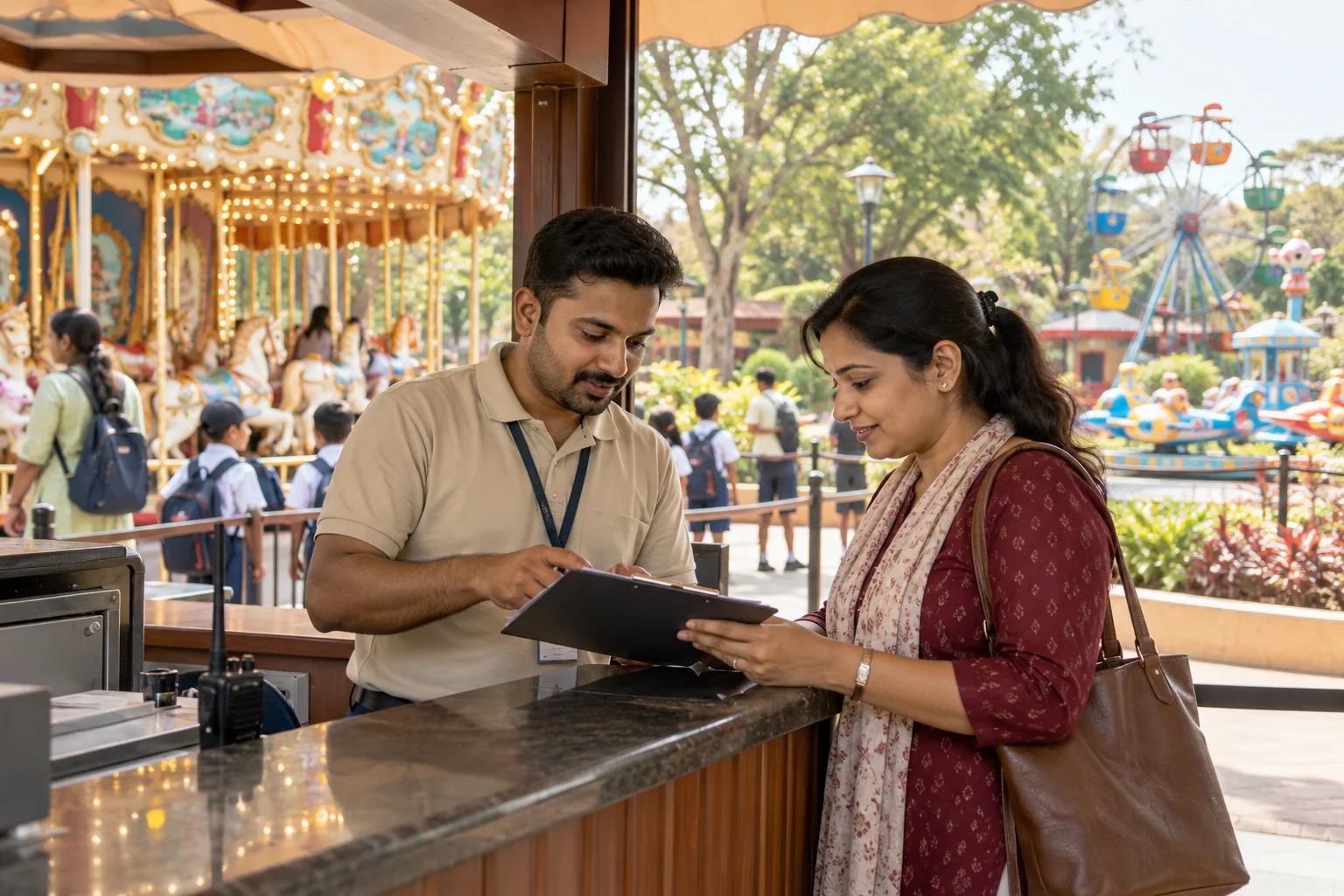
What social media means
Social media is the ongoing posting your business does on platforms such as Instagram, Facebook and LinkedIn to stay visible to customers and prospects between purchases. GullySales plans a posting calendar, writes captions and designs the images so the page looks active and answers what a visitor would ask.
Also for amusement parks and family entertainment centres
- Content marketing for amusement parks and family entertainment centres
- Lead generation for amusement parks and family entertainment centres
- SEO for amusement parks and family entertainment centres
- Local SEO for amusement parks and family entertainment centres
- Buyer personas for amusement parks and family entertainment centres
- CRM for amusement parks and family entertainment centres
- Follow-up systems for amusement parks and family entertainment centres
- WhatsApp marketing for amusement parks and family entertainment centres
Sales and marketing for amusement parks and family entertainment centres, the overview.
Last updated 14 Nov 2026.
For amusement parks and family entertainment centres
Where it usually goes wrong, and what we would do.
“A reel is the ticket window for a parent choosing a day out”
A short clip of a slide, a splash or a kid laughing is how a parent decides. A page of announcements does not do that. Video from the park, shot on ordinary phones, is enough.
“Children's faces need consent”
Footage of guests, especially children, needs permission from the parent or guardian. Ask at entry, post notices where filming happens and delete on request. Do not use a child's image in an advertisement without written agreement.
“The weekday audience is not the weekend one”
A school group, an office team and a family on holiday see different posts. A single feed that talks to all of them says little to any. Use separate messages for separate groups.
“Complaints and reels travel together”
A viral video of a long queue or a closed ride reaches more people than your own posts. A calm reply with facts, posted where it started, limits the damage.
What we do
What we deliver for amusement parks and family entertainment centres.
The work available for this need. We agree the deliverables and responsibilities for your engagement in writing.
Content plan around park moments
A set of post ideas tied to rides, food, seasons and events, with shots the team can capture on the day.
Result: The team has a clear list of what to film.
Consent and filming notice
A simple notice for entry and a log of permissions for any child or guest used in marketing.
Result: You hold a record of consent for featured guests.
Audience-specific posts
Posts for school groups, offices and families, each with a different call to action.
Result: Each audience sees a message that suits them.
Comment and message guide
Short replies for common questions about timings, tickets and party bookings.
Result: Comments get a useful answer and a route to booking.
Creator and local collaboration list
Names of local parenting and lifestyle creators to invite for a visit, with a clear brief.
Result: Invitations go to people who fit your visitors.
How the result is measured
- Posts published
- Engagement rate
- Enquiries from social profiles
Recorded as a baseline before work starts, so every later report has an honest comparison.
Posts and pieces to plan
Plan these posts for a park or entertainment centre account.
- Ride of the week with height rules
- A short video of one ride with the height and age limit stated on screen. It prevents a child being turned away at the gate.
- A birthday party in progress
- Photos from a real party, posted with the host family's consent and without other children's faces unless their guardians agreed.
- Weekday offer for schools and offices
- A plain post with the dates open for groups and how to book. Keep it to a real offer your team can honour.
- Rain day and heat day notices
- A post that says whether the park is open, which rides are shut and what visitors can do. It cuts the angry calls at the gate.
- Behind the scenes check
- A video of attendants checking a ride before opening. It shows care without making a safety claim you cannot support.
Who it is for
This is written for these amusement parks and family entertainment centres.
- Theme parks and water parks on the outskirts of large cities
- Mall-based family entertainment centres with games and soft play
- Trampoline, adventure and kids activity parks
- Amusement parks attached to resorts and farmhouses
- Fairs, exhibitions and seasonal carnival grounds
- Snow-themed and indoor attraction parks
- School and college picnic organisers
- Corporate outing and employee family-day planners
- Residents' associations and apartment societies planning group trips
- Birthday and kitty party hosts
Before you decide
When this may not be the right fit.
- You have no rule on posting photographs of children, so posting before you set one would put visitors' children on screen without their guardians' consent.
- Nobody monitors the account on busy weekends, when most comments and complaints arrive.
Before you decide
Agree the work. Know how to judge it.
Social media marketing for amusement parks and family entertainment centres: use these checks to prepare, choose the scope, and review what changes.
Bring the right evidence
Review the posts that produced useful conversations, not only the ones with the most views. Gather buyer questions and decide which team member can contribute credible material.
Make the scope clear
Choose the audience and channel before setting a posting volume. Agree who supplies material, approves posts, and handles messages, including complaints or questions the agency cannot answer.
Check the work in use
Follow a post through to the profile, website, and response. A useful report explains the quality of conversations and enquiries, alongside reach and engagement.
Know when to change course
If publishing takes time away from unanswered buyer messages, fix the response routine first. Do not expand to another channel without a clear reason for being there.
These are discussion points, not a fixed package. GullySales confirms the deliverables, responsibilities, fee, and term in writing after reading your brief and speaking with you.
Before we start
What to have ready before the work starts.
The records, access and decisions this work needs from amusement parks and family entertainment centres. Anything missing is noted in the written scope, with who will supply it.
- Logins for every social account
- Give us the list of pages and the person who owns each login, including old pages created by staff. If an account is stuck with a former employee, we start by recovering it. Without owner access, the park cannot reply or remove a bad post when it matters. An old page with followers still counts.
- A consent notice for guests
- Provide the wording you already use at the gate or party room, if any, or tell us there is none. Your adviser decides final text. Without a notice, we plan only wide shots with no identifiable children, and the content feels cold next to rival parks. A draft in your own words is a good start.
- A person who films on the floor
- Name a staff member or a supervisor who can shoot clips on a phone during normal operations and tell us what is safe to show. Without that person, we depend on rare visits, and the calendar fills with old footage and generic graphics. Weekend staff are as useful as managers for this role.
- The festival and holiday offer decisions
- Bring the owner's decision on what the park will offer around holidays and which dates are blocked for private events. A rough note works. Without decisions, we cannot write booking prompts, and posts end with a vague invitation instead of a way to reserve. Even a short list of dates is better than none.
- A reply plan for complaints
- Agree who sees comments and messages, who responds and when an incident goes to the manager. Give us names and phone numbers inside the team only. Without a plan, a complaint about a queue or a refund sits in public view and the next family reads it. An agreed order saves an awkward public exchange later.
How it works
How the social media work runs
The work itself, in order. How an engagement starts, from your brief to a written scope, is set out on our method page.
- 1
List the park moments worth filming
We sit with the operations manager and list moments a parent would stop for: the first splash, the queue for the big ride, a birthday cake in the party room, a school group arriving. You mark which moments can be filmed safely and which should not appear. We note each one on a shared list.
- 2
Agree who holds each account
We ask who owns the Instagram, Facebook and YouTube logins and whether a former agency or staff member still has access. You choose one owner on your side. Without a clear owner, a post about a closed ride goes unanswered and comments under it start to turn. One name goes against each account.
- 3
Set the consent and filming rule
We write a short notice for the gate and the party room, with your lawyer or adviser reviewing it, saying when filming happens and how a guest can opt out. You decide who carries it. No child appears in a post unless the parent has agreed. The notice is yours to approve in full.
- 4
Shape the calendar around the park's year
We lay out posts around school holidays, festivals, exam end, monsoon and the days the park is quiet. You approve the plan and remove anything you cannot deliver. Weekday posts speak to teachers and offices, and weekend posts speak to families deciding on a plan. Gaps in the plan are marked, not filled with filler posts.
- 5
Shoot with the team, then approve each post
A short shoot is planned with the floor staff, who show us angles and safe spots. We draft captions and a booking prompt for each post, and you read every one before it goes out. Facts about rides, timings and rules are checked against the gate board. We never post anything you have not read.
- 6
Read messages and bookings against the plan
After posting begins we compare messages, party enquiries and group form entries with the numbers recorded before the work started. You see which posts brought a real question and which only brought likes, then decide what the park films next and what to stop making. We keep a short note of what each post was meant to do.
Where this fits
Three pieces of sales work, in this order.
This work sits inside sales process design, at stage 0, foundation. The audit comes before it, and sales management keeps it running.
Step 1
Sales audit
Find where deals are being lost and what to fix first.
Start here if you cannot say where orders are lost.
Step 2 · you are here
Sales process design
One written way to sell, from first enquiry to repeat order.
Start here if every salesperson sells differently.
Step 3
Sales management
A target, a review routine and someone who owns the number.
Start here if the team has targets and no routine.
FAQ
Questions owners ask before they call.
Not here? More answers, or ask on WhatsApp.
Do we need a social media manager on site?
Can we run contests?
Should we pay creators?
Can we post photos of visitors' children?
Do we need to boost every post?
What happens to comments about a ride that was shut?
How much does it cost?
How long is the contract?
How soon will we see results?
Who will actually do the work?
More for amusement parks and family entertainment centres
Related work to consider.
Closest to this: content and social
Also for amusement parks and family entertainment centres
- Lead generation for amusement parks and family entertainment centres
- SEO for amusement parks and family entertainment centres
- Local SEO for amusement parks and family entertainment centres
- Buyer personas for amusement parks and family entertainment centres
- CRM for amusement parks and family entertainment centres
- Follow-up systems for amusement parks and family entertainment centres
Or start from the overview: sales and marketing for amusement parks and family entertainment centres.
Your next practical step
Tell us what you are trying to grow, and we will read it before we call.
Eight short steps, mostly taps. Skip anything you would rather answer on the call.