Bars, pubs and microbreweries · Digital marketing
One plan for the map, the website, the posts and the booking message.
Digital marketing for a bar, pub or microbrewery joins your map profile, website, social posts and WhatsApp into one plan around your programme. GullySales builds each piece, sets the order of work and reads the results with you, with every message kept on the venue and away from alcohol.
Scope, fee, reporting and term are agreed in writing after we have read your brief and spoken to you.
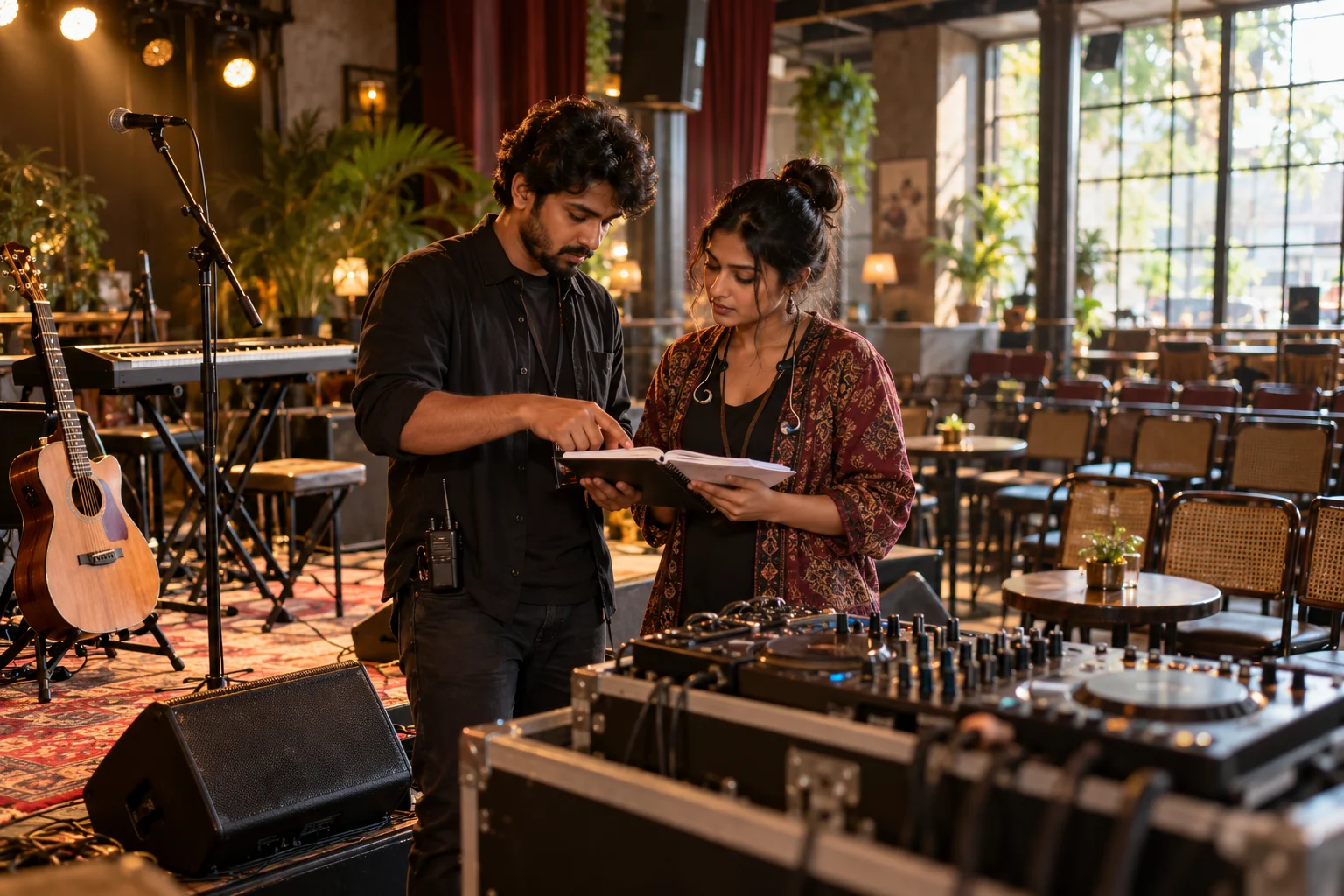
What digital marketing means
Digital marketing is the combined work of search, social media, advertising and website channels running together rather than as separate projects with separate people. GullySales runs these as one connected system so a change in one channel, such as a new offer, is reflected everywhere at once.
Also for bars, pubs and microbreweries
- Buyer personas for bars, pubs and microbreweries
- Lead generation for bars, pubs and microbreweries
- SEO for bars, pubs and microbreweries
- Local SEO for bars, pubs and microbreweries
- Social media marketing for bars, pubs and microbreweries
- Content marketing for bars, pubs and microbreweries
- CRM for bars, pubs and microbreweries
- Follow-up systems for bars, pubs and microbreweries
Sales and marketing for bars, pubs and microbreweries, the overview.
Last updated 14 Nov 2026.
For bars, pubs and microbreweries
Where it usually goes wrong, and what we would do.
“Each channel has a job”
The map brings in the nearby guest, the site answers the planner, social shows the night and WhatsApp takes the booking. Asking each to do everything leaves gaps.
“The programme is the calendar”
Match fixtures, festivals and live nights set when to post and what to say. Work done after the date has passed reaches nobody.
“Paid promotion needs a rule check”
Platforms and states restrict advertising for alcohol venues. Check both before spending anything, and keep the copy about the venue and the event.
What we do
What we deliver for bars, pubs and microbreweries.
The work available for this need. We agree the deliverables and responsibilities for your engagement in writing.
Programme calendar
A dated plan placing posts, emails and messages before each event, match and festival.
Result: Every date is promoted ahead of time.
Channel roles
A written note on what each channel is for and who looks after it.
Result: Nobody expects the wrong thing from a channel.
Tracking set-up
Calls, forms and WhatsApp clicks tagged by source.
Result: You can see which channel brought tables.
Rules sheet agreed with your adviser
A one-page list of what the venue may and may not say online.
Result: Everyone writing for the venue follows one list.
Season review
A look at bookings, sources and guest questions, written up for the next plan.
Result: The next season starts with what you learned.
How the result is measured
- Enquiries across channels
- Cost per enquiry overall
- Channel mix by contribution
Recorded as a baseline before work starts, so every later report has an honest comparison.
Searches your buyers type
Digital marketing for a bar starts with the searches that end in a reserved table.
- table booking pub tonight
- A Maps profile with a booking button and a WhatsApp link that works at the hours the venue is busy.
- office party venue with food
- A group page with packages and an enquiry form. Ads on this search land on the same page.
- microbrewery tour and tasting
- A page for the brewery floor and the tasting, with the booking route. Keep to local rules on how alcohol is described.
- live music and cricket screening
- An events page updated for the coming week. An event listing with nothing planned loses the visitor.
- [venue name] reviews
- Groups read reviews before booking. Reply to each and keep food reviews current.
Who it is for
This is written for these bars, pubs and microbreweries.
- Microbreweries and brewpubs with their own brewing floor
- Sports bars with screens for cricket and football
- Rooftop lounges and terrace bars
- Gastropubs where food carries the evening
- Live music venues and open-mic pubs
- Hotel bars and restaurants with a licensed bar
- Standalone neighbourhood pubs
- Club and lounge venues for private parties
Before you decide
When this may not be the right fit.
- Your licence and advertising rules are unclear, so paid ads naming drinks could breach them.
- The venue is full on peak nights, and more reach would only add refusals.
Before you decide
Agree the work. Know how to judge it.
Digital marketing for bars, pubs and microbreweries: use these checks to prepare, choose the scope, and review what changes.
Bring the right evidence
Bring a recent won order and an enquiry that went nowhere. Trace how each buyer found you, what they asked, and who handled the next step. A channel list alone will not explain the difference.
Make the scope clear
Choose one offer and one buyer group first. Agree which part needs attention: being found, getting a useful enquiry, or turning an enquiry into an order. Separate recommendations from the work required to carry them out.
Check the work in use
A useful plan names the first change, its owner, the evidence behind it, and the number that will show whether it worked. Ask what has deliberately been left out and why.
Know when to change course
If your team cannot answer the enquiries it already receives, improve that handover before buying more traffic. If the offer itself is unclear, test it with buyers before adding channels.
These are discussion points, not a fixed package. GullySales confirms the deliverables, responsibilities, fee, and term in writing after reading your brief and speaking with you.
Before we start
What to have ready before the work starts.
The records, access and decisions this work needs from bars, pubs and microbreweries. Anything missing is noted in the written scope, with who will supply it.
- The programme for the coming season
- Bring the fixtures, bands, festivals and private events you expect, even where dates may move. The plan hangs on it. Without a programme the channels run on general posts and the quiet nights stay quiet. Include any private bookings already in the diary, because they affect which nights can be advertised and which are kept for the party. Please also mark nights that are certain and nights that are tentative, so that the plan can bend.
- Logins for every channel in use
- Gather access to the map listing, website, social pages and business chat, with the people who hold each. Gaps are named, not hidden. A channel we cannot enter is left alone, and the plan says so. Where an old agency holds a login, bring the contact so that access can be moved to an account you own before work starts. Tell us which accounts are shared with other branches or partners.
- A booking-source habit at the door
- The host should ask a group how they found the venue and note it. A tick-list beside the book is enough. Without this, we cannot tell which channel worked and the review at the end of the season turns into opinion. Ask once per table and write in a single column, so the sheet shows which channel the group named, even when the answer is a friend. This is worth two minutes at the door and gives us the only truthful figure.
- A sheet of what you will not say
- Write the lines your venue never uses, from your own sense and your adviser's view: drink brands, strengths, prices, offers. This becomes the rules sheet. If it is missing, we default to silence on drinks everywhere. Keep it to a page that the team can read at a glance, so that a new bartender or host learns the limits without a meeting. Share it with the owner and manager so both can sign it.
- One person who approves every message
- Name the person, the owner or manager, who reads each item before it goes out. If approval is split among several partners with different views, the plan slows and nights pass unpublicised. If the owner and manager disagree on wording, decide who has the final word before the plan starts, so that posts are not held for days. Pick one name, so the plan is not held up by a committee.
How it works
How the digital marketing work runs
The work itself, in order. How an engagement starts, from your brief to a written scope, is set out on our method page.
- 1
Put the year's programme on one page
We start with your programme: the festivals, cricket fixtures, band nights, quiet months and private-party seasons. You tell us which dates carry the year. We place the channels around that calendar, since a plan that ignores your nights will push the wrong message. Current calls, bookings and map actions are recorded at the same time. Where a date falls on a dry day or a festival closure, we mark it, so no channel announces something the venue cannot run.
- 2
Give each channel one job
We write down what the map listing, the website, the social pages and the booking chat are each responsible for, such as being found, being believed, showing the room or taking the booking. You approve the roles, and any channel that has no job is paused. When two channels do the same job, we choose the one your guests already use and rest the other until it has a purpose of its own.
- 3
Agree rules with your adviser first
Before anything is written, we take your adviser's view on what each channel may say about the venue, the licence and the events. We note it on a rules sheet that every writer and poster follows. Where a rule is unclear, the line stays out until you confirm. The sheet also lists what each channel may not say, so a new writer joining the team does not repeat a mistake made earlier. Each rule is dated, so a later change is easy to follow.
- 4
Set up the tracking you can read
We label the links from the profile, the posts and the website, and set a simple sheet where the host notes how each group heard of you. We test each link and check that a booking made through each lands in the book with its source. We record the first link click, the call and the booking on the same sheet, so a single guest can be followed from the map to the table.
- 5
Run the first nights and watch the door
With the plan in place we publish for the first programme dates, and the host tells us what groups say on arrival. Where a message brings the wrong crowd, we change it. You decide whether any paid promotion goes ahead, after the platform's current rules are checked. Each message is written for one occasion and one channel, and the host reports whether the arriving group matches the one we aimed at. We also adjust the order of posts if a night is cancelled.
- 6
Review the season against the starting figures
At the close of the season we set calls, direction taps, bookings and repeat groups beside the figures recorded before the plan. You and the manager choose which channels earn more attention next, which to simplify and which nights need a new approach. We also write a short note of what to drop, since a plan that only adds work will be dropped itself. We also look at which message was repeated until it stopped working and which channel took effort without bringing a single booking.
Where this fits
Three pieces of sales work, in this order.
This work sits inside sales process design, at stage 0, foundation. The audit comes before it, and sales management keeps it running.
Step 1
Sales audit
Find where deals are being lost and what to fix first.
Start here if you cannot say where orders are lost.
Step 2 · you are here
Sales process design
One written way to sell, from first enquiry to repeat order.
Start here if every salesperson sells differently.
Step 3
Sales management
A target, a review routine and someone who owns the number.
Start here if the team has targets and no routine.
FAQ
Questions owners ask before they call.
Not here? More answers, or ask on WhatsApp.
Where should a new pub start?
Can we use influencers?
Is there a budget rule?
Can a bar advertise on social platforms?
Should we begin with all four channels at once?
Do you manage paid promotion for us?
How long is the contract?
How soon will we see results?
Who will actually do the work?
What do you need from us?
More for bars, pubs and microbreweries
Related work to consider.
Closest to this: strategy and research
Also for bars, pubs and microbreweries
Or start from the overview: sales and marketing for bars, pubs and microbreweries.
Your next practical step
Tell us what you are trying to grow, and we will read it before we call.
Eight short steps, mostly taps. Skip anything you would rather answer on the call.