Cafes and coffee shops · CRM
Keep the catering contact when the manager who knew them leaves.
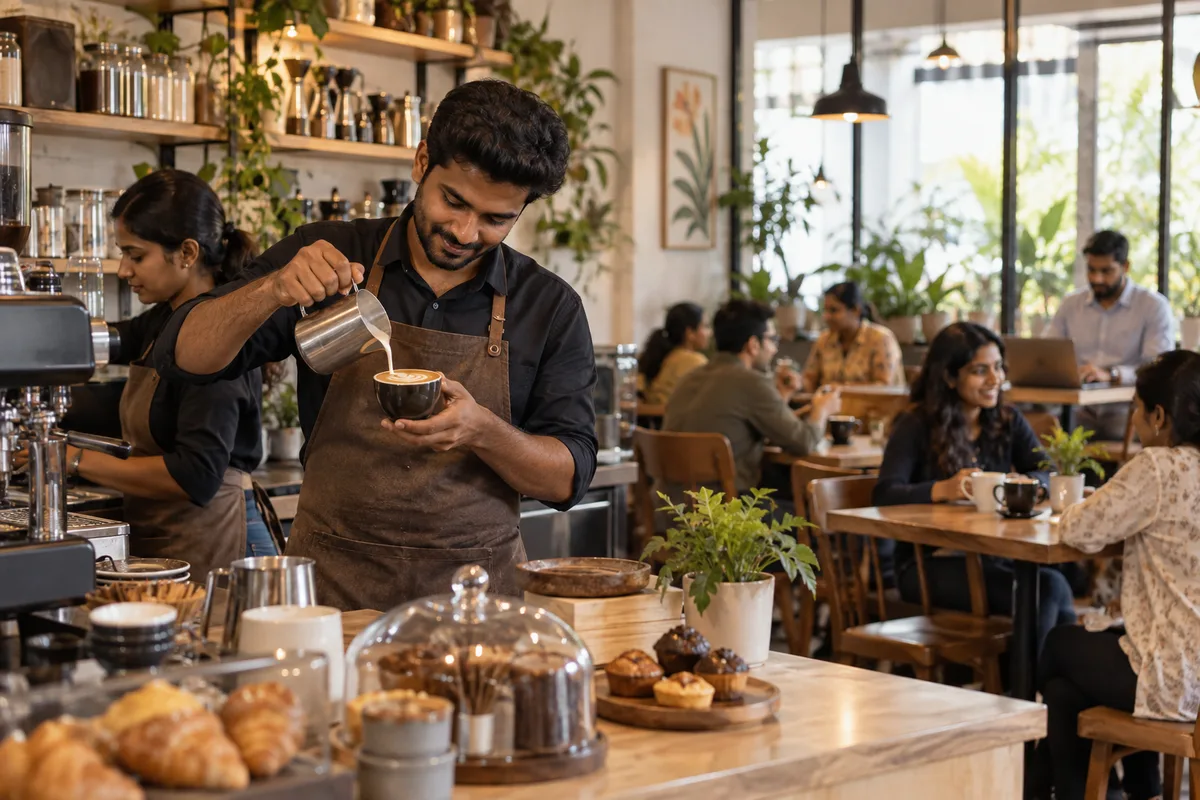
A CRM for a cafe is the record behind the counter: table and event bookings, catering enquiries, corporate coffee accounts and the regulars who left a number. GullySales sets up the few fields your staff will actually fill in and shows the owner what to read out of them.
Scope, fee, reporting and term are agreed in writing after we have read your brief and spoken to you.
What CRM means
A CRM is the record where every enquiry, call and quote is kept against a customer, replacing separate notebooks, spreadsheets and memory. GullySales sets up or cleans an existing CRM and reports from it by enquiry outcome rather than by activity logged.
Also for cafes and coffee shops
- Lead generation for cafes and coffee shops
- Follow-up systems for cafes and coffee shops
- Branding for cafes and coffee shops
- Buyer journey for cafes and coffee shops
- Buyer personas for cafes and coffee shops
- Content marketing for cafes and coffee shops
- Digital marketing for cafes and coffee shops
- Email marketing for cafes and coffee shops
Sales and marketing for cafes and coffee shops, the overview.
Last updated 5 Oct 2026. Rules for this trade differ by state and professional body, and they change. We describe restrictions in general terms, so check the current position with your own council or adviser before you publish anything.
For cafes and coffee shops
Where it usually goes wrong, and what we would do.
“The record has to outlast the staff”
Baristas and shift managers move on. A catering contact saved in one person's phone leaves with them, and the office that ordered fifty coffees last Diwali never hears from you again.
“Four fields, not forty”
A counter team will enter a name, a number, a date and what was ordered. Ask for more and it gets skipped during a rush, and a half-filled record stops being worth reading.
“A corporate account is not a booking diary entry”
An office that orders coffee for meetings needs a billing contact, a GST number and a note of the standing order. None of that fits in the line where you write a table number.
What we do
What we deliver for cafes and coffee shops.
Every deliverable, what it covers for you, and the result it is there to produce. Nothing here is an extra.
A bookings and enquiry record the counter can update
One shared record for table bookings, birthday enquiries and catering requests, visible to whoever is on the till rather than kept in a paper diary.
Result: A booking exists somewhere other than one person's handwriting.
Separate records for corporate and catering accounts
A record for offices and event clients holding the billing contact, GST details, what was ordered last and the date it was ordered.
Result: A repeat order can be asked for by name and by what they had.
A short field list staff will actually complete
The smallest set of fields that still answers who, when, how many and what, written so a new barista fills it in without being trained twice.
Result: The record stays true because completing it takes seconds.
Consent recorded against the number
A note beside each phone number saying how it was given and what the customer agreed to hear about, kept with the booking itself.
Result: You can message a customer without wondering whether you should.
A read-out the owner can take at a glance
A simple view of enquiries received, bookings confirmed, and the ones nobody replied to, drawn from the same record.
Result: You see the gap between enquiries and bookings without asking anyone.
How the result is measured
- Enquiries logged in the CRM
- Data completeness
- Reports generated from CRM data
Recorded as a baseline before work starts, so every later report has an honest comparison.
What to record, and when
What a cafe should record about bookings, corporate orders and regulars, and whether it needs software yet.
- Table or event booking with date and headcount
- Record the date, the time, the number of guests and the occasion, such as a birthday table or a book-club evening. Whoever opens the cafe should see tomorrow's bookings without scrolling a chat.
- Corporate coffee and catering enquiries
- Keep these as a company, not as a person: office, floor, the person who orders, the person who pays and the order size. A coffee-and-snacks request for a meeting recurs, and the record should show it.
- What the regular usually orders
- Note the drink and the seat they prefer for people who come often. It lets any barista greet them well, and it costs nothing. Do not write personal remarks about a customer that you would not say to them.
- Consent next to the number
- If a regular gave a number on a loyalty form, record whether they said you may send offers, and when. Without that note, a message to them is a guess, and an annoyed customer will say so.
- Slow-hour offers that brought someone in
- When someone walks in for a weekday-morning offer, tick it. After a while you see whether the offer fills the slow hours or only gives away discount to people who would have come anyway.
- Do you need software yet?
- A shared sheet is enough while one person owns the file and staff add a line from the counter. Look at a tool when there are several outlets or when catering enquiries start arriving faster than anyone can answer them.
Who it is for
This is written for these cafes and coffee shops.
- Independent single-outlet cafes
- Specialty coffee roasters with a cafe
- Cafes inside co-working spaces
- Bakery cafes
- Cafe chains opening new outlets
- Cloud kitchen and delivery-only cafes
- Cafes attached to bookstores or art spaces
- Late-night and student-area cafes
Not for
It is not the right fit if.
- You want a guaranteed Google ranking or a guaranteed number of leads. Nobody honest can promise either.
- You need enquiries by next week and have nobody to answer them.
- You want posts and reach reported, not enquiries and orders.
How it works
From your first message to the first report.
No open-ended retainer. Every step gives you something in writing.
First
Your brief
You tell us what you need in a few short steps: your business, what you want, where enquiries come from and how they are handled.
After the brief
A conversation and a written scope
We read it, then talk with whoever handles your enquiries. If you want our help, the scope, the fee and the reporting come in writing, and nothing starts before you have read them.
Before work starts
Baseline recorded
Enquiries by source, reply time, conversion and cost per order, written down so every later report has an honest comparison.
After the baseline
The first fix goes live
The fix we agreed to start with is put in place and measured against the baseline, whether that is reply time, a follow-up sequence, the page buyers land on or the handover between marketing and sales.
As agreed
Report against the baseline
What moved, what did not, and what changes next, in plain words. How often you get it is set in writing before work starts.
At renewal
Renew on the numbers
The term ends and you decide whether to continue from the results. The length is agreed in writing before anything starts.
How the crm work runs
- 1
Map the sales process
We record how a deal actually moves from enquiry to close in your business today.
- 2
Configure stages and fields
The CRM's pipeline and fields are built to match that process exactly, not a generic template.
- 3
Set up automations
Reminders, assignment rules and follow-up triggers are configured so routine steps happen without manual effort.
- 4
Test with real deals
We run the configuration against actual current deals to catch gaps before the whole team relies on it.
Why us
Why owners pick GullySales over an agency.
Marketing and sales, as one job
Most agencies stop at the enquiry. We also fix what happens after it: the reply, the follow-up, the quote and the CRM.
The person on the first call does the work
No account managers in between. You are never handed to someone you have not met.
A baseline before anything starts
Your numbers are written down on day one, so every later report compares against something honest.
The fee in writing, split three ways
Our time, your media spend and production on separate lines. You always see what goes to us.
No guarantees we cannot keep
The term is agreed in writing and never a default twelve months. We never promise a ranking or a lead count, because nobody controls those.
One office, and we say so
Nagarbhavi, Bengaluru. We work across India by call and WhatsApp and travel when a session needs to be in person.
#257, 3rd floor, Sri Nanjundeshwara Complex, Nagarbhavi 8th Block, Outer Ring Road. How we work.
Your brief
Tell us what you need, and we will read it before we call.
Eight short steps about your business, what you want and who decides. Most questions are a tap, and you can skip any you would rather answer on the call.
FAQ
Questions owners ask before they call.
Not here? More answers, or ask on WhatsApp.
Do we need a real CRM or will a shared sheet do?
Our staff change often. Who keeps this current?
We have a notebook of names from a stamp card. Is it worth typing in?
Instagram DMs and Google messages ask about tables. Do they go into the record too?
How soon would we see more customers?
Do we need to advertise?
How much does it cost?
How long is the contract?
Who will actually do the work?
What do you need from us?
From the blog
Further reading for cafes and coffee shops.
 7 min read · 21 Sept 2026How to design metro and transit advertisingA commuter stands still in front of a platform panel for four minutes and passes the same one twice a day for a month. Design for the sixth viewing.
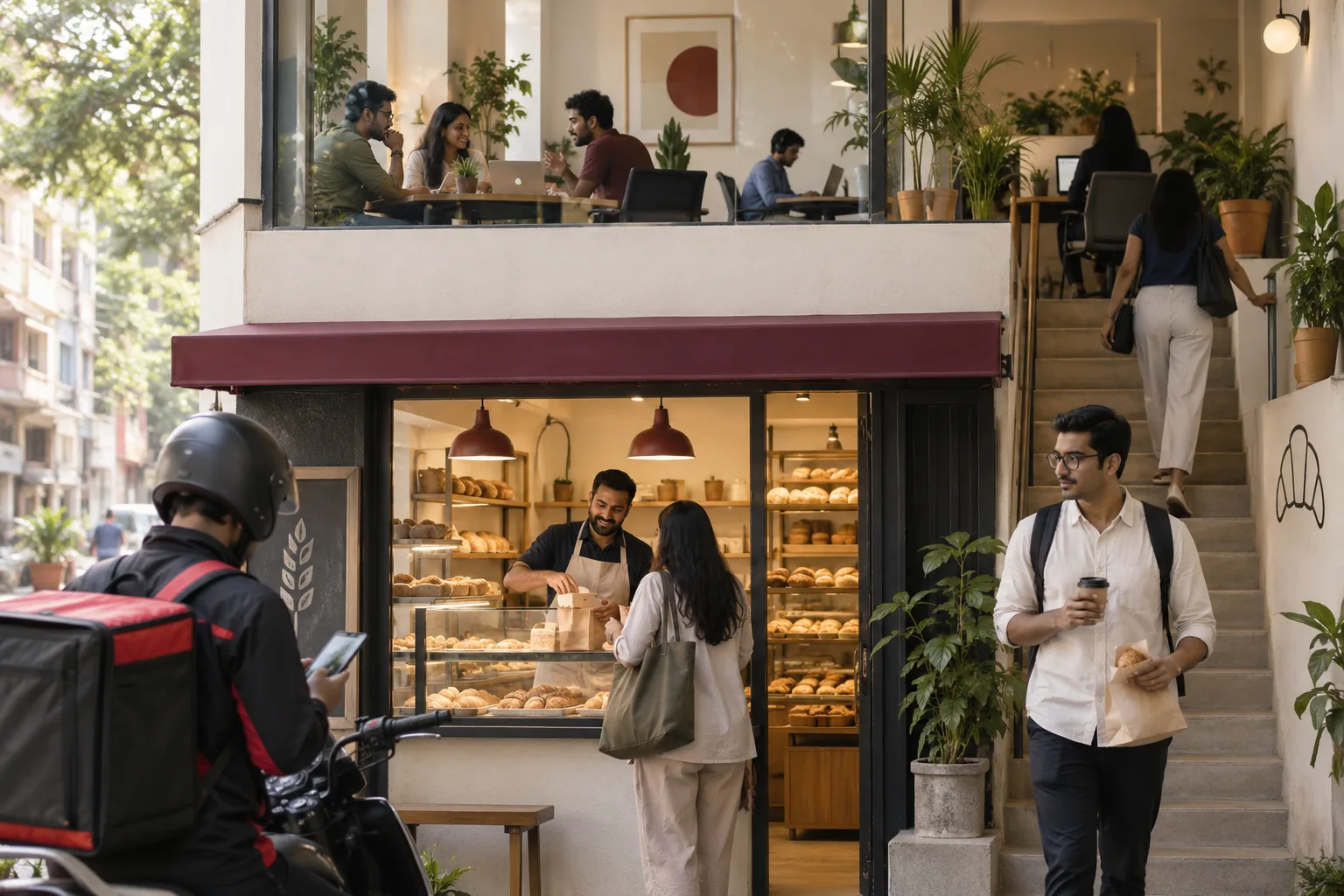 7 min read · 21 Sept 2026How to advertise to startup employeesThere is no tech park to buy. A forty person company sits above a bakery, so the audience is the neighbourhood, the delivery app and the coworking floor.
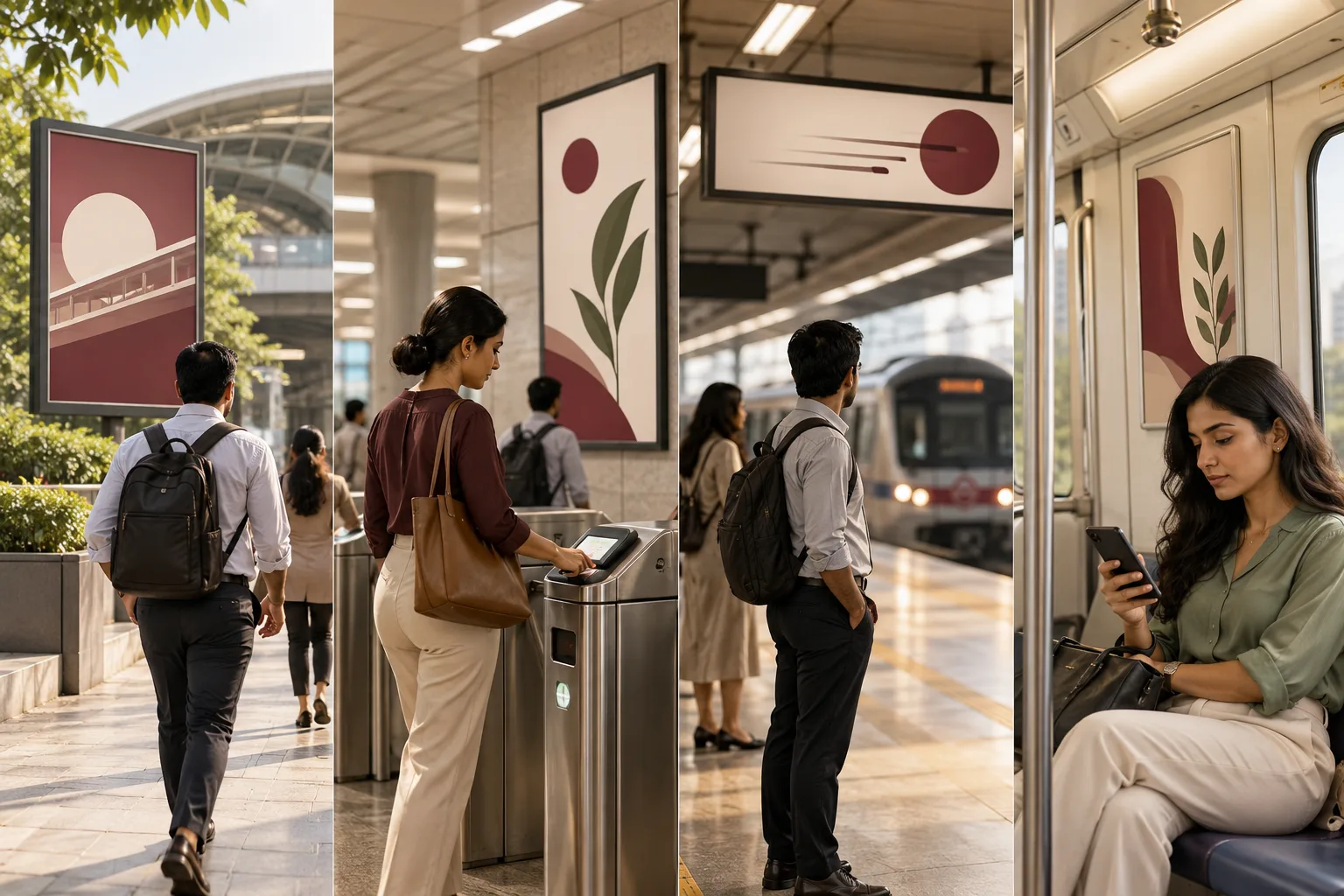 7 min read · 21 Sept 2026How to advertise to metro commutersA commuter is a mode, not a person. The journey has four still moments and each one takes different creative, which is why one design across a station never performs.
More for cafes and coffee shops
Everything else we would do for you.
Closest to this: leads and follow-up
Also for cafes and coffee shops
- Branding for cafes and coffee shops
- Buyer journey for cafes and coffee shops
- Buyer personas for cafes and coffee shops
- Content marketing for cafes and coffee shops
- Digital marketing for cafes and coffee shops
- Email marketing for cafes and coffee shops
- Influencer marketing for cafes and coffee shops
- Loyalty programmes for cafes and coffee shops
- PPC ads for cafes and coffee shops
- Public relations for cafes and coffee shops
- Reputation management for cafes and coffee shops
- Sales enablement tools for cafes and coffee shops
- Sales management for cafes and coffee shops
- Sales process for cafes and coffee shops
- Sales training for cafes and coffee shops
- SEO for cafes and coffee shops
- Social media for cafes and coffee shops
- Video marketing for cafes and coffee shops
- Website for cafes and coffee shops
- Review generation for cafes and coffee shops
- Customer retention for cafes and coffee shops
- Referral marketing for cafes and coffee shops
- WhatsApp marketing for cafes and coffee shops
Or start from the overview: sales and marketing for cafes and coffee shops.
Your next practical step
Tell us what you are trying to grow, and we will read it before we call.
Eight short steps, mostly taps. Skip anything you would rather answer on the call.