Cafes and coffee shops · Sales training
Train the counter team to upsell a pastry without sounding scripted.
Sales training for a cafe means teaching counter staff how to suggest an add-on, describe a seasonal drink, or handle a group booking enquiry. It should feel natural, not forced. GullySales runs this training around your actual menu and counter flow.
Scope, fee, reporting and term are agreed in writing after we have read your brief and spoken to you.
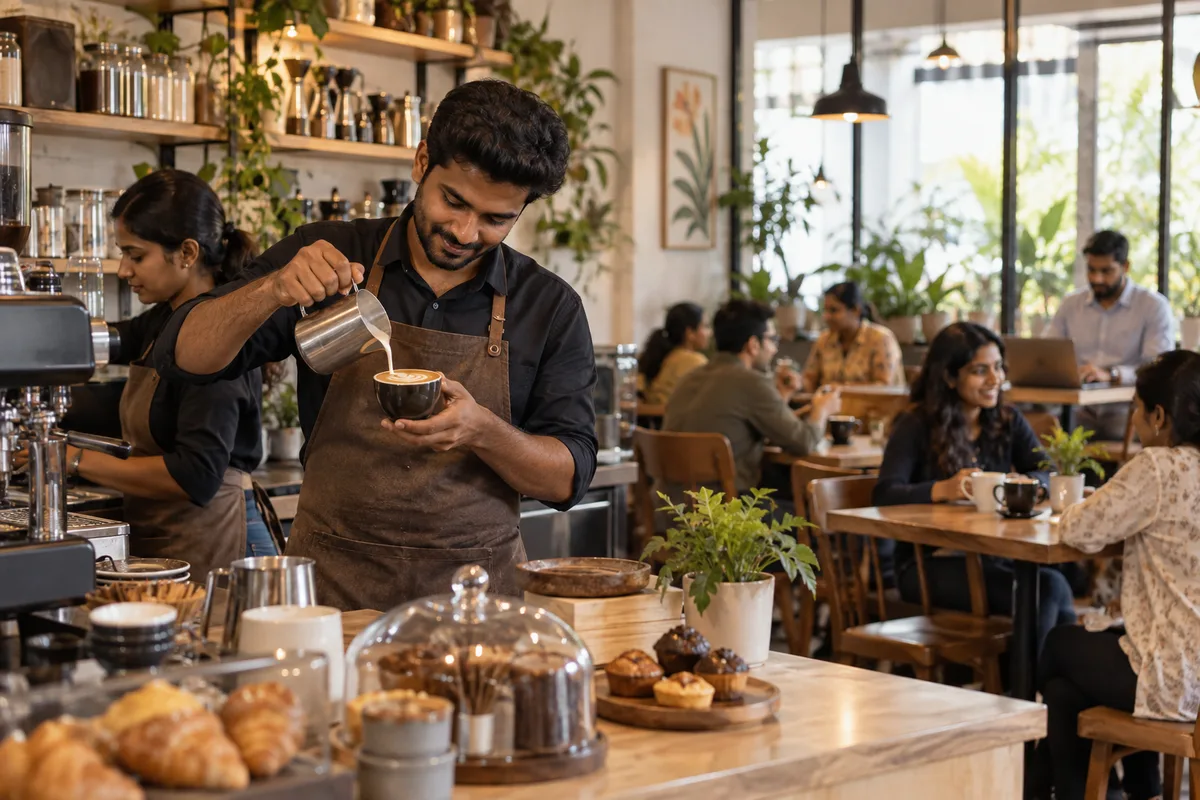
What sales training means
Sales training teaches a sales team a skill it does not yet have, such as handling a specific objection or running a proper site visit, usually through a structured session. GullySales runs these sessions around real objections and calls from your business rather than generic sales theory.
Also for cafes and coffee shops
- Sales enablement tools for cafes and coffee shops
- Sales management for cafes and coffee shops
- Sales process for cafes and coffee shops
- Branding for cafes and coffee shops
- Buyer journey for cafes and coffee shops
- Buyer personas for cafes and coffee shops
- Content marketing for cafes and coffee shops
- Digital marketing for cafes and coffee shops
Sales and marketing for cafes and coffee shops, the overview.
Last updated 5 Oct 2026. Rules for this trade differ by state and professional body, and they change. We describe restrictions in general terms, so check the current position with your own council or adviser before you publish anything.
For cafes and coffee shops
Where it usually goes wrong, and what we would do.
“One suggested add-on beats a memorised script”
Staff trained to suggest one relevant item, for example a pastry with a specific coffee, sell more than those reciting a fixed line to every customer.
“Describing a new drink well takes practice, not a poster”
A seasonal drink sells faster when staff can describe it confidently in one sentence than when customers are left to read a small chalkboard.
“Handling a large group calmly is a trainable skill”
New staff often struggle slightly when six people arrive with special requests, and a short session on this specific moment reduces mistakes.
What we do
What we deliver for cafes and coffee shops.
Every deliverable, what it covers for you, and the result it is there to produce. Nothing here is an extra.
Add-on suggestion training
A short session teaching staff to suggest one relevant pastry with a specific coffee, not a fixed script.
Result: Staff suggest naturally instead of reciting a line every customer notices.
New drink description drill
Practice describing a new seasonal drink in one confident sentence, so staff do not rely on a chalkboard.
Result: A new drink sells from the first day it is offered.
Large group handling session
A focused session on calmly managing a table of six or more with special requests.
Result: Staff handle a busy group booking without a visible scramble.
A first-week training slot for new hires
A short training session built into a new hire's first week rather than picked up on the job.
Result: New staff form good counter habits from day one.
How the result is measured
- Skill assessment scores
- Objection handling improvement
- Conversion rate after training
Recorded as a baseline before work starts, so every later report has an honest comparison.
Situations to practise
Six counter moments a cafe team should practise, and what good looks like.
- A customer orders a filter coffee and nothing else
- Suggest one pairing by name, once, such as the cardamom loaf, and then stop. Practise with the three items you most want to sell this season.
- A guest asks what is good here
- Give two choices in taste words, not just bestseller, and ask one question: sweet, strong or light. Practise describing each drink in one sentence.
- A group of eight walks in at peak hour
- Greet them, give an honest wait, offer the table that suits, and take the order through one person. Practise the seating decision on your actual floor plan.
- A birthday enquiry arrives on Instagram or WhatsApp
- Ask date, headcount, outside cake allowed or not, and budget. Reply with the set menu and any deposit in one message. Practise on a real chat.
- A complaint about cold coffee or a long wait
- Apologise once, replace the drink first, then explain. Practise at the till with a real order slip, so the apology comes before the excuse.
- A regular hands over a loyalty card
- Say the next reward when returning the card. Practise this as one friendly sentence, so the card gets used at the till and not left in a drawer.
Who it is for
This is written for these cafes and coffee shops.
- Independent single-outlet cafes
- Specialty coffee roasters with a cafe
- Cafes inside co-working spaces
- Bakery cafes
- Cafe chains opening new outlets
- Cloud kitchen and delivery-only cafes
- Cafes attached to bookstores or art spaces
- Late-night and student-area cafes
Not for
It is not the right fit if.
- You want a guaranteed Google ranking or a guaranteed number of leads. Nobody honest can promise either.
- You need enquiries by next week and have nobody to answer them.
- You want posts and reach reported, not enquiries and orders.
How it works
From your first message to the first report.
No open-ended retainer. Every step gives you something in writing.
First
Your brief
You tell us what you need in a few short steps: your business, what you want, where enquiries come from and how they are handled.
After the brief
A conversation and a written scope
We read it, then talk with whoever handles your enquiries. If you want our help, the scope, the fee and the reporting come in writing, and nothing starts before you have read them.
Before work starts
Baseline recorded
Enquiries by source, reply time, conversion and cost per order, written down so every later report has an honest comparison.
After the baseline
The first fix goes live
The fix we agreed to start with is put in place and measured against the baseline, whether that is reply time, a follow-up sequence, the page buyers land on or the handover between marketing and sales.
As agreed
Report against the baseline
What moved, what did not, and what changes next, in plain words. How often you get it is set in writing before work starts.
At renewal
Renew on the numbers
The term ends and you decide whether to continue from the results. The length is agreed in writing before anything starts.
How the sales training work runs
- 1
Assess current skill levels
We review the team's current strengths and gaps, by observing calls and talking to managers.
- 2
Build the curriculum
Content is developed around your product, customers and sales cycle.
- 3
Schedule and deliver
Sessions run on a set calendar, with practice built into each one.
- 4
Check understanding
Short knowledge checks confirm what has actually stuck.
- 5
Review and refresh
The curriculum is revisited periodically and refresher sessions are run for the wider team.
Why us
Why owners pick GullySales over an agency.
Marketing and sales, as one job
Most agencies stop at the enquiry. We also fix what happens after it: the reply, the follow-up, the quote and the CRM.
The person on the first call does the work
No account managers in between. You are never handed to someone you have not met.
A baseline before anything starts
Your numbers are written down on day one, so every later report compares against something honest.
The fee in writing, split three ways
Our time, your media spend and production on separate lines. You always see what goes to us.
No guarantees we cannot keep
The term is agreed in writing and never a default twelve months. We never promise a ranking or a lead count, because nobody controls those.
One office, and we say so
Nagarbhavi, Bengaluru. We work across India by call and WhatsApp and travel when a session needs to be in person.
#257, 3rd floor, Sri Nanjundeshwara Complex, Nagarbhavi 8th Block, Outer Ring Road. How we work.
Your brief
Tell us what you need, and we will read it before we call.
Eight short steps about your business, what you want and who decides. Most questions are a tap, and you can skip any you would rather answer on the call.
FAQ
Questions owners ask before they call.
Not here? More answers, or ask on WhatsApp.
How long does training take?
Does this need to be repeated for new hires?
Our staff are part-time students who leave. Is training worth it?
Should staff say the same line to every customer?
How soon would we see more customers?
Do we need to advertise?
How much does it cost?
How long is the contract?
Who will actually do the work?
What do you need from us?
From the blog
Further reading for cafes and coffee shops.
 7 min read · 21 Sept 2026How to design metro and transit advertisingA commuter stands still in front of a platform panel for four minutes and passes the same one twice a day for a month. Design for the sixth viewing.
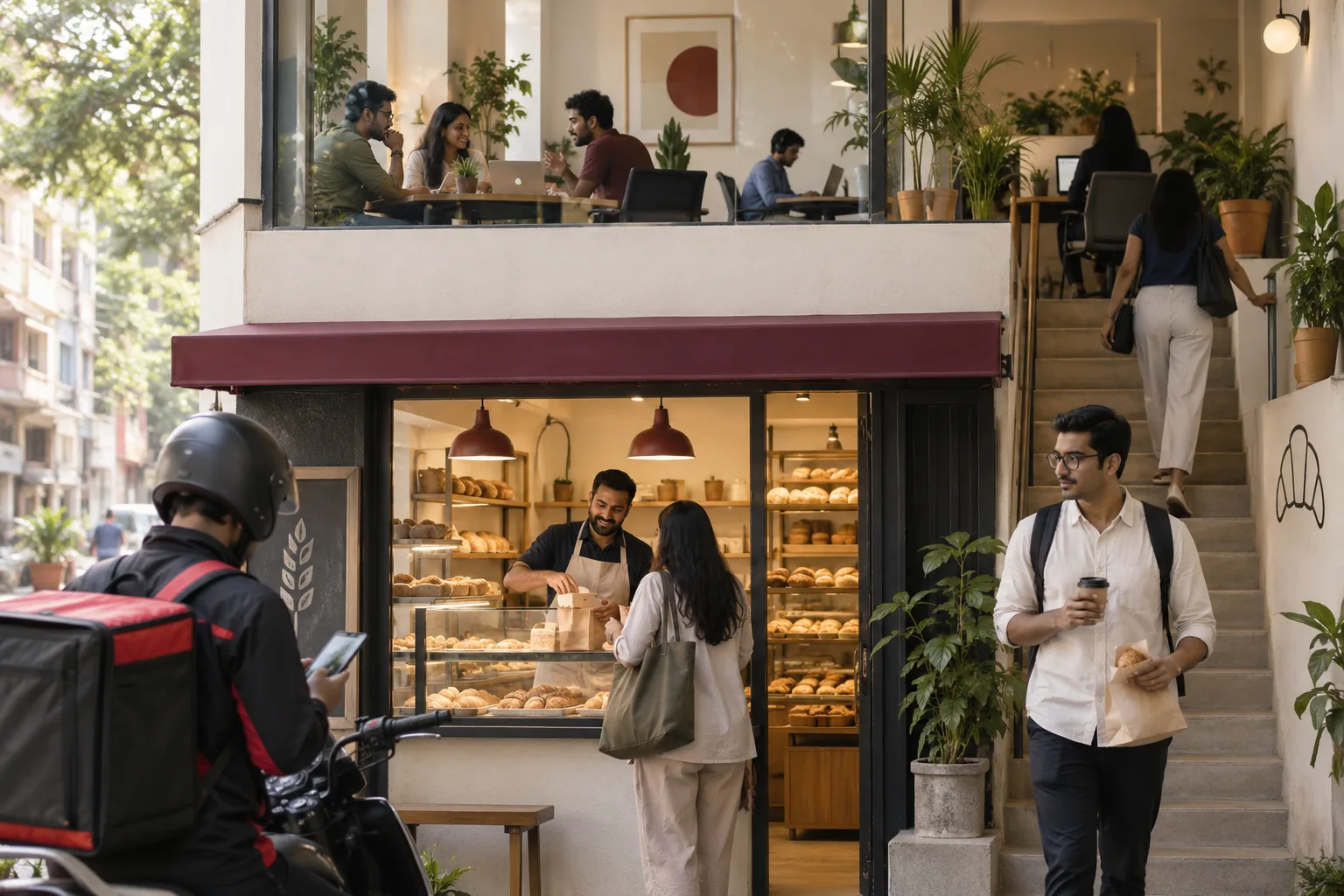 7 min read · 21 Sept 2026How to advertise to startup employeesThere is no tech park to buy. A forty person company sits above a bakery, so the audience is the neighbourhood, the delivery app and the coworking floor.
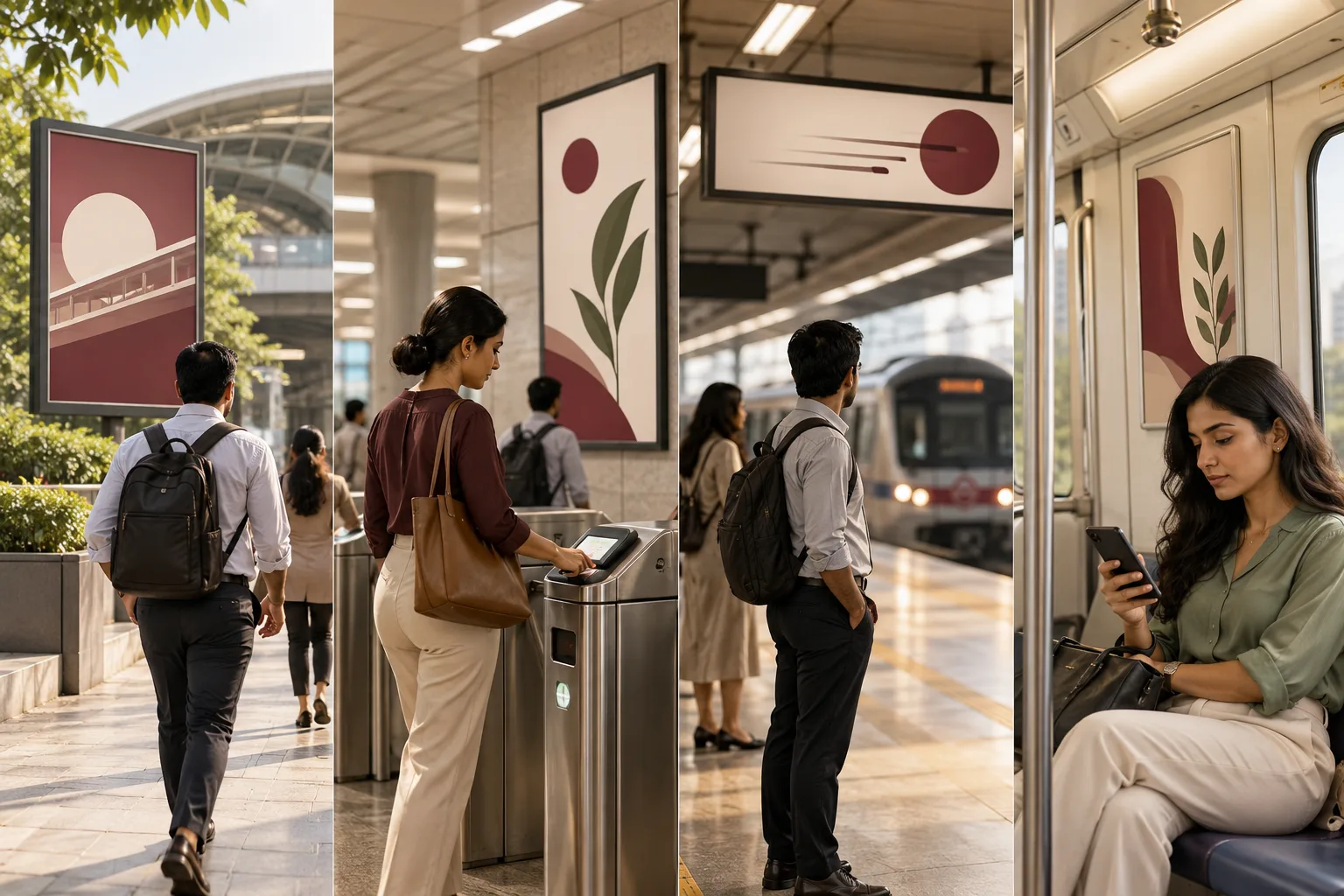 7 min read · 21 Sept 2026How to advertise to metro commutersA commuter is a mode, not a person. The journey has four still moments and each one takes different creative, which is why one design across a station never performs.
More for cafes and coffee shops
Everything else we would do for you.
Closest to this: sales craft
Also for cafes and coffee shops
- Branding for cafes and coffee shops
- Buyer journey for cafes and coffee shops
- Buyer personas for cafes and coffee shops
- Content marketing for cafes and coffee shops
- Digital marketing for cafes and coffee shops
- Email marketing for cafes and coffee shops
- Influencer marketing for cafes and coffee shops
- Lead generation for cafes and coffee shops
- Loyalty programmes for cafes and coffee shops
- PPC ads for cafes and coffee shops
- Public relations for cafes and coffee shops
- Reputation management for cafes and coffee shops
- SEO for cafes and coffee shops
- Social media for cafes and coffee shops
- Video marketing for cafes and coffee shops
- Website for cafes and coffee shops
- Follow-up systems for cafes and coffee shops
- CRM for cafes and coffee shops
- Review generation for cafes and coffee shops
- Customer retention for cafes and coffee shops
- Referral marketing for cafes and coffee shops
- WhatsApp marketing for cafes and coffee shops
Or start from the overview: sales and marketing for cafes and coffee shops.
Your next practical step
Tell us what you are trying to grow, and we will read it before we call.
Eight short steps, mostly taps. Skip anything you would rather answer on the call.