Cafes and coffee shops · Referral and loyalty campaign creative design
Draw a loyalty card that a regular keeps in the wallet.
Referral and loyalty campaign creative design for a cafe is the artwork for the stamp card, the member pass, the bring-a-friend invitation and the reminders that a regular sees at the counter and on the phone. GullySales draws each piece from the reward rules you have written, then hands over files your printer and your phone screen can both use.
Scope, fee, reporting and term are agreed in writing after we have read your brief and spoken to you.
What referral and loyalty campaign creative design means
Referral and loyalty campaign creative design is the artwork that shows customers how to introduce a friend or collect rewards: the invitation, the card, the share graphic and the reminder. GullySales draws each piece from your written programme rules and hands over production files, so staff and customers see one offer.
Also for cafes and coffee shops
- Loyalty programmes for cafes and coffee shops
- Customer retention for cafes and coffee shops
- Referral marketing for cafes and coffee shops
- Branding for cafes and coffee shops
- Buyer journey for cafes and coffee shops
- Buyer personas for cafes and coffee shops
- Content marketing for cafes and coffee shops
- Digital marketing for cafes and coffee shops
Sales and marketing for cafes and coffee shops, the overview.
Last updated 14 Nov 2026. Rules for this trade differ by state and professional body, and they change. We describe restrictions in general terms, so check the current position with your own council or adviser before you publish anything.
For cafes and coffee shops
Where it usually goes wrong, and what we would do.
“A stamp card lives or dies in the wallet”
A card that is too tall, too glossy to stamp or too crowded to read gets left in a coat pocket. The card has to fit among bank cards, survive a wet cup ring and show the next reward at a glance. Its size, its stock and the space for each stamp are design decisions, and they decide whether the barista reaches for it or the customer forgets it.
“The friend gets a card that makes no sense alone”
A regular hands a colleague an invitation. If it only says refer a friend, the colleague has no idea what is on offer, where the cafe is or what to do at the counter. The invitation must stand alone: it names the cafe, shows what the new visitor receives and tells the barista what to look for, using one line the staff can read in a second.
“The counter, the cup and the phone show different offers”
A cafe collects its promotions from several hands: a sleeve printed last season, a chalkboard, a post and a bill. When the stamp rule changes, each of them keeps showing the old one. Designing the whole set from one rules sheet makes the cup, the board and the screen say the same thing, and a customer never has to ask which is true.
“Rewards in a food trade carry rules of their own”
Food and drink advertising is regulated, and rules differ by country and by profession. Cash payments for referrals are a risk, and wording about what a drink does for the body is not for the card. We draw the reward you have chosen, leave claims out, and mark every sentence of offer wording as yours to confirm with your own adviser.
What we do
What we deliver for cafes and coffee shops.
The work available for this need. We agree the deliverables and responsibilities for your engagement in writing.
Design direction sheet for the programme
One page that fixes the card shape, the colours, the stamp or point motif, the voice of the short lines and the place of the logo. Every later piece is drawn from it, so the stamp card, the pass and the invitation look like members of one family at the counter.
Result: One sheet is signed by your approver, and later pieces are checked against it.
Loyalty stamp card or member pass
A card sized for the wallet with clear stamp spaces and the reward shown at the end, or a phone pass drawn for the screen size your platform uses. The spaces are large enough for the barista's stamp and the reward line states the rule exactly as you wrote it.
Result: The printed or on-screen pass shows the reward rule word for word as in your written scheme.
Bring-a-friend invitation
A small card, slipped into a takeaway bag or handed over at the counter, that tells the newcomer what the cafe is, what the first visit brings and who to show it to. It reads without any explanation from the regular who passed it on.
Result: A person who has never visited can say what the invitation offers after one look.
Share graphic and message frame
A square and a tall version for sharing on a phone, with a clean space for the invitation text and the cafe's name. It suits the way a regular sends a link to a colleague on a chat app and avoids the look of a mass advertisement.
Result: The graphic displays correctly in the chat and the story formats you listed.
Counter, sleeve and bill pieces
A table tent or counter stand, a cup sleeve line and a bill footer that tell the customer about the scheme at the moment they pay or wait. They repeat the same offer in the same words so that the cafe never contradicts itself between the cup and the counter.
Result: The counter, the sleeve and the bill show the same offer and the same reward line.
Reward and reminder artwork
The artwork for the moment a reward is earned and for the nudge when a card is close to complete: a stamp-near-full message, a reward-ready pass and a gentle reminder frame. Each one keeps to the design sheet and avoids pressure wording.
Result: Each reminder piece is checked against the written rules before it goes to print or to the phone.
How the result is measured
- Referral invitations handed out against introductions logged
- Cards or passes issued against cards used at the next purchase
- Staff questions about how the programme works
Recorded as a baseline before work starts, so every later report has an honest comparison.
Who it is for
This is written for these cafes and coffee shops.
- Independent single-outlet cafes
- Specialty coffee roasters with a cafe
- Cafes inside co-working spaces
- Bakery cafes
- Cafe chains opening new outlets
- Cloud kitchen and delivery-only cafes
- Cafes attached to bookstores or art spaces
- Late-night and student-area cafes
Before you decide
Agree the work. Know how to judge it.
Referral and loyalty campaign creative design for cafes and coffee shops: use these checks to prepare, choose the scope, and review what changes.
Bring the right evidence
Review repeat orders, inactive customers, and reasons for leaving. Separate a normal buying interval from a customer who stopped because of an unresolved problem.
Make the scope clear
Choose the customer group and the reason to contact them. Agree how complaints, renewal decisions, and additional offers are handled, including when a sales message is inappropriate.
Check the work in use
Track the response through to a retained or repeat order, with discounts and service costs visible. Record why the customer returned rather than crediting every repeat purchase to the campaign.
Know when to change course
If customers leave because delivery is unreliable, fix that before offering a loyalty reward. Repeated promotions can hide the cause without improving the experience.
These are discussion points, not a fixed package. GullySales confirms the deliverables, responsibilities, fee, and term in writing after reading your brief and speaking with you.
Before we start
What to have ready before the work starts.
The records, access and decisions this work needs from cafes and coffee shops. Anything missing is noted in the written scope, with who will supply it.
- The reward rules in writing
- A short page that states what a stamp is, how many earn the reward and what a friend receives. Artwork can only repeat the rule it is given. When the rule is spoken but not written, each piece ends up with a slightly different version.
- Your logo, colours and cup artwork
- The identity files and photographs of your current cup, sleeve and board. They let the card sit comfortably among the pieces already in the room. Without them the programme looks like a template from outside the cafe.
- A list of where the scheme will appear
- Counter, takeaway bag, cup sleeve, bill, phone, shop window. Each place needs its own size and its own file. A short list now saves redrawing a poster for a window nobody mentioned.
- One person who approves the wording
- A named person at the cafe who signs off every offer line, because they alone know what the till and the staff can honour. When approval is shared loosely, three people change three words and the card promises something the counter cannot do.
- Guidance from your adviser on food rules
- Whatever your own adviser or local authority has said about food advertising, reward wording and referral incentives. Rules differ by country and by profession. We draw within what you give us and do not decide the regulated points ourselves.
How it works
How the referral and loyalty campaign creative design work runs
The work itself, in order. How an engagement starts, from your brief to a written scope, is set out on our method page.
- 1
Reading your written reward rules
We start from the page where you set out who earns what, how many visits count and what the friend receives. If it does not exist, we stop and point you to the programme planning first, because artwork drawn before the rule is set has to be redrawn when the rule changes.
- 2
Collecting what customers see now
We look at the card, sleeve, board and post your customers already meet, photographed in the cafe. We note which look is worth keeping and where two pieces disagree. The cafe may already have a loved cup design that the new card should echo, and we draw the programme beside it.
- 3
Setting the card size and the stamp style
We choose the card dimensions, the stock your printer offers, the stamp spaces and how a stamp or hole punch will land on the paper. We try the card in a wallet and under a barista's hand. You agree the direction sheet before any other piece is drawn.
- 4
Drawing the card and the invitation
The loyalty card and the friend's invitation come first, because everything else repeats their look. We draw both with your real offer wording in place, not placeholder lines, so you read what a customer will read. You mark changes on the proofs and we revise them once at a time.
- 5
Drawing the counter and screen pieces
We then draw the table tent, the sleeve line, the bill footer and the phone graphics from the same sheet. Each is checked against the printer's and the platform's current rules. Wording about drinks, health and discounts stays as you have approved it, and we flag any line we think needs your adviser.
- 6
Reading the pieces against your starting figures
Before launch, you note how many cards are in circulation, how many returning customers you can count and how many new faces arrive at the counter in a typical week of your choosing. Afterwards, we read the same figures beside what changed. Other offers running at the cafe are written next to the result.
Where this fits
Three pieces of sales work, in this order.
This work sits inside sales process design, at stage 7, after the sale. The audit comes before it, and sales management keeps it running.
Step 1
Sales audit
Find where deals are being lost and what to fix first.
Start here if you cannot say where orders are lost.
Step 2 · you are here
Sales process design
One written way to sell, from first enquiry to repeat order.
Start here if every salesperson sells differently.
Step 3
Sales management
A target, a review routine and someone who owns the number.
Start here if the team has targets and no routine.
FAQ
Questions owners ask before they call.
Not here? More answers, or ask on WhatsApp.
Do you decide what the reward should be?
Should the card be paper or a phone pass?
Can we pay customers who bring a friend?
Can the card mention what the drink does for health?
Do you write the words on the invitation?
What if we change the stamp rule later?
How much does it cost?
How long is the contract?
How soon will we see results?
Who will actually do the work?
From the blog
Further reading for cafes and coffee shops.
 7 min read · 21 Sept 2026How to design metro and transit advertisingA commuter stands still in front of a platform panel for four minutes and passes the same one twice a day for a month. Design for the sixth viewing.
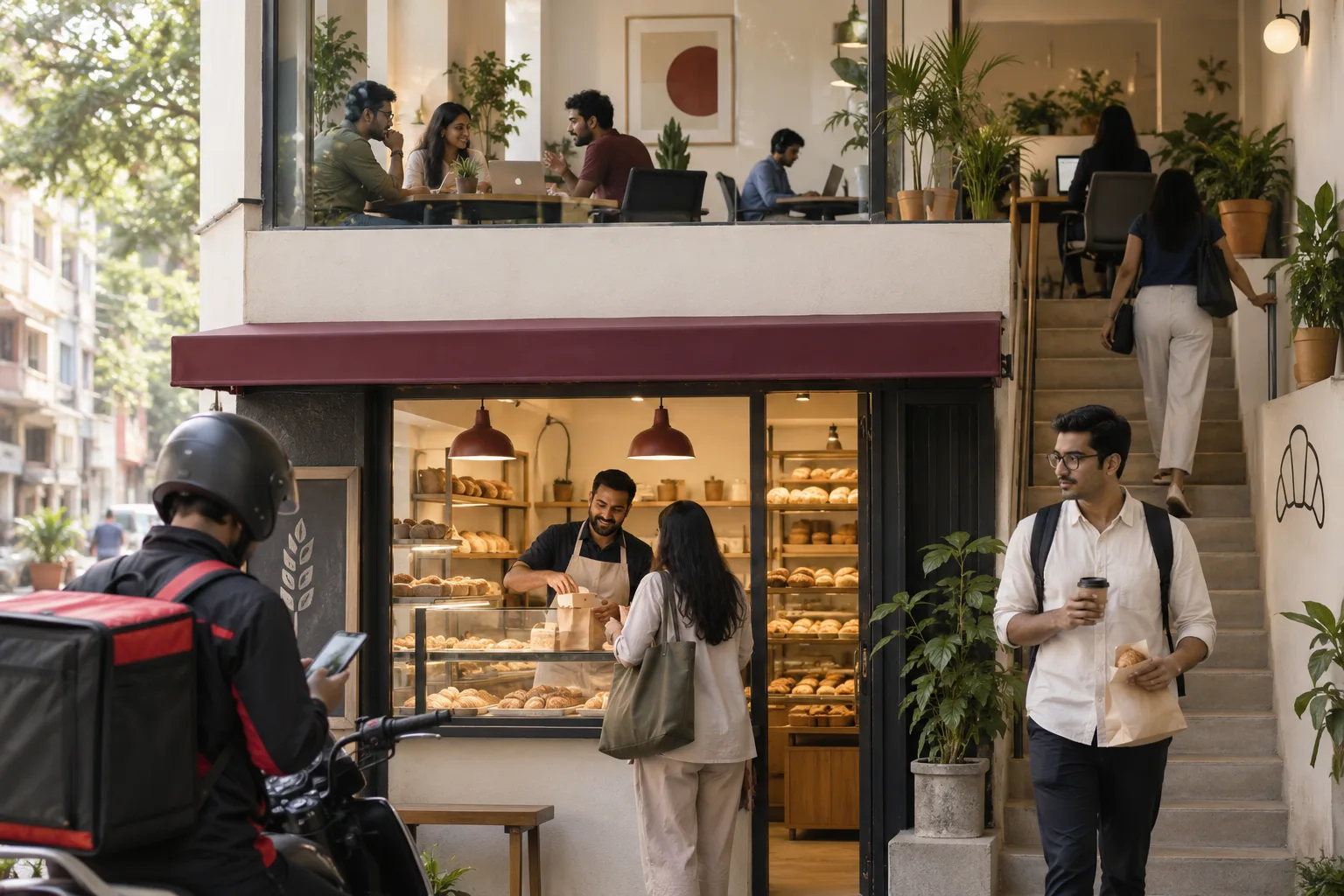 7 min read · 21 Sept 2026How to advertise to startup employeesThere is no tech park to buy. A forty person company sits above a bakery, so the audience is the neighbourhood, the delivery app and the coworking floor.
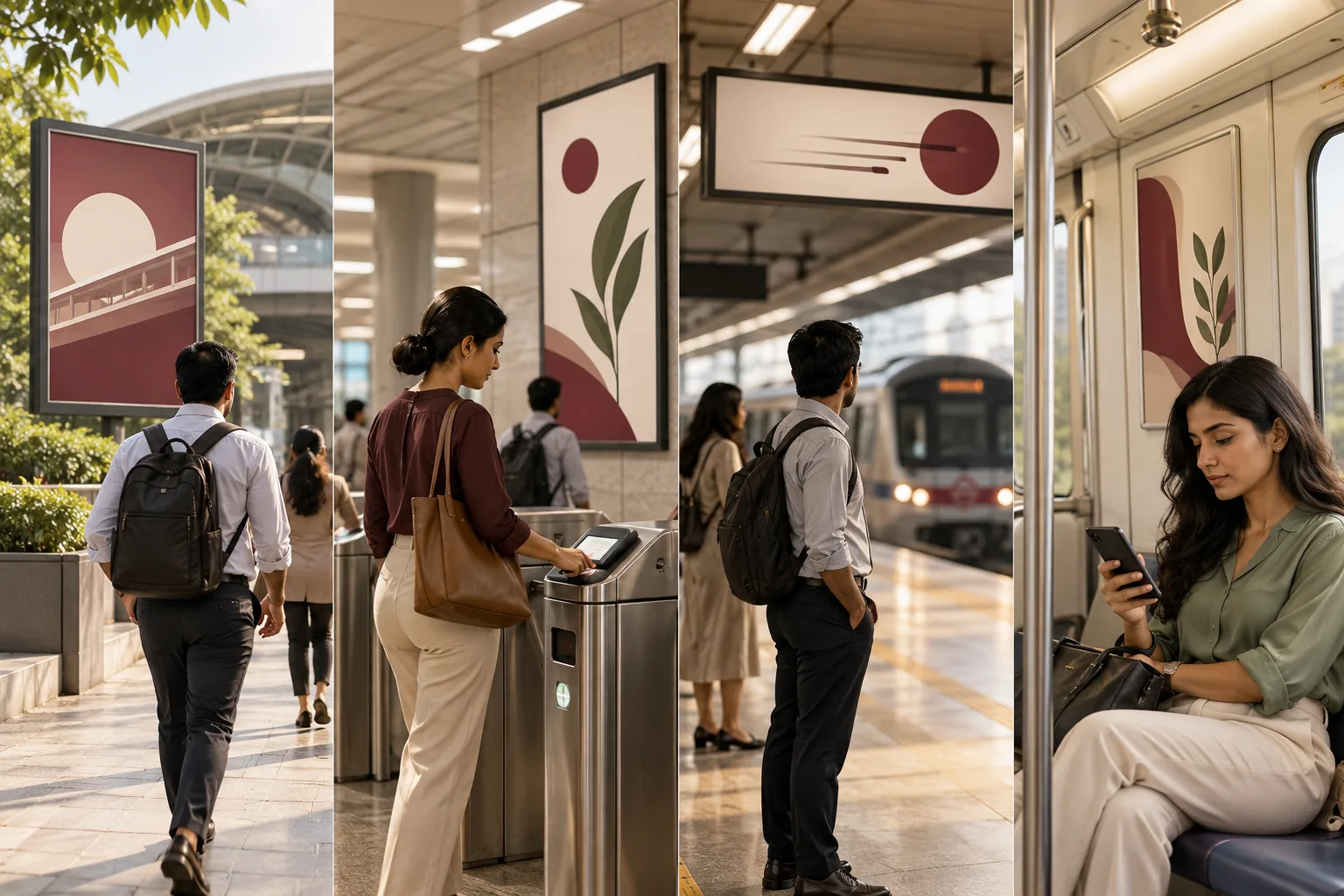 7 min read · 21 Sept 2026How to advertise to metro commutersA commuter is a mode, not a person. The journey has four still moments, each needing different creative, so one design across a station fails.
More for cafes and coffee shops
Related work to consider.
Closest to this: customers after the sale
Also for cafes and coffee shops
Or start from the overview: sales and marketing for cafes and coffee shops.
Your next practical step
Tell us what you are trying to grow, and we will read it before we call.
Eight short steps, mostly taps. Skip anything you would rather answer on the call.