Cafes and coffee shops · Sales enablement
Give the counter staff a script for the catering question they get weekly.
Sales enablement for a cafe means simple tools, such as a catering price sheet or a script for a group booking enquiry. These help counter staff handle questions confidently without checking with a manager every time. GullySales builds these from the questions your staff already field.
Scope, fee, reporting and term are agreed in writing after we have read your brief and spoken to you.
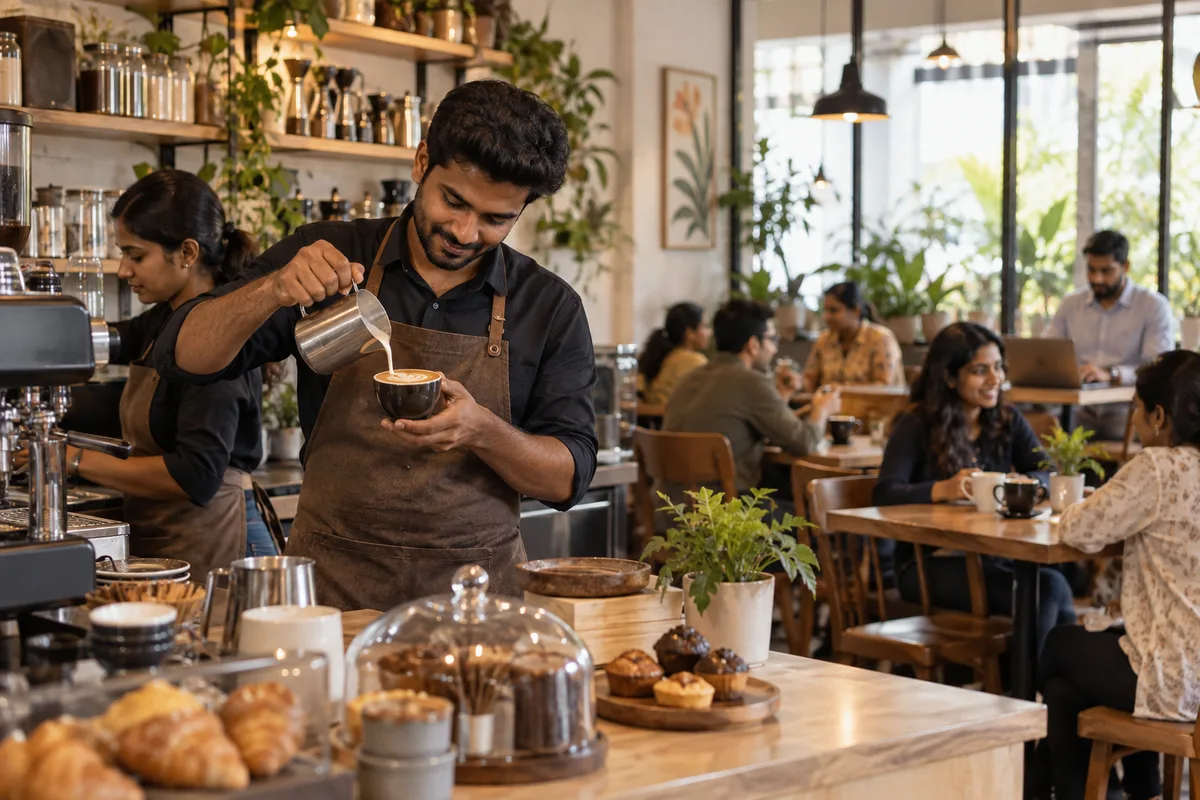
What sales enablement means
Sales enablement is giving a sales team the tools it needs to sell, such as scripts, brochures, pricing sheets and a working CRM, rather than teaching a skill. GullySales builds and keeps these tools current so a salesperson is never explaining a product from memory alone.
Also for cafes and coffee shops
- Sales management for cafes and coffee shops
- Sales process for cafes and coffee shops
- Sales training for cafes and coffee shops
- Branding for cafes and coffee shops
- Buyer journey for cafes and coffee shops
- Buyer personas for cafes and coffee shops
- Content marketing for cafes and coffee shops
- Digital marketing for cafes and coffee shops
Sales and marketing for cafes and coffee shops, the overview.
Last updated 8 Nov 2026. Rules for this trade differ by state and professional body, and they change. We describe restrictions in general terms, so check the current position with your own council or adviser before you publish anything.
For cafes and coffee shops
Where it usually goes wrong, and what we would do.
“A one-page catering sheet answers the question on the spot”
Staff fielding an office catering enquiry without a ready price and quantity sheet either guess or ask the customer to wait, and both lose the order.
“A group booking script fills the gap between yes and confirmed”
A short, consistent set of questions to ask, about numbers, timing and seating, turns a vague enquiry into a confirmed booking faster.
“New staff need this on day one, not month three”
A written reference for common enquiries shortens how long a new hire takes before they can handle a booking call confidently.
What we do
What we deliver for cafes and coffee shops.
Every deliverable, what it covers for you, and the result it is there to produce. Nothing here is an extra.
Catering price and quantity sheet
A one-page reference with pricing and quantities for common office and party catering orders.
Result: Staff answer a catering question on the spot instead of asking the customer to wait.
Group booking enquiry script
A short set of questions for staff to ask about numbers, timing and seating on any booking call.
Result: A vague enquiry turns into a confirmed booking faster.
New-staff reference pack
A written reference covering common enquiries, ready for a new hire's first day at the counter.
Result: A new team member handles a booking call confidently within the first week.
Menu and allergen quick reference
A laminated or digital sheet answering common dietary and allergen questions without checking with the kitchen each time.
Result: Staff answer a dietary question on the spot, keeping the customer at the counter.
How the result is measured
- Tools in active use
- Time to onboard a new salesperson
- Consistency of pitch across the team
Recorded as a baseline before work starts, so every later report has an honest comparison.
What counter staff carry
Keep a small kit at the counter that answers the catering and booking questions.
- Catering price sheet
- Price per box or per head for tea, snacks and bakes, the minimum order, how much notice the kitchen needs and the delivery area. The owner sets prices; the manager updates the sheet.
- Group booking form
- Date, headcount, time slot, advance and cancellation terms for a birthday table or an office meeting. Staff fill it at the counter and hand it to the manager, so nothing is left to memory.
- Allergen and milk card
- Which items contain nuts, gluten, dairy or egg, and which plant milks you stock. The head barista rewrites it whenever the menu or a supplier changes.
- Tasting box for office managers
- A few small portions of the bestsellers with a menu card, kept ready for a visit to a nearby office. Whoever runs the kitchen replaces it before the bakes go stale.
- Work-from-cafe rules card
- Seat hours, power points, wifi and the minimum spend for a laptop afternoon, written once so every shift answers the same way. The owner revises it when the slow hours shift.
Who it is for
This is written for these cafes and coffee shops.
- Independent single-outlet cafes
- Specialty coffee roasters with a cafe
- Cafes inside co-working spaces
- Bakery cafes
- Cafe chains opening new outlets
- Cloud kitchen and delivery-only cafes
- Cafes attached to bookstores or art spaces
- Late-night and student-area cafes
Not for
It is not the right fit if.
- The cafe has no catering menu or group price yet, so a script would have nothing to quote.
- The counter staff keep changing, and a pack nobody is trained on would not be read.
- Group bookings are rare in the cafe, and the counter does not need a tool for them.
How it works
How the sales enablement work runs
The work itself, in order. How an engagement starts, from your brief to a written scope, is set out on our method page.
- 1
Audit what exists
We collect the material from managers, reps, shared drives and chat groups, and mark what is current, outdated or duplicated.
- 2
Organise the library
Assets are grouped by stage of the sale and by buyer type, named by one rule and placed where reps already work.
- 3
Fill the gaps
We interview your best reps and managers and build the missing battle cards, answers and guides.
- 4
Build the onboarding pathway
New hires get a clear order of material to cover, linked to your sales stages and the tools they will use.
- 5
Assign owners and keep it current
Each asset gets an owner and a review rule, and triggers such as a price change or a new competitor prompt an update.
Where this fits
Three pieces of sales work, in this order.
This work sits inside sales management. A target, a review routine and someone who owns the number.
Step 1
Sales audit
Find where deals are being lost and what to fix first.
Start here if you cannot say where orders are lost.
Step 2
Sales process design
One written way to sell, from first enquiry to repeat order.
Start here if every salesperson sells differently.
Step 3 · you are here
Sales management
A target, a review routine and someone who owns the number.
Start here if the team has targets and no routine.
FAQ
Questions owners ask before they call.
Not here? More answers, or ask on WhatsApp.
Who builds and updates these materials?
Does this only help larger cafes?
Can we send the catering sheet to customers on WhatsApp?
What happens to the sheet when milk, bean or bakery costs rise?
How long is the contract?
How soon will we see results?
Who will actually do the work?
What do you need from us?
What if we are not happy with the work?
From the blog
Further reading for cafes and coffee shops.
 7 min read · 21 Sept 2026How to design metro and transit advertisingA commuter stands still in front of a platform panel for four minutes and passes the same one twice a day for a month. Design for the sixth viewing.
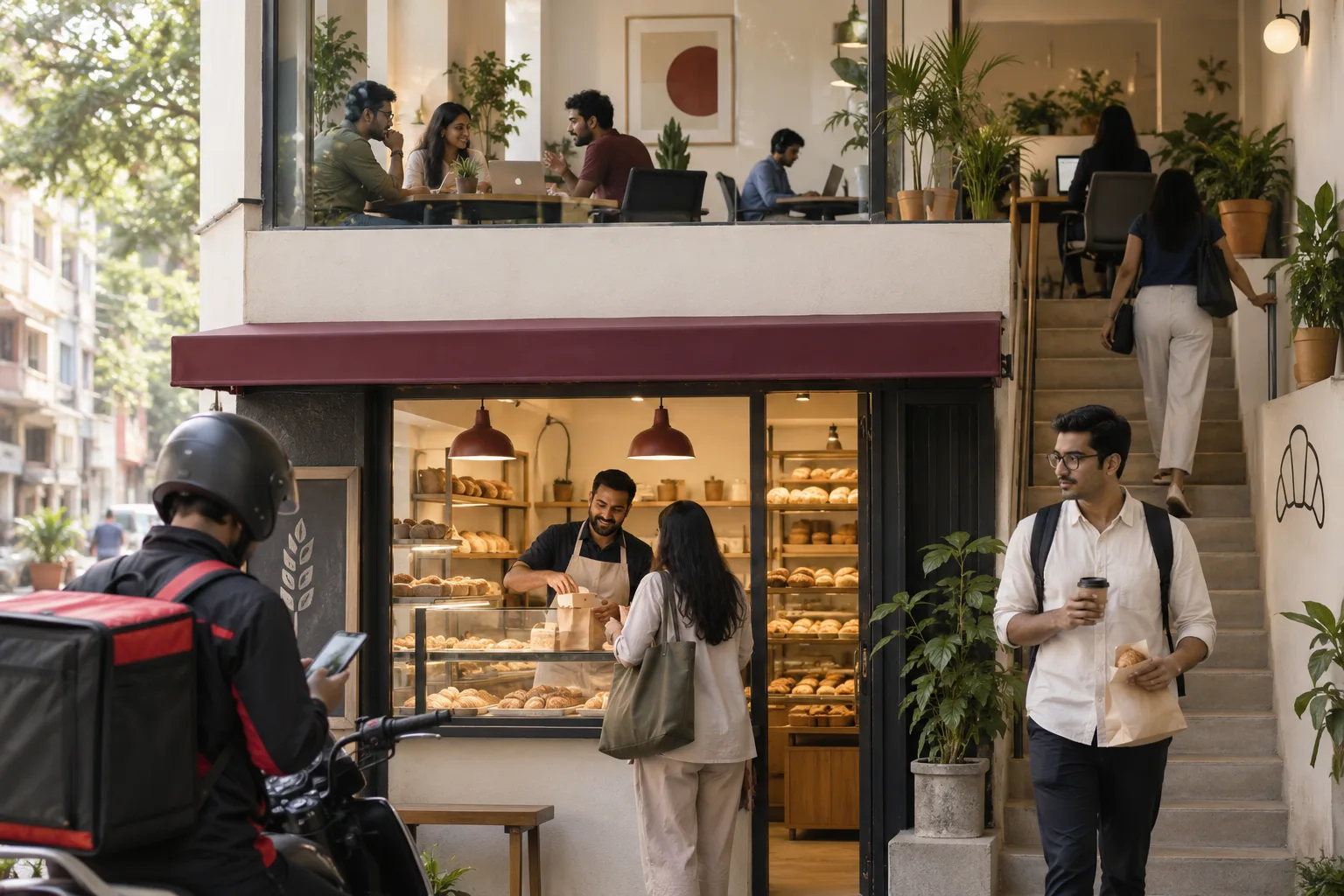 7 min read · 21 Sept 2026How to advertise to startup employeesThere is no tech park to buy. A forty person company sits above a bakery, so the audience is the neighbourhood, the delivery app and the coworking floor.
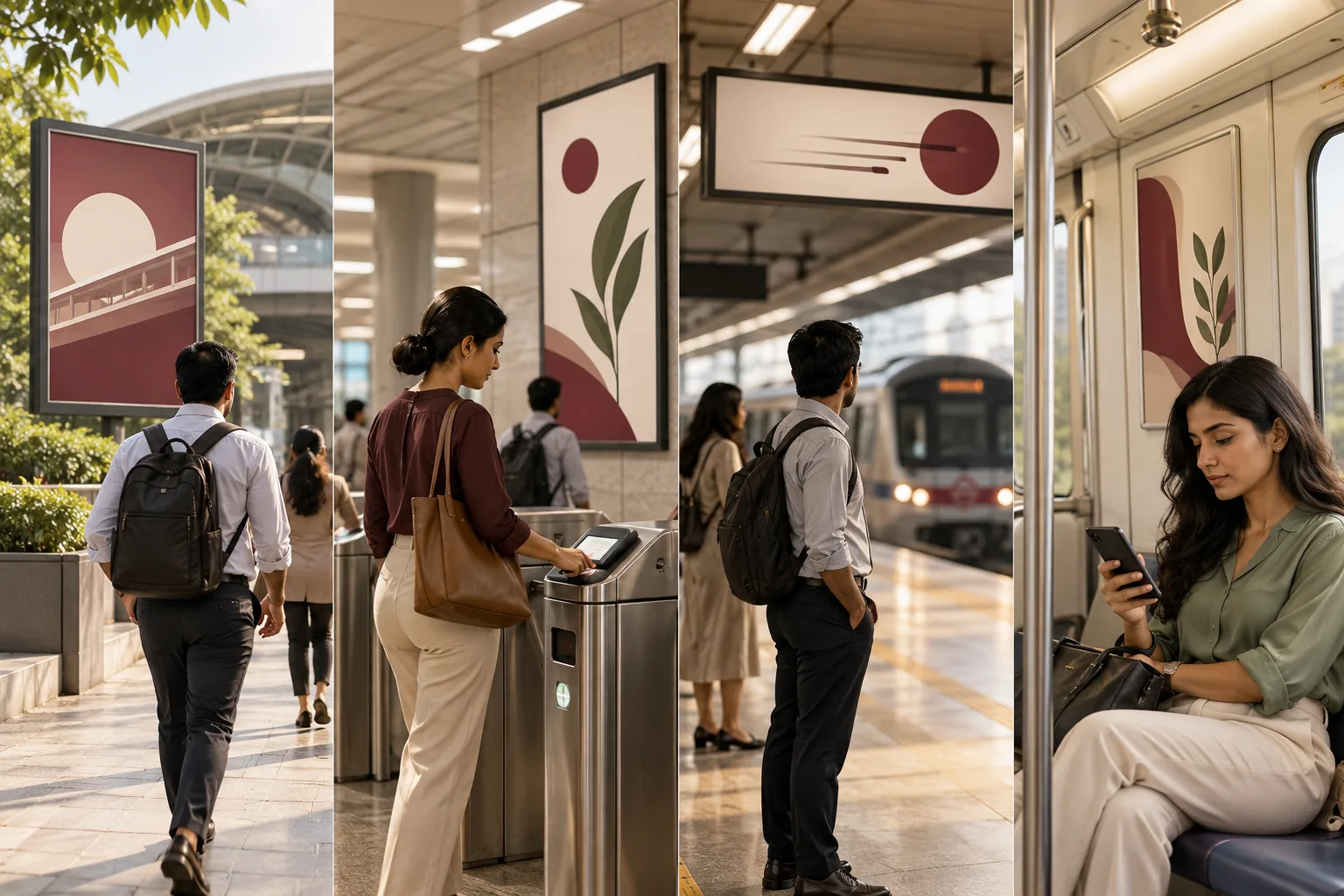 7 min read · 21 Sept 2026How to advertise to metro commutersA commuter is a mode, not a person. The journey has four still moments and each one takes different creative, which is why one design across a station never performs.
More for cafes and coffee shops
Everything else we would do for you.
Closest to this: sales craft
Also for cafes and coffee shops
Or start from the overview: sales and marketing for cafes and coffee shops.
Your next practical step
Tell us what you are trying to grow, and we will read it before we call.
Eight short steps, mostly taps. Skip anything you would rather answer on the call.