Cafes and coffee shops · Sales process
Confirm more catering orders while the customer is still comparing cafés.
A sales process for a cafe is the fixed set of steps for a booking, catering or corporate enquiry. It covers who answers, what is asked, and how a quote is followed up before the customer books elsewhere. GullySales writes this with your team and gives you the record to see where enquiries stall.
Scope, fee, reporting and term are agreed in writing after we have read your brief and spoken to you.
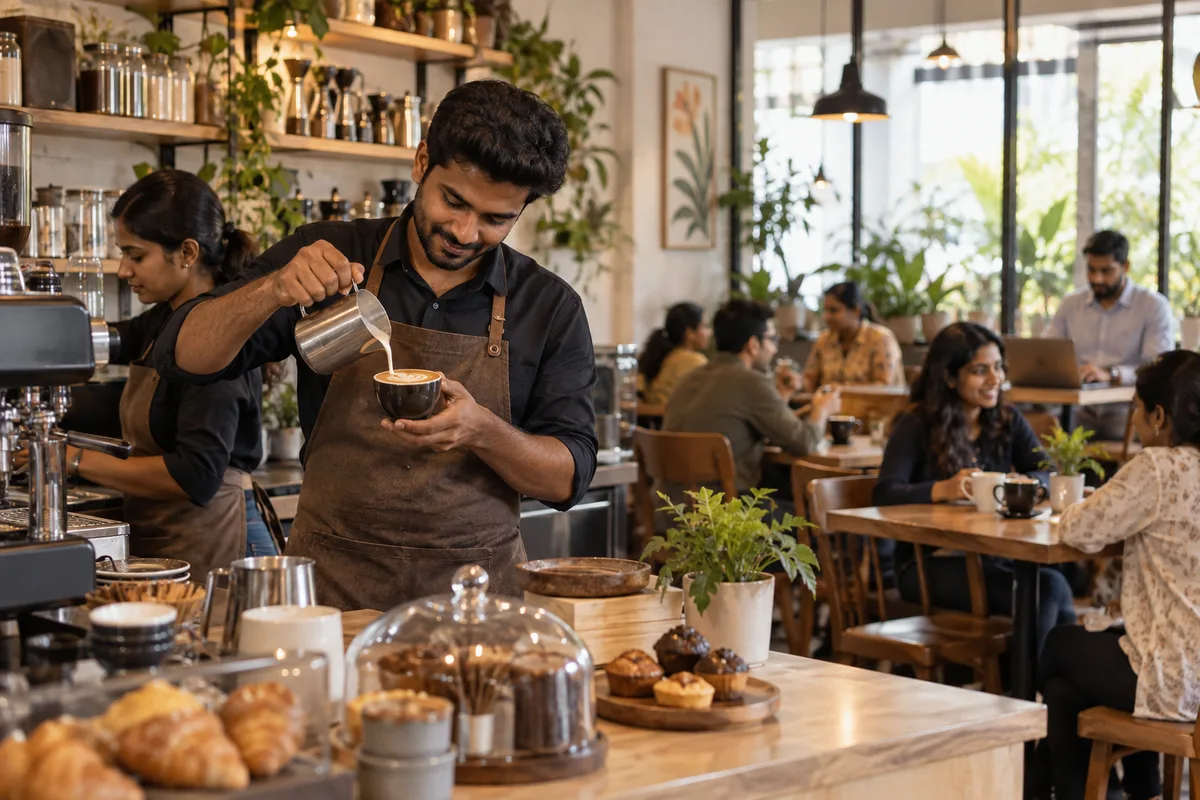
What sales process means
A sales process is the fixed sequence of steps, such as enquiry, site visit, quote and order, that every deal is expected to pass through in the same order. GullySales writes this sequence down for your business and checks that every salesperson actually follows it.
Also for cafes and coffee shops
- Sales enablement tools for cafes and coffee shops
- Sales management for cafes and coffee shops
- Sales training for cafes and coffee shops
- Branding for cafes and coffee shops
- Buyer journey for cafes and coffee shops
- Buyer personas for cafes and coffee shops
- Content marketing for cafes and coffee shops
- Digital marketing for cafes and coffee shops
Sales and marketing for cafes and coffee shops, the overview.
Last updated 8 Nov 2026. Rules for this trade differ by state and professional body, and they change. We describe restrictions in general terms, so check the current position with your own council or adviser before you publish anything.
For cafes and coffee shops
Where it usually goes wrong, and what we would do.
“The catering quote needs a same-day follow-up”
An office manager comparing two or three cafes for a team event books whichever replies with a clear quote first, not whichever has the better coffee.
“A group booking script prevents an under-set table”
Asking for numbers, timing and any dietary needs upfront avoids a table set for six when eight arrive on a busy Saturday.
“No-shows need a same-day recovery step”
A quick message to a no-show group, offering to rebook, recovers some of the booking rather than writing it off entirely.
What we do
What we deliver for cafes and coffee shops.
Every deliverable, what it covers for you, and the result it is there to produce. Nothing here is an extra.
Same-day catering quote step
A written step so every catering enquiry gets a clear quote back the same day it arrives.
Result: The office manager comparing cafes hears from you before the others.
Group booking intake checklist
A fixed set of questions on numbers, timing and dietary needs, asked before a table is confirmed.
Result: The table set matches who actually shows up on a busy Saturday.
A no-show recovery message
A short, ready message sent the same day to a group that did not show, offering to rebook.
Result: A missed booking gets one more honest chance to become a visit.
A checklist attached to the booking phone
A short, saved checklist your team follows for every enquiry, needing no separate system.
Result: The same steps happen whoever on the team answers the enquiry.
How the result is measured
- Deals following the process
- Time spent at each step
- Drop-off rate by step
Recorded as a baseline before work starts, so every later report has an honest comparison.
Steps of a sale
Handle a party booking or an office catering order the same way whoever picks up the phone.
- The enquiry, on any channel
- Ask the date, headcount, occasion and budget per head before sending a menu. Write it into the bookings diary with the platform it came from, whether Instagram, WhatsApp or a call.
- Space and house rules
- Confirm which area of the cafe they get, whether they can bring their own cake, and any decor they plan. Note any request you turned down, as it often explains a later cancellation.
- The quote on WhatsApp
- Send a set menu or a per-head price with what it includes, the GST line and any minimum spend. Record the time it went out and who sent it.
- Advance to hold the date
- Hold a Saturday table or a catering date only against an advance by UPI. Record the amount and the payment reference against the booking.
- Day-before confirmation
- Message the organiser to confirm final numbers, arrival time and any allergies or Jain food needs. Update the kitchen sheet so prep matches the confirmed count.
- After the event
- Thank the organiser and ask whether the office would want the same order again. Note the feedback and the next likely occasion, such as a team lunch, against their name.
Who it is for
This is written for these cafes and coffee shops.
- Independent single-outlet cafes
- Specialty coffee roasters with a cafe
- Cafes inside co-working spaces
- Bakery cafes
- Cafe chains opening new outlets
- Cloud kitchen and delivery-only cafes
- Cafes attached to bookstores or art spaces
- Late-night and student-area cafes
Not for
It is not the right fit if.
- The cafe has not decided what it will cater or book, and a fixed process would fix a menu that is not ready.
- One person takes every enquiry and enjoys doing it their own way, and a written process would be ignored.
- Catering and bookings are a small part of the cafe's income, and the counter has other priorities.
How it works
How the sales process work runs
The work itself, in order. How an engagement starts, from your brief to a written scope, is set out on our method page.
- 1
Study current deal flow
We trace how deals actually move today, comparing across reps and outcomes.
- 2
Define the stages
Clear stages and criteria are designed to match how deals genuinely progress and close.
- 3
Configure the CRM
The process is built into your CRM so it is enforced structurally, not just documented.
- 4
Train the team
Reps are trained on the new process and why each stage exists.
- 5
Review adoption
We check after rollout whether the process is being followed and adjust where it is not.
Where this fits
Three pieces of sales work, in this order.
This work sits inside sales process design, at stage 1, prospecting and lead generation. The audit comes before it, and sales management keeps it running.
Step 1
Sales audit
Find where deals are being lost and what to fix first.
Start here if you cannot say where orders are lost.
Step 2 · you are here
Sales process design
One written way to sell, from first enquiry to repeat order.
Start here if every salesperson sells differently.
Step 3
Sales management
A target, a review routine and someone who owns the number.
Start here if the team has targets and no routine.
FAQ
Questions owners ask before they call.
Not here? More answers, or ask on WhatsApp.
Can a small team run a formal process without extra staff?
Does this apply to delivery orders too?
Should we take a large group booking without an advance?
Who should handle catering enquiries, the counter staff or the owner?
How much does it cost?
How long is the contract?
How soon will we see results?
Who will actually do the work?
What do you need from us?
What if we are not happy with the work?
From the blog
Further reading for cafes and coffee shops.
 7 min read · 21 Sept 2026How to design metro and transit advertisingA commuter stands still in front of a platform panel for four minutes and passes the same one twice a day for a month. Design for the sixth viewing.
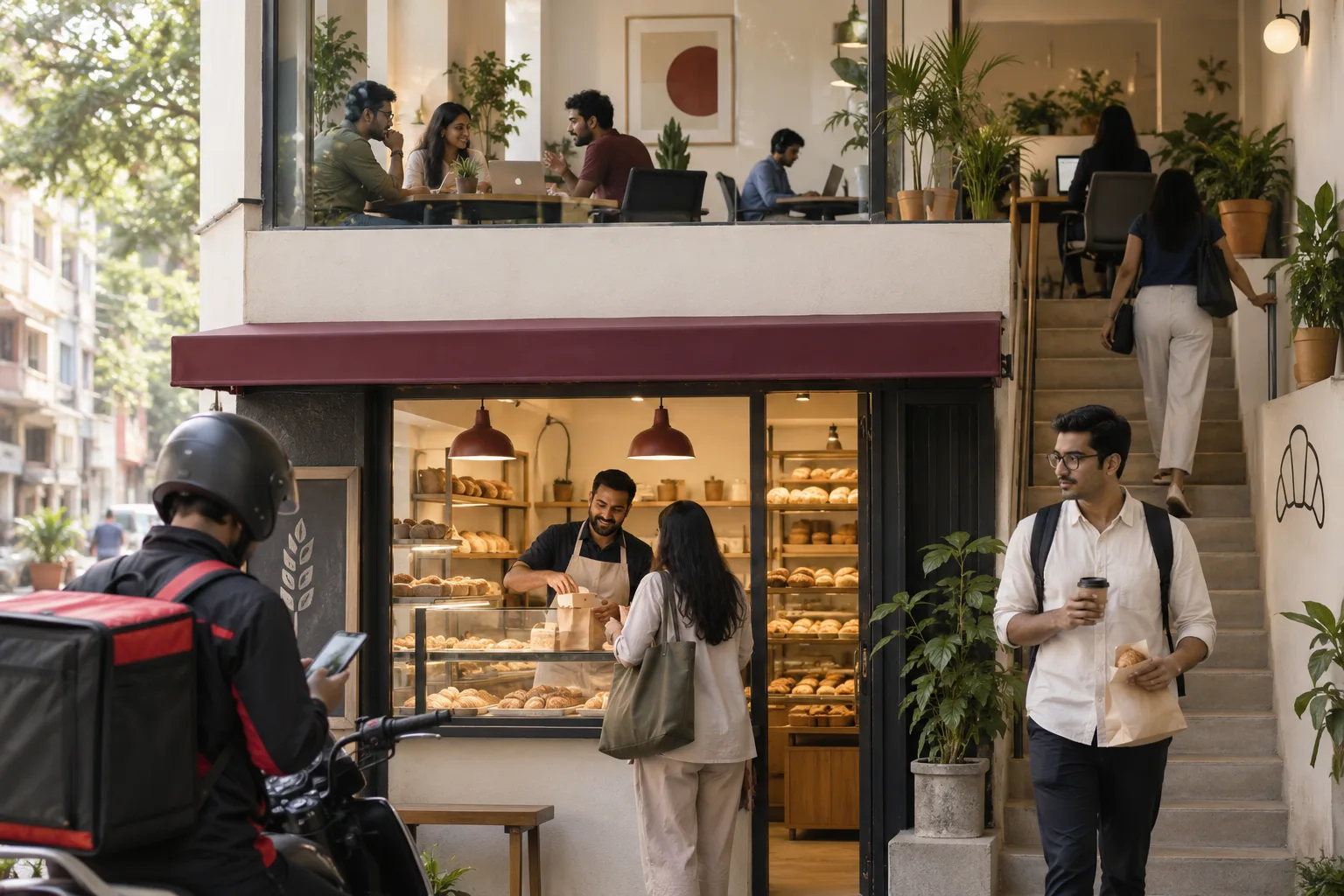 7 min read · 21 Sept 2026How to advertise to startup employeesThere is no tech park to buy. A forty person company sits above a bakery, so the audience is the neighbourhood, the delivery app and the coworking floor.
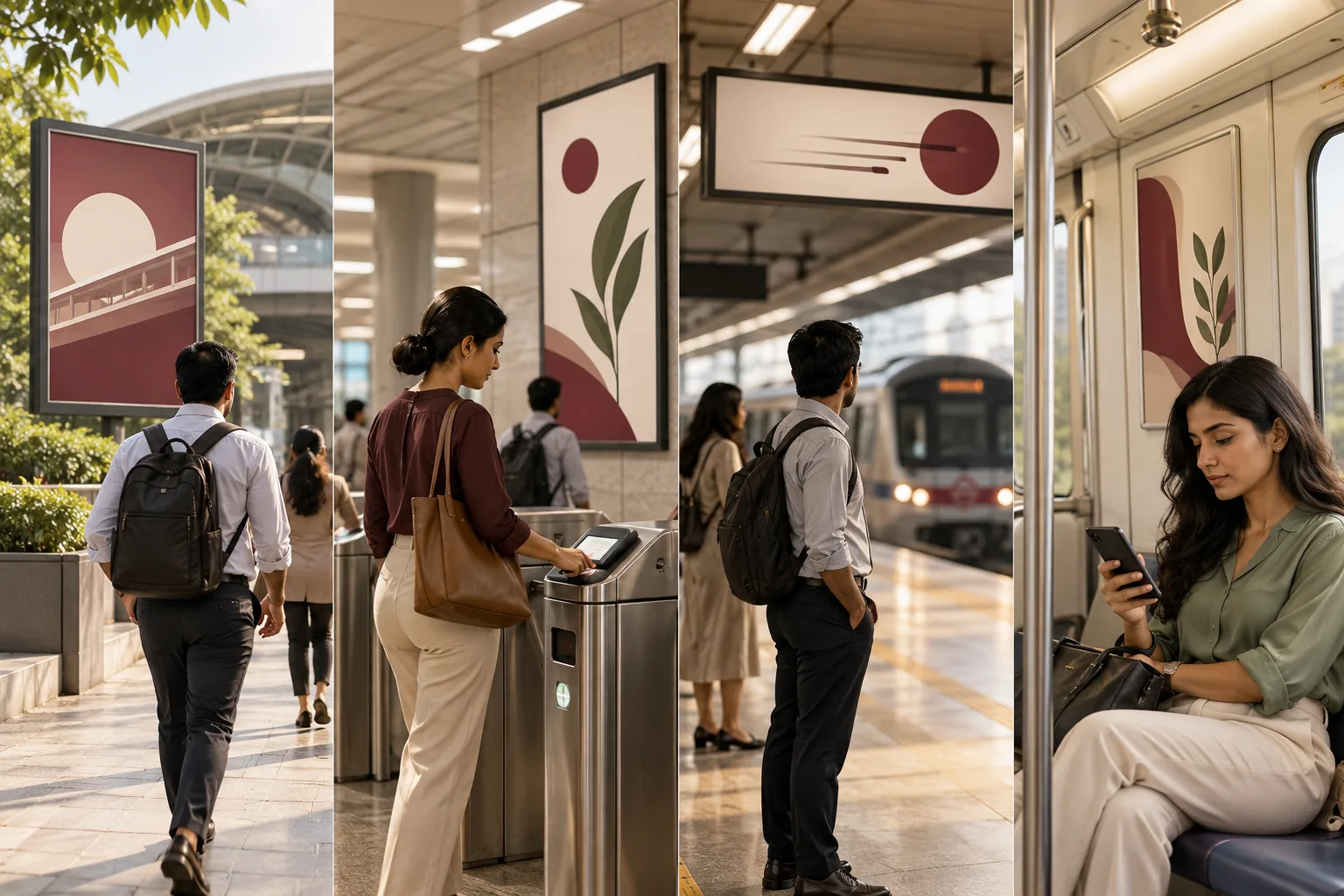 7 min read · 21 Sept 2026How to advertise to metro commutersA commuter is a mode, not a person. The journey has four still moments and each one takes different creative, which is why one design across a station never performs.
More for cafes and coffee shops
Everything else we would do for you.
Closest to this: sales craft
Also for cafes and coffee shops
Or start from the overview: sales and marketing for cafes and coffee shops.
Your next practical step
Tell us what you are trying to grow, and we will read it before we call.
Eight short steps, mostly taps. Skip anything you would rather answer on the call.