Restaurants · Cinema advertising
The hall empties hungry, two hundred metres from your door.
Cinema advertising for a restaurant buys on-screen time in the reel at the screens your diners already visit, usually inside the mall you sit in or the one beside it. GullySales reads the release calendar before booking, builds the slide around one dish and a code that opens your own booking, then counts the scans by week.
Scope, fee, reporting and term are agreed in writing after we have read your brief and spoken to you.
What cinema advertising means
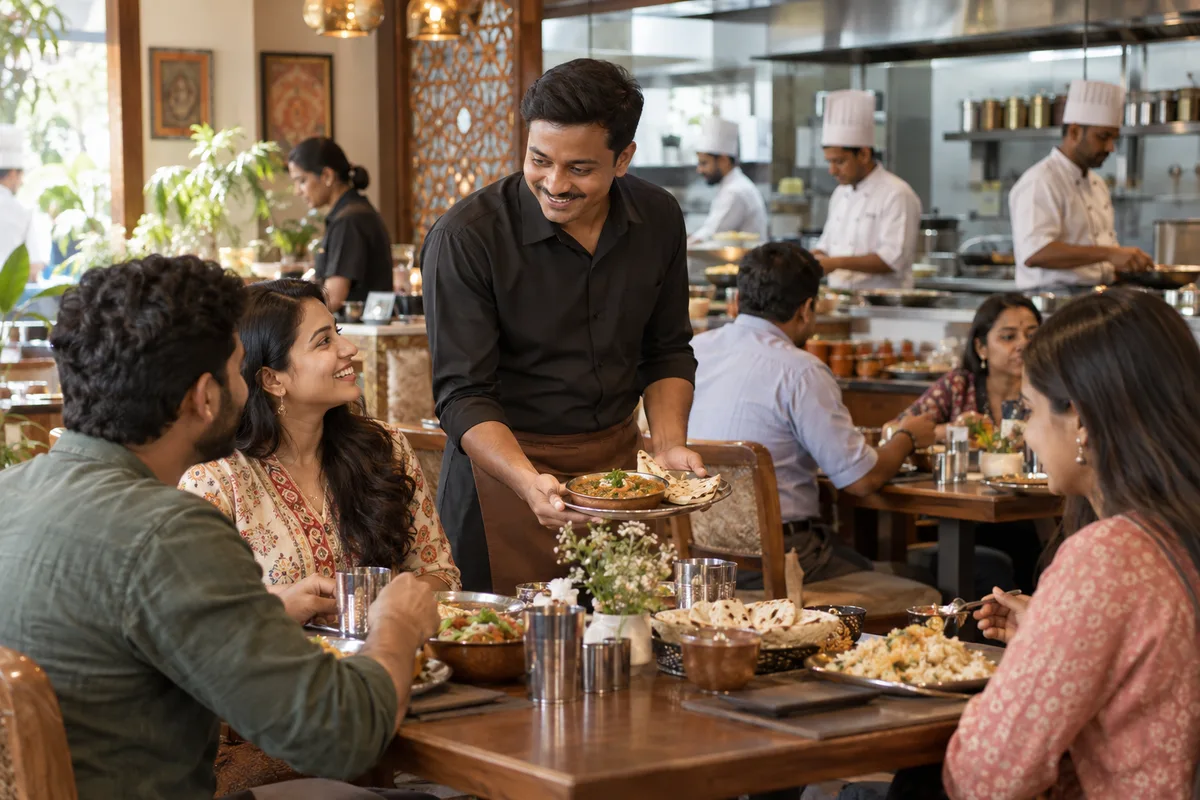
Cinema advertising is a slide or a film before the show at screens near your business, plus the lobby around them. GullySales chooses the screens by catchment rather than by chain, and puts a QR code on the slide so the spend can be judged.
Last updated 5 Oct 2026. Rules for this trade differ by state and professional body, and they change. We describe restrictions in general terms, so check the current position with your own council or adviser before you publish anything.
For restaurants
Where it usually goes wrong, and what we would do.
“You are advertising to people who will choose dinner within the hour”
Nothing else puts your name in front of a hungry group already standing inside your catchment. So the slide carries the floor, the direction and the closing time rather than the story of your kitchen.
“The interval is when a hall thinks about food”
People walk in late and miss the early reel. At the interval the hall is full and heading for the counter, which is the one moment your advertisement does not have to compete for attention.
“What released decides who is sitting there”
A family film on a holiday weekend fills the seats with the table of six you want on Sunday afternoon. A late-night thriller fills them with two people who will order in, so read the calendar before the weeks are fixed.
“Send the scan to your own booking, not to the app”
A code opening your Swiggy page hands the customer, the commission and the phone number straight back to the app. Point it at your WhatsApp or a table booking and the guest is yours to keep.
What we do
What we deliver for restaurants.
Every deliverable, what it covers for you, and the result it is there to produce. Nothing here is an extra.
Screen list built around the outlet
The specific properties and screens within the distance a diner will walk or drive after a show, including the ones inside your own mall, instead of a package across the city.
Result: You buy halls your tables can actually be reached from.
Release calendar read before the weeks are booked
What is scheduled on those screens in the weeks quoted, so a full house and a fourth-week matinee are not paid for at the same rate.
Result: The weeks you buy are the weeks the hall is full.
A slide built for a four-storey screen
One dish photographed large, the outlet's floor and mall named, and a code big enough to scan from the back row of a dark hall.
Result: The slide reads from the last seat in the row.
A code that opens your own booking route
A QR pointing to your WhatsApp or a reservation page used in this reel alone, never to a delivery app listing.
Result: Every scan belongs to you, and it is counted.
Floor staff briefed before week one
The captains and the billing desk told what the slide offers and what the code is, with a line on the bill to record it when a guest mentions the cinema.
Result: A guest walking in from the show is recognised at the table.
Scans and covers reported week by week
Scans, redemptions and covers on show nights read against the baseline taken before the campaign and against what was playing those weeks.
Result: You can tell a good release week from a good advertisement.
How the result is measured
- Screens and weeks run
- Scans by screen
- Enquiries traced to the cinema route
Recorded as a baseline before work starts, so every later report has an honest comparison.
Questions to ask the cinema
Put these six questions to the cinema's sales contact before you pay for a week of screen time.
- Which screens and which shows?
- Ask for the list of screens carrying the reel in your weeks and the show times. Evening shows fill your tables, while a morning matinee may not.
- Where in the reel does the slide play?
- Find out whether it plays before the film, at the interval or both, and how often per show. The interval is the moment that matters for a restaurant.
- Slide format and file deadline
- Get the size, file type, length in seconds and the last date to submit, in writing. A late file is the commonest way to lose a booked week.
- Is anyone else in your category on the reel?
- Ask whether a competing restaurant or the mall's own food court operator holds the same reel, and whether the property protects your category.
- What proof of display will you receive?
- Ask what record you get after the run: screens, dates and number of plays. Nothing you are given will say who was in the seats.
- What if the screens change?
- Ask what happens when a screen closes, a film is withdrawn or a week is lost, and whether the weeks are repaid or replaced.
Who it is for
This is written for these restaurants.
- Family restaurants and multi-cuisine dining
- South Indian vegetarian restaurants and darshinis
- Biryani, kebab and non-vegetarian specialists
- Regional cuisine restaurants
- Casual dining and bar restaurants
- Quick service restaurants and food courts
- Cloud kitchens and delivery-only brands
- Office canteens and food service operators
- Multi-outlet restaurant groups
Not for
It is not the right fit if.
- You want a guaranteed Google ranking or a guaranteed number of leads. Nobody honest can promise either.
- You need enquiries by next week and have nobody to answer them.
- You want posts and reach reported, not enquiries and orders.
How it works
From your first message to the first report.
No open-ended retainer. Every step gives you something in writing.
First
Your brief
You tell us what you need in a few short steps: your business, what you want, where enquiries come from and how they are handled.
After the brief
A conversation and a written scope
We read it, then talk with whoever handles your enquiries. If you want our help, the scope, the fee and the reporting come in writing, and nothing starts before you have read them.
Before work starts
Baseline recorded
Enquiries by source, reply time, conversion and cost per order, written down so every later report has an honest comparison.
After the baseline
The first fix goes live
The fix we agreed to start with is put in place and measured against the baseline, whether that is reply time, a follow-up sequence, the page buyers land on or the handover between marketing and sales.
As agreed
Report against the baseline
What moved, what did not, and what changes next, in plain words. How often you get it is set in writing before work starts.
At renewal
Renew on the numbers
The term ends and you decide whether to continue from the results. The length is agreed in writing before anything starts.
How the cinema advertising work runs
- 1
Fix the catchment
We start from how far your customer travels to reach you, which for a clinic or a restaurant is short and decides the screen list on its own.
- 2
Read the release weeks
We check what is scheduled in the campaign window and time the buy to the weeks with something worth watching in the hall.
- 3
Build the creative
The slide or the film is made for a screen four storeys high and cut to the duration being bought.
- 4
Coordinate the booking
We place the buy with the cinema or its appointed agency and confirm the screens, the position and the delivery date in writing.
- 5
Count what came back
Scans, code use and calls are read against the weeks and the screens, and the next round drops the screens that gave nothing.
Why us
Why owners pick GullySales over an agency.
Marketing and sales, as one job
Most agencies stop at the enquiry. We also fix what happens after it: the reply, the follow-up, the quote and the CRM.
The person on the first call does the work
No account managers in between. You are never handed to someone you have not met.
A baseline before anything starts
Your numbers are written down on day one, so every later report compares against something honest.
The fee in writing, split three ways
Our time, your media spend and production on separate lines. You always see what goes to us.
No guarantees we cannot keep
The term is agreed in writing and never a default twelve months. We never promise a ranking or a lead count, because nobody controls those.
One office, and we say so
Nagarbhavi, Bengaluru. We work across India by call and WhatsApp and travel when a session needs to be in person.
#257, 3rd floor, Sri Nanjundeshwara Complex, Nagarbhavi 8th Block, Outer Ring Road. How we work.
Your brief
Tell us what you need, and we will read it before we call.
Eight short steps about your business, what you want and who decides. Most questions are a tap, and you can skip any you would rather answer on the call.
FAQ
Questions owners ask before they call.
Not here? More answers, or ask on WhatsApp.
The mall has its own food court. Will they take our advertisement?
Should the code go to Swiggy or to us?
Should the slide offer something to scan for?
Is a cinema slide worth it for a restaurant that is not near a mall?
Should we leave Swiggy and Zomato?
Are paid food blogger visits worth it?
How much does it cost?
How long is the contract?
How soon will we see results?
Who will actually do the work?
From the blog
Further reading for restaurants.
 6 min read · 21 Sept 2026Radio advertising vs social media advertising: where should your money go?Radio reaches a driver who cannot click. Social reaches a thumb that can. One buys a name people remember, the other buys the enquiry itself.
 7 min read · 21 Sept 2026Local audience targeting strategyThree different people are local to you: the one who lives near you, the one who works near you, and the one searching near you. The settings that reach each are different.
 6 min read · 21 Sept 2026Influencer marketing vs social media advertising: which one should you pay for?An ad is a message you control, shown to people you choose. A creator post is a recommendation you do not control, shown to people who chose the creator.
More for restaurants
Everything else we would do for you.
Closest to this: paid and media
Also for restaurants
Or start from the overview: sales and marketing for restaurants.
Your next practical step
Tell us what you are trying to grow, and we will read it before we call.
Eight short steps, mostly taps. Skip anything you would rather answer on the call.