Restaurants · Content marketing
Answer the parking, jain and cake questions before the call comes.
Content marketing for a restaurant is the writing that gets you chosen and stops the same six questions arriving by phone. GullySales plans the party menus, the festival pages and the dish stories from what your own callers ask, and writes them in your words.
Scope, fee, reporting and term are agreed in writing after we have read your brief and spoken to you.
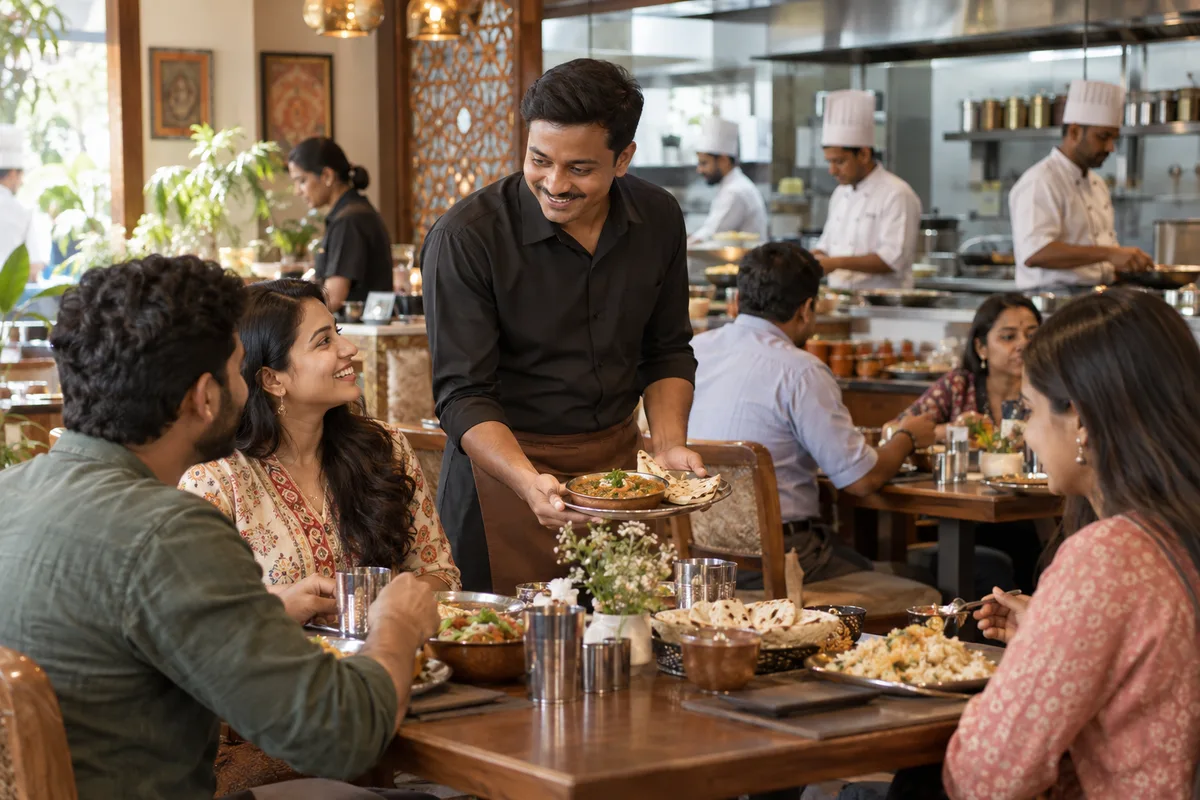
What content marketing means
Content marketing is writing articles, guides and pages that answer the questions buyers search before they are ready to enquire. This makes your business visible and trusted before the first call. GullySales plans this content from the first conversation onward, choosing topics that match real search demand rather than guesses.
Last updated 5 Oct 2026. Rules for this trade differ by state and professional body, and they change. We describe restrictions in general terms, so check the current position with your own council or adviser before you publish anything.
For restaurants
Where it usually goes wrong, and what we would do.
“Six questions make up most of your calls”
Parking, jain food, whether a cake may be brought in, the price for two, the private area, and whether you take bookings at all.
“A party menu is a document, not a conversation”
An organiser needs something she can forward to fourteen people. A phone call cannot be forwarded.
“Your festival menu needs a page a week early”
Onam sadya and Ramzan iftar tables are booked days ahead, so a reel posted on the morning itself is a reel posted too late.
What we do
What we deliver for restaurants.
Every deliverable, what it covers for you, and the result it is there to produce. Nothing here is an extra.
A party and group booking page that can be forwarded
Set menus at two or three price points, the seating, the private area, the advance and the cake policy, on one page and as one image for WhatsApp.
Result: The organiser can circulate it without ringing back.
A page for each festival menu, published a week ahead
Ugadi, Onam, Ramzan, Diwali or Christmas, whichever suits your kitchen and your neighbourhood, written with the dates, the price and how to book.
Result: Bookings arrive before the day rather than on it.
The six questions answered on the site
Parking, jain and vegetarian options, the cake policy, the price for two, the private area and whether you take bookings, written where a guest looks.
Result: The phone rings for bookings instead of directions.
A short story behind the dishes you want ordered
Where the recipe came from, who cooks it and what makes it different, written the way your chef says it rather than as marketing.
Result: A guest has a reason to try what you make best.
An office ordering page an admin team can find
The lunch combos, bulk ordering terms, the delivery window and the GST invoice details published as a page somebody searching for bulk lunch orders lands on.
Result: A team lunch gets arranged without three phone calls.
A record of what people keep asking
The questions the floor and the phone keep getting, written down and turned into the next page instead of being answered again.
Result: The site improves where it is actually costing you.
How the result is measured
- Pages published
- Organic traffic
- Enquiries from content pages
Recorded as a baseline before work starts, so every later report has an honest comparison.
Questions buyers ask first
What a diner wants to know before choosing a restaurant, and the page that answers it.
- Is it vegetarian or Jain, and what about allergies?
- A dietary page. List the pure vegetarian dishes, whether oil or the tawa is shared, the Jain and no-onion-no-garlic options, and what you cannot promise. Have the head cook check it.
- Is there parking, and can my parents manage the stairs?
- An access page with photographs of the entrance. Cover parking, lift or stairs, wheelchair access, seating for elders, high chairs and the nearest landmark.
- What does a meal for two cost, and is service charge extra?
- A menu page with the dishes and prices as text, plus a note on GST, service charge and anything extra. Put the date it was last checked at the top.
- What does the place look like at night?
- Photographs of each room and table layout at the hour people dine, tagged by occasion, with a short walk-in video. Show the noise and lighting honestly.
- What should I order on a first visit?
- A first-time guide naming the dishes regulars order, the spice level in plain words, and which plates suit sharing. Write it in the voice of the person who serves the tables.
- Do you deliver to my area, and can I order direct?
- A delivery page listing the areas you cover, how to order straight on WhatsApp or the phone, and which dishes travel badly. Say what direct ordering gives the guest.
Who it is for
This is written for these restaurants.
- Family restaurants and multi-cuisine dining
- South Indian vegetarian restaurants and darshinis
- Biryani, kebab and non-vegetarian specialists
- Regional cuisine restaurants
- Casual dining and bar restaurants
- Quick service restaurants and food courts
- Cloud kitchens and delivery-only brands
- Office canteens and food service operators
- Multi-outlet restaurant groups
Not for
It is not the right fit if.
- You want a guaranteed Google ranking or a guaranteed number of leads. Nobody honest can promise either.
- You need enquiries by next week and have nobody to answer them.
- You want posts and reach reported, not enquiries and orders.
How it works
From your first message to the first report.
No open-ended retainer. Every step gives you something in writing.
First
Your brief
You tell us what you need in a few short steps: your business, what you want, where enquiries come from and how they are handled.
After the brief
A conversation and a written scope
We read it, then talk with whoever handles your enquiries. If you want our help, the scope, the fee and the reporting come in writing, and nothing starts before you have read them.
Before work starts
Baseline recorded
Enquiries by source, reply time, conversion and cost per order, written down so every later report has an honest comparison.
After the baseline
The first fix goes live
The fix we agreed to start with is put in place and measured against the baseline, whether that is reply time, a follow-up sequence, the page buyers land on or the handover between marketing and sales.
As agreed
Report against the baseline
What moved, what did not, and what changes next, in plain words. How often you get it is set in writing before work starts.
At renewal
Renew on the numbers
The term ends and you decide whether to continue from the results. The length is agreed in writing before anything starts.
How the content marketing work runs
- 1
Confirm the plan
Topics and formats for the coming month are confirmed against the content strategy.
- 2
Produce and review
Content is written or filmed, then reviewed by someone who knows your trade before it goes out.
- 3
Publish and distribute
Finished content is published to the site and pushed through the channels your buyers actually use.
- 4
Track enquiries
Enquiries are traced back to content where a direct line exists, and reported honestly where it does not.
- 5
Report and adjust
We report results and adjust the next topics based on what actually worked.
Why us
Why owners pick GullySales over an agency.
Marketing and sales, as one job
Most agencies stop at the enquiry. We also fix what happens after it: the reply, the follow-up, the quote and the CRM.
The person on the first call does the work
No account managers in between. You are never handed to someone you have not met.
A baseline before anything starts
Your numbers are written down on day one, so every later report compares against something honest.
The fee in writing, split three ways
Our time, your media spend and production on separate lines. You always see what goes to us.
No guarantees we cannot keep
The term is agreed in writing and never a default twelve months. We never promise a ranking or a lead count, because nobody controls those.
One office, and we say so
Nagarbhavi, Bengaluru. We work across India by call and WhatsApp and travel when a session needs to be in person.
#257, 3rd floor, Sri Nanjundeshwara Complex, Nagarbhavi 8th Block, Outer Ring Road. How we work.
Your brief
Tell us what you need, and we will read it before we call.
Eight short steps about your business, what you want and who decides. Most questions are a tap, and you can skip any you would rather answer on the call.
FAQ
Questions owners ask before they call.
Not here? More answers, or ask on WhatsApp.
Does a restaurant need a blog?
Who writes this when the kitchen is full?
Should the menu be a PDF or text on the page?
How do we tell which page brought a booking?
Should we leave Swiggy and Zomato?
Are paid food blogger visits worth it?
How much does it cost?
How long is the contract?
How soon will we see results?
Who will actually do the work?
From the blog
Further reading for restaurants.
 6 min read · 21 Sept 2026Radio advertising vs social media advertising: where should your money go?Radio reaches a driver who cannot click. Social reaches a thumb that can. One buys a name people remember, the other buys the enquiry itself.
 7 min read · 21 Sept 2026Local audience targeting strategyThree different people are local to you: the one who lives near you, the one who works near you, and the one searching near you. The settings that reach each are different.
 6 min read · 21 Sept 2026Influencer marketing vs social media advertising: which one should you pay for?An ad is a message you control, shown to people you choose. A creator post is a recommendation you do not control, shown to people who chose the creator.
More for restaurants
Everything else we would do for you.
Closest to this: content and social
Also for restaurants
Or start from the overview: sales and marketing for restaurants.
Your next practical step
Tell us what you are trying to grow, and we will read it before we call.
Eight short steps, mostly taps. Skip anything you would rather answer on the call.