Restaurants · Outdoor advertising
Dinner is decided in the last two kilometres, so the panel belongs there.
Outdoor advertising for a restaurant is a named site on the stretch people drive hungry, facing the traffic that can still turn into your gate. GullySales picks sites by that evening drive rather than by the price list, designs for the three seconds a driver gives it, and puts a code the cashier asks for.
Scope, fee, reporting and term are agreed in writing after we have read your brief and spoken to you.
What outdoor advertising means
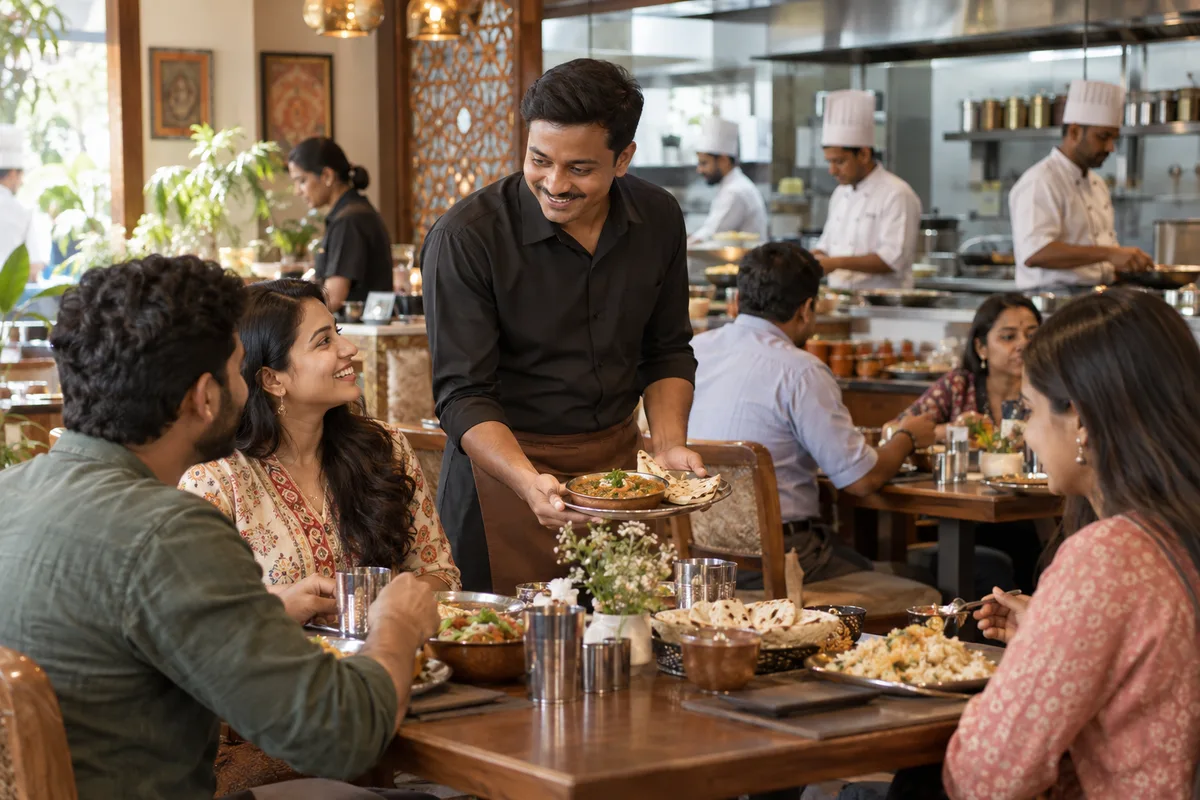
Outdoor advertising is the hoarding, billboard, bus shelter or digital screen on a road your buyers already use. GullySales picks the sites from where your customers actually come from, coordinates the booking with the media owner, and gives the campaign a traceable route so it is not judged on guesswork.
Last updated 5 Oct 2026. Rules for this trade differ by state and professional body, and they change. We describe restrictions in general terms, so check the current position with your own council or adviser before you publish anything.
For restaurants
Where it usually goes wrong, and what we would do.
“Evening traffic, and only the inbound side of it”
The family deciding where to eat is on the road between seven and nine, heading home. A panel on the outbound carriageway is read at lunchtime by people driving away from you. Same road, same rate, wrong side.
“One dish, the name, and where to park”
A driver reads three things at most. A biryani anybody would recognise, the restaurant name, and the word parking do more than a menu, because the person at the wheel is already wondering where to leave the car.
“A new outlet needs the road before the app ranks it”
Delivery listings climb slowly in the first weeks, so a new kitchen is invisible in the app while it is earning that position. Panels around the outlet tell the neighbourhood you have opened in the meantime.
“The road cannot see your till”
No structure knows who walked in, and the delivery apps will not hand over their customers either. A code the cashier asks for, or a scan that opens your own WhatsApp ordering line, is the only record of what a site did.
What we do
What we deliver for restaurants.
Every deliverable, what it covers for you, and the result it is there to produce. Nothing here is an extra.
Sites chosen on the inbound side of the evening drive
Panels judged by the carriageway they face at eight at night and how far they sit from your turning, with photographs taken from a car rather than from a deck.
Result: The people who read it can still reach you tonight.
Artwork that works in three seconds
One dish shot for the panel, the name large, the turn described in a few words, and parking stated plainly where you have it.
Result: A driver takes the point without slowing down.
A cycle long enough to be recognised
The full display cycle instead of a fortnight, so the same commuters pass the site four and five times on their way home.
Result: Your name is familiar before anyone acts on it.
Launch cover for a new outlet
Sites around the new kitchen from the week it opens, carrying the opening date and the direct ordering number while the app listing is still building.
Result: The neighbourhood knows you are open before the app says so.
A code the cashier asks for
One offer code printed on the outdoor sites alone, asked at billing and honoured on your own ordering number, logged by day and by site.
Result: Walk-ins can be set against the panel that sent them.
Dated proof of display
Photographs at mounting and mid-cycle, with unlit or missing panels taken up with the media owner while the cycle is running.
Result: You pay for the evenings the site was actually lit.
How the result is measured
- Sites booked
- Proof of display received
- Enquiries quoting the campaign route
Recorded as a baseline before work starts, so every later report has an honest comparison.
How it is bought, and approved
A restaurant buys outdoor on the evening road, and the landlord and the civic body clear it first.
- Fascia, A-frame and footpath
- Your fascia, the A-frame and any flex over the door fall under the lease and the local body's signage and footpath rules. Footpath boards are often refused, so check before buying.
- Your food licence on printed material
- Check the current FSSAI rules for what your printed material must show about your licence. Ask your food safety adviser, and keep the licence valid.
- Faces on the inbound side
- Pole kiosks and hoardings are sold per face. Visit at dinner time and choose the face looking at traffic heading towards you.
- Alcohol and the board
- If you serve alcohol, rules on advertising it differ by state and are strict in many places. Leave the bar off the board unless your licence terms allow it.
- Parking in the line
- Tell the driver where to park or turn. A site that sends a car past a closed turning loses the table.
- The cashier's code
- Print a code the cashier asks for at the till, and note it with the bill so the direct orders and the walk-ins can be counted.
Who it is for
This is written for these restaurants.
- Family restaurants and multi-cuisine dining
- South Indian vegetarian restaurants and darshinis
- Biryani, kebab and non-vegetarian specialists
- Regional cuisine restaurants
- Casual dining and bar restaurants
- Quick service restaurants and food courts
- Cloud kitchens and delivery-only brands
- Office canteens and food service operators
- Multi-outlet restaurant groups
Not for
It is not the right fit if.
- You want a guaranteed Google ranking or a guaranteed number of leads. Nobody honest can promise either.
- You need enquiries by next week and have nobody to answer them.
- You want posts and reach reported, not enquiries and orders.
How it works
From your first message to the first report.
No open-ended retainer. Every step gives you something in writing.
First
Your brief
You tell us what you need in a few short steps: your business, what you want, where enquiries come from and how they are handled.
After the brief
A conversation and a written scope
We read it, then talk with whoever handles your enquiries. If you want our help, the scope, the fee and the reporting come in writing, and nothing starts before you have read them.
Before work starts
Baseline recorded
Enquiries by source, reply time, conversion and cost per order, written down so every later report has an honest comparison.
After the baseline
The first fix goes live
The fix we agreed to start with is put in place and measured against the baseline, whether that is reply time, a follow-up sequence, the page buyers land on or the handover between marketing and sales.
As agreed
Report against the baseline
What moved, what did not, and what changes next, in plain words. How often you get it is set in writing before work starts.
At renewal
Renew on the numbers
The term ends and you decide whether to continue from the results. The length is agreed in writing before anything starts.
How the outdoor advertising work runs
- 1
Draw the catchment
We agree the roads, junctions and neighbourhoods your buyer moves through. It is almost always a smaller area than an owner first says, and a clinic in Nagarbhavi does not need the whole of west Bengaluru.
- 2
Survey what is available
We work through the sites on offer inside that catchment and go and stand in front of the ones worth looking at.
- 3
Compare and book
Sites are compared on facing, visibility, illumination and cycle length, then booked through the media owner or their agency at a negotiated rate.
- 4
Print to specification
Artwork is made to the exact panel size and delivered ahead of mounting day, with a proof you approve before printing.
- 5
Monitor the cycle
We collect mounting and mid-cycle photographs, and take up anything late, torn or unlit with the media owner while the cycle is still running.
Why us
Why owners pick GullySales over an agency.
Marketing and sales, as one job
Most agencies stop at the enquiry. We also fix what happens after it: the reply, the follow-up, the quote and the CRM.
The person on the first call does the work
No account managers in between. You are never handed to someone you have not met.
A baseline before anything starts
Your numbers are written down on day one, so every later report compares against something honest.
The fee in writing, split three ways
Our time, your media spend and production on separate lines. You always see what goes to us.
No guarantees we cannot keep
The term is agreed in writing and never a default twelve months. We never promise a ranking or a lead count, because nobody controls those.
One office, and we say so
Nagarbhavi, Bengaluru. We work across India by call and WhatsApp and travel when a session needs to be in person.
#257, 3rd floor, Sri Nanjundeshwara Complex, Nagarbhavi 8th Block, Outer Ring Road. How we work.
Your brief
Tell us what you need, and we will read it before we call.
Eight short steps about your business, what you want and who decides. Most questions are a tap, and you can skip any you would rather answer on the call.
FAQ
Questions owners ask before they call.
Not here? More answers, or ask on WhatsApp.
Is a hoarding worth it for a single restaurant?
Can outdoor bring direct orders instead of app orders?
Is a pole kiosk better than a hoarding for a lunch-hour crowd?
Do we need extra permission for a lit board near homes?
Should we leave Swiggy and Zomato?
Are paid food blogger visits worth it?
How much does it cost?
How long is the contract?
How soon will we see results?
Who will actually do the work?
From the blog
Further reading for restaurants.
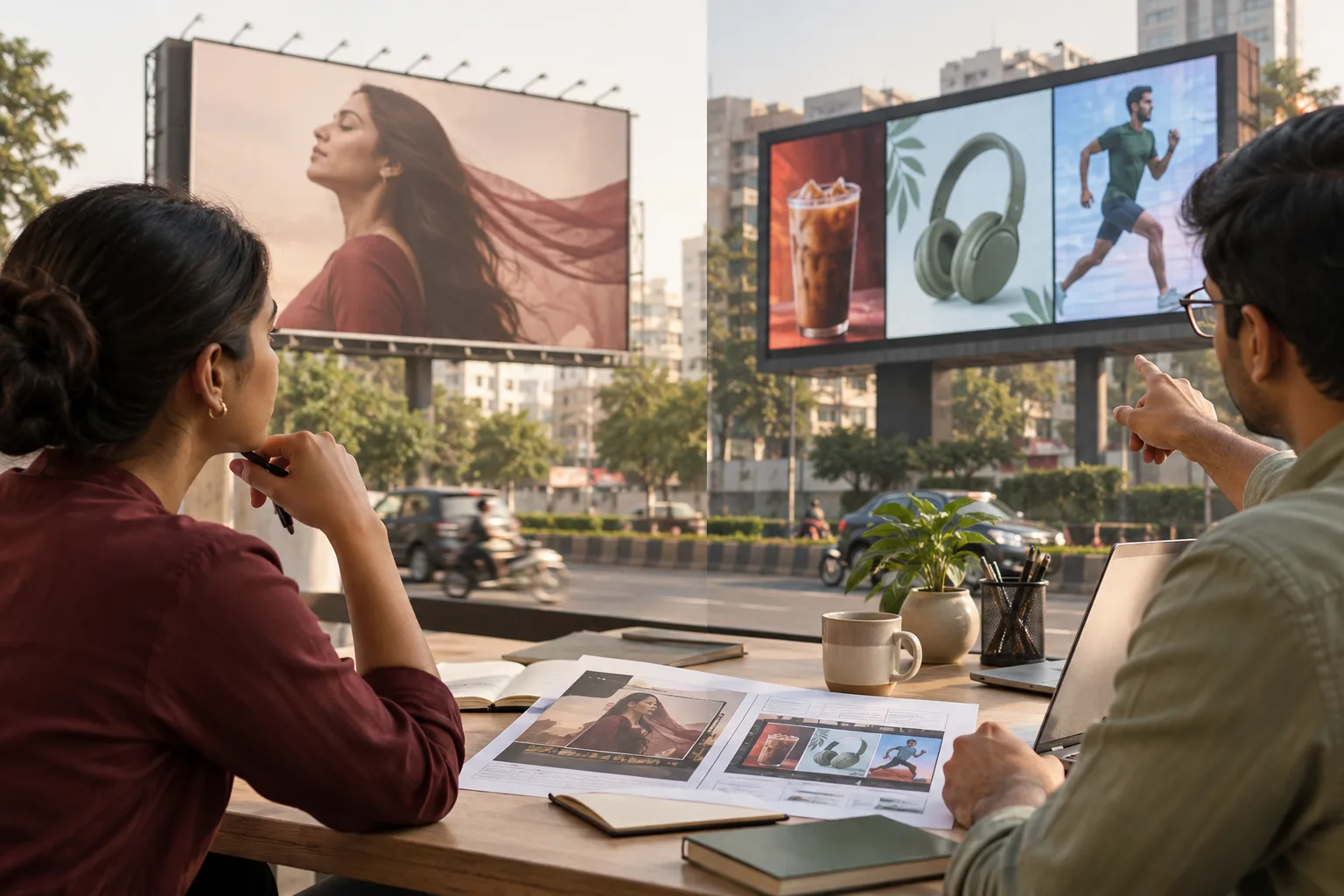 6 min read · 21 Sept 2026Billboard vs digital billboard advertising: is a rotating slot worth it?A printed hoarding is yours every minute of the month. An LED screen gives you one slot in a shared loop. Work out your share before you compare prices.
 6 min read · 25 Nov 2025Should I use digital or offline advertising?Digital captures people already looking. Offline reaches people who never search. The trap is that only one of the two can prove it worked, so budgets drift.
 6 min read · 17 Jun 2025How to build brand awarenessAwareness is repetition in the places your buyers already are. Measuring it needs a baseline, a separate number per medium and a question asked at the counter.
More for restaurants
Everything else we would do for you.
Closest to this: paid and media
Also for restaurants
Or start from the overview: sales and marketing for restaurants.
Your next practical step
Tell us what you are trying to grow, and we will read it before we call.
Eight short steps, mostly taps. Skip anything you would rather answer on the call.