Restaurants · Digital out-of-home advertising
Show tonight's table to people standing a street away.
Digital out-of-home advertising for a restaurant buys timed appearances on shared screens in places such as office lobbies, malls, food courts and roadside hoardings near where people choose a meal. GullySales picks screens around your guests, agrees the rotation and booking terms, prepares the creative, and checks playback records against the schedule.
Scope, fee, reporting and term are agreed in writing after we have read your brief and spoken to you.

What digital out-of-home advertising means
Digital out-of-home advertising (DOOH) buys timed appearances on shared screens in places such as office lobbies, malls, airports, and roadside locations. GullySales selects sites around your buyers, agrees the screen rotation and booking terms, prepares suitable creative, and checks playback records against the schedule, with response recorded separately from media delivery.
Also for restaurants
- Apartment advertising for restaurants
- Cinema advertising for restaurants
- Outdoor advertising for restaurants
- Facebook and Instagram ad copywriting for restaurants
- YouTube and video ad script writing for restaurants
- Retargeting ad copywriting for restaurants
- Print advertisement copywriting for restaurants
- Ad headline and copy variations for testing for restaurants
Sales and marketing for restaurants, the overview.
Last updated 14 Nov 2026. Rules for this trade differ by state and professional body, and they change. We describe restrictions in general terms, so check the current position with your own council or adviser before you publish anything.
For restaurants
Where it usually goes wrong, and what we would do.
“The screen has to be near the decision”
A restaurant is chosen in the last stretch before a meal, so a screen in a lift lobby, a food court corridor or a junction near your street can do more than one in a distant mall. A busy screen far from your tables reaches people who have no way to reach you tonight. We judge each site by how close it is to where your guests eat, not by its footfall figure.
“A screen shows your slot, then moves on”
On a shared screen your restaurant takes a few seconds in a rotation of other advertisers. The viewer does not control the pace and may glance only once. That favours one dish, one name and one direction, with large lettering and a photograph that reads at a distance. A menu, a paragraph or a small phone number is lost before it is read.
“Time of day decides whether the dish makes sense”
A lunch offer on a screen people pass in the evening is wasted, and a dinner image shown at breakfast is ignored. Digital screens can be scheduled by time, so a restaurant can show the office lunch offer near offices before noon and the family dinner near homes in the evening. The booking has to state those slots, not leave the rotation to the seller.
“Playback records prove the ad ran, not that guests came”
A proof-of-play report shows the ad appeared on the screen at the agreed times. It does not show who looked or who booked. A restaurant that treats the report as results will overpay for screens that nobody watches. A booking phrase or offer name used only on the screens gives the front desk a trace to read against delivery.
What we do
What we deliver for restaurants.
The work available for this need. We agree the deliverables and responsibilities for your engagement in writing.
Site shortlist around your guests
We list the screens within reach of your restaurant, the offices, malls, food courts and roads nearby, and ask each seller for the location, the screen size, the rotation length and the dates available. Sites that sit away from your guests or give no clear playback record are set aside with a reason.
Result: A shortlist of screens with location, format and the reason each was kept or dropped.
Rotation and daypart plan
We set out which hours and days the restaurant appears, matched to the meal you want to fill: office lunch, evening family dinner, weekend brunch. The plan names the share of the loop you are buying and what the seller says about the other advertisers beside you, since neighbours on a screen shape how yours is read.
Result: A schedule chart that shows each screen, the hours bought and the meal each hour serves.
Creative for a few-second glance
We prepare the screen artwork to the seller's specification: one dish photograph, the restaurant name, the area and one way to respond. Lettering is checked at the distance a viewer stands. We leave out anything that needs a longer read, and keep any wording your adviser requires clear of the picture.
Result: Approved artwork files that read at a glance, with the seller's file specification met.
Booking terms and proof-of-play clause
We check that the booking states the sites, the hours, the number of plays and the proof-of-play report you will receive. We raise gaps with the seller before you sign. The seller is paid by you directly, and you sign the booking. If a screen is down, the booking says what is credited or replaced, as the seller's terms allow.
Result: A signed booking record with sites, hours, plays and the report format listed.
Response line for screen enquiries
We set up a phrase, offer name or dedicated number used only in the screen creative, and a short script so staff ask how the guest heard of you. The answers are recorded in the same place as other sources, so the screens can be read against bookings without guessing.
Result: A booking source field that carries screens as its own label beside the other channels.
Playback against bookings reading
After the run, we set the proof-of-play records beside the schedule you bought and the recorded enquiries and bookings. We compare these with your own figures from before the work began, and report gaps in playback or response in plain words, with what the records cannot show.
Result: A report with the playback figures, recorded response and the limits of both.
How the result is measured
- Plays delivered against the booked schedule
- Screens reporting playback against the approved site list
- Delivered rotation share and cost per play where records support comparison
Recorded as a baseline before work starts, so every later report has an honest comparison.
Who it is for
This is written for these restaurants.
- Family restaurants and multi-cuisine dining
- South Indian vegetarian restaurants and darshinis
- Biryani, kebab and non-vegetarian specialists
- Regional cuisine restaurants
- Casual dining and bar restaurants
- Quick service restaurants and food courts
- Cloud kitchens and delivery-only brands
- Office canteens and food service operators
- Multi-outlet restaurant groups
Before you decide
Agree the work. Know how to judge it.
Digital out-of-home advertising for restaurants: use these checks to prepare, choose the scope, and review what changes.
Bring the right evidence
State the buyer group, catchment, and dates that matter to the offer. Ask for the proposed inventory and available evidence about its audience, with the source and date shown.
Make the scope clear
Agree the exact placements, formats, booking period, and proof of delivery. Separate media charges from design, production, permissions, and installation where these apply.
Check the work in use
Compare delivery evidence with the agreed booking and record enquiries through a distinct response route where practical. Treat audience estimates separately from measured responses.
Know when to change course
Do not buy a placement only because it is discounted. If the location or audience does not fit the buyer, revisit the plan before committing production costs.
These are discussion points, not a fixed package. GullySales confirms the deliverables, responsibilities, fee, and term in writing after reading your brief and speaking with you.
Before we start
What to have ready before the work starts.
The records, access and decisions this work needs from restaurants. Anything missing is noted in the written scope, with who will supply it.
- The meal, area and guest you want
- State whether you want office lunch, a family dinner or a weekend crowd, and the streets they come from. Screens are bought by place and hour, so this decides everything. When it is missing, the plan follows the seller's cheapest slots, which may reach the wrong people.
- Recent booking and call records
- Bring the reservation book, call log or booking tool with the sources guests gave. It is the baseline for reading the run. If the source is not recorded today, we begin a sheet before the screens go live, and the first stretch has no clean comparison.
- One strong dish photograph
- Supply a sharp, well-lit photograph of the plate you want known, in the highest quality you hold. A screen shows it large, and a soft or dim image looks worse than none. Without it, we would use stock images that do not look like your food.
- A booking phrase or number for screens
- Pick a phrase to quote, a short address or a number that appears only in the screen creative. Passers-by cannot click a screen. If the response line is shared with every channel, the front desk cannot tell the screens from anything else.
- Someone to approve and pay the seller
- Name the person who signs the booking, approves the proof and pays the seller. Screen slots are scheduled in blocks, and an unapproved proof holds the start. A verbal sign-off on a busy shift leaves no record if a dispute arises later.
How it works
How the digital out-of-home advertising work runs
The work itself, in order. How an engagement starts, from your brief to a written scope, is set out on our method page.
- 1
Choose the meal and the street
We start by asking which meal you want to fill and where those guests are an hour before they eat. A restaurant near an office park will pick the lobby and lunch hours, while a family place will choose residential screens in the evening. That choice is written down, and every screen is held against it.
- 2
Take your starting figures
We record your current calls, bookings and walk-in enquiries, with the source guests named, before any artwork is made. The sheet is dated and approved by you. Screens run in a busy city with festivals and offers, so without a baseline nobody can separate the screens from everything else.
- 3
Ask sellers for site and playback detail
We send each seller your trade area and ask for exact locations, screen format, loop length, other advertisers on the loop and the form of the playback report. Any answer that is missing is recorded as unknown. You decide whether to go ahead with the gap or drop the site.
- 4
Prepare the artwork for the screen
We prepare one dish image, a short line, the name and the area, built to the seller's file rules and checked at viewing distance. You see the proof, confirm every word against the kitchen and approve it. Any licence or approval marks that your adviser requires are placed so they do not crowd the dish.
- 5
Book the slots and set the response line
We check the schedule, plays and report terms against the plan, and place the response line on the reservation sheet and call script. You sign and pay. We keep the seller's confirmation and the first playback sample, so a late start or a dark screen is noticed against the agreed dates.
- 6
Read the report beside your baseline
At the end of the run, we collect the playback report and compare it with the schedule, then set it beside the recorded enquiries and your starting figures. We state what is supported and what is not, and you decide whether to keep the same screens, change the hours or stop.
Where this fits
Three pieces of sales work, in this order.
This work sits inside sales process design, at stage 1, prospecting and lead generation. The audit comes before it, and sales management keeps it running.
Step 1
Sales audit
Find where deals are being lost and what to fix first.
Start here if you cannot say where orders are lost.
Step 2 · you are here
Sales process design
One written way to sell, from first enquiry to repeat order.
Start here if every salesperson sells differently.
Step 3
Sales management
A target, a review routine and someone who owns the number.
Start here if the team has targets and no routine.
FAQ
Questions owners ask before they call.
Not here? More answers, or ask on WhatsApp.
Where should a restaurant put digital screen ads?
How long does a restaurant ad stay on screen?
Can I change the offer on the screen during the run?
What does a proof-of-play report show?
Will screens fill my restaurant?
Are there rules about food or alcohol on a screen?
How much does it cost?
How long is the contract?
Who will actually do the work?
What do you need from us?
From the blog
Further reading for restaurants.
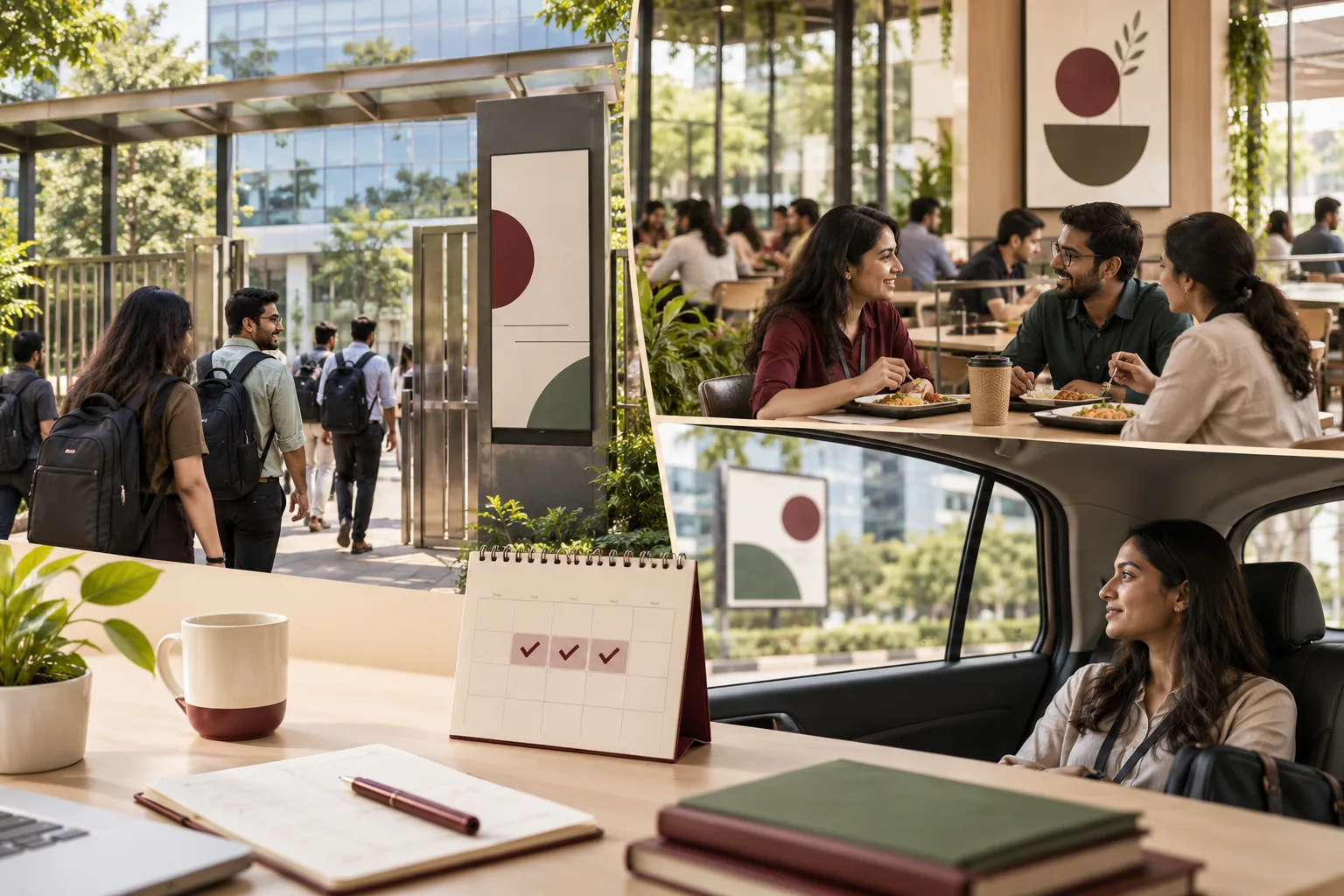 7 min read · 21 Sept 2026How to advertise to IT employeesTech park audiences can be reached at the gate, in the food court and on the cab ride. Buy Tuesday to Thursday and know which shift you are reaching.
 6 min read · 21 Sept 2026Radio advertising vs social media advertising: where should your money go?Radio reaches a driver who cannot click. Social reaches a thumb that can. One buys a name people remember, the other buys the enquiry itself.
 7 min read · 21 Sept 2026Local audience targeting strategyThree people are local to you: the one who lives near, the one who works near and the one searching near. The settings that reach each differ.
More for restaurants
Related work to consider.
Closest to this: paid and media
- Apartment advertising for restaurants
- Cinema advertising for restaurants
- Outdoor advertising for restaurants
- Facebook and Instagram ad copywriting for restaurants
- YouTube and video ad script writing for restaurants
- Retargeting ad copywriting for restaurants
- Print advertisement copywriting for restaurants
- Ad headline and copy variations for testing for restaurants
Also for restaurants
Or start from the overview: sales and marketing for restaurants.
Your next practical step
Tell us what you are trying to grow, and we will read it before we call.
Eight short steps, mostly taps. Skip anything you would rather answer on the call.