Restaurants · Hyperlocal advertising
Dinner is chosen two roads away, so put the advertisement on those roads.
Hyperlocal advertising for a restaurant buys media only in the streets, apartments and offices from which guests will actually walk or drive to your door, and from which your delivery rider can arrive hot. GullySales maps that area from your own addresses, plans the placements inside it and sets up a way to count the responses.
Scope, fee, reporting and term are agreed in writing after we have read your brief and spoken to you.

What hyperlocal advertising means
Hyperlocal advertising buys media within the area your shop, branch, or service location can realistically serve, rather than across an entire city. GullySales maps that catchment using your customer records and local access routes, then plans digital targeting and nearby physical placements with a response route your sales team can track.
Also for restaurants
- Apartment advertising for restaurants
- Cinema advertising for restaurants
- Outdoor advertising for restaurants
- Facebook and Instagram ad copywriting for restaurants
- YouTube and video ad script writing for restaurants
- Retargeting ad copywriting for restaurants
- Print advertisement copywriting for restaurants
- Ad headline and copy variations for testing for restaurants
Sales and marketing for restaurants, the overview.
Last updated 14 Nov 2026. Rules for this trade differ by state and professional body, and they change. We describe restrictions in general terms, so check the current position with your own council or adviser before you publish anything.
For restaurants
Where it usually goes wrong, and what we would do.
“A guest travels a short distance and then stops”
The distance a person will go for a weekday dinner is short, and it changes with a flyover, a railway line, a market lane or a lack of parking. A pin code is a poor guide because a neighbourhood across a divider may be nearer on the map and further in practice. The plan starts by finding the streets your guests really come from, using reservation, delivery and phone records.
“Dine-in and delivery draw different circles”
A guest on foot or in a car decides on parking, the lane and how the street looks at night. A delivery order depends on the rider's route, the app's radius and how long the food stays warm. One circle drawn round the restaurant serves neither. The plan keeps two areas, one for the table and one for the doorstep, and puts each placement against the one it serves.
“Offices, apartments and colleges are separate audiences”
A lunch crowd from nearby offices wants speed, a clear price and a set meal. Apartment residents want a family table, a weekend offer and a direct number. Students want a price they can share. A single advertisement for all three says little to any. The plan names which building cluster each placement is for, and the offer and the wording follow that group.
“A placement nobody can count is only a guess”
A lift panel, a society noticeboard or a nearby hoarding is easy to book and hard to judge. Without a source question at the host stand or a code on the printed offer, the owner cannot tell whether the panel brought tables or only reminded existing guests. Every placement in the plan carries a way to be counted, even if the count is rough and has to be read with care.
What we do
What we deliver for restaurants.
The work available for this need. We agree the deliverables and responsibilities for your engagement in writing.
Two-area catchment map
A map with one boundary for guests who will come to the table and a second for guests the kitchen can deliver to while the food is still good. It marks barriers such as railway crossings and one-way roads, the parking near the door, and the apartment and office clusters inside each boundary.
Result: You can see on one page where dine-in and delivery guests live.
Address analysis from your own records
A review of the addresses in your reservation book, delivery orders and phone log, grouped by street and building cluster. It shows which neighbourhoods already send guests and which near ones do not, so the boundary rests on your evidence and not on a circle.
Result: Each cluster in the plan is backed by a count from your own records.
Local media shortlist
A comparison of nearby placements: apartment lift panels, society newsletters, local print, door-to-door handouts, a Maps post, a map-targeted social post and a hoarding on the approach road. Each is listed with its location, its audience and the person who must approve it.
Result: Every shortlisted placement names the cluster it is meant to reach.
Offer set by building cluster
One short offer for the office lunch, another for the apartment family table and a third for the evening delivery order, each with its own wording and its own booking route. The offers are written so staff can state them in one sentence and know which one applies.
Result: Staff can say which offer belongs to which cluster without a script.
Listing and phone route check
A review of the Maps listing, the booking number and the WhatsApp link so that a guest who sees a nearby placement lands on the right information. It confirms the pin, the opening hours, the parking note and the menu, and names who answers each route.
Result: A guest who follows any placement reaches a correct and answered route.
Placement response record
A sheet that links each placement to the code, the question at the stand or the number a guest uses. It records the date each placement went live and removed, the bookings noted against it and the notes from the floor. It does not claim precise attribution.
Result: After the campaign you can compare placements by their recorded responses.
How the result is measured
- Spend and placement delivery by catchment, separate from buyer response
- Clicks and QR scans, treated as activity rather than qualified enquiries
- Enquiries by pin code and share arriving from outside the catchment
Recorded as a baseline before work starts, so every later report has an honest comparison.
Who it is for
This is written for these restaurants.
- Family restaurants and multi-cuisine dining
- South Indian vegetarian restaurants and darshinis
- Biryani, kebab and non-vegetarian specialists
- Regional cuisine restaurants
- Casual dining and bar restaurants
- Quick service restaurants and food courts
- Cloud kitchens and delivery-only brands
- Office canteens and food service operators
- Multi-outlet restaurant groups
Before you decide
Agree the work. Know how to judge it.
Hyperlocal advertising for restaurants: use these checks to prepare, choose the scope, and review what changes.
Bring the right evidence
State the buyer group, catchment, and dates that matter to the offer. Ask for the proposed inventory and available evidence about its audience, with the source and date shown.
Make the scope clear
Agree the exact placements, formats, booking period, and proof of delivery. Separate media charges from design, production, permissions, and installation where these apply.
Check the work in use
Compare delivery evidence with the agreed booking and record enquiries through a distinct response route where practical. Treat audience estimates separately from measured responses.
Know when to change course
Do not buy a placement only because it is discounted. If the location or audience does not fit the buyer, revisit the plan before committing production costs.
These are discussion points, not a fixed package. GullySales confirms the deliverables, responsibilities, fee, and term in writing after reading your brief and speaking with you.
Before we start
What to have ready before the work starts.
The records, access and decisions this work needs from restaurants. Anything missing is noted in the written scope, with who will supply it.
- Reservation and delivery address records
- These records show which streets send guests and which do not. Without them, the catchment is a circle and the media is bought for people who live behind a barrier. Names and numbers can be removed; we need the street, the building cluster and the date.
- Delivery radius and rider routes
- We need the radius the app or your own riders use, the time food stays warm in the box and the routes that are slow at dinner. Without them, a placement reaches homes that your kitchen cannot serve well, and the order arrives cold and earns a poor rating.
- Parking and approach notes
- A short note on where guests park, which lane is one way and where the signboard can be seen. A placement that sends a guest to the door but leaves them circling for parking loses the table to a competitor with a visible car park.
- Permission for each physical placement
- Lift panels, society notices, door handouts and hoardings need the consent of the society, the landlord or the owner of the space. We prepare the request; you or the owner of the space approves it. A placement put up without permission is removed and the money is lost.
- Who answers the line at lunch and dinner
- Name the person who answers calls and messages in each period, and give them the offer for each cluster. When a nearby placement brings a call to an unanswered phone, the guest tries the next restaurant on the map.
How it works
How the hyperlocal advertising work runs
The work itself, in order. How an engagement starts, from your brief to a written scope, is set out on our method page.
- 1
Collect addresses and walk the streets
We ask for the addresses in your reservation book, your delivery history and your phone log, with the guests' details removed where you prefer. A visit to the area on foot or by car shows the barriers, the parking and where the signboard can be seen from. This replaces a drawn circle with real travel.
- 2
Draw the dine-in and delivery areas
From the records and the visit we draw the two boundaries and mark the clusters inside them: apartments, offices, colleges and shops. You correct the draft with what you know of the lanes and the rider's route. We keep the first boundary small, since widening it later costs less than paying for waste.
- 3
Match each cluster to a placement
Each cluster is paired with a placement it will actually see: a lift panel for towers, a counter card for the nearby office canteen, a map-targeted post for the evening commuter. We compare cost, approval needs and what each placement needs from the kitchen. Only placements that serve a named cluster remain on the list.
- 4
Write the offers and prepare the routes
We write one offer for each cluster and test the wording on a few staff and regular guests for clarity. The booking line, the WhatsApp number and the listing are updated to match. We confirm who answers at lunch and at dinner, since a placement without an answered line spends money for nothing.
- 5
Place the media and brief the floor
Placements go live in the order of their approvals. The floor team learns which offer belongs to which cluster and how to ask the source question in the same words. We check each live placement, photograph it and note the date on the response sheet.
- 6
Read the result against the earlier counts
We compare bookings, delivery orders and walk-in notes with the figures recorded before the campaign, cluster by cluster. We note which placements were followed by visits and which were not, and which streets surprised us. You decide which to renew, move or drop for the next period.
Where this fits
Three pieces of sales work, in this order.
This work sits inside sales process design, at stage 1, prospecting and lead generation. The audit comes before it, and sales management keeps it running.
Step 1
Sales audit
Find where deals are being lost and what to fix first.
Start here if you cannot say where orders are lost.
Step 2 · you are here
Sales process design
One written way to sell, from first enquiry to repeat order.
Start here if every salesperson sells differently.
Step 3
Sales management
A target, a review routine and someone who owns the number.
Start here if the team has targets and no routine.
FAQ
Questions owners ask before they call.
Not here? More answers, or ask on WhatsApp.
What does hyperlocal mean for a restaurant?
How big should our advertising area be?
Are society and lift panels worth it for a restaurant?
Can we advertise on delivery apps and hyperlocally together?
Does this work for a restaurant inside a mall or food court?
How do we tell which placement brought a guest?
How much does it cost?
How long is the contract?
How soon will we see results?
Who will actually do the work?
From the blog
Further reading for restaurants.
 7 min read · 21 Sept 2026Local audience targeting strategyThree people are local to you: the one who lives near, the one who works near and the one searching near. The settings that reach each differ.
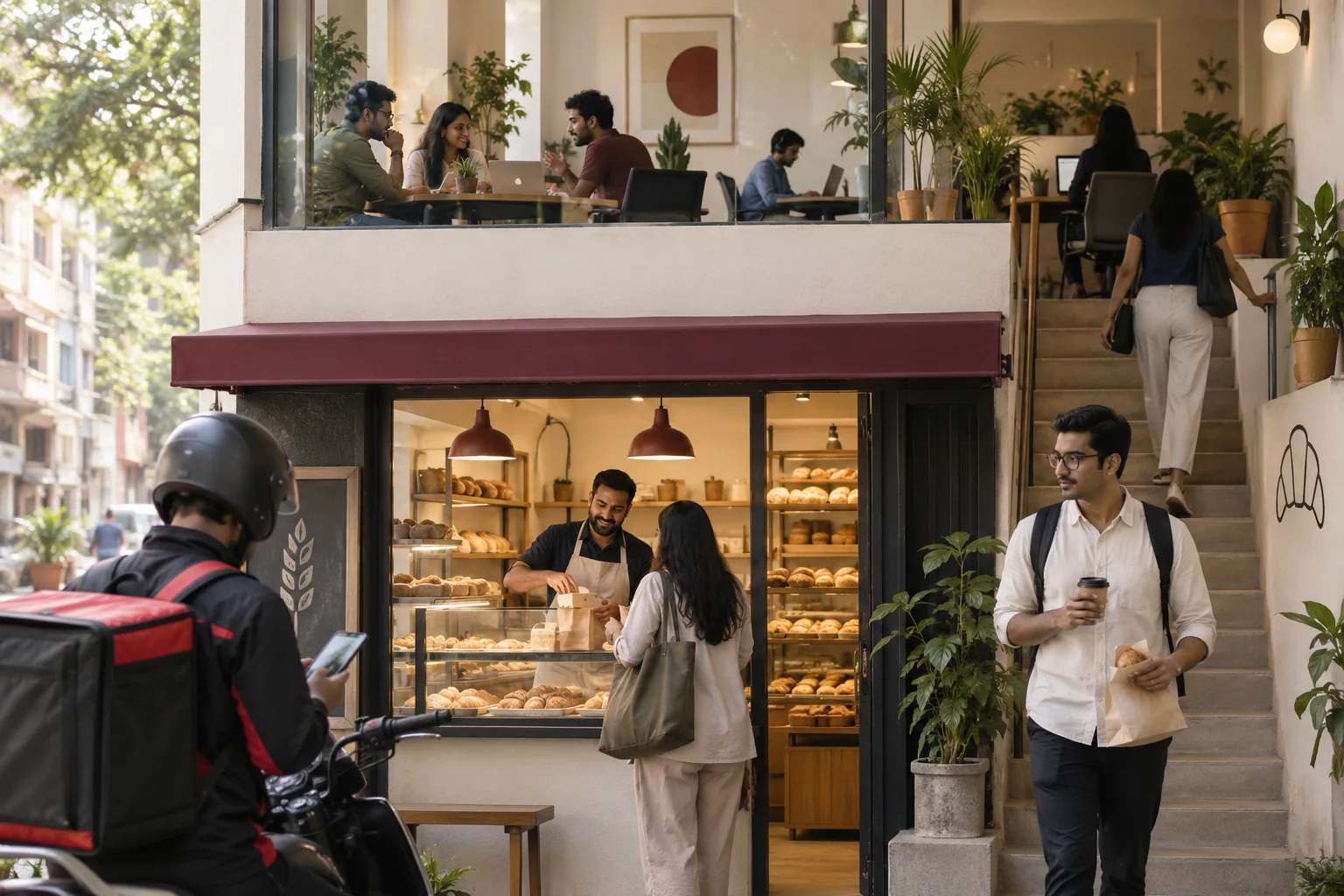 7 min read · 21 Sept 2026How to advertise to startup employeesThere is no tech park to buy. A forty person company sits above a bakery, so the audience is the neighbourhood, the delivery app and the coworking floor.
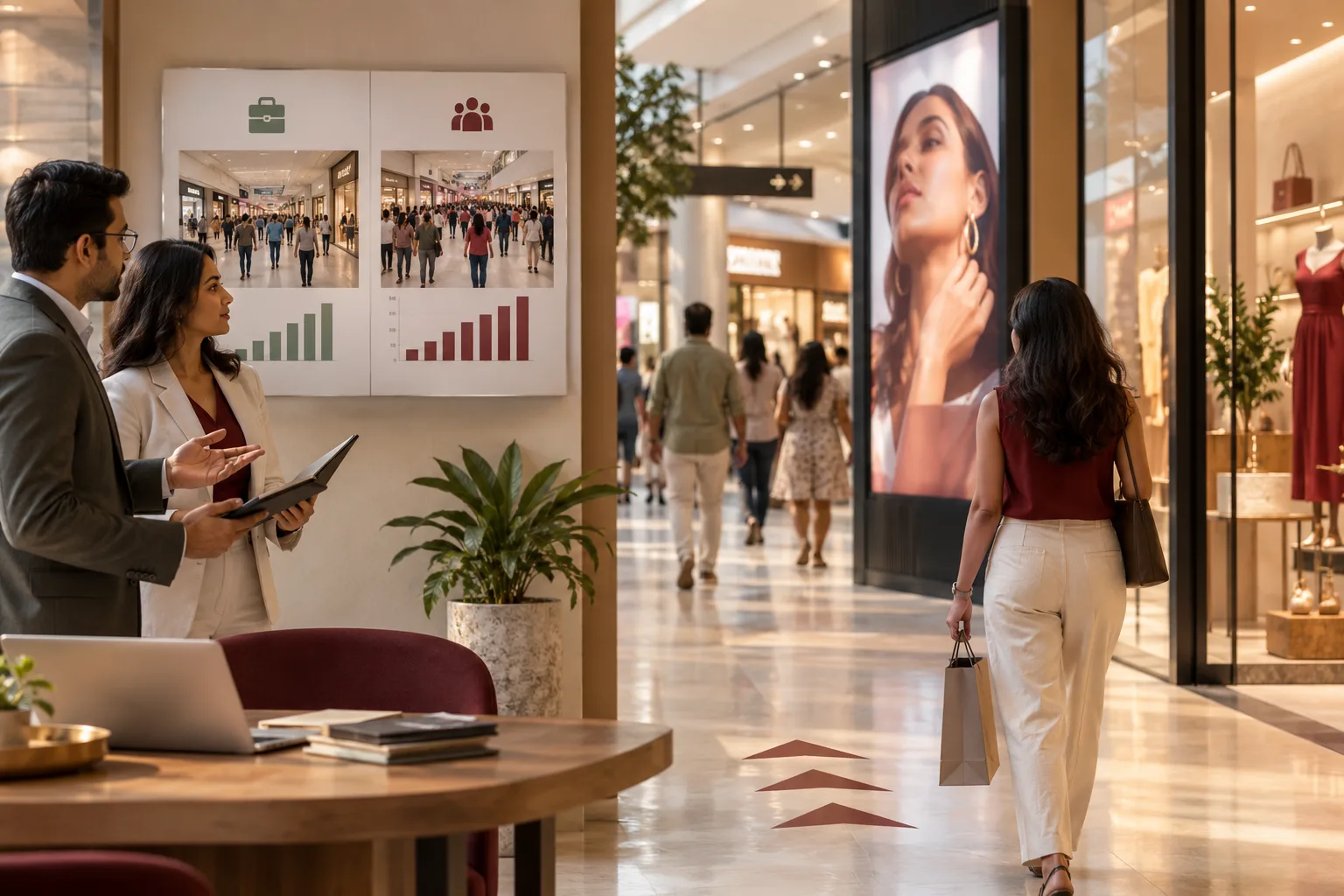 8 min read · 21 Sept 2026How to advertise to mall shoppersThe shopper is already inside. Your landlord sells the media that reaches them, and the decision falls in the last thirty metres.
More for restaurants
Related work to consider.
Closest to this: paid and media
- Apartment advertising for restaurants
- Cinema advertising for restaurants
- Outdoor advertising for restaurants
- Facebook and Instagram ad copywriting for restaurants
- YouTube and video ad script writing for restaurants
- Retargeting ad copywriting for restaurants
- Print advertisement copywriting for restaurants
- Ad headline and copy variations for testing for restaurants
Also for restaurants
Or start from the overview: sales and marketing for restaurants.
Your next practical step
Tell us what you are trying to grow, and we will read it before we call.
Eight short steps, mostly taps. Skip anything you would rather answer on the call.