Restaurants · Mall advertising
People come to the mall to shop, so give the hungry ones a reason to cross town.
Mall advertising for a restaurant means paid space inside a named mall, from a lift panel or screen slot to a kiosk or atrium table, aimed at visitors who are already deciding where to eat. GullySales compares the mall's positions and rules, coordinates the booking and approvals, and sets up a response route your team can trace to the placement.
Scope, fee, reporting and term are agreed in writing after we have read your brief and spoken to you.

What mall advertising means
Mall advertising is paid space inside a named mall for a fixed period, from a staffed kiosk or atrium activation to lift panels and screen slots. GullySales compares locations and formats, coordinates booking and mall approvals, and sets up a response route so your sales team can trace enquiries to the placement.
Also for restaurants
- Apartment advertising for restaurants
- Cinema advertising for restaurants
- Outdoor advertising for restaurants
- Facebook and Instagram ad copywriting for restaurants
- YouTube and video ad script writing for restaurants
- Retargeting ad copywriting for restaurants
- Print advertisement copywriting for restaurants
- Ad headline and copy variations for testing for restaurants
Sales and marketing for restaurants, the overview.
Last updated 14 Nov 2026. Rules for this trade differ by state and professional body, and they change. We describe restrictions in general terms, so check the current position with your own council or adviser before you publish anything.
For restaurants
Where it usually goes wrong, and what we would do.
“The mall has its own restaurants”
A mall has a food court and a floor of restaurants that pay rent for the visitor's attention, and its seller may protect them. A restaurant outside the building, or one on another floor, can be told that food advertising is limited to certain positions, or refused outright. The terms should say which food brands may advertise, in which spaces, and whether a tenant's exclusivity covers your cuisine or only your product name.
“Visitors are on the way to something else”
A person walking through an atrium is heading to a shop, a cinema or a lift. They are not reading a menu. A panel has seconds to say what you serve, where you are and how far, so one dish and one direction carry more than a list. The brief should state the single reason to come to you, and the placement should be judged on whether a visitor can act on it without a map.
“Weekends and festivals cost more and fill faster”
The days when a mall is crowded are the days your own dining room is busiest, and the seller may charge a premium for them. Paying extra to send more guests to a restaurant that is already turning people away adds cost without adding covers. The comparison should price the slow evenings and the busy ones separately and show which day your tables are empty.
“A kiosk without trained staff loses the visitor”
A staffed table or kiosk puts a promoter between the visitor and your door. If the promoter cannot say what the set menu includes, whether a table is free tonight or how to book, the visitor walks on. Sampling needs the mall's permission and your food handling rules. The brief for staff matters as much as the space, and a space-only quote is never the full activation budget.
What we do
What we deliver for restaurants.
The work available for this need. We agree the deliverables and responsibilities for your engagement in writing.
Catchment and mall shortlist
A shortlist of malls tied to where your guests already live and eat, with the surrounding neighbourhoods and the existing food tenants noted. Each recommendation states why the mall fits your restaurant and what we could not verify.
Result: Each mall on the list has a written reason tied to your own guests and your own location.
Food advertising permission record
Written answers from the mall or its agency on whether your restaurant may advertise, the positions open to food brands, any tenant exclusivity and whether sampling and promoters are allowed. Open questions stay open on the record.
Result: You know what the mall allows a restaurant to do before you approve any booking.
Format and date comparison
Panels, screens, atrium space and kiosks compared on one budget basis for the same period. The comparison names the booking unit, the quoted weekend or festival premium and the evenings on which your dining room has empty tables.
Result: Each available format is priced against the same period and the same booking unit.
Marked placement plan
The proposed position marked on the mall's floor plan, with nearby shops, the food court, the lifts and the walking routes. Your approval refers to that location and not to an unspecified space somewhere in the building.
Result: The position you approve can be found on the mall's own floor plan.
Artwork and installation file
Artwork prepared to the mall's dimensions or screen specification, with the structure and electrical details a kiosk needs. Food claims and offer wording go to your own adviser, and the mall's approval is recorded before production.
Result: Approvals for the artwork and the installation are on file before anything is made.
Promoter brief and enquiry route
A one-page brief for staff on the dish, the set menu, the table question and the booking route, with a code or link that records the source. Your team notes each booking and order so mall results sit apart from other sources.
Result: Bookings and orders from the mall can be counted separately from other sources.
How the result is measured
- Booked placements and dates delivered, supported by evidence
- QR scans and initial responses, separate from qualified enquiries
- Qualified enquiries with a recorded requirement and sales owner
Recorded as a baseline before work starts, so every later report has an honest comparison.
Who it is for
This is written for these restaurants.
- Family restaurants and multi-cuisine dining
- South Indian vegetarian restaurants and darshinis
- Biryani, kebab and non-vegetarian specialists
- Regional cuisine restaurants
- Casual dining and bar restaurants
- Quick service restaurants and food courts
- Cloud kitchens and delivery-only brands
- Office canteens and food service operators
- Multi-outlet restaurant groups
Before you decide
Agree the work. Know how to judge it.
Mall advertising for restaurants: use these checks to prepare, choose the scope, and review what changes.
Bring the right evidence
State the buyer group, catchment, and dates that matter to the offer. Ask for the proposed inventory and available evidence about its audience, with the source and date shown.
Make the scope clear
Agree the exact placements, formats, booking period, and proof of delivery. Separate media charges from design, production, permissions, and installation where these apply.
Check the work in use
Compare delivery evidence with the agreed booking and record enquiries through a distinct response route where practical. Treat audience estimates separately from measured responses.
Know when to change course
Do not buy a placement only because it is discounted. If the location or audience does not fit the buyer, revisit the plan before committing production costs.
These are discussion points, not a fixed package. GullySales confirms the deliverables, responsibilities, fee, and term in writing after reading your brief and speaking with you.
Before we start
What to have ready before the work starts.
The records, access and decisions this work needs from restaurants. Anything missing is noted in the written scope, with who will supply it.
- Booking diary and till records
- We need the diary and the till records for comparable evenings before the campaign. They are the baseline that any mall result is judged against. Without them, the advertising is credited with every busy evening, and the decision to repeat is made on a guess.
- A statement of what you serve and where
- Tell us the dish or set menu you want the mall to carry, the address, the nearest landmark and how long the drive takes from the mall. A visitor needs one reason and one direction. When these are missing, the panel lists everything and persuades nobody.
- Capacity for the evenings you are targeting
- Say how many covers the kitchen can serve on the evenings you want filled, and which evenings are already full. A campaign that sends guests to a full room produces bad reviews, so capacity on the target evenings decides which dates we price.
- Staff for a kiosk or table
- If you want a staffed space, name the people who will stand there, their hours and who trains them. The mall may require entry passes and uniforms. When no staff are named, we recommend a panel or screen that needs no promoter.
- A named person for the booking line
- Name who answers the number or the message link used in the mall material, and a backup. Visitors decide where to eat in the moment. When a call rings out or a message waits, the guest chooses a food court tenant instead.
How it works
How the mall advertising work runs
The work itself, in order. How an engagement starts, from your brief to a written scope, is set out on our method page.
- 1
Goal, evenings and guest
We start from your requirements brief and a conversation about which evenings need covers, which guests you want more of and what a good response looks like. We agree whether the goal is new first visits or repeat bookings from nearby, and put scope, fee and term in writing.
- 2
Baseline from your booking and till records
You share the booking diary, till records and order counts for comparable evenings, with the source of each booking where you hold it. This is the record the mall result is read against later. Without it, a busy weekend cannot be separated from one that would have been busy anyway.
- 3
Location and permission check
The mall or its appointed agency confirms available spaces, food advertising rules, tenant exclusivity and sampling permissions. We resolve product-type eligibility before asking you to choose a format. Where a visit helps, we look at the footfall past the proposed position at the hours your guests would be there.
- 4
Booking approval with the full cost
You review the exact position, dates, quoted cost and the extra costs a staffed table brings, such as structure, power and promoters. The booking goes ahead through the mall or its seller only after your authorised person approves in writing, and the premium for busy days is shown separately.
- 5
Artwork, installation and staff brief
Your adviser reviews food and offer wording, the mall approves the artwork, and then production is released. Promoters receive the brief and a short test of the questions they will meet. The person who answers booking calls confirms the route works before the space goes live.
- 6
Delivery check and result review
We compare the mall's delivery evidence with the booking and raise any shortfall in line with the contract. Coded bookings, calls and orders are read against the baseline and your till figures, and your team supplies the visits that followed, so contacts are not reported as covers.
Where this fits
Three pieces of sales work, in this order.
This work sits inside sales process design, at stage 1, prospecting and lead generation. The audit comes before it, and sales management keeps it running.
Step 1
Sales audit
Find where deals are being lost and what to fix first.
Start here if you cannot say where orders are lost.
Step 2 · you are here
Sales process design
One written way to sell, from first enquiry to repeat order.
Start here if every salesperson sells differently.
Step 3
Sales management
A target, a review routine and someone who owns the number.
Start here if the team has targets and no routine.
FAQ
Questions owners ask before they call.
Not here? More answers, or ask on WhatsApp.
Can a restaurant outside the mall advertise inside it?
Is a kiosk or a screen slot better for a restaurant?
Should we pay extra for a weekend or festival slot?
Can we give out samples in the mall?
How do we tell which bookings came from the mall?
Can you promise more footfall or sales from a mall placement?
How much does it cost?
How long is the contract?
How soon will we see results?
Who will actually do the work?
From the blog
Further reading for restaurants.
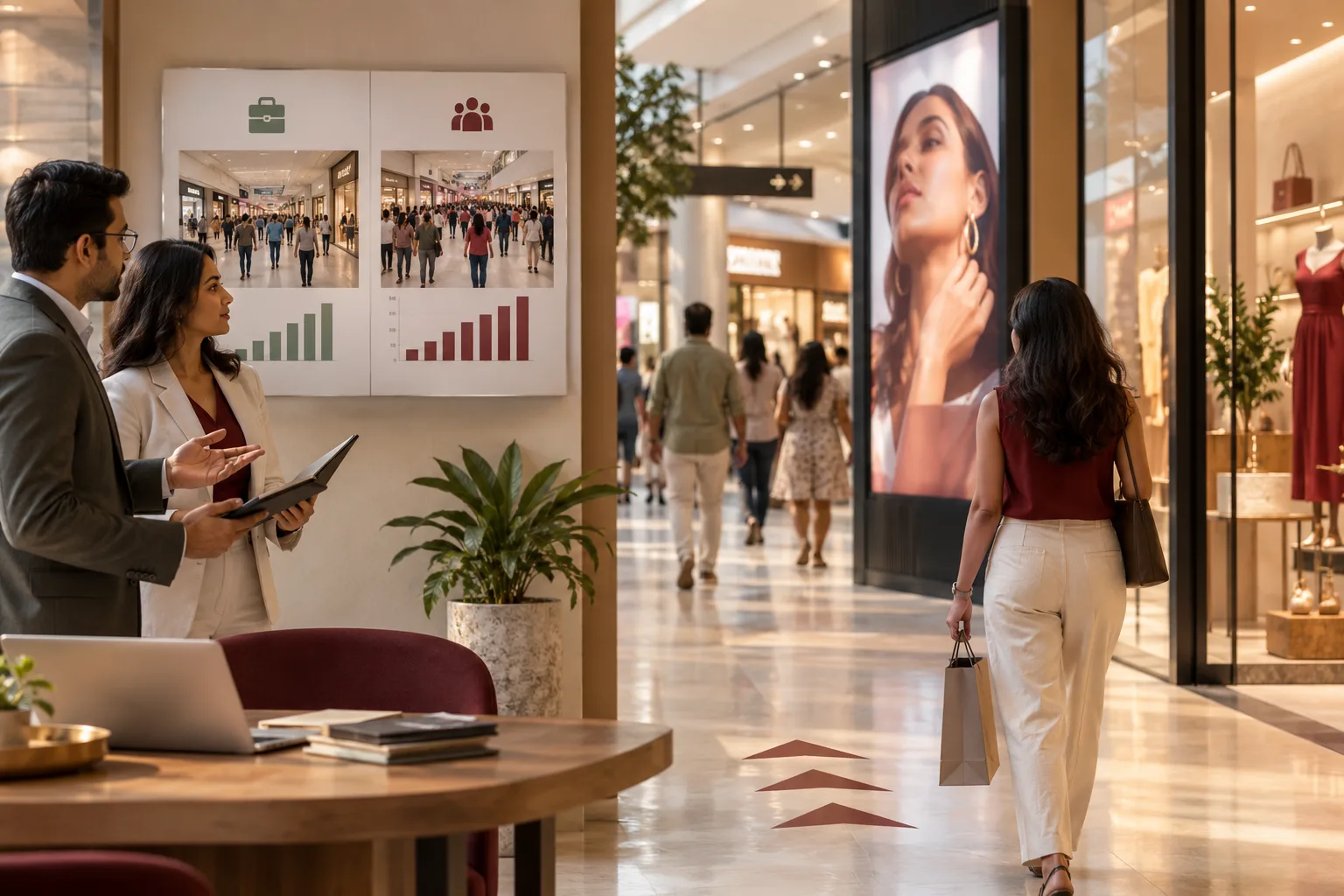 8 min read · 21 Sept 2026How to advertise to mall shoppersThe shopper is already inside. Your landlord sells the media that reaches them, and the decision falls in the last thirty metres.
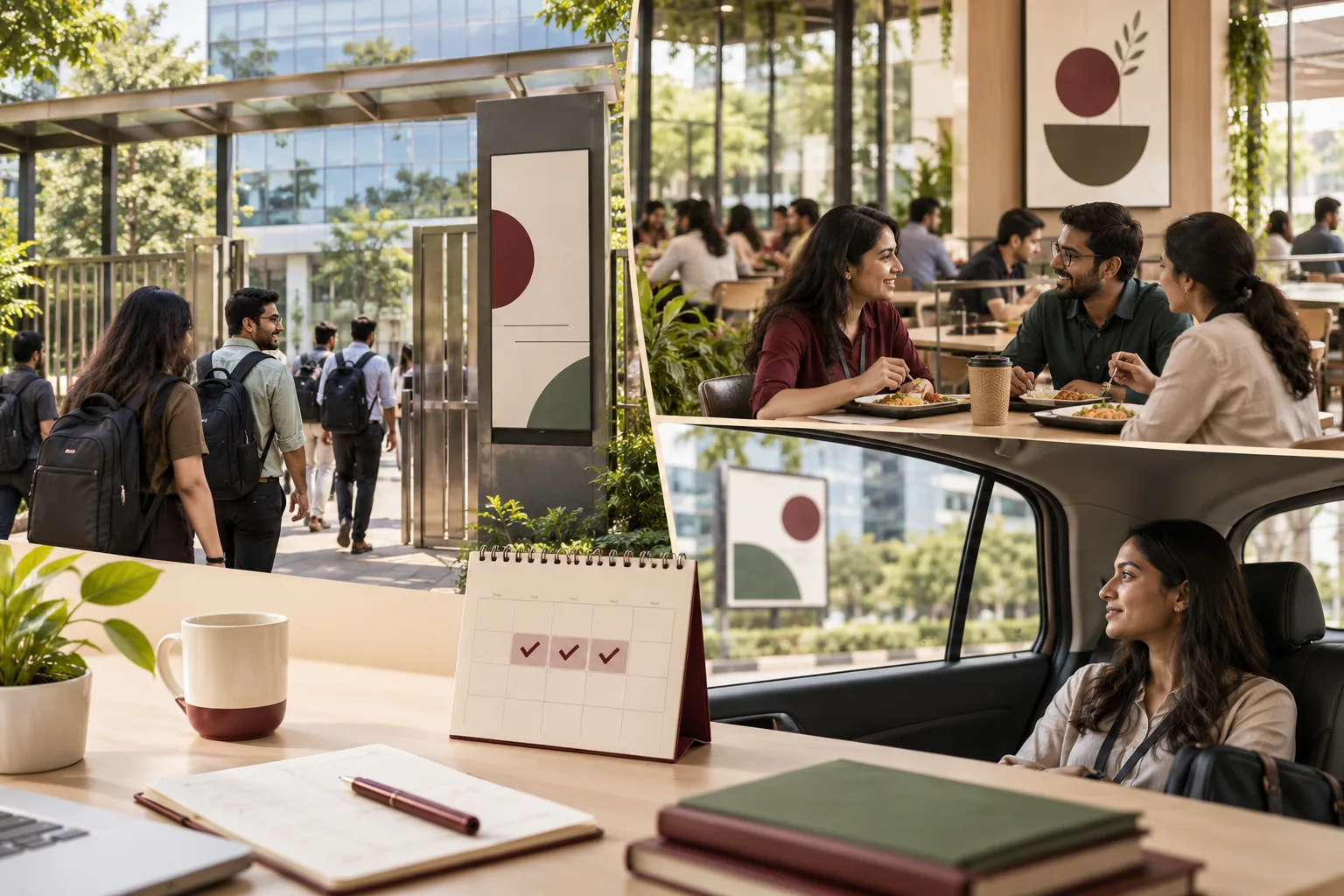 7 min read · 21 Sept 2026How to advertise to IT employeesTech park audiences can be reached at the gate, in the food court and on the cab ride. Buy Tuesday to Thursday and know which shift you are reaching.
 6 min read · 21 Sept 2026Radio advertising vs social media advertising: where should your money go?Radio reaches a driver who cannot click. Social reaches a thumb that can. One buys a name people remember, the other buys the enquiry itself.
More for restaurants
Related work to consider.
Closest to this: paid and media
- Apartment advertising for restaurants
- Cinema advertising for restaurants
- Outdoor advertising for restaurants
- Facebook and Instagram ad copywriting for restaurants
- YouTube and video ad script writing for restaurants
- Retargeting ad copywriting for restaurants
- Print advertisement copywriting for restaurants
- Ad headline and copy variations for testing for restaurants
Also for restaurants
Or start from the overview: sales and marketing for restaurants.
Your next practical step
Tell us what you are trying to grow, and we will read it before we call.
Eight short steps, mostly taps. Skip anything you would rather answer on the call.