Dairy producers · Dealer development
A booth that stocks your pouch should be reordering it, not just holding it.
Dealer development for a dairy producer is the work of getting more sales from the booths, kiranas, sweet shops and cold-counter retailers that already stock your milk, curd, paneer or ghee. GullySales builds the outlet scorecard, the visit checklist and the scheme record, then tracks agreed actions against what each outlet actually buys from your van or distributor.
Scope, fee, reporting and term are agreed in writing after we have read your brief and spoken to you.
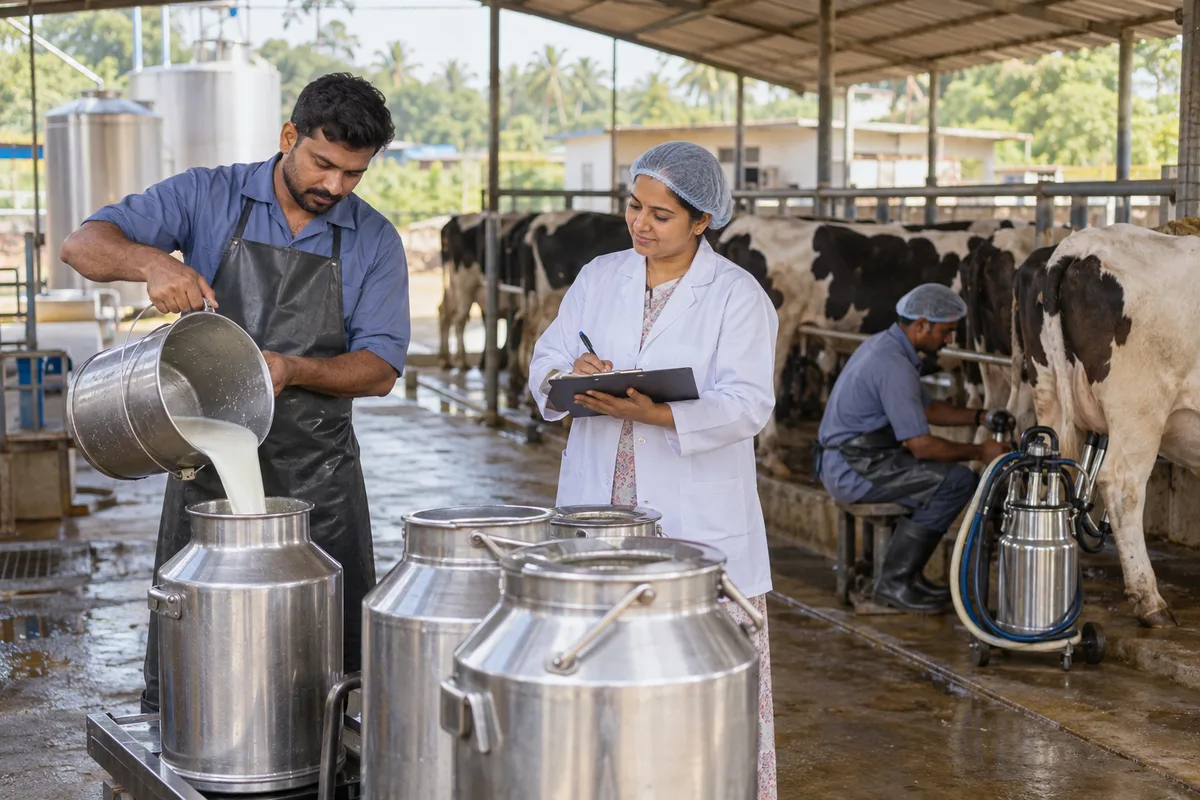
What dealer development means
Dealer development is the work of improving sales through your existing retail-facing dealers, using purchase records, counter visibility, scheme tracking, and field visits to decide where support is needed. GullySales builds the dealer scorecards and visit plans, then works through your field team to track agreed actions against dealer orders.
Also for dairy producers
- Distributor sales force effectiveness for dairy producers
- Partner compensation and incentive design for dairy producers
- Retail execution and merchandising for dairy producers
- Route to market and distribution strategy for dairy producers
- Trade promotion planning for dairy producers
- B2B marketing for dairy producers
- Online brand promotion for dairy producers
- Content marketing for dairy producers
Sales and marketing for dairy producers, the overview.
Last updated 14 Nov 2026. Rules for this trade differ by state and professional body, and they change. We describe restrictions in general terms, so check the current position with your own council or adviser before you publish anything.
For dairy producers
Where it usually goes wrong, and what we would do.
“The pouch is stocked but the fridge belongs to someone else”
A kirana carries your curd in a fridge shared with a rival brand, a soft drink dealer's bottles and the owner's own lunch. When the shelf is full, the shopkeeper pushes whichever brand pays the better margin or arrives last. A visit that asks only for the next order never looks inside the fridge, so the real reason for slow reordering stays hidden.
“Expiry fear decides how much a dealer orders”
Fresh dairy has a short life on the shelf. A shopkeeper who once absorbed a loss on unsold curd or paneer orders cautiously afterwards, and no reminder about a new scheme changes that memory. Development work has to deal with the return and replacement terms the dealer believes apply, because the written terms and the remembered terms are rarely the same.
“The van driver is the only person who sees the outlet”
On a milk run, the driver hands over crates, collects empties and moves on. That person knows which booth always runs short by seven in the morning and which one never opens on time. None of it reaches the sales head, because there is no place to write it down. The outlet is judged by its invoice instead of by what the driver saw.
“Schemes on paneer and ghee are announced but not tracked”
A festival offer on ghee is shared on a group chat, a few dealers claim it, and the finance team later asks which outlets qualified. Without a record linking the offer to invoices and the next order, nobody can say whether the scheme moved stock or only reduced the rate on what the dealer was going to buy anyway.
What we do
What we deliver for dairy producers.
The work available for this need. We agree the deliverables and responsibilities for your engagement in writing.
Outlet register and starting record
A checked list of booths, kiranas, sweet shops and chilled-counter retailers, matched to van billing or distributor invoices. Duplicates, closed outlets and shops that buy only once in a long while are marked, so everyone starts from the same list.
Result: The sales head can point to the invoices behind every outlet on the list.
Outlet scorecard
Written scoring rules that weigh purchases by product line, regularity of reorder, scheme participation and whether the chiller or shelf shows your product. The rules are agreed with your sales head before any outlet is ranked or visited.
Result: Any outlet's ranking can be explained from the scorecard, not from opinion.
Phone-ready visit checklist
A short note the field person or driver fills in at the outlet: stock on hand, expiry dates seen, shelf and chiller position, rival brand activity, complaints raised, and the next action with a named owner. It is built for a shop counter, not an office desk.
Result: Each completed visit shows an action and a person, or the reason there is none.
Returns and replacement note
A one-page statement of what your company will take back or replace on short-life products, and how a dealer claims it. Your accounts team confirms the terms before the note reaches any outlet, so the field team repeats one rule instead of improvising.
Result: A dealer can read the return terms in your own words and so can your accountant.
Scheme claim tracker
A record joining each scheme circular to the outlets that joined, the invoices that qualified and the orders that followed. Claims without matching invoices stay on an exceptions list for your team to settle, instead of passing as verified.
Result: For any scheme, you can list which outlets qualified and what they bought next.
Counter material and chiller branding
Boards, stickers or chiller wraps within the agreed scope, with artwork approved by you before printing. The visit checklist then records whether the material reached the outlet and is visible to a customer standing at the counter.
Result: A visit record shows whether each outlet displays the approved material.
How the result is measured
- Dealer purchases from the distributor against the baseline
- Active, dormant, and reactivated dealers, using agreed definitions
- Scheme claims matched to supporting invoices
Recorded as a baseline before work starts, so every later report has an honest comparison.
Who it is for
This is written for these dairy producers.
- Milk producers and processors
- Paneer, curd and ghee manufacturers
- Flavoured and UHT milk brands
- Co-operative dairy societies
- Bulk suppliers to hotels and sweet shops
- Milk booth and kirana distribution networks
Before you decide
Agree the work. Know how to judge it.
Dealer development for dairy producers: use these checks to prepare, choose the scope, and review what changes.
Bring the right evidence
Map existing partners, their territories, and the customers they serve. Review active selling and repeat orders separately from the number of partners signed up.
Make the scope clear
Agree partner fit, territory rules, onboarding, and support responsibilities. Clarify how direct enquiries and partner enquiries are assigned before starting recruitment.
Check the work in use
Follow a partner enquiry through to an order and the next purchase. Check whether the partner has the product knowledge and material needed to sell without repeated intervention.
Know when to change course
If current partners cannot sell because supply or support is weak, resolve that before recruiting more. A bigger network can spread the same problem further.
These are discussion points, not a fixed package. GullySales confirms the deliverables, responsibilities, fee, and term in writing after reading your brief and speaking with you.
Before we start
What to have ready before the work starts.
The records, access and decisions this work needs from dairy producers. Anything missing is noted in the written scope, with who will supply it.
- Van billing or distributor invoices by outlet
- Outlet-level purchase records are the base of every comparison. Without them we can only describe visits, not orders, and any ranking would rest on the field team's memory. If billing is by route and not by outlet, tell us at the start so the gap is planned for.
- Your current return and replacement terms
- We need the terms as your accounts team applies them, not as the circular states them. Dealers behave according to the version they believe. If the written and applied terms differ, the work begins by settling which one is real.
- Recent scheme circulars and claims
- Past festival or launch offers, with the claims that followed, show how schemes have been run and where proof was missing. If circulars were only sent as messages, collect screenshots and the date each was sent, because the tracker starts from them.
- A named person for each outlet action
- Every problem a visit finds, such as a warm chiller or a missing price list, needs someone who can act. Name the sales head, the depot in charge and the person who handles complaints. Without owners, the checklist records problems that nobody closes.
- Photographs of the shelf and chiller
- A few photographs from different outlets show what a counter looks like when your product is well placed and when it is hidden. They let us write checklist questions around what the field team really sees, and they give the artwork team the shop sizes to design for.
How it works
How the dealer development work runs
The work itself, in order. How an engagement starts, from your brief to a written scope, is set out on our method page.
- 1
Outlet and invoice access agreement
You tell us who holds the van billing and distributor invoices, and which person in your company makes decisions about outlets. We agree which outlets are in scope and which records will be used. Nothing is ranked until the people who own those records have confirmed we may use them.
- 2
Reconciling the outlet list
We match your outlet list to billing and visit history, marking closed shops, duplicates and names that differ between the van sheet and the distributor. You confirm the starting figures and accept any gaps in the data, so later comparisons are made against numbers everybody has already seen.
- 3
Ranking outlets with the sales head
We propose scorecard rules and a first ranking. Your sales head corrects it with local knowledge, such as a booth that buys little because its locality changed, or a kirana whose low orders trace to late supply rather than weak demand. The agreed ranking decides who gets attention first.
- 4
Handing the checklist to the van and field team
The checklist and visit plan go to the people who actually stand at the outlet. A few of them try it on live routes, and we change any question that is hard to answer at a counter. Your sales head names who closes each action the checklist raises.
- 5
Running schemes through the tracker
Each scheme is entered with its terms before it is announced. As claims arrive, we match them to invoices and later orders. Outlets that claim without a matching invoice are listed for your team to resolve, and the circular text is checked against what finance will actually pay.
- 6
Reading results against the starting record
We compare outlet orders with the record taken before the work began, set beside visit evidence and open actions. Measured figures are kept apart from estimates, and any change in supply or season that affects the comparison is written next to the number it affects.
Where this fits
Three pieces of sales work, in this order.
This work sits inside sales process design, at stage 1, prospecting and lead generation. The audit comes before it, and sales management keeps it running.
Step 1
Sales audit
Find where deals are being lost and what to fix first.
Start here if you cannot say where orders are lost.
Step 2 · you are here
Sales process design
One written way to sell, from first enquiry to repeat order.
Start here if every salesperson sells differently.
Step 3
Sales management
A target, a review routine and someone who owns the number.
Start here if the team has targets and no routine.
FAQ
Questions owners ask before they call.
Not here? More answers, or ask on WhatsApp.
How is dealer development different from signing up new booths and kiranas?
Does this work if our milk is sold through distributors and we do not bill outlets directly?
Can you tell us why a booth stopped taking our pouch?
Will you change our scheme rates or margins for dealers?
Do we need an app or a new system for the visit checklist?
What if our outlet records are poor or incomplete?
How much does it cost?
How long is the contract?
How soon will we see results?
Who will actually do the work?
From the blog
Further reading for dairy producers.
 5 min read · 6 Oct 2026How food brands win the trade and the shopperA food or household brand is chosen twice, by the distributor or retailer who stocks it and by the shopper who picks it up. What each buyer checks.
 8 min read · 22 Jul 2026What a dairy brand's website must do for distributors and bulk buyersA dairy website is read by distributors and bulk buyers. Here are the pages, the FSSAI details and the cold chain answers they look for.
 6 min read · 16 Mar 2026How to get on a company's approved vendor list without the file stallingVendor registration runs through four or five desks inside the buyer, each waiting on you. Send complete papers and keep your sponsor informed.
More for dairy producers
Related work to consider.
Closest to this: channels and partners
Also for dairy producers
Or start from the overview: sales and marketing for dairy producers.
Your next practical step
Tell us what you are trying to grow, and we will read it before we call.
Eight short steps, mostly taps. Skip anything you would rather answer on the call.