Dairy producers · Partner compensation and incentive design
Pay distributors and booths for milk that reaches a household, not for stock that sits.
Partner compensation and incentive design for a dairy producer sets the margins, slabs and scheme rules that reward distributors, booths and kirana dealers for specific behaviour, such as selling a new curd pack or settling dues on time. GullySales tests proposed rewards against your order, return and margin records, and writes settlement terms your sales and accounts teams have approved.
Scope, fee, reporting and term are agreed in writing after we have read your brief and spoken to you.
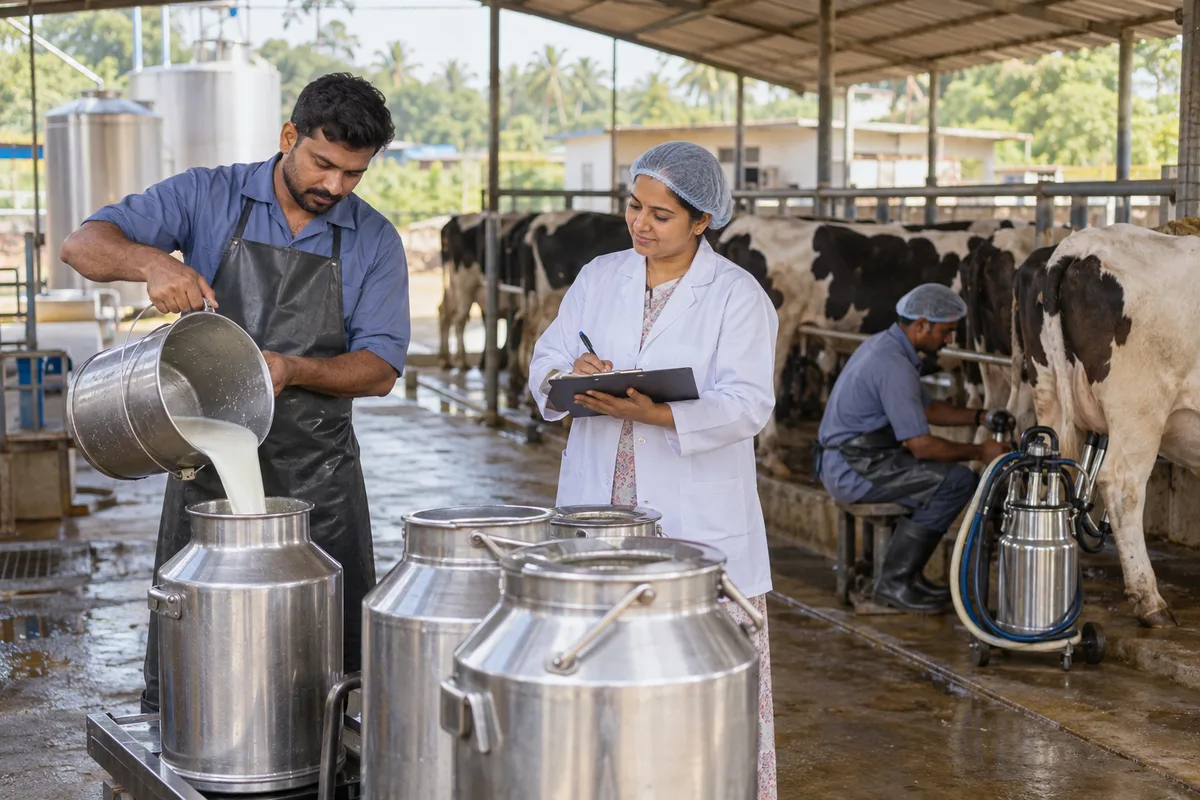
What partner compensation and incentive design means
Partner compensation and incentive design sets the margins, bonuses, and scheme rules that reward dealers and distributors for specific sales behaviour. GullySales reviews your existing payouts, tests proposed rewards against your order and margin records, and writes terms that connect partner earnings to evidence of the business you want to grow.
Also for dairy producers
- Dealer development for dairy producers
- Distributor sales force effectiveness for dairy producers
- Retail execution and merchandising for dairy producers
- Route to market and distribution strategy for dairy producers
- Trade promotion planning for dairy producers
- B2B marketing for dairy producers
- Online brand promotion for dairy producers
- Content marketing for dairy producers
Sales and marketing for dairy producers, the overview.
Last updated 14 Nov 2026. Rules for this trade differ by state and professional body, and they change. We describe restrictions in general terms, so check the current position with your own council or adviser before you publish anything.
For dairy producers
Where it usually goes wrong, and what we would do.
“A purchase slab rewards loading, not selling”
A distributor who reaches the slab by taking extra cartons of curd and paneer earns the bonus on the day of purchase. The shelf life then runs against the distributor, returns arrive, and the next order is thin. Paying on what leaves the depot cannot tell stock that moved from stock that was merely moved.
“Short shelf life makes returns part of the scheme”
A reward that ignores returns pays twice for the same carton: once when it is bought and again, in effect, when it is credited back. For ghee and long-life milk the risk is smaller, but for curd, paneer and fresh milk it is central. The rules must say how returns affect eligibility before any partner reads the circular.
“Large agents collect, small booths see no reason to change”
Absolute volume targets favour the agent who already supplies the largest number of routes. A small booth owner or a new distributor sees a target far out of reach and carries on as before. The company pays the big agent for volume it would have got anyway, and the partner it wanted to move first receives nothing.
“Nobody can say what a festival scheme earned”
A sweets-season offer on ghee and paneer is paid out, the quarter closes and the question comes: did it add sales or merely lower the rate on purchases that were coming? Without an estimate of what would have sold anyway, and the product margin that funds the reward, the only figure left is the payout itself.
What we do
What we deliver for dairy producers.
The work available for this need. We agree the deliverables and responsibilities for your engagement in writing.
Statement of what the scheme is for
A written line naming the behaviour being rewarded, such as opening new booths, stocking a new flavoured milk, or paying within terms, and the evidence that will show it happened. You approve it before any payout structure is discussed.
Result: Everyone involved can read what success means before the scheme starts.
Slab and payout model
Proposed margins, slabs or bonuses tested against your past orders, with a partner-by-partner view of who would qualify under each option and what each would cost. The model shows the effect on large and small partners side by side.
Result: For each option you can list who earns what and the total cost.
Purchase and onward-sale rules
A written split between rewards earned for buying from you and rewards earned for selling onward to booths, kiranas and kitchens. Each part names the record that supports it, such as your invoice or the distributor's secondary-sales statement.
Result: Each part of a payout points to a named record you can check.
Cost and returns calculation
A calculation using product margins, expected returns of short-life lines and an agreed estimate of sales without the scheme. Assumptions are visible, so you can question the extra contribution claimed before you approve a budget.
Result: The assumptions behind the budget are listed where you can dispute them.
Claim and settlement rules
Written requirements for invoices, stock statements and secondary-sales records, how returns affect eligibility, and who approves a credit note or a payment. Finance and sales sign the same document, so a claim has one answer.
Result: A claim can be decided from the document without a phone call to finance.
Partner circular with worked examples
A short circular in the partners' language covering eligibility, dates and payout examples for a booth, a sub-distributor and a bulk supplier. Sales and finance check each example against the calculation before it is released.
Result: Every example in the circular reproduces from the approved calculation.
How the result is measured
- Scheme cost against estimated incremental sales-out and contribution
- Partners meeting the chosen behaviour against the agreed baseline
- Qualifying completed orders, separate from distributor stock purchases
Recorded as a baseline before work starts, so every later report has an honest comparison.
Who it is for
This is written for these dairy producers.
- Milk producers and processors
- Paneer, curd and ghee manufacturers
- Flavoured and UHT milk brands
- Co-operative dairy societies
- Bulk suppliers to hotels and sweet shops
- Milk booth and kirana distribution networks
Before you decide
Agree the work. Know how to judge it.
Partner compensation and incentive design for dairy producers: use these checks to prepare, choose the scope, and review what changes.
Bring the right evidence
Map existing partners, their territories, and the customers they serve. Review active selling and repeat orders separately from the number of partners signed up.
Make the scope clear
Agree partner fit, territory rules, onboarding, and support responsibilities. Clarify how direct enquiries and partner enquiries are assigned before starting recruitment.
Check the work in use
Follow a partner enquiry through to an order and the next purchase. Check whether the partner has the product knowledge and material needed to sell without repeated intervention.
Know when to change course
If current partners cannot sell because supply or support is weak, resolve that before recruiting more. A bigger network can spread the same problem further.
These are discussion points, not a fixed package. GullySales confirms the deliverables, responsibilities, fee, and term in writing after reading your brief and speaking with you.
Before we start
What to have ready before the work starts.
The records, access and decisions this work needs from dairy producers. Anything missing is noted in the written scope, with who will supply it.
- Your last few schemes in writing
- Circulars, messages and payout sheets show what partners were promised and what was paid. If terms lived on a group chat, gather screenshots with dates. Without them we cannot tell whether a gap between promise and payment was a rule or an exception.
- Order, return and payment records by partner
- A reward that ignores returns and late payment misleads, so all three records are needed for the same partners and periods. If returns are recorded as credit notes only at quarter end, say so, because the model then needs a separate step to attribute them.
- Margin by product line
- Milk, curd, paneer and ghee earn very different contributions. We need the margin for each, as your accounts team calculates it, to test what a reward costs. With a single blended margin, a scheme could look affordable and quietly lose money on one line.
- A sales head and a finance lead who can decide
- One person to choose the behaviour, and another to confirm what can be funded and shown. If they disagree, the disagreement is settled before modelling starts. A scheme designed to satisfy both without a decision satisfies neither.
- Your adviser's availability
- Payout structures and credit notes carry tax and compliance questions that belong to your own adviser. Tell them that a review is coming and who will send the documents. If review is left to the last minute, the launch waits or goes out unreviewed.
How it works
How the partner compensation and incentive design work runs
The work itself, in order. How an engagement starts, from your brief to a written scope, is set out on our method page.
- 1
Gathering earlier schemes and the records behind them
You share past scheme terms with order, return and payment records for the same periods. We agree the comparison period and list what evidence is missing before reading anything into the results. A scheme with no matching invoices is recorded as unmeasured, not as a success or a failure.
- 2
Choosing what behaviour to pay for
Your sales head selects the single change the scheme must bring. Finance confirms what proof exists and how much contribution can fund a reward. Wanting several changes at once blurs the rules, so we ask you to rank them and design for the first.
- 3
Modelling the payout options
We test alternatives against your history: who would qualify, what each would cost, and where loading of short-life stock would distort the result. You choose a structure and sign off its assumptions. Options that cost more than the funding available are set aside in writing.
- 4
Review by your own adviser
Your chartered accountant or other adviser reviews the payout documents and the tax treatment of rewards and credit notes. GullySales prepares and explains the documents; the adviser decides on anything regulated, and you hold the final approval for the scheme and its terms.
- 5
Briefing the team and the partners
Your sales team is walked through the rules and the worked examples before partners see them, so the answer to a claim does not change by who is asked. The circular then goes to partners. Questions that arise are noted and answered from the written document.
- 6
Reading the scheme against the starting record
After the scheme period we compare orders, returns and onward sales with the position recorded before it began, using the same definitions. The payout is set beside the estimated sales without the scheme, and the margin it consumed, so the cost can be judged.
Where this fits
Three pieces of sales work, in this order.
This work sits inside sales management. A target, a review routine and someone who owns the number.
Step 1
Sales audit
Find where deals are being lost and what to fix first.
Start here if you cannot say where orders are lost.
Step 2
Sales process design
One written way to sell, from first enquiry to repeat order.
Start here if every salesperson sells differently.
Step 3 · you are here
Sales management
A target, a review routine and someone who owns the number.
Start here if the team has targets and no routine.
FAQ
Questions owners ask before they call.
Not here? More answers, or ask on WhatsApp.
Why not just raise the distributor's margin on all products?
Can you set a reward for the milk booth staff or delivery boys?
Will the scheme stop distributors dumping stock at month end?
Do you handle the tax side of incentives and credit notes?
Can you control the price booths sell at through rewards?
How do we know the scheme paid for itself?
How long is the contract?
How soon will we see results?
Who will actually do the work?
What do you need from us?
From the blog
Further reading for dairy producers.
 5 min read · 6 Oct 2026How food brands win the trade and the shopperA food or household brand is chosen twice, by the distributor or retailer who stocks it and by the shopper who picks it up. What each buyer checks.
 8 min read · 22 Jul 2026What a dairy brand's website must do for distributors and bulk buyersA dairy website is read by distributors and bulk buyers. Here are the pages, the FSSAI details and the cold chain answers they look for.
 6 min read · 16 Mar 2026How to get on a company's approved vendor list without the file stallingVendor registration runs through four or five desks inside the buyer, each waiting on you. Send complete papers and keep your sponsor informed.
More for dairy producers
Related work to consider.
Closest to this: channels and partners
Also for dairy producers
Or start from the overview: sales and marketing for dairy producers.
Your next practical step
Tell us what you are trying to grow, and we will read it before we call.
Eight short steps, mostly taps. Skip anything you would rather answer on the call.