Dairy producers · Retail execution and merchandising
Keep the chiller stocked, facing the buyer and in date.
Retail execution and merchandising for a dairy producer means checking what actually sits in the booth chiller, the kirana cabinet and the supermarket dairy shelf, and how it is arranged for the buyer. GullySales visits the outlets, records stock, dates and placement, and agrees a standard that your van team and stockists can follow.
Scope, fee, reporting and term are agreed in writing after we have read your brief and spoken to you.
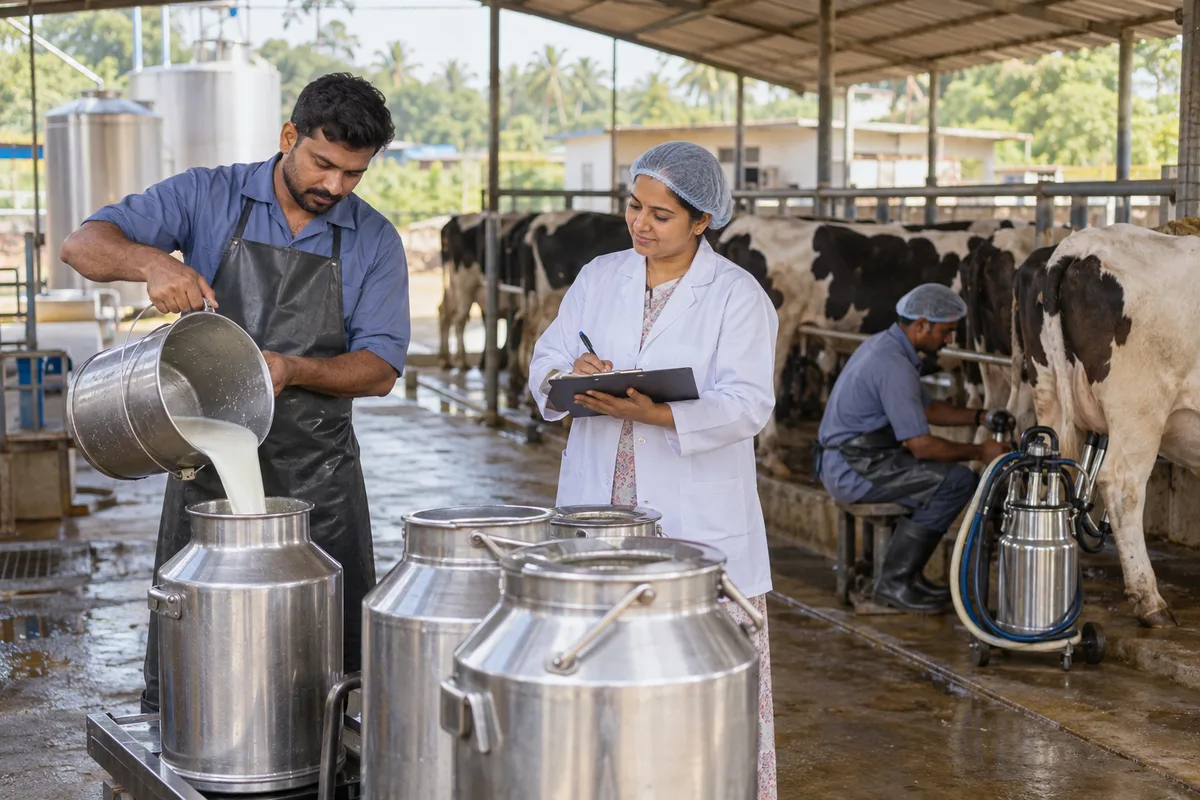
What retail execution and merchandising means
Retail execution and merchandising checks how your products are stocked, displayed, and priced at the point of sale, then sets practical standards for each outlet type. GullySales reviews shelf presence, prepares display guidance and point of sale material, and gives your field team outlet-level findings to take back to dealers and your order desk.
Also for dairy producers
- Dealer development for dairy producers
- Distributor sales force effectiveness for dairy producers
- Partner compensation and incentive design for dairy producers
- Route to market and distribution strategy for dairy producers
- Trade promotion planning for dairy producers
- B2B marketing for dairy producers
- Online brand promotion for dairy producers
- Content marketing for dairy producers
Sales and marketing for dairy producers, the overview.
Last updated 14 Nov 2026. Rules for this trade differ by state and professional body, and they change. We describe restrictions in general terms, so check the current position with your own council or adviser before you publish anything.
For dairy producers
Where it usually goes wrong, and what we would do.
“The chiller is shared with rivals”
A cabinet in a corner shop holds your pouches beside two other dairies, and the shopkeeper decides who sits at the front. Pouches pushed to the back are seen last and sold last. Placement is renegotiated at the counter on every delivery, so it needs a clear request your team can make politely, along with a record showing which outlets actually give you the front rows and which do not.
“Old pouches hide behind new ones”
A van unloads fresh stock and the shopkeeper slides it in front, leaving the older packs behind with the shortest remaining shelf life. Those are the pouches that return unsold, and a booth that keeps taking returns soon orders less. Rotation by date is a habit that has to be taught and checked at the cabinet, because a delivery note will never show it.
“The full range never reaches the shelf”
The booth stocks the toned milk pouch but has no curd cups, paneer pack or ghee sachet next to it. Your order desk sees only what was ordered, not what was never offered. A new line sits in the price list while the shelf in front of the buyer shows only the old one, so the visit has to record what is missing, not just what is present.
“Display material is delivered, not fitted”
Cabinet stickers, rate boards and hanging tags are handed to the delivery boy and end up behind the counter. Sunlight on a glass door or a poster covering the temperature display causes its own trouble. Material only helps where it is fitted at eye level, kept clean and replaced when it fades, and somebody has to go back and look.
What we do
What we deliver for dairy producers.
The work available for this need. We agree the deliverables and responsibilities for your engagement in writing.
Outlet visit record
A dated sheet for each outlet in the agreed sample. It lists the packs in the cabinet, the rows they occupy, the dates on the oldest and newest pouch, and the shelf price shown. Your supervisor can read it without being at the counter.
Result: Every sampled outlet has a dated record and photographs you can open and compare.
Chiller and shelf standard by outlet type
One short page each for the milk booth, the kirana cabinet, the sweet shop fridge and the supermarket dairy shelf. It states which products face forward, which rows are asked for and how the older packs are placed.
Result: A van salesperson can read the page for an outlet type and know what to ask for.
Date and rotation check sheet
A simple tick sheet the van team uses at the cabinet, showing whether older packs sit in front, whether anything is close to the end of its date and what was taken back. It is designed for a quick look, not a long audit.
Result: You can see which outlets rotate stock and which return it unsold.
Range gap list by outlet
A list showing which pack sizes and lines each outlet stocks and which it has never carried. It separates a shop that declined a line from one that was never offered it, so the order desk follows up the right ones.
Result: The order desk holds a named list of outlets to offer each line to.
Display material placement list
A record of every sticker, board or tag supplied, the outlet it went to and a photograph of where it was fitted. Items found behind the counter are marked and the shopkeeper is asked again.
Result: Each item supplied can be traced to a photographed position or marked as not fitted.
Findings note for stockists and your team
A plain summary of what the visits found, written so your sales head can raise it with a stockist or a supermarket buyer. It names outlets and dates, and it separates what your team can fix from what needs the outlet's agreement.
Result: Your sales head can open a stockist conversation with dated findings in hand.
How the result is measured
- Outlets meeting the approved display standard
- Point of sale material correctly placed, separate from material dispatched
- Missing priority products or variants at the shelf
Recorded as a baseline before work starts, so every later report has an honest comparison.
Who it is for
This is written for these dairy producers.
- Milk producers and processors
- Paneer, curd and ghee manufacturers
- Flavoured and UHT milk brands
- Co-operative dairy societies
- Bulk suppliers to hotels and sweet shops
- Milk booth and kirana distribution networks
Before you decide
Agree the work. Know how to judge it.
Retail execution and merchandising for dairy producers: use these checks to prepare, choose the scope, and review what changes.
Bring the right evidence
Map the accounts, travel pattern, and purpose of each visit. Distinguish a useful buyer meeting from a visit recorded only to meet an activity target.
Make the scope clear
Agree territory coverage, visit priorities, and how notes reach the rest of the team. Include the handover for quotations or technical questions that cannot be resolved on site.
Check the work in use
Review what changed after the visit: a requirement clarified, an agreed trial, or a next decision. Compare time spent with account potential and the quality of follow-up.
Know when to change course
If a routine update can be handled remotely, reserve travel for work that needs a visit. Do not expand coverage beyond the team's ability to follow through.
These are discussion points, not a fixed package. GullySales confirms the deliverables, responsibilities, fee, and term in writing after reading your brief and speaking with you.
Before we start
What to have ready before the work starts.
The records, access and decisions this work needs from dairy producers. Anything missing is noted in the written scope, with who will supply it.
- A route-wise outlet list
- The names, addresses and route of each outlet your vans serve, with the type of outlet marked. We cannot choose a sample without it, and a list built from memory leaves out the outlets nobody visits, which are exactly the ones worth seeing.
- Product list with pack sizes
- Every product and pack size you intend to see on the shelf, with the printed price on the pack. Without it we cannot tell a missing line from one you stopped supplying, and the gap list will be wrong from its first page.
- Who owns each chiller
- A note of which cabinets are yours, which are lent by a stockist and which belong to the shopkeeper or a rival dairy. Branding a cabinet that belongs to someone else causes friction, so the standard has to be written around what you may actually ask for.
- Display material in stock
- The stickers, rate boards and tags you hold, with a sample of each. We plan placement around what exists, not around material you meant to print. If a sticker is out of date, the old design and the new one should not appear on the same route.
- A person to receive the findings
- Name a van supervisor or area sales head who will read the visit records and act on them. Findings sent to nobody are simply filed, and the second round of visits then shows the same cabinets in the same condition.
How it works
How the retail execution and merchandising work runs
The work itself, in order. How an engagement starts, from your brief to a written scope, is set out on our method page.
- 1
Agree the outlet list and routes
We start with the outlet list your van team already serves, grouped by route and by type: booths, kiranas, sweet shops and any supermarket shelf. You choose which routes are in the sample. Without a list there is nothing to visit, so this is the first thing we ask for and the point where the sample is fixed in writing.
- 2
Record the shelf before changing anything
A first round of visits records the cabinet as it stands, with photographs of rows, dates, shelf prices and any display material. Nothing is corrected during this round. The record is the figure everything later is read against, so it is taken on ordinary trading mornings and not on days when the outlet has been warned.
- 3
Write the standard with your sales head
We draft one page for each outlet type from what the first round showed, using the cabinet space that really exists. Your sales head reads it against a booth cabinet and a kirana counter before approving. A standard that needs a cabinet twice the size will be ignored, so the draft is cut back to what the space allows.
- 4
Brief the van team on the cabinet
The salespeople and delivery staff who stand at the counter are shown the standard and the check sheet using photographs from their own routes. They are asked what a shopkeeper will refuse. Their answers change the standard before it goes wider, since they know which request causes an argument and which is accepted.
- 5
Run the standard on a few routes
The standard goes to a small set of routes first. The van team fills the check sheet at each call and the display material is fitted with a photograph taken afterwards. Problems in the sheet or the wording show up on these routes, and they are corrected before the standard reaches the full network.
- 6
Read the result against the first record
A second round of visits repeats the first, and we compare row positions, dates, range and display material against the record taken before the work began. The comparison is written as a plain list of what changed and what did not. Outlets that did not change are named, with the reason the shopkeeper gave.
Where this fits
Three pieces of sales work, in this order.
This work sits inside sales process design, at stage 1, prospecting and lead generation. The audit comes before it, and sales management keeps it running.
Step 1
Sales audit
Find where deals are being lost and what to fix first.
Start here if you cannot say where orders are lost.
Step 2 · you are here
Sales process design
One written way to sell, from first enquiry to repeat order.
Start here if every salesperson sells differently.
Step 3
Sales management
A target, a review routine and someone who owns the number.
Start here if the team has targets and no routine.
FAQ
Questions owners ask before they call.
Not here? More answers, or ask on WhatsApp.
How is retail execution different from running a shop display scheme?
Can you make a shopkeeper give us the front of the chiller?
Do the visits cover the cold chain and food safety?
What if our outlets are mostly small booths with no planned layout?
Does this include supermarket dairy shelves as well as booths?
How will we know the visits changed anything?
How much does it cost?
How long is the contract?
How soon will we see results?
Who will actually do the work?
From the blog
Further reading for dairy producers.
 5 min read · 6 Oct 2026How food brands win the trade and the shopperA food or household brand is chosen twice, by the distributor or retailer who stocks it and by the shopper who picks it up. What each buyer checks.
 8 min read · 22 Jul 2026What a dairy brand's website must do for distributors and bulk buyersA dairy website is read by distributors and bulk buyers. Here are the pages, the FSSAI details and the cold chain answers they look for.
 6 min read · 16 Mar 2026How to get on a company's approved vendor list without the file stallingVendor registration runs through four or five desks inside the buyer, each waiting on you. Send complete papers and keep your sponsor informed.
More for dairy producers
Related work to consider.
Closest to this: channels and partners
Also for dairy producers
Or start from the overview: sales and marketing for dairy producers.
Your next practical step
Tell us what you are trying to grow, and we will read it before we call.
Eight short steps, mostly taps. Skip anything you would rather answer on the call.