Dairy producers · Route to market and distribution strategy
Match each product to the route its shelf life allows.
Route to market and distribution strategy for a dairy producer decides how fresh milk, paneer, curd, ghee and long-life packs reach each buyer, through your own vans, booths, wholesalers or direct supply. GullySales compares your present routes with the alternatives, using your own delivery and sales records, and writes the structure for your approval.
Scope, fee, reporting and term are agreed in writing after we have read your brief and spoken to you.
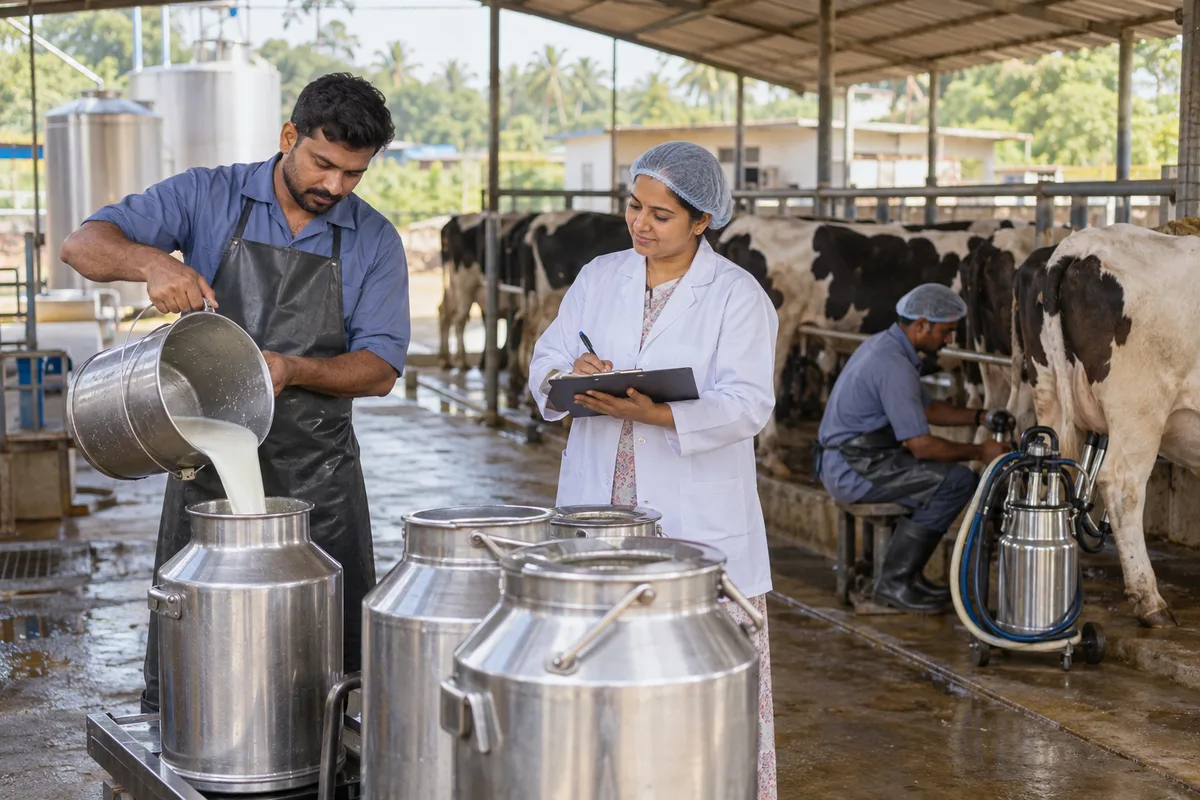
What route to market and distribution strategy means
Route to market and distribution strategy defines the layers, partner numbers, and stock points between your factory and the buyer. GullySales uses your sales records and field discussions to compare network options, identify gaps in coverage, and plan changes to the structure before you appoint more distributors or commit to another depot.
Also for dairy producers
- Dealer development for dairy producers
- Distributor sales force effectiveness for dairy producers
- Partner compensation and incentive design for dairy producers
- Retail execution and merchandising for dairy producers
- Trade promotion planning for dairy producers
- B2B marketing for dairy producers
- Online brand promotion for dairy producers
- Content marketing for dairy producers
Sales and marketing for dairy producers, the overview.
Last updated 14 Nov 2026. Rules for this trade differ by state and professional body, and they change. We describe restrictions in general terms, so check the current position with your own council or adviser before you publish anything.
For dairy producers
Where it usually goes wrong, and what we would do.
“Shelf life sets the route, not the map”
Pasteurised pouch milk must reach the cabinet while it still has much of its life left, so a chilled van and a short route decide the radius. Ghee and long-life packs can travel through ordinary wholesalers. One structure for every product either wastes the chilled van on ambient goods or sends fresh stock down a slow chain. The first job is to split the range by how far each item can safely travel.
“Vans carry cost whatever they carry”
A chilled van costs the same to run on a thin route as on a busy one. A booth that takes few litres still gets a stop, and the route looks busy on paper while the margin disappears in fuel and driver time. Before adding a stop or a stockist, the route has to be read as a loop with a cost, not as a list of customers.
“Booths, kiranas and kitchens are three routes”
A milk booth reorders on its own rhythm, a kirana wants small drops with returns accepted, and a hotel or sweet shop wants a fixed drop, a quoted rate and credit terms. Putting all three on one van and one price list helps nobody. Each buyer type may need its own route, its own paperwork and its own person responsible for it.
“Returns and credit travel back down the chain”
Unsold pouches come back through whoever delivered them, and a stockist who bears the loss will stop stocking fresh lines. Credit given informally at the booth sits between the van team and the accounts desk. A route plan that ignores who carries returns and who chases payment looks sound until the first month of reconciliation.
What we do
What we deliver for dairy producers.
The work available for this need. We agree the deliverables and responsibilities for your engagement in writing.
Delivery and sales map
Your invoices and van logs placed on a map of the area, showing where litres leave, which drops are close together and which stops stand alone. It marks areas with enquiries but no stable supply route. You can check each point against your own records.
Result: Every marked area can be traced back to invoices, van logs or recorded enquiries.
Product-by-route table
A table listing each product against the routes that suit its shelf life: own van, stockist, wholesaler, booth, direct kitchen supply. It records the reason for each entry and what a change would cost in handling.
Result: Each product has a named route and a written reason you can challenge.
Route cost comparison
A comparison of present routes and one or two alternatives, using your own fuel, driver and cold-storage figures. It shows which stops carry the route and which only add to it. We use your numbers, not outside averages.
Result: Your finance lead can reproduce each comparison from the figures supplied.
Stockist and depot role notes
A short note for each stockist, depot or chilling point stating what it holds, what it delivers, who bears returns and who chases credit. Ambiguity here is the usual source of disputes between your team and stockists.
Result: Each partner's responsibilities are written on one page both sides can read.
Proposed structure and changeover plan
The recommended structure, with the order in which routes would be moved so that no booth loses its morning delivery on the switch day. It lists what each route change needs from your team.
Result: You can approve, change or reject each route change separately.
Measures to read afterwards
A short list of figures you already hold, such as returns by route and stops per van, recorded before the change so the same figures can be read after it. Nothing is added that your accounts desk cannot produce.
Result: The before figures are written down and dated before any route moves.
How the result is measured
- Coverage gaps by territory against the starting baseline
- Cost of each distribution layer against reach delivered
- Retailers actively ordering through each partner
Recorded as a baseline before work starts, so every later report has an honest comparison.
Who it is for
This is written for these dairy producers.
- Milk producers and processors
- Paneer, curd and ghee manufacturers
- Flavoured and UHT milk brands
- Co-operative dairy societies
- Bulk suppliers to hotels and sweet shops
- Milk booth and kirana distribution networks
Before you decide
Agree the work. Know how to judge it.
Route to market and distribution strategy for dairy producers: use these checks to prepare, choose the scope, and review what changes.
Bring the right evidence
Map existing partners, their territories, and the customers they serve. Review active selling and repeat orders separately from the number of partners signed up.
Make the scope clear
Agree partner fit, territory rules, onboarding, and support responsibilities. Clarify how direct enquiries and partner enquiries are assigned before starting recruitment.
Check the work in use
Follow a partner enquiry through to an order and the next purchase. Check whether the partner has the product knowledge and material needed to sell without repeated intervention.
Know when to change course
If current partners cannot sell because supply or support is weak, resolve that before recruiting more. A bigger network can spread the same problem further.
These are discussion points, not a fixed package. GullySales confirms the deliverables, responsibilities, fee, and term in writing after reading your brief and speaking with you.
Before we start
What to have ready before the work starts.
The records, access and decisions this work needs from dairy producers. Anything missing is noted in the written scope, with who will supply it.
- Invoices by outlet
- A list of invoices or dispatch records by outlet, covering at least a full cycle of your busy and slow periods. Without it the map shows only where you think milk goes, and a structure built on opinion will protect the routes everyone is already used to.
- Van trip records
- Trip sheets showing the route, stops, litres loaded, returns and the time the van reached each stop. If drivers keep these on paper, a photograph of each sheet is enough. Missing trip records mean the route cost is a guess.
- Return and credit ledgers
- Whatever you keep on unsold pouches taken back and amounts owed by booths, kiranas and kitchens. We need to see who carries each loss. If credit is tracked informally, tell us so, and we will mark those routes as unverified in the comparison.
- Quality limits for each product
- A note from your quality team on how long each product can stay outside the cabinet and what storage it needs. We use it to place products in routes. If it is missing, the product-by-route table cannot be completed safely.
- A decision maker for changes
- One person who can approve moving a route or ending a stockist arrangement. A route plan with no approver stays a document, and stockists who hear rumours of change before a decision is made begin to hold back orders.
How it works
How the route to market and distribution strategy work runs
The work itself, in order. How an engagement starts, from your brief to a written scope, is set out on our method page.
- 1
Gather invoices, van logs and returns
We begin with what you already hold: dispatch invoices by outlet, van trip records, return notes and any credit ledger. Missing records are listed, not guessed. This is the first request because the whole structure is built from where milk actually went, and a plan drawn from memory repeats the existing routes.
- 2
Split the range by shelf life
Each product is placed in a band: fresh and chilled, chilled but slower, and ambient. We ask your quality team what each can bear in transit and in a shopkeeper's cabinet, and we write the answer down. Your food safety adviser decides limits; we only use the figures you give us.
- 3
Talk to the route people
We speak with van drivers, area supervisors and a few stockists about where deliveries fail. A driver knows which lane is blocked at dawn and which booth takes returns without complaint. Their account is set beside the records, and where the two disagree the difference is noted for the owner to settle.
- 4
Draw and cost the alternatives
Two or three structures are drawn: for example, the present loop, a depot with a short chilled leg, and a wholesaler route for ambient lines. Each is costed with your own figures. We show what each alternative changes for booths, kiranas and kitchens, so the choice is made with the buyer types in view.
- 5
Write the structure and changeover
The preferred structure is written with roles for each partner and an order of change that protects the morning delivery. You read it, mark it up and send it back. Appointments of stockists and signing of agreements stay with you; we prepare the notes and the comparison, and you sign.
- 6
Read the result against the first figures
After the first route changes, the figures recorded at the start are read again: returns by route, stops per van and enquiries left unserved. The comparison is written plainly, including anything that got worse. It becomes the basis for deciding whether to extend the change to the rest of the network.
Where this fits
Three pieces of sales work, in this order.
This work sits inside sales process design, at stage 0, foundation. The audit comes before it, and sales management keeps it running.
Step 1
Sales audit
Find where deals are being lost and what to fix first.
Start here if you cannot say where orders are lost.
Step 2 · you are here
Sales process design
One written way to sell, from first enquiry to repeat order.
Start here if every salesperson sells differently.
Step 3
Sales management
A target, a review routine and someone who owns the number.
Start here if the team has targets and no routine.
FAQ
Questions owners ask before they call.
Not here? More answers, or ask on WhatsApp.
Do we need a depot, or can our own vans cover everything?
Can this work replace our stockists?
How do we add a new town without a new van?
Is hotel and sweet shop supply part of the same plan?
What about co-operative collection from farmers?
Will you tell us how many litres a new route will sell?
How much does it cost?
How long is the contract?
How soon will we see results?
Who will actually do the work?
From the blog
Further reading for dairy producers.
 5 min read · 6 Oct 2026How food brands win the trade and the shopperA food or household brand is chosen twice, by the distributor or retailer who stocks it and by the shopper who picks it up. What each buyer checks.
 8 min read · 22 Jul 2026What a dairy brand's website must do for distributors and bulk buyersA dairy website is read by distributors and bulk buyers. Here are the pages, the FSSAI details and the cold chain answers they look for.
 6 min read · 16 Mar 2026How to get on a company's approved vendor list without the file stallingVendor registration runs through four or five desks inside the buyer, each waiting on you. Send complete papers and keep your sponsor informed.
More for dairy producers
Related work to consider.
Closest to this: channels and partners
Also for dairy producers
Or start from the overview: sales and marketing for dairy producers.
Your next practical step
Tell us what you are trying to grow, and we will read it before we call.
Eight short steps, mostly taps. Skip anything you would rather answer on the call.