Dairy producers · Distributor sales force effectiveness
A distributor's van salesperson should leave each lane with orders, not just a signature.
Distributor sales force effectiveness for a dairy producer means improving how the salespeople and van runners employed by your distributor cover booths, kiranas and sweet shops, record what each stop buys, and match orders to invoices. GullySales reviews the routes against outlet and billing records, watches what happens on the lane, and recommends practical changes the distributor decides on.
Scope, fee, reporting and term are agreed in writing after we have read your brief and spoken to you.
What distributor sales force effectiveness means
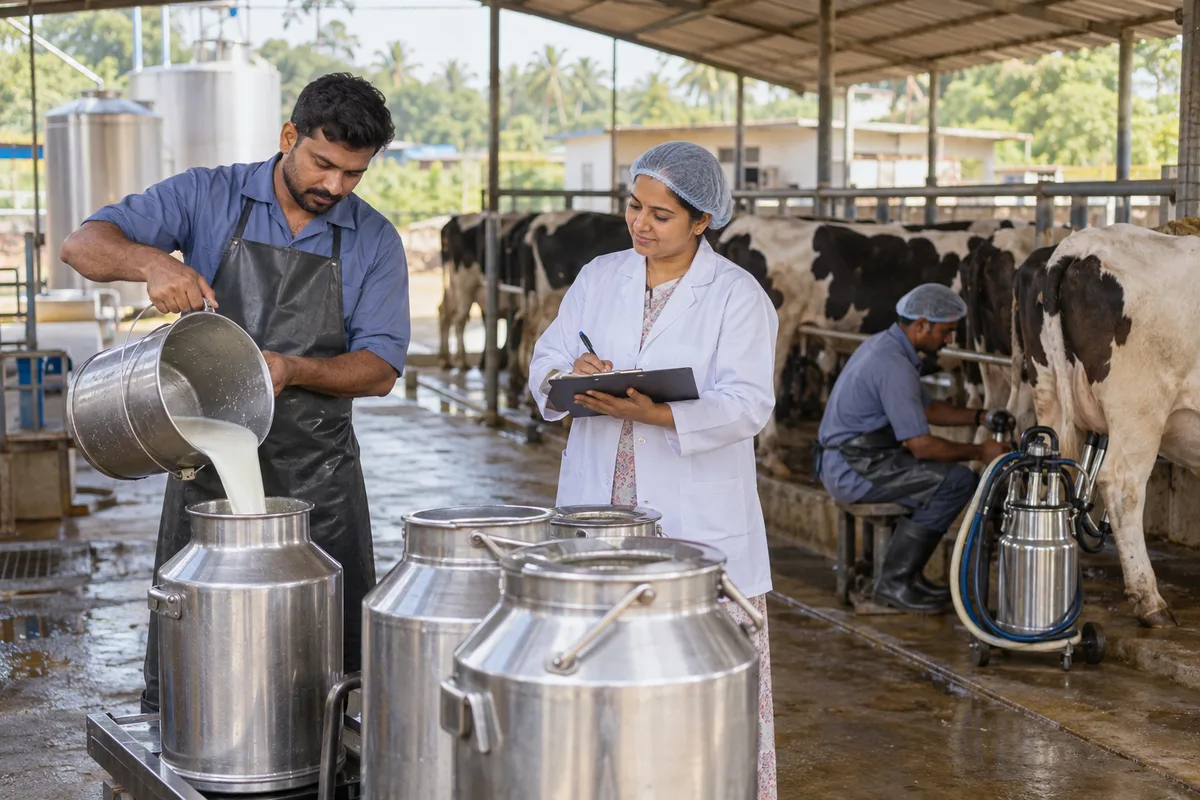
Distributor sales force effectiveness means improving how a distributor’s own salespeople cover retailers and dealers, record visits, and book orders. GullySales reviews beat plans against outlet and billing records, checks what happens in the field, and gives the distributor practical changes to coverage and supervision, with results measured against an agreed baseline.
Also for dairy producers
- Dealer development for dairy producers
- Partner compensation and incentive design for dairy producers
- Retail execution and merchandising for dairy producers
- Route to market and distribution strategy for dairy producers
- Trade promotion planning for dairy producers
- B2B marketing for dairy producers
- Online brand promotion for dairy producers
- Content marketing for dairy producers
Sales and marketing for dairy producers, the overview.
Last updated 14 Nov 2026. Rules for this trade differ by state and professional body, and they change. We describe restrictions in general terms, so check the current position with your own council or adviser before you publish anything.
For dairy producers
Where it usually goes wrong, and what we would do.
“The route was drawn for the morning delivery, not for selling”
A distributor's milk route is built around when pouches must reach the shop before opening. The salesperson inherits that order of stops and has no time to explain a new curd pack or a paneer offer at any of them. The route is efficient for delivery and poor for selling, and nobody has asked whether the two jobs need separate sequences.
“Collection and order calls look identical in the report”
A stop where the salesperson only collected overdue payment is logged the same way as a stop where a new order was booked. The supervisor sees a full list of visits and believes the lane is covered. Until the two purposes are recorded apart, selling time cannot be measured and the distributor cannot tell where it disappears.
“Fixed visit habits ignore how short-life products sell”
A kirana that sells curd fast in warm weather needs a different visit pattern from a booth whose paneer sits for days. A distributor who treats every outlet alike either over-supplies the slow shop or leaves the fast one short. Stock-outs and returns both come from the same cause: a visit plan that has not followed what each outlet buys.
“Orders noted on the lane do not always reach the invoice”
A salesperson jots an order in a notebook, the van loads by a separate list, and the invoice is raised at the depot. Between those three records an order can shrink or vanish. Before anyone blames the outlet or praises the salesperson, the gap needs to be traced, because it may lie in the paperwork and not in the selling.
What we do
What we deliver for dairy producers.
The work available for this need. We agree the deliverables and responsibilities for your engagement in writing.
Lane and outlet review
A marked-up list of each lane showing assigned outlets, stop order and visit frequency. The distributor checks it against the outlet register and spots billed outlets that no lane covers, or lanes that include shops which no longer exist.
Result: Every billed outlet is either on a lane or listed as uncovered.
Outlet priority groups
Outlets sorted into groups from recorded purchases and agreed potential, each with a proposed visit pattern. The distributor reviews the assumptions, including seasonal swings in curd and lassi demand, before the team changes any route.
Result: The distributor can read why an outlet sits in a group and challenge it.
Visit and order comparison
A lane-by-lane and salesperson-by-salesperson comparison of stops made against orders booked. Collection-only stops and missing entries are separated, so the distributor can see what each figure actually counts before comparing one person with another.
Result: Selling stops and collection stops are counted apart for every lane.
Order-to-invoice check
Where records allow, order-book or app entries are matched to the invoices raised for the same outlet. Orders without a matching invoice remain on an exceptions list and are not counted as sales. The distributor decides what to do with each exception.
Result: Each unmatched order is on a list with its likely cause marked.
Short end-of-lane report format
A report that fits the existing paper or phone routine: outlet, purpose of the stop, order status and one unresolved issue. We supply sample entries filled in for a booth and a sweet shop so the supervisor can see what a useful entry looks like.
Result: A supervisor can read one report and find the stop that needs follow-up.
Supervisor ride-along notes
Specific points for the distributor's supervisor to raise during ride-alongs and team briefings, each tied to something observed on a lane or a gap in the records. Nothing is general advice about motivation; every point names the outlet or entry that prompted it.
Result: Each coaching point can be traced to a stop or a record.
How the result is measured
- Recorded visits against planned outlet coverage
- Order-producing calls against total calls, with collection-only visits identified
- Outlets billed against outlets assigned to the beat
Recorded as a baseline before work starts, so every later report has an honest comparison.
Who it is for
This is written for these dairy producers.
- Milk producers and processors
- Paneer, curd and ghee manufacturers
- Flavoured and UHT milk brands
- Co-operative dairy societies
- Bulk suppliers to hotels and sweet shops
- Milk booth and kirana distribution networks
Before you decide
Agree the work. Know how to judge it.
Distributor sales force effectiveness for dairy producers: use these checks to prepare, choose the scope, and review what changes.
Bring the right evidence
Map existing partners, their territories, and the customers they serve. Review active selling and repeat orders separately from the number of partners signed up.
Make the scope clear
Agree partner fit, territory rules, onboarding, and support responsibilities. Clarify how direct enquiries and partner enquiries are assigned before starting recruitment.
Check the work in use
Follow a partner enquiry through to an order and the next purchase. Check whether the partner has the product knowledge and material needed to sell without repeated intervention.
Know when to change course
If current partners cannot sell because supply or support is weak, resolve that before recruiting more. A bigger network can spread the same problem further.
These are discussion points, not a fixed package. GullySales confirms the deliverables, responsibilities, fee, and term in writing after reading your brief and speaking with you.
Before we start
What to have ready before the work starts.
The records, access and decisions this work needs from dairy producers. Anything missing is noted in the written scope, with who will supply it.
- Lane lists and the outlet register
- These show who is meant to be visited and in what order. Without them we cannot test coverage against billing. If the lane list lives in a supervisor's notebook, ask for it to be copied out before we begin, because every later comparison depends on it.
- Outlet-level invoices from the distributor
- Orders and invoices by outlet let us see what each stop actually produced. If the distributor bills by lane only, we can describe coverage but not results. Say so early, so the written scope does not promise measures the records cannot support.
- The current pay and incentive arrangement
- How the distributor pays van salespeople shapes what they do on a lane. If pay rewards billed value, a salesperson will favour large outlets. We need the arrangement as it is applied, so our observations explain behaviour and do not blame individuals.
- Permission to ride along
- Salespeople behave differently when watched, so the distributor should tell the team why we are there before the first ride. The owner or supervisor should introduce us, and agree which lanes. Without that introduction the team may treat the visit as an audit and the observations lose value.
- A decision-maker at the distributor
- Recommendations about lanes and supervision belong to the distributor, so someone there must be able to approve a change. If that person is unavailable, proposals wait. We also need to know who handles the salespeople's questions, because a change they do not understand will not last.
How it works
How the distributor sales force effectiveness work runs
The work itself, in order. How an engagement starts, from your brief to a written scope, is set out on our method page.
- 1
Agreement with the distributor on access
The distributor is a separate business, so this begins with their consent. You send the brief; we meet the distributor and agree which lanes and records are in scope. The written scope names who at the distributor receives our recommendations and who decides on them.
- 2
Accepting the records and the starting position
The distributor shares lane lists, order books and outlet-level invoices. We check which are usable and set the starting position without filling gaps by assumption. The distributor and your channel head confirm those figures before any comparison between lanes is made.
- 3
Spending time on the lane itself
We ride along on selected lanes, watching how long each stop takes, what is said at the counter and how the order is recorded. These observations are set beside the records. Where the two disagree, we note both and ask the salesperson and supervisor to explain before drawing any conclusion.
- 4
Proposing changes to coverage and supervision
From the records and the ride-alongs we draft changes: stop order, visit frequency for each outlet group, and the report format. The distributor's owner reviews them with the supervisor, who knows the lanes. Only changes the distributor accepts go forward, and they are written down.
- 5
Trying one lane before the others
One lane runs on the changed plan while the rest continue as before, so the two can be compared. We watch for problems a plan on paper hides, such as a closing time at a booth or a road that floods. The distributor decides whether the change extends to other lanes.
- 6
Comparing results with the starting record
We set orders and outlet coverage against the position recorded before the work began, using the same definitions as at the start. Changes in season, price or supply that affect the figures are noted beside them, so the distributor does not credit the plan for what the weather did.
Where this fits
Three pieces of sales work, in this order.
This work sits inside sales process design, at stage 1, prospecting and lead generation. The audit comes before it, and sales management keeps it running.
Step 1
Sales audit
Find where deals are being lost and what to fix first.
Start here if you cannot say where orders are lost.
Step 2 · you are here
Sales process design
One written way to sell, from first enquiry to repeat order.
Start here if every salesperson sells differently.
Step 3
Sales management
A target, a review routine and someone who owns the number.
Start here if the team has targets and no routine.
FAQ
Questions owners ask before they call.
Not here? More answers, or ask on WhatsApp.
Whose employees are we looking at, ours or the distributor's?
Can you tell us which salesperson is underperforming?
Do you set salaries or incentives for the distributor's team?
What if the distributor will not share outlet-level invoices?
Will this reduce the stock returns we take back on curd and paneer?
Our distributor sells by phone and WhatsApp, not on lanes. Is this for us?
How much does it cost?
How long is the contract?
How soon will we see results?
Who will actually do the work?
From the blog
Further reading for dairy producers.
 5 min read · 6 Oct 2026How food brands win the trade and the shopperA food or household brand is chosen twice, by the distributor or retailer who stocks it and by the shopper who picks it up. What each buyer checks.
 8 min read · 22 Jul 2026What a dairy brand's website must do for distributors and bulk buyersA dairy website is read by distributors and bulk buyers. Here are the pages, the FSSAI details and the cold chain answers they look for.
 6 min read · 16 Mar 2026How to get on a company's approved vendor list without the file stallingVendor registration runs through four or five desks inside the buyer, each waiting on you. Send complete papers and keep your sponsor informed.
More for dairy producers
Related work to consider.
Closest to this: channels and partners
Also for dairy producers
Or start from the overview: sales and marketing for dairy producers.
Your next practical step
Tell us what you are trying to grow, and we will read it before we call.
Eight short steps, mostly taps. Skip anything you would rather answer on the call.