Industrial equipment manufacturers · Product launch events
A new machine launch should end with named plant buyers and a call planned for each.
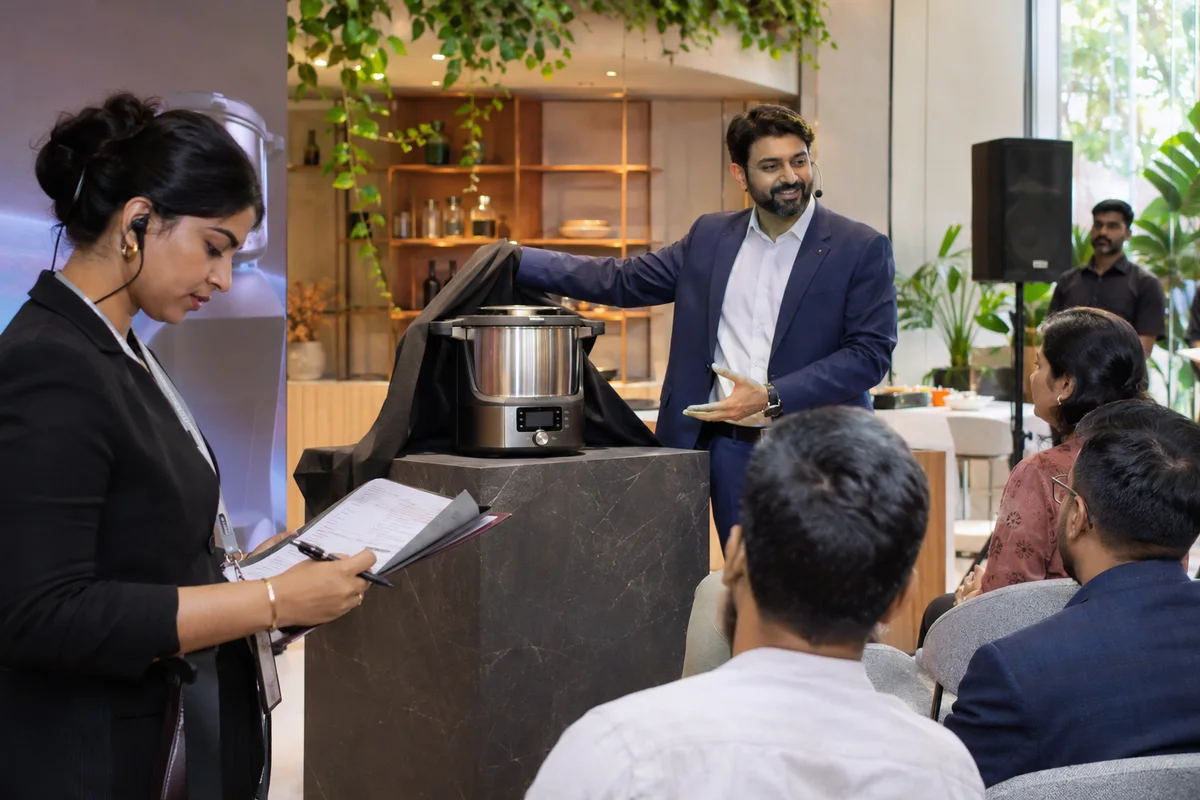
A product launch event for an industrial equipment manufacturer is the day a new machine is shown running to invited plant engineers, procurement heads and dealers, at your works or a hired hall. GullySales plans the guest list, the demonstration, the capture desk and the follow-up calls with your team, and your engineers and salespeople hold the conversations.
Scope, fee, reporting and term are agreed in writing after we have read your brief and spoken to you.
What product launch events means
A product launch event is the one day, in a hall, showroom or plant, when invited buyers see a new offer first-hand. GullySales plans the guest and dealer list, invitations, run-sheet, demonstration and lead capture with your team, and prepares the follow-up so each guest gets a call that refers to what they saw.
Also for industrial equipment manufacturers
- Digital marketing for industrial equipment manufacturers
- Marketing strategy for industrial equipment manufacturers
- Buyer persona for industrial equipment manufacturers
- Product differentiation strategy for industrial equipment manufacturers
- Geographic market research for industrial equipment manufacturers
- Annual revenue planning for industrial equipment manufacturers
- Competitive intelligence for industrial equipment manufacturers
- Competitor marketing analysis for industrial equipment manufacturers
Sales and marketing for industrial equipment manufacturers, the overview.
Last updated 14 Nov 2026.
For industrial equipment manufacturers
Where it usually goes wrong, and what we would do.
“The guest list is filled with courtesy invitations”
A launch hall fills with suppliers, relatives and neighbouring factory owners who will never issue a purchase order. The plant engineer who might replace a line this year is one name among them, and nobody at the door can tell which badge matters.
“The demonstration shows the machine but not the buyer's job”
Running the new press or conveyor on a clean demonstration load impresses visitors and answers nothing. A procurement head wants to see the machine handle their own material, tolerance or cycle. Without that, the visit ends in admiration and no enquiry.
“The enquiry is spoken, not written”
A visiting engineer asks the sales engineer about power rating, delivery and spares over tea. Nobody notes it. The next day the quotation goes out generic, and the buyer compares it against rivals who wrote down exactly what was asked.
“Dealers and end users are handled in the same queue”
A distributor wants margin, stock and territory terms. A plant buyer wants specification, references and service cover. Putting both in one line at one desk means each gets half an answer, and the dealer leaves without knowing what the launch means for them.
What we do
What we deliver for industrial equipment manufacturers.
The work available for this need. We agree the deliverables and responsibilities for your engagement in writing.
Invitation list by buyer role
Dealers, existing customers, plant engineers and procurement contacts sorted into separate lists from your own records, with a short reason for each person's invitation.
Result: You can point at any name and say why they were asked.
Run-sheet with a working demonstration
A sequence for the day that shows the machine on a buyer-style job, with speaking roles fixed for your engineers and a place where visitors may ask technical questions.
Result: Each visitor sees the machine do work close to their own.
Capture desk and enquiry slip
A slip that records the visitor, the plant, the machine type they asked about and what they want next, filled in by your team while the conversation is still fresh.
Result: Every serious visitor leaves a written enquiry behind.
Follow-up call sheet
A sheet for each caller listing the guest, what they saw and asked, and the next step, so the call refers to the demonstration rather than reading from a list.
Result: Your sales engineers can see who calls whom, and about what.
Dealer briefing sheet
A one-page note on the new machine, the specification and the terms you have set, written for the distributor to use with their own customers.
Result: Dealers leave knowing what to say about the machine.
Launch review note
A short record after the follow-up calls, listing which guests became quotations and which stalled, so the next launch starts from facts.
Result: The owner can see what the day produced in RFQs.
How the result is measured
- Invited guests, confirmed guests and guests who attended
- Capture records with a stated requirement and next action
- Time to first call after the event
Recorded as a baseline before work starts, so every later report has an honest comparison.
Who it is for
This is written for these industrial equipment manufacturers.
- CNC machine and precision equipment manufacturers
- Industrial pump and compressor manufacturers
- Packaging machinery manufacturers
- Conveyor and material handling equipment makers
- Motor and drive manufacturers
- Custom fabrication and job-work manufacturers
- Export-oriented industrial equipment makers
- Spare parts and after-sales service providers
Before you decide
Agree the work. Know how to judge it.
Product launch events for industrial equipment manufacturers: use these checks to prepare, choose the scope, and review what changes.
Bring the right evidence
Name the buyers you want to meet and the reason for them to speak with you. Bring a product or service story that can lead to a useful next conversation after the event.
Make the scope clear
Agree the event activity, demonstration material, enquiry capture, and follow-up responsibilities. Separate venue or sponsorship spend from production and sales preparation.
Check the work in use
Review the conversations that had a recorded need and agreed next step. Track them through proposals and orders instead of treating badge scans as qualified opportunities.
Know when to change course
If nobody can follow up after the event, reduce the activity to what the team can handle. A full contact list with no next action is not a sales pipeline.
These are discussion points, not a fixed package. GullySales confirms the deliverables, responsibilities, fee, and term in writing after reading your brief and speaking with you.
Before we start
What to have ready before the work starts.
The records, access and decisions this work needs from industrial equipment manufacturers. Anything missing is noted in the written scope, with who will supply it.
- The finished machine, tested and guarded
- A launch cannot show a machine that has not passed your own tests. The engineer must confirm that it is safe to run before guests. If it is not ready, the event waits.
- A guest list with roles
- The names of plant engineers and purchase heads, with the company, are needed in advance, along with the dealers who will attend. Put a mark against each guest who has enquired about a similar machine in the past, since those are the people the programme is really for. A list from the CRM or the RFQ register will do. Without roles, the invitation goes to anyone and the room fills with courtesy guests.
- A sample of the buyer's own material
- The demonstration is strongest when it handles a material a buyer uses. Ask a customer for a sample, with permission, or choose a standard one. Samples must be brought to the works before the day, and the engineer must run them first to see that the machine handles them well. Without a sample, the demonstration shows only the machine.
- A decision on prices and certifications
- Decide in advance whether prices are discussed at the event and which certifications are announced. Check with your adviser on what can be said. Without a decision, staff will answer differently at different tables.
- Salespeople free for the day and the calls
- The event needs people at the door, the machine and the desk, and afterwards on the telephone. Fix who does what. If your sales team cannot be spared, the event is made smaller.
How it works
How the product launch events work runs
The work itself, in order. How an engagement starts, from your brief to a written scope, is set out on our method page.
- 1
Settle who must be in the room
We begin with the new machine and ask who has to see it: plant engineers who specify, purchase heads who decide and dealers who will quote. You and the sales head write the list by role and by name. Courtesy invitations are listed separately so they do not crowd out the buyers. We also ask the service head who should come, because a buyer standing at a new machine asks about spares and breakdown support within minutes.
- 2
Pick the venue and plan the demonstration
We weigh your works against a hired hall for the machine, the power supply and the numbers you expect. The demonstration is planned around a buyer's job, such as a real material or a real batch, and not only the machine running. Your engineer rehearses what will be shown, including the load, the changeover and the stop, and lists what could trip or jam. The venue must have the power supply the machine needs, checked by your electrician, not assumed from the datasheet.
- 3
Write the run-sheet with the engineer
We write who speaks, who demonstrates and who answers questions, in order. The engineer decides what is safe to show and what is not. The run-sheet also names the person at the door who ticks guests off the list and hands out the specification sheet, and the person who keeps the dealers' table separate. Speeches by the owner are kept short, since engineers came to see the machine.
- 4
Build the capture desk and enquiry slip
We design a desk where a guest's interest is written down: name, plant, machine, duty and the next step wanted. The slip is short enough to fill in standing. A salesperson sits at the desk, so that no enquiry is left as a spoken promise. The slip has a box for the buyer's own drawing or sample, because a guest who offers one is nearly ready to ask for a quotation, and that guest should be called first.
- 5
Rehearse and brief the dealers
We run the sequence once with your staff, from the entrance to the desk, and note where it stalls. The dealer briefing sheet is written separately, with the points a dealer needs to quote the machine. Dealers and end users are sent to different tables, so a dealer asking about margin does not stand beside a plant engineer asking about capacity. The sheet for dealers carries the rating, the options, the spares list and who to call for a quotation.
- 6
Call the guests and review against the record
After the event, the call sheet is divided among your salespeople, and each call refers to the slip. We later read the enquiries, the quotations sent and the dealer questions against what was recorded before the event. You decide what the next launch should change. We note which guests came from the invited roles and which did not, and which slips led to a quotation, so the next guest list is better than the last one.
Proof
Published examples of our work.
Real clients and the work recorded for each engagement. These examples may cover related services or industries. They show the method, not a guaranteed result.
Burhani Hydroline
- Situation
- The website was dated. Menus were hard to follow, pages were slow, and it did not work properly on a phone, which is where a buyer looks first.
- What we did
- Research before design
- Wireframes and prototypes
- The full product catalogue
- An online checkout
- Result
- No numbers were recorded for this engagement. The work is described in full in the case study.
Also worked with
Chord Road Hospital · Curtain Label · Difesa Security Services · Felicity Inn · Hands On CSR · Implevista · Kambar Group · Kalessi · Kerur Pain Clinic · LL Trust · Lucky Deals · Natural Gases · NavaShakthi Souhardha · NewCom Logistics · Proton Technical Services · SB Engineering · Shakthi Foundation · Shakthi Group · Urbanest · Insyde Studio · Venkateshwara Laser Tech · Vivara Studios
Where this fits
Three pieces of sales work, in this order.
This work sits inside sales process design, at stage 1, prospecting and lead generation. The audit comes before it, and sales management keeps it running.
Step 1
Sales audit
Find where deals are being lost and what to fix first.
Start here if you cannot say where orders are lost.
Step 2 · you are here
Sales process design
One written way to sell, from first enquiry to repeat order.
Start here if every salesperson sells differently.
Step 3
Sales management
A target, a review routine and someone who owns the number.
Start here if the team has targets and no routine.
FAQ
Questions owners ask before they call.
Not here? More answers, or ask on WhatsApp.
Should we launch at our works or in a hired hall?
Do you arrange the stage, sound and catering?
Can the launch announce prices and certifications?
What if the machine fails during the demonstration?
How do we treat guests from a rival's company?
How long is the contract?
How soon will we see results?
Who will actually do the work?
What do you need from us?
What if we are not happy with the work?
From the blog
Further reading for industrial equipment manufacturers.
 6 min read · 10 Oct 2026How manufacturers can generate enquiries from relevant business buyersRelevant RFQs come from buyers who can verify you: real specifications on product pages, matching listings and a quick way to screen requests.
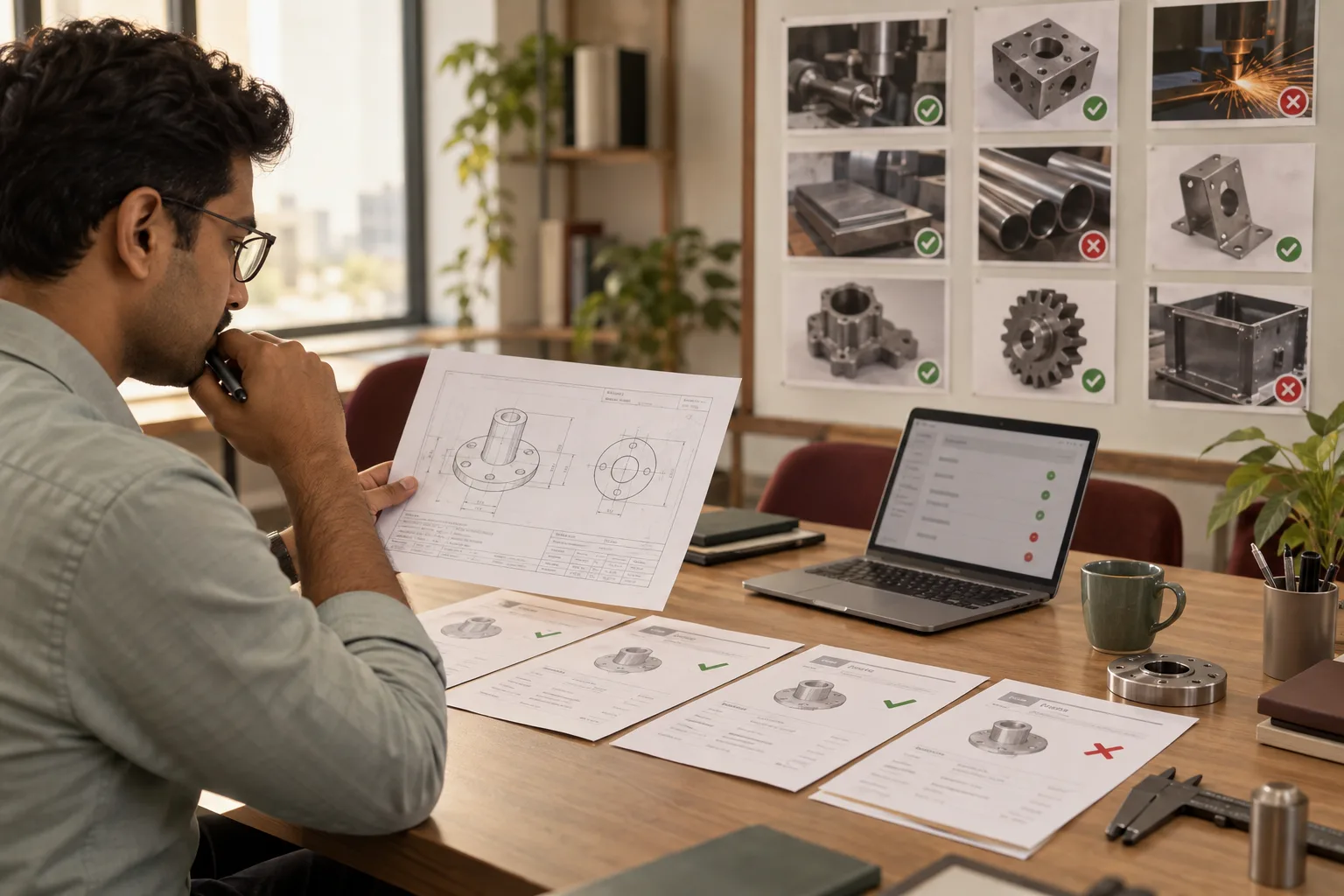 6 min read · 6 Oct 2026How industrial buyers decide which unit gets the RFQWhat industrial buyers check before sending an RFQ, across nine manufacturing trades, and where a unit drops off the shortlist.
 7 min read · 21 Sept 2026How to advertise to plant headsPlant heads can block a purchase but rarely sign one. Learn why breakdown searches, estate media and a trial offer reach them better than brand ads.
More for industrial equipment manufacturers
Related work to consider.
Closest to this: strategy and research
- Digital marketing for industrial equipment manufacturers
- Marketing strategy for industrial equipment manufacturers
- Buyer persona for industrial equipment manufacturers
- Product differentiation strategy for industrial equipment manufacturers
- Geographic market research for industrial equipment manufacturers
- Annual revenue planning for industrial equipment manufacturers
- Competitive intelligence for industrial equipment manufacturers
- Competitor marketing analysis for industrial equipment manufacturers
Also for industrial equipment manufacturers
- Answer engine optimisation for industrial equipment manufacturers
- Branding for industrial equipment manufacturers
- Content marketing for industrial equipment manufacturers
- Email marketing for industrial equipment manufacturers
- Google Business Profile management for industrial equipment manufacturers
- Influencer marketing for industrial equipment manufacturers
Or start from the overview: sales and marketing for industrial equipment manufacturers.
Your next practical step
Tell us what you are trying to grow, and we will read it before we call.
Eight short steps, mostly taps. Skip anything you would rather answer on the call.