Metal fabrication and laser cutting units · Lead generation
Get the drawing, and get it while the buyer is still comparing.
Lead generation for a fabrication unit is getting a drawing into your hands with the quantity and material attached. The second half is deciding fast whether the job is worth an estimate. GullySales builds the routes that bring drawings in, and the routine that answers each one with a priced reply.
Scope, fee, reporting and term are agreed in writing after we have read your brief and spoken to you.
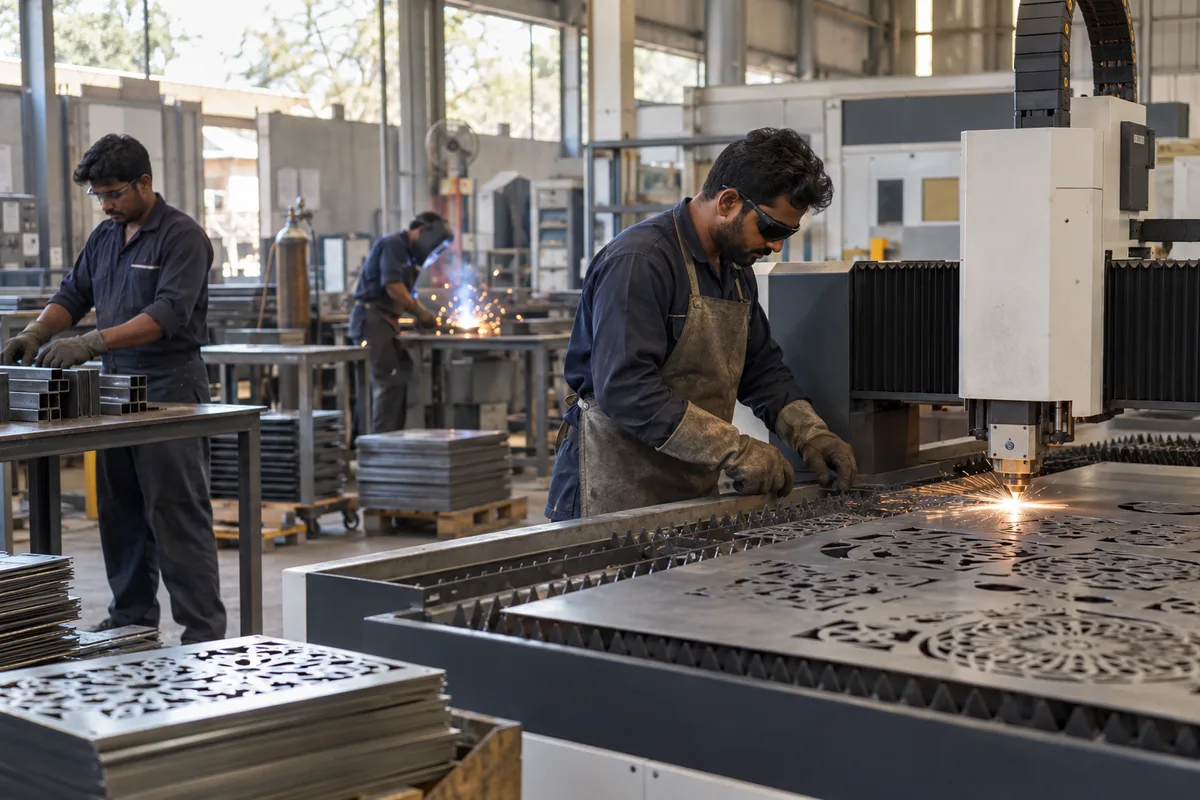
What lead generation means
Lead generation is the combined work of every channel that brings in a new enquiry, whether from search, adverts, referrals or a stall at an exhibition. GullySales runs these channels together and reports the number of enquiries each one produced, not the activity behind it.
Also for metal fabrication and laser cutting units
- CRM for metal fabrication and laser cutting units
- Follow-up systems for metal fabrication and laser cutting units
- SEO for metal fabrication and laser cutting units
- PPC ads for metal fabrication and laser cutting units
- Digital marketing for metal fabrication and laser cutting units
- Reputation management for metal fabrication and laser cutting units
- Local SEO for metal fabrication and laser cutting units
- Branding for metal fabrication and laser cutting units
Sales and marketing for metal fabrication and laser cutting units, the overview.
Last updated 13 Nov 2026.
For metal fabrication and laser cutting units
Where it usually goes wrong, and what we would do.
“A drawing on WhatsApp at ten is an order by four”
The same file has gone to three shops. Whoever comes back first with a believable rate and a lead time is the one who gets asked to start.
“One-piece enquiries are the tax on marketplace listings”
IndiaMART brings real OEM buyers and a steady stream of people wanting a single bracket cut. Both arrive in the same inbox.
“The best lead is a plant you already supplied”
A purchase engineer who took a batch from you last year has other parts going out to somebody else. Nobody ever rings to ask which.
What we do
What we deliver for metal fabrication and laser cutting units.
The work available for this need. We agree the deliverables and responsibilities for your engagement in writing.
A drawing upload route on every page
An upload field and a WhatsApp number on each process page, asking for the file, the material, the quantity and the date wanted.
Result: Drawings arrive with enough detail to price.
A same-day quoting rule with a tracker
An agreed reply target, a standard quotation format and a log of every drawing received, quoted and chased.
Result: No drawing sits in a phone until the shift ends.
First reply templates for marketplace enquiries
A short reply for IndiaMART and JustDial leads that asks for the drawing, quantity and material before anybody spends time estimating.
Result: Single-piece enquiries sort themselves out.
An outreach list of plants and panel builders
Machine builders, panel makers, HVAC contractors and equipment manufacturers within your delivery radius, with purchase and design contacts named.
Result: New drawings come from buyers who had never heard of you.
A dormant account call routine
A monthly list of companies that have not sent a drawing in six months, with a call script asking what parts are going out now.
Result: Past buyers send their next job to you.
Reporting on drawings and conversion
Drawings received by source, reply time, quotations sent and orders won, reported against the baseline recorded before work starts.
Result: You can see whether faster quoting is buying you work.
How the result is measured
- Enquiries generated
- Cost per enquiry
- Enquiries by source
Recorded as a baseline before work starts, so every later report has an honest comparison.
Where enquiries come from
A fabrication shop gets drawings, photos and walk-ins, and each should be logged with the details a quote needs.
- DXF or drawing by WhatsApp or email
- Record the file name, material, thickness, quantity and finish asked for. Reply with a confirmation that the file opened and what is missing, then quote from the tracker.
- Single-piece enquiry from a marketplace
- Note the item and quantity, and reply with the minimum order or the shop's charge for small jobs. Tag these separately so you can see how many turn into a drawing at all.
- Phone call or walk-in for a gate, grill or shed
- Record the site address, the dimensions the customer gives and whether there is an existing frame. Book a measurement visit, since a quote from a phone description is a guess.
- Panel builder or OEM requirement
- Log the part, the yearly quantity and the powder coat or galvanising needed. Ask whether they want a regular vendor arrangement, and who inspects the first batch.
- Architect or designer for decorative work
- Record the project, the pattern or jali drawing and the finish. Ask for the final drawing and the site date, and send photos of a similar finished piece.
- Repeat customer with a revised drawing
- Open it against the earlier job and note what changed. Quote from the earlier rate sheet for the same material, and check the new drawing against the old one before sending a price.
Who it is for
This is written for these metal fabrication and laser cutting units.
- CNC laser cutting job shops
- Sheet metal fabrication units
- Structural steel fabricators
- Precision sheet metal and enclosure makers
- Decorative and architectural metal work studios
- Gate, grill, railing and shed fabricators
- Stainless steel kitchen and equipment fabricators
- Powder coating and finishing units
Not for
It is not the right fit if.
- Your estimator is fully occupied with current jobs, so a stream of new drawings would wait for a quote.
- You do not log the drawings that arrive today, so there is no baseline to tell whether more leads are coming.
Before you decide
Agree the work. Know how to judge it.
Lead generation for metal fabrication and laser cutting units: use these checks to prepare, choose the scope, and review what changes.
Bring the right evidence
Define the organisations or buyers you can serve and the reasons they would consider a conversation. Bring examples of accepted and rejected prospects so the selection rule is visible.
Make the scope clear
Agree the research sources, contact approach, qualification rules, and handover. Clarify which meetings count as accepted and what happens to replies that are not ready to buy.
Check the work in use
Review why a prospect was selected and what was learned from the response. Count held, relevant conversations separately from contacts found, messages sent, or meetings booked.
Know when to change course
If the same objection appears repeatedly, adjust the offer or buyer group before increasing outreach. Respect a request to stop contact and keep the exclusion in the record.
These are discussion points, not a fixed package. GullySales confirms the deliverables, responsibilities, fee, and term in writing after reading your brief and speaking with you.
Before we start
What to have ready before the work starts.
The records, access and decisions this work needs from metal fabrication and laser cutting units. Anything missing is noted in the written scope, with who will supply it.
- The quotation book with outcomes
- A register of quotations sent, with the buyer, the part and whether it was won, lost or went silent. It shows which sources bring real orders. If the outcomes were never written down, the owner and estimator reconstruct the last season from memory and we mark the figures as an estimate.
- A named person who reads each drawing
- Someone who can look at a DXF or a sketch and say within the office whether it is cuttable. The routes we build send every drawing to that person. Without one, leads gather in the owner's phone and the plan reverts to the habit that existed before.
- Your marketplace listing login
- The IndiaMART or similar profile is where one-piece enquiries come from, and its replies must be rewritten. We need to read the lead history and edit the listing. If the account sits with a former employee, recovering it comes before every other step.
- A list of plants you have supplied
- Company names and the purchase contact, even if only in an old delivery challan book. The best new work can come from plants that have bought from you once. Without the list, the outreach has to begin from cold names, which is slower and weaker.
How it works
How the lead generation work runs
The work itself, in order. How an engagement starts, from your brief to a written scope, is set out on our method page.
- 1
Count the machine hours that sit idle
We start by asking your production head which machines wait for work and which are over-booked, because lead generation should fill the idle bed, not add to a queue. You tell us the kinds of jobs that leave margin. We write down the capacity we are selling and leave out the work you would send elsewhere.
- 2
Read last season's enquiries side by side
Your marketplace messages, WhatsApp drawings and quotation book are laid next to each other. We mark where each came from and which became an order, which was a single piece and which was a drawing nobody could cut. You see which source gave you the work you wanted. This is the baseline against which every later figure is read.
- 3
Put an upload route on every page
We add a way to send a drawing with quantity, material and thickness on the website, the Maps listing and the marketplace profile. You decide what the form asks, and we keep it to what the estimator needs. We then send a test drawing from a phone to check that it lands in front of the person who prices.
- 4
Write the quoting rule with the estimator
With the estimator and the owner we write one page that says which drawings get a full quote, which get a price reply and which are declined, along with who checks the file. The rule is pinned in the office and entered in the tracker. A drawing then has a named owner from the minute it arrives.
- 5
Compare drawings received with the baseline
After the routes have run, we count the drawings received by source and the share that turned into quotations and orders, using the figures recorded before the work started. You see which routes brought plants and which brought only price checks. Then you decide whether to widen the outreach or tighten the marketplace listing.
Where this fits
Three pieces of sales work, in this order.
This work sits inside sales process design, at stage 1, prospecting and lead generation. The audit comes before it, and sales management keeps it running.
Step 1
Sales audit
Find where deals are being lost and what to fix first.
Start here if you cannot say where orders are lost.
Step 2 · you are here
Sales process design
One written way to sell, from first enquiry to repeat order.
Start here if every salesperson sells differently.
Step 3
Sales management
A target, a review routine and someone who owns the number.
Start here if the team has targets and no routine.
FAQ
Questions owners ask before they call.
Not here? More answers, or ask on WhatsApp.
How fast do we have to quote?
How do we handle the single-piece enquiries?
A customer sends a photo of a hand-drawn sketch. Do we count it?
Which enquiries need a full quote and which only a price reply?
What do we do with enquiries from machine buyers?
Can lead generation work if capacity is already full?
How long is the contract?
How soon will we see results?
Who will actually do the work?
What do you need from us?
From the blog
Further reading for metal fabrication and laser cutting units.
 7 min read · 8 Jul 2026How to get plastic moulding job work and CNC machining ordersJob work orders go to shops buyers can find and check. How moulders and machine shops get on RFQ lists and win repeat orders.
 7 min read · 27 Aug 2024How to generate B2B leadsB2B leads start with a named list of companies and the two people inside each. Reach them by search, outreach and phone, then qualify before sales.
 7 min read · 21 Sept 2026How to advertise to purchase managersPurchase managers only listen once an indent lands. Get into the vendor file, the specification and the search results before that day.
More for metal fabrication and laser cutting units
Related work to consider.
Closest to this: leads and follow-up
Also for metal fabrication and laser cutting units
- SEO for metal fabrication and laser cutting units
- PPC ads for metal fabrication and laser cutting units
- Digital marketing for metal fabrication and laser cutting units
- Reputation management for metal fabrication and laser cutting units
- Local SEO for metal fabrication and laser cutting units
- Branding for metal fabrication and laser cutting units
Or start from the overview: sales and marketing for metal fabrication and laser cutting units.
Your next practical step
Tell us what you are trying to grow, and we will read it before we call.
Eight short steps, mostly taps. Skip anything you would rather answer on the call.