Metal fabrication and laser cutting units · Branding
Look like a shop a purchase team can put on its vendor list.
Branding for a fabrication unit is everything a buyer reads before trusting you with a batch: the capability sheet, the quotation, the shop floor and the photographs. GullySales settles that presentation and makes sure the same shop shows up on the website, the profile and a vendor registration form.
Scope, fee, reporting and term are agreed in writing after we have read your brief and spoken to you.
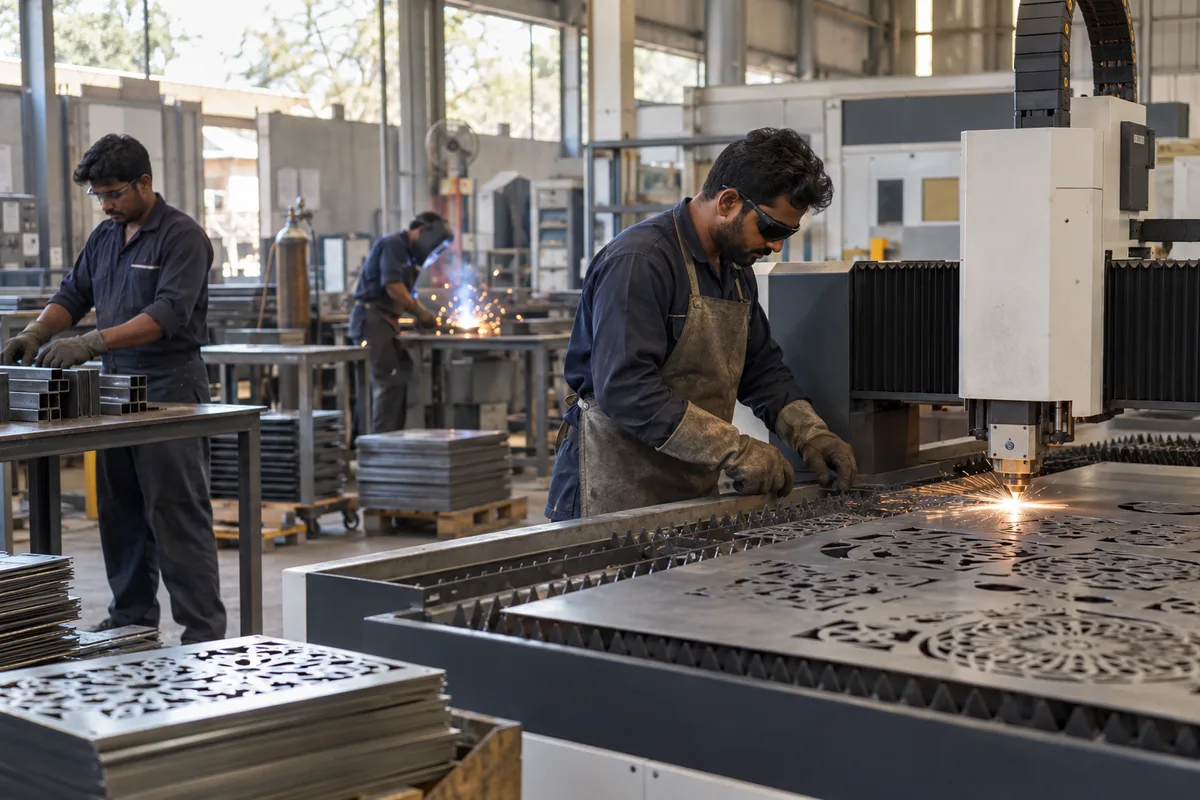
What branding means
Branding is what a customer remembers about your business beyond the product, including your name, colours, tone of voice and what you are known for locally. GullySales sets or corrects this once and applies it consistently across your website, signage and adverts so the business looks like one company everywhere.
Also for metal fabrication and laser cutting units
- SEO for metal fabrication and laser cutting units
- PPC ads for metal fabrication and laser cutting units
- Lead generation for metal fabrication and laser cutting units
- Digital marketing for metal fabrication and laser cutting units
- Reputation management for metal fabrication and laser cutting units
- Local SEO for metal fabrication and laser cutting units
- Social media marketing for metal fabrication and laser cutting units
- Content marketing for metal fabrication and laser cutting units
Sales and marketing for metal fabrication and laser cutting units, the overview.
Last updated 13 Nov 2026.
For metal fabrication and laser cutting units
Where it usually goes wrong, and what we would do.
“Your quotation is the document that gets compared”
Three shops send a rate. The one that states material, tolerance, finishing and lead time on the same sheet reads as the safer choice.
“A tidy floor photographs as a capable shop”
Buyers read housekeeping as quality. Sorted stock, marked bays and a clean machine area do more for you than a redesigned logo.
“Decorative work and job work need different faces”
An architect specifying a jali screen wants a portfolio. A panel builder wants tolerances. One brochure trying to do both convinces neither.
What we do
What we deliver for metal fabrication and laser cutting units.
The work available for this need. We agree the deliverables and responsibilities for your engagement in writing.
A capability sheet purchase teams can file
Machines, bed sizes, tonnage, materials, tolerances, finishing, quality checks and delivery reach, in one document kept current.
Result: Vendor registration stops stalling on missing details.
A quotation format that carries the shop
Material grade, thickness, process, finishing, tolerance, lead time and terms set out beside the rate, on your own letterhead.
Result: You are compared on what is supplied rather than on rate alone.
Photography of the floor, the machines and the work
One proper shoot covering the laser, the brake, the welding bay, finished panels and a fitted structure, used everywhere afterwards.
Result: Every place a buyer looks shows the same shop.
A separate portfolio for architectural work
A folder of jali screens, facade panels, staircases and custom frames, prepared for architects and interior designers rather than for purchase engineers.
Result: Designers can see whether you have made what they are drawing.
One positioning line used everywhere
A short agreed line on what your shop is for, applied to the site, the profile, the quotation and the stall panel.
Result: Buyers can describe your shop to a colleague accurately.
Signage, uniform and vehicle presentation
The board at the gate, shop floor identity cards and the delivery vehicle brought to one standard so a visiting buyer finds the place easily.
Result: A plant visit starts well rather than with a phone call for directions.
How the result is measured
- Recognition in customer feedback
- Consistency across channels
- Repeat enquiries by name
Recorded as a baseline before work starts, so every later report has an honest comparison.
Positioning in one sentence
The sentence a fabrication unit can fill in so a buyer with a drawing knows whether to send it to you.
We cut, bend and finish [material and thickness] for [OEMs, architects or shopfitters] in [area], and unlike [the next laser shop] we [one thing you do on every drawing].
- Who it is for
- Pick the buyer: an OEM with repeat sheet metal parts, an architect needing decorative screens, a shopfitter, or a one-off homeowner. Their drawings, tolerances and patience differ, and so does the quote.
- What you cut, bend and finish
- State materials, thickness range, bed size, bending capacity and finishing such as powder coating, in the units a drawing uses. 'All types of fabrication' tells a buyer nothing.
- What the buyer gets that the other laser shop does not
- It might be a quote returned from a DXF file by a named person, nesting that saves sheet, or in-house bending and powder coating so one vendor handles the part. Choose one you do on every job.
- The proof you can show
- Photographs of finished parts beside the drawing, a first-article inspection sample, a list of materials you hold in stock, and a repeat OEM willing to confirm the work.
- Words buyers ignore
- 'Precision', 'quality' and 'timely delivery' are on every card. Replace them with a tolerance you hold, the sheet thickness you cut and the way you inspect a first piece.
- The name and tagline test
- A name ending in 'Engineering' or 'Industries' gets lost among others on IndiaMART lists. Add the process and your industrial area to the display name, and keep the tagline to what you cut.
Who it is for
This is written for these metal fabrication and laser cutting units.
- CNC laser cutting job shops
- Sheet metal fabrication units
- Structural steel fabricators
- Precision sheet metal and enclosure makers
- Decorative and architectural metal work studios
- Gate, grill, railing and shed fabricators
- Stainless steel kitchen and equipment fabricators
- Powder coating and finishing units
Not for
It is not the right fit if.
- Your quotation still leaves out material, finish and tolerance, and a new logo would not fix what buyers compare.
- The shop floor is untidy and unmarked, so new branding would promise what a visit would contradict.
Before you decide
Agree the work. Know how to judge it.
Branding for metal fabrication and laser cutting units: use these checks to prepare, choose the scope, and review what changes.
Bring the right evidence
Collect the sales presentation, website, quotations, and other material buyers actually see. Mark where the description of the business changes or where a claim has no supporting evidence.
Make the scope clear
Agree whether the work concerns the offer, the words, the visual identity, or all of them. List the formats that need updating and who owns the final approval.
Check the work in use
Test the proposed direction on a real sales page or proposal. A buyer should be able to tell who the offer is for, what is different, and what evidence supports it.
Know when to change course
A new identity will not fix an unresolved service problem. Put the delivery issue right before making a stronger public promise about it.
These are discussion points, not a fixed package. GullySales confirms the deliverables, responsibilities, fee, and term in writing after reading your brief and speaking with you.
Before we start
What to have ready before the work starts.
The records, access and decisions this work needs from metal fabrication and laser cutting units. Anything missing is noted in the written scope, with who will supply it.
- Your last ten quotations
- Real documents with the layout and terms as you send them. They show what buyers compare and where the format hides your strengths. If quotations are handwritten, we photograph a few and reset them from there. We also look at the terms printed at the foot, such as payment, validity and inspection, since a purchase desk compares these before it compares the rate.
- Machine list and inspection instruments
- The machines, plus the vernier, height gauge and other measuring tools you use. The capability sheet is built on these facts. Without them, it can only describe what is visible, and a purchase department wants evidence of measurement.
- Permission for naming customers
- Written or message approval from any customer whose name or part may appear in a portfolio. Some OEMs forbid it. Where permission is missing, the work is shown as an unnamed part, and the owner should not insist on naming.
- A decision on marking the parts
- Whether your name may be stamped or etched on the parts. Some customers refuse. Only you and the customer can settle it, and the answer decides whether identity extends to the product itself or stays on the paperwork. If the customer agrees, we design a small mark that suits etching on sheet.
How it works
How the branding work runs
The work itself, in order. How an engagement starts, from your brief to a written scope, is set out on our method page.
- 1
Gather the documents buyers already see
We collect a quotation, a delivery challan, a visiting card, the website and a vendor registration form you submitted, and lay them side by side. You see what a purchase department sees. The gaps in name, address and wording are marked, and the owner decides which version of the name and the tagline stays.
- 2
Ask three buyers what made them stay
We speak with an industrial buyer, a contractor and a homeowner you have served, with your introduction. We ask what they checked and what nearly stopped them. Their words are written down exactly, and you read them before any positioning line is drafted.
- 3
Choose one line for the shop
From the buyer comments and your own sense of the work, we draft two or three positioning lines and test them against the quotation. You pick the one you can keep true on every job. That line is the only claim we then repeat across the site and the paperwork.
- 4
Walk the floor for a photograph plan
A walk through the shop with a list of what a capable fabricator looks like on camera: tidy bays, labelled stock, a finished batch ready for dispatch. You may need to clear a corner first. We then plan the shots for the capability sheet and the portfolio.
- 5
Redraw the quotation and capability sheet
The quotation is reset so that part, material, quantity and conditions read clearly, and the capability sheet is written from your machine list. Industrial and architectural work get separate portfolios. You approve both before anything is printed or shared.
Where this fits
Three pieces of sales work, in this order.
This work sits inside sales process design, at stage 1, prospecting and lead generation. The audit comes before it, and sales management keeps it running.
Step 1
Sales audit
Find where deals are being lost and what to fix first.
Start here if you cannot say where orders are lost.
Step 2 · you are here
Sales process design
One written way to sell, from first enquiry to repeat order.
Start here if every salesperson sells differently.
Step 3
Sales management
A target, a review routine and someone who owns the number.
Start here if the team has targets and no routine.
FAQ
Questions owners ask before they call.
Not here? More answers, or ask on WhatsApp.
Does a job shop need a logo and a brand book?
How do we look bigger than we are without lying?
Our work goes out unmarked to OEMs. Can we put our name on the parts?
Should we list machine make and bed size on the website?
How do we look bigger without exaggerating?
Does a job shop need a logo redrawn?
How much does it cost?
How long is the contract?
How soon will we see results?
Who will actually do the work?
From the blog
Further reading for metal fabrication and laser cutting units.
 7 min read · 21 Sept 2026How to advertise to purchase managersPurchase managers only listen once an indent lands. Get into the vendor file, the specification and the search results before that day.
 7 min read · 21 Sept 2026How to advertise to engineers, who buy from the specificationAn engineer writes the specification and purchase buys from it. Get your make on the approved list before the tender, or the budget goes elsewhere.
 7 min read · 8 Jul 2026How to get plastic moulding job work and CNC machining ordersJob work orders go to shops buyers can find and check. How moulders and machine shops get on RFQ lists and win repeat orders.
More for metal fabrication and laser cutting units
Related work to consider.
- SEO for metal fabrication and laser cutting units
- PPC ads for metal fabrication and laser cutting units
- Lead generation for metal fabrication and laser cutting units
- Digital marketing for metal fabrication and laser cutting units
- Reputation management for metal fabrication and laser cutting units
- Local SEO for metal fabrication and laser cutting units
Or start from the overview: sales and marketing for metal fabrication and laser cutting units.
Your next practical step
Tell us what you are trying to grow, and we will read it before we call.
Eight short steps, mostly taps. Skip anything you would rather answer on the call.