Metal fabrication and laser cutting units · Social media
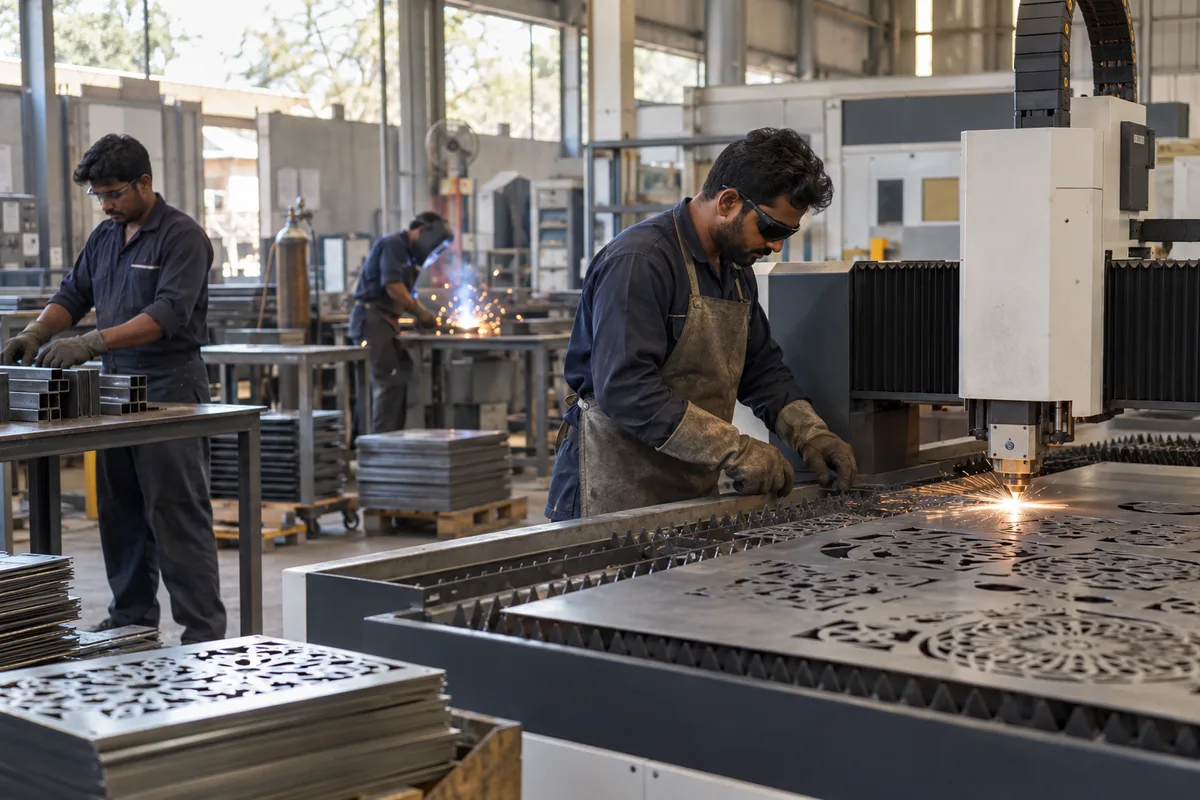
A laser cutting a jali pattern is the best advertisement you own.
Social media for a fabrication unit is worth the time for two audiences only: architects and interior designers who specify decorative metal work, and purchase and design engineers on LinkedIn. GullySales runs both, using video shot on your own floor rather than pictures bought from a stock library.
Scope, fee, reporting and term are agreed in writing after we have read your brief and spoken to you.
What social media means
Social media is the ongoing posting your business does on platforms such as Instagram, Facebook and LinkedIn to stay visible to customers and prospects between purchases. GullySales plans a posting calendar, writes captions and designs the images so the page looks active and answers what a visitor would ask.
Also for metal fabrication and laser cutting units
- Content marketing for metal fabrication and laser cutting units
- SEO for metal fabrication and laser cutting units
- PPC ads for metal fabrication and laser cutting units
- Lead generation for metal fabrication and laser cutting units
- Digital marketing for metal fabrication and laser cutting units
- Reputation management for metal fabrication and laser cutting units
- Local SEO for metal fabrication and laser cutting units
- Branding for metal fabrication and laser cutting units
Sales and marketing for metal fabrication and laser cutting units, the overview.
Last updated 13 Nov 2026.
For metal fabrication and laser cutting units
Where it usually goes wrong, and what we would do.
“Architects choose fabricators from a portfolio feed”
A designer specifying a facade screen wants to see pattern work, edge finish and a fitted panel before naming a shop to the client.
“The machine footage exists and nobody keeps it”
Every shop has operators filming a cut on their phones. Collected properly, that is a year of posts already paid for.
“Homeowners scroll, purchase engineers do not”
Gate and railing work spreads on local groups and Instagram. Industrial work comes from LinkedIn, referrals and search, so budget belongs there.
What we do
What we deliver for metal fabrication and laser cutting units.
The work available for this need. We agree the deliverables and responsibilities for your engagement in writing.
A routine for collecting machine footage
A simple rule for operators on what to film and where to send it, so cuts, bends and fittings are captured as they happen.
Result: The posting never depends on somebody remembering.
An Instagram portfolio for architectural work
Jali screens, facade panels, staircases and frames posted with the material, thickness and finish named, aimed at designers.
Result: Designers can judge your work without visiting the shop.
LinkedIn posts written for purchase and design engineers
New machines, capacity added, a difficult part solved and sectors supplied, posted from the company page and the owner's profile.
Result: Industrial buyers see a shop that is investing.
Permission agreed before a client's part is shown
A short ask and a written record, since a part on your bed may be somebody's unreleased product or a tooling detail.
Result: Real work can be shown without risking an account.
Messages routed into the enquiry record
Instagram and LinkedIn messages logged with calls and WhatsApp files, with an agreed time for a first reply.
Result: A designer's message is answered the same day.
Reporting on enquiries from social
Messages, drawings and jobs traced to each platform, measured against the baseline recorded before work starts.
Result: You can tell whether the posting is worth the operator's time.
How the result is measured
- Posts published
- Engagement rate
- Enquiries from social profiles
Recorded as a baseline before work starts, so every later report has an honest comparison.
Platform for this buyer
Where architects and engineers look at fabricators, and what to post for each.
- Instagram for architects
- Post decorative screens, jaali panels, gates and signage in daylight. Caption the material, the thickness and the finish, such as powder coating, so architects can specify it.
- LinkedIn for purchase and design engineers
- Post a batch of brackets or enclosures with the material and what was checked. Invite the DXF on WhatsApp, with material, thickness and quantity.
- YouTube Shorts of the machine cutting
- Film the beam on the sheet, the nesting layout and the finished edge. Sound on, since buyers like to hear it cut.
- WhatsApp Business catalogue of materials
- List what you stock: MS, SS 304, aluminium and GI sheet in the thicknesses you cut. Buyers then send files that match what you can do.
- Google Business Profile photos
- Add photographs of the machine, the bed size and finished parts. Buyers searching for laser cutting nearby judge a shop by what they see.
- What not to post
- Do not post a customer's DXF, drawing or a part carrying their logo. Ask first, and show your own samples or an unbranded part.
Who it is for
This is written for these metal fabrication and laser cutting units.
- CNC laser cutting job shops
- Sheet metal fabrication units
- Structural steel fabricators
- Precision sheet metal and enclosure makers
- Decorative and architectural metal work studios
- Gate, grill, railing and shed fabricators
- Stainless steel kitchen and equipment fabricators
- Powder coating and finishing units
Not for
It is not the right fit if.
- Operators will not film their work and nobody will collect the clips, so a plan would have no raw material.
- Your work is all unmarked OEM parts you may not show, with no decorative or fitted jobs to post.
Before you decide
Agree the work. Know how to judge it.
Social media marketing for metal fabrication and laser cutting units: use these checks to prepare, choose the scope, and review what changes.
Bring the right evidence
Review the posts that produced useful conversations, not only the ones with the most views. Gather buyer questions and decide which team member can contribute credible material.
Make the scope clear
Choose the audience and channel before setting a posting volume. Agree who supplies material, approves posts, and handles messages, including complaints or questions the agency cannot answer.
Check the work in use
Follow a post through to the profile, website, and response. A useful report explains the quality of conversations and enquiries, alongside reach and engagement.
Know when to change course
If publishing takes time away from unanswered buyer messages, fix the response routine first. Do not expand to another channel without a clear reason for being there.
These are discussion points, not a fixed package. GullySales confirms the deliverables, responsibilities, fee, and term in writing after reading your brief and speaking with you.
Before we start
What to have ready before the work starts.
The records, access and decisions this work needs from metal fabrication and laser cutting units. Anything missing is noted in the written scope, with who will supply it.
- Admin access to Instagram and LinkedIn
- Admin rights for the business account and page, not just a personal login. Old pages may be abandoned or owned by a former staff member. We recover access first, or begin new pages.
- Operators willing to appear on camera
- Machine operators may prefer to stay off screen. You ask them, and we respect a no. Hands and machines make good footage without faces. If nobody agrees, the clips are framed on the sheet, the beam and the finished part, and the owner decides whether a voice-over is worth recording.
- A folder of finished-job photographs
- Pictures of completed staircases, panels and enclosures, with the customer name noted beside each. We separate shareable from confidential ones. Without a folder, early posts depend on new shoots.
- Permission from architects you work with
- A message from an architect or designer allowing their project to be shown with credit. It strengthens the portfolio, since they may repost. Without it, we show the metalwork alone.
- One person to answer social messages
- People send a phone photo of a hand sketch. Someone must reply and pass it to the estimator. We route messages into the enquiry record, but a person has to look at them. A rule that the clerk forwards each one to the estimator keeps a sketch from sitting unread in the inbox of the page.
How it works
How the social media work runs
The work itself, in order. How an engagement starts, from your brief to a written scope, is set out on our method page.
- 1
Find the footage already on phones
We ask the machine operators, the supervisor and the owner to scroll through their phones for videos of cutting, bending and finished parts. You tell us which clips can be shared. This saves a separate shoot and shows what the floor already produces by itself.
- 2
Pick the platforms that fit
Instagram for architectural and decorative work, and LinkedIn for purchase and design engineers. You decide whether to run one or both, based on which buyer you want. The other platforms are left alone, since the trade does not use them for buying.
- 3
Agree what may be shown and named
A short list of customer parts that can appear, and a message to each customer who must give permission. Where a part is confidential, the post shows the process instead. You hold the final say, and we never publish a part without a yes on record. The permission message is written in plain words and sent by the owner, so the customer sees a familiar name asking.
- 4
Plan posts around real jobs
A new machine, a large batch, a staircase installed on site, a sheet nested to waste less. We set the sequence with you after reading the order book. Each post carries a way to send a drawing.
- 5
Check each draft with the shop floor
Before a video goes up, the supervisor watches it for wrong terms or unsafe practice, such as a worker without eye protection. You approve the final cut. Corrections are made before publication, not after, and the post waits until they are done. The supervisor also marks any shot that shows a customer drawing pinned to the machine, so it can be cropped or dropped.
- 6
Count enquiries from social against the baseline
Messages and calls traced to posts are counted and compared with the figures noted before the work. We separate architects from plant buyers in the record. You decide which platform to continue and which to drop.
Where this fits
Three pieces of sales work, in this order.
This work sits inside sales process design, at stage 0, foundation. The audit comes before it, and sales management keeps it running.
Step 1
Sales audit
Find where deals are being lost and what to fix first.
Start here if you cannot say where orders are lost.
Step 2 · you are here
Sales process design
One written way to sell, from first enquiry to repeat order.
Start here if every salesperson sells differently.
Step 3
Sales management
A target, a review routine and someone who owns the number.
Start here if the team has targets and no routine.
FAQ
Questions owners ask before they call.
Not here? More answers, or ask on WhatsApp.
Is Instagram worth it for an industrial job shop?
What do we post when the parts belong to customers?
Should the machine operator be on camera?
People send a phone photo of a hand sketch in a message. How do we reply?
Who approves a video before it goes up?
Is it worth posting if purchase engineers do not follow us?
How much does it cost?
How long is the contract?
How soon will we see results?
Who will actually do the work?
From the blog
Further reading for metal fabrication and laser cutting units.
 7 min read · 21 Sept 2026How to advertise to purchase managersPurchase managers only listen once an indent lands. Get into the vendor file, the specification and the search results before that day.
 7 min read · 21 Sept 2026How to advertise to engineers, who buy from the specificationAn engineer writes the specification and purchase buys from it. Get your make on the approved list before the tender, or the budget goes elsewhere.
 7 min read · 8 Jul 2026How to get plastic moulding job work and CNC machining ordersJob work orders go to shops buyers can find and check. How moulders and machine shops get on RFQ lists and win repeat orders.
More for metal fabrication and laser cutting units
Related work to consider.
Closest to this: content and social
Also for metal fabrication and laser cutting units
- SEO for metal fabrication and laser cutting units
- PPC ads for metal fabrication and laser cutting units
- Lead generation for metal fabrication and laser cutting units
- Digital marketing for metal fabrication and laser cutting units
- Reputation management for metal fabrication and laser cutting units
- Local SEO for metal fabrication and laser cutting units
Or start from the overview: sales and marketing for metal fabrication and laser cutting units.
Your next practical step
Tell us what you are trying to grow, and we will read it before we call.
Eight short steps, mostly taps. Skip anything you would rather answer on the call.