Metal fabrication and laser cutting units · Content marketing
Write the page that answers what thickness and what tolerance.
Content for a job shop is the plain writing that lets a buyer decide before calling: what you cut, in what material and to what tolerance. It also covers how a drawing should reach you. GullySales writes it with your estimator and turns each piece into a route for a drawing to arrive.
Scope, fee, reporting and term are agreed in writing after we have read your brief and spoken to you.
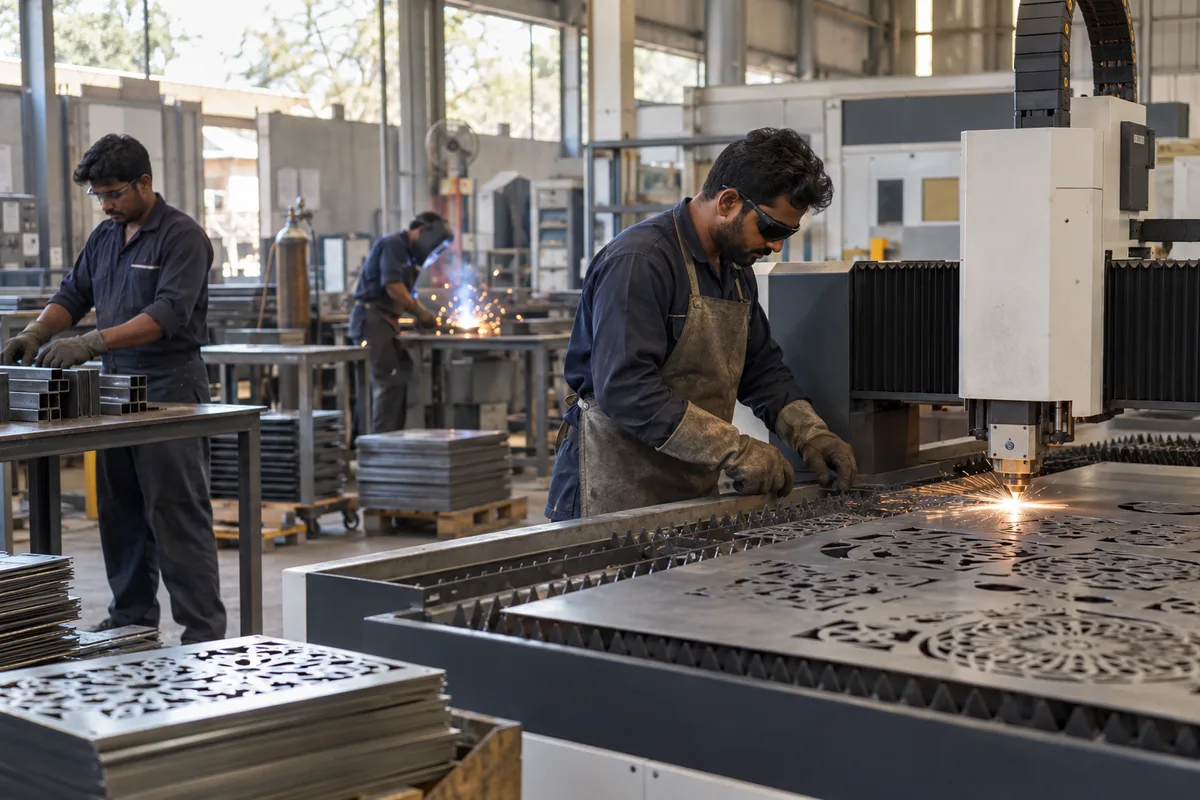
What content marketing means
Content marketing is writing articles, guides and pages that answer the questions buyers search before they are ready to enquire. This makes your business visible and trusted before the first call. GullySales plans this content from the first conversation onward, choosing topics that match real search demand rather than guesses.
Also for metal fabrication and laser cutting units
- Social media marketing for metal fabrication and laser cutting units
- SEO for metal fabrication and laser cutting units
- PPC ads for metal fabrication and laser cutting units
- Lead generation for metal fabrication and laser cutting units
- Digital marketing for metal fabrication and laser cutting units
- Reputation management for metal fabrication and laser cutting units
- Local SEO for metal fabrication and laser cutting units
- Branding for metal fabrication and laser cutting units
Sales and marketing for metal fabrication and laser cutting units, the overview.
Last updated 13 Nov 2026.
For metal fabrication and laser cutting units
Where it usually goes wrong, and what we would do.
“The buyer's question is a number, not a story”
How thick, how long, how close a tolerance, how soon. A page answering those in order gets the drawing, a page about quality does not.
“Designers need help sending a file correctly”
Half the delay on a decorative job is artwork that will not cut. A short guide on file formats and minimum slot widths saves both sides a week.
“Your estimator is already the writer”
The answers typed into WhatsApp twenty times a month are the content. They only need collecting and editing, not inventing.
What we do
What we deliver for metal fabrication and laser cutting units.
The work available for this need. We agree the deliverables and responsibilities for your engagement in writing.
The questions your estimator answers most
A list gathered from actual replies and calls, ordered by how close each question sits to a drawing being sent.
Result: Writing starts from real buying questions.
Capability guides by material and thickness
Plain pages on cutting mild steel, stainless and aluminium at each thickness, with the finish and tolerance a buyer can expect.
Result: Buyers stop ringing to ask whether you can do their part.
A file preparation guide for drawings and artwork
What formats you accept, how to mark bends, what slot widths cut cleanly and what delays a job at the nesting stage.
Result: Drawings arrive ready to quote.
Case notes on jobs you can name
Short write-ups of a difficult part, a structure erected or a decorative panel, published where the client has agreed to it.
Result: A new buyer sees a job like theirs already delivered.
A finishing and coating explainer
A page on powder coating, galvanising and painting, what each suits and what it adds to lead time and rate.
Result: Buyers ask for the finish that fits rather than the cheapest one.
A note on which page pulled drawings
Visits, enquiries and drawings traced to each page published, against the baseline recorded before work starts.
Result: The pages that work get more, the rest get dropped.
How the result is measured
- Pages published
- Organic traffic
- Enquiries from content pages
Recorded as a baseline before work starts, so every later report has an honest comparison.
Questions buyers ask first
The questions a buyer asks before sending a drawing to a cutting shop, and the page that answers each.
- What thickness of mild steel and stainless can you cut?
- A capability table by material: MS, SS 304, SS 316, aluminium, copper. State the maximum thickness for each, the bed size and the machine's power. Update it when you add a machine.
- Which file format do I send: DXF, DWG or PDF?
- A file preparation guide. State the formats you accept, units, closed profiles, no duplicate lines, text converted to curves and one part per layer. A clean file saves a round of calls.
- Do you supply the material, or do I?
- A page on material and sourcing. Say which grades you stock, how mill test certificates are supplied, and how customer-supplied sheet is handled, including the wastage you allow for.
- Can you bend, weld and finish the cut parts too?
- A page for the full job route: laser cut, press brake bending, welding, powder coating, assembly. Say what is done in-house and what goes out to a partner.
- What is the smallest order, and can I get one prototype?
- An order size page. State whether you take a single piece, what a prototype costs to set up in general terms, and how a repeat order is priced against the first.
- How do I get a rate for a gate, railing or shed?
- A page for site work. Say what you need: measurements, a sketch or photographs, the finish and the site location. Explain how installation is priced, so the customer is not surprised.
Who it is for
This is written for these metal fabrication and laser cutting units.
- CNC laser cutting job shops
- Sheet metal fabrication units
- Structural steel fabricators
- Precision sheet metal and enclosure makers
- Decorative and architectural metal work studios
- Gate, grill, railing and shed fabricators
- Stainless steel kitchen and equipment fabricators
- Powder coating and finishing units
Not for
It is not the right fit if.
- Your estimator cannot supply the real answers on thickness and tolerance, so the pages would be generic.
- The site cannot take new pages, and content would sit in drafts.
Before you decide
Agree the work. Know how to judge it.
Content marketing for metal fabrication and laser cutting units: use these checks to prepare, choose the scope, and review what changes.
Bring the right evidence
Bring questions from sales calls and examples of objections that delay a decision. Choose a subject expert who can check the substance, and identify evidence that can be published.
Make the scope clear
Agree the reader, buying question, format, and distribution route for each piece. Set the approval process and distinguish new research from rewriting material you already have.
Check the work in use
Ask a colleague to use the draft in a real buyer conversation. It should answer the question, support its claims, and make the next step clear without requiring a sales pitch to explain it.
Know when to change course
If the same unanswered question appears in several articles, improve the strongest page before commissioning another. More words are not a substitute for missing evidence.
These are discussion points, not a fixed package. GullySales confirms the deliverables, responsibilities, fee, and term in writing after reading your brief and speaking with you.
Before we start
What to have ready before the work starts.
The records, access and decisions this work needs from metal fabrication and laser cutting units. Anything missing is noted in the written scope, with who will supply it.
- A recorded talk with the estimator
- A conversation recorded on a phone is enough, covering the questions buyers repeat. Without the estimator's words, the writing turns generic. If they are unavailable, the plan slows until a slot is found. Bring the questions you hear from architects and fabricators who outsource a step to you, because their wording differs from a purchase engineer.
- A sample of drawings that arrived badly
- Files that came in with problems, with notes on what was wrong. They shape the file guide, which is the page designers will read first. If none were kept, the next ones are saved from the day we start.
- Material and thickness ranges you cut
- A table of what you stock and cut, with limits. The guides state it. A wrong limit brings jobs you decline, and a right one filters them before the call.
- A list of jobs you may name
- Customers who agreed to be mentioned in a case note. Notes use only these. Without the list, the notes describe unnamed parts and the process rather than the client. Where a customer allows only a description, we write the case as a part, a material and a problem solved, with no company name.
How it works
How the content marketing work runs
The work itself, in order. How an engagement starts, from your brief to a written scope, is set out on our method page.
- 1
Collect the questions the estimator answers
We sit with the estimator and write down the questions that arrive again and again: maximum thickness, material grades, minimum order, file format, finish. You add the ones you wish buyers asked. This list is the first source of every article we write. Where two people give different answers, such as the minimum order, we ask you to settle it so the page says one thing.
- 2
Sort topics by the buyer who asks
Plant buyers want capability and tolerances, designers want file preparation, homeowners want to know how a gate is maintained. We assign each topic to a buyer and a page. You approve the order, which follows the work you want more of.
- 3
Record the estimator explaining it
A short conversation, recorded or typed, in which the estimator explains each topic in their own words. We write from that. The result carries the knowledge of the shop rather than a copied brochure, and the estimator corrects each draft before it moves on. We also ask what the estimator tells a buyer who asks for something the shop cannot cut, because that refusal belongs on the page.
- 4
Prepare the file guide with the draftsperson
The person who opens drawings tells us what goes wrong: open lines, wrong units, text not converted. We turn it into a checklist for designers. You decide which formats you accept and which you send back. The checklist is tested on two real drawings from the sample folder before it is published, and the draftsperson confirms it would have caught the fault.
- 5
Publish with a route for a drawing
Each article ends with a way to send a file and a way to ask a question on WhatsApp. You check the facts before release. Afterwards we note which pages received drawings and which were read without any.
Where this fits
Three pieces of sales work, in this order.
This work sits inside sales process design, at stage 0, foundation. The audit comes before it, and sales management keeps it running.
Step 1
Sales audit
Find where deals are being lost and what to fix first.
Start here if you cannot say where orders are lost.
Step 2 · you are here
Sales process design
One written way to sell, from first enquiry to repeat order.
Start here if every salesperson sells differently.
Step 3
Sales management
A target, a review routine and someone who owns the number.
Start here if the team has targets and no routine.
FAQ
Questions owners ask before they call.
Not here? More answers, or ask on WhatsApp.
Who actually writes this, us or you?
How much content does a job shop need?
Should we post jobs we did for a named company?
Should gate and grill work sit on the same pages as industrial work?
How many articles does a job shop need?
Can content bring industrial buyers or only designers?
How long is the contract?
How soon will we see results?
Who will actually do the work?
What do you need from us?
From the blog
Further reading for metal fabrication and laser cutting units.
 7 min read · 21 Sept 2026How to advertise to purchase managersPurchase managers only listen once an indent lands. Get into the vendor file, the specification and the search results before that day.
 7 min read · 21 Sept 2026How to advertise to engineers, who buy from the specificationAn engineer writes the specification and purchase buys from it. Get your make on the approved list before the tender, or the budget goes elsewhere.
 7 min read · 8 Jul 2026How to get plastic moulding job work and CNC machining ordersJob work orders go to shops buyers can find and check. How moulders and machine shops get on RFQ lists and win repeat orders.
More for metal fabrication and laser cutting units
Related work to consider.
Closest to this: content and social
Also for metal fabrication and laser cutting units
- SEO for metal fabrication and laser cutting units
- PPC ads for metal fabrication and laser cutting units
- Lead generation for metal fabrication and laser cutting units
- Digital marketing for metal fabrication and laser cutting units
- Reputation management for metal fabrication and laser cutting units
- Local SEO for metal fabrication and laser cutting units
Or start from the overview: sales and marketing for metal fabrication and laser cutting units.
Your next practical step
Tell us what you are trying to grow, and we will read it before we call.
Eight short steps, mostly taps. Skip anything you would rather answer on the call.