Metal fabrication and laser cutting units · Search engine optimisation
Be found for the process and the thickness, not for fabrication work.
Search engine optimisation for a job shop decides whether a purchase engineer looking for laser cutting near their plant reaches your page. GullySales builds a page for each process, with bed size, materials and thickness on it, and separates the industrial pages from the gate and railing work.
Scope, fee, reporting and term are agreed in writing after we have read your brief and spoken to you.
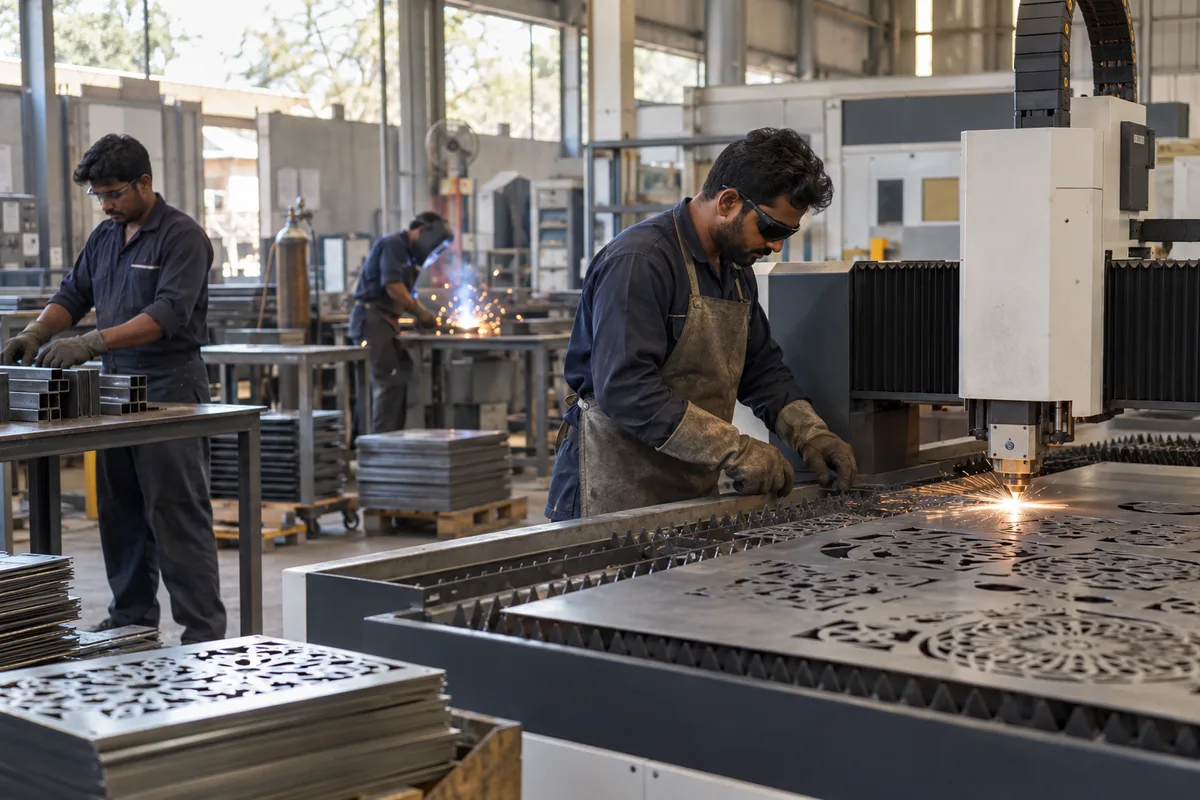
What search engine optimisation means
Search engine optimisation (SEO) is the work of getting your website to appear when a buyer searches Google for what you sell. GullySales builds pages around real search terms, fixes technical issues that block ranking, and tracks which searches actually bring enquiries.
Also for metal fabrication and laser cutting units
- Local SEO for metal fabrication and laser cutting units
- Website for metal fabrication and laser cutting units
- PPC ads for metal fabrication and laser cutting units
- Lead generation for metal fabrication and laser cutting units
- Digital marketing for metal fabrication and laser cutting units
- Reputation management for metal fabrication and laser cutting units
- Branding for metal fabrication and laser cutting units
- Social media marketing for metal fabrication and laser cutting units
Sales and marketing for metal fabrication and laser cutting units, the overview.
Last updated 13 Nov 2026.
For metal fabrication and laser cutting units
Where it usually goes wrong, and what we would do.
“Thickness and bed size are the search”
A buyer looks for 12 mm MS laser cutting or 3000 by 1500 bed size. A page saying we do laser cutting answers nobody.
“Two trades under one roof need two sets of pages”
Industrial job work and house gates are different buyers with different words. Putting both on one services page loses both searches.
“Nobody links to a job shop, so the page must do the work”
Fabrication sites almost never earn links, which puts the weight on writing pages that answer a specific process question better than anyone nearby.
What we do
What we deliver for metal fabrication and laser cutting units.
The work available for this need. We agree the deliverables and responsibilities for your engagement in writing.
A page for each process you sell
Laser cutting, press brake bending, welding, structural fabrication and powder coating, each naming materials, thickness range, bed size and tolerance.
Result: A buyer searching one process finds the page about that process.
Machine capability written into the page
Laser wattage, bed dimensions, brake tonnage, maximum length and the materials you cut, stated in the text rather than left to a phone call.
Result: Enquiries arrive from buyers whose job actually fits your machines.
Industrial pages kept apart from gate and railing pages
One set written for purchase engineers and panel builders, another for homeowners and contractors, each with its own words and its own enquiry route.
Result: Both trades get found without one drowning the other.
Area pages for the estates you supply
A page per industrial belt naming what is made there and the parts those plants send out for cutting and bending.
Result: You appear in searches tied to the buyer's own location.
A technical clean-up of the site
Speed, mobile layout, page titles and broken links checked, because most job shop sites were built once and never touched again.
Result: Pages you already have stop being held back.
A report by process page
Positions, visits and enquiries for each process page, set against the baseline recorded before work started.
Result: You know which process is bringing drawings in.
How the result is measured
- Ranking positions
- Organic traffic
- Enquiries from organic search
Recorded as a baseline before work starts, so every later report has an honest comparison.
Searches your buyers type
What a purchase engineer types before sending a drawing, and the page that answers it.
- laser cutting service near me
- A process page tied to your location. State the machine, the bed size, the materials and the thickness range cut, and the file formats you accept. Show a plate cut and the tolerance you hold.
- MS sheet laser cutting 6 mm job work
- A material page. Give the grades you stock or take from the customer, the thickness limits for each material, and say what a quote needs: DXF or drawing, quantity and finish.
- stainless steel kitchen equipment fabricator
- A page for hotels and canteens. List the items you make, the SS grade, the gauge, the finish and the hygiene details, and show a finished kitchen with the site measurement step.
- powder coating job work with sheet metal fabrication
- A finishing page. Say what pre-treatment is done, the colours and textures you offer, the coating thickness you aim for as stated in your own spec, and the largest part your oven takes.
- sheet metal enclosure manufacturer for control panels
- An enclosure page. Show the enclosure types you bend and weld, the protection rating you build to, the doors and locks fitted, and what a panel builder sends, such as drawings and quantity.
- industrial shed fabrication contractor
- A structure page. Show a shed you built, the section sizes and roofing you fit, the survey, drawings and erection steps, and say what the client provides, such as the plot plan and the foundation.
Who it is for
This is written for these metal fabrication and laser cutting units.
- CNC laser cutting job shops
- Sheet metal fabrication units
- Structural steel fabricators
- Precision sheet metal and enclosure makers
- Decorative and architectural metal work studios
- Gate, grill, railing and shed fabricators
- Stainless steel kitchen and equipment fabricators
- Powder coating and finishing units
Not for
It is not the right fit if.
- You will not state bed size, thickness range and tolerance on a page, so the pages would say nothing a buyer is searching for.
- The shop cannot take new industrial work at present, and pages that draw drawings would only create refusals.
Before you decide
Agree the work. Know how to judge it.
SEO for metal fabrication and laser cutting units: use these checks to prepare, choose the scope, and review what changes.
Bring the right evidence
Bring the pages for the products or services you want to sell, the search queries available in your reports, and examples of enquiries from search. Separate branded searches from buyers discovering you for the first time.
Make the scope clear
Agree which pages and technical fixes come first, who can publish changes, and who supplies subject knowledge. Link search work to a relevant enquiry route on each priority page.
Check the work in use
Follow the trail from a relevant query to its landing page and then to an enquiry. Review whether those enquiries fit your offer, alongside indexing and search visibility.
Know when to change course
A ranking movement alone is not a buying signal. If traffic grows but relevant enquiries do not, revisit page intent and the offer before producing more pages.
These are discussion points, not a fixed package. GullySales confirms the deliverables, responsibilities, fee, and term in writing after reading your brief and speaking with you.
Before we start
What to have ready before the work starts.
The records, access and decisions this work needs from metal fabrication and laser cutting units. Anything missing is noted in the written scope, with who will supply it.
- The machine list with bed sizes
- We need every machine, its working bed, the maximum thickness for each material and the ones currently out of service. Search pages built from a wrong figure bring drawings you cannot cut, and a buyer who finds that out does not return. If a machine is missing from the list, its page is not written.
- A folder of last year's quotation requests
- Emails, WhatsApp threads or the quotation book, in any state, as long as the material and quantity are readable. They show the words buyers actually use and the jobs that turned into orders. Without them we plan the pages from guesswork about demand, and the first set would drift toward work you do not want.
- Edit access to the website and Business Profile
- Someone must hold the login to the domain, the hosting and the Maps listing, and be willing to hand over editor access. Job shops sometimes find the site was built by a relative or a former vendor. If the login cannot be found, we plan the pages and wait until access is recovered.
- A decision on gate and railing work
- Only the owner can say whether the household trade stays beside the industrial work or is hidden from the plant buyers. The choice changes the site map, because a separate section needs its own pages and photographs. If it is left open, we build the industrial pages first and leave the other trade out.
How it works
How the search engine optimisation work runs
The work itself, in order. How an engagement starts, from your brief to a written scope, is set out on our method page.
- 1
List every process with its bed size
We start with the machine list on your shop floor: each laser, press brake, shear and welding bay, with its bed size, the sheet thickness it handles and the materials it runs. You confirm what is true today, including machines that are down for repair. This list becomes the spine of the site, because a purchase engineer searches by process and thickness before they ever read your company name.
- 2
Pull the searches from your quotation file
We read a sample of your past quotation requests and the WhatsApp messages that came with them, and note the words buyers used for the job: mild steel sheet, stainless panels, bending, powder coated enclosures. You tell us which of those jobs you want more of and which you would rather decline. We then fix the list of pages worth building.
- 3
Split the industrial and gate work
We decide with you which pages belong to the plant buyer and which to the homeowner or contractor, and keep them on separate paths so neither confuses the other. You choose whether the gate and railing trade is promoted at all. The result is a written site map with each page tied to one process and one kind of buyer.
- 4
Write each page with the estimator
Your estimator reads our draft for every process page and corrects tolerances, material grades and what you refuse to cut. We add photographs from the floor and a route for sending a drawing. Nothing goes live until you have signed off the technical claims, so the page says only what the machine can really do.
- 5
Read the pages against recorded enquiries
Before any change we note how many drawings arrived from search, and from which pages, in your enquiry register. Afterwards we compare the same figures process by process, and look at which pages brought drawings you quoted and which brought only one-piece curiosity. You then decide where the next page goes.
Where this fits
Three pieces of sales work, in this order.
This work sits inside sales process design, at stage 1, prospecting and lead generation. The audit comes before it, and sales management keeps it running.
Step 1
Sales audit
Find where deals are being lost and what to fix first.
Start here if you cannot say where orders are lost.
Step 2 · you are here
Sales process design
One written way to sell, from first enquiry to repeat order.
Start here if every salesperson sells differently.
Step 3
Sales management
A target, a review routine and someone who owns the number.
Start here if the team has targets and no routine.
FAQ
Questions owners ask before they call.
Not here? More answers, or ask on WhatsApp.
Have you done this for a fabrication business?
Should the gate and grill work be on the same website?
Should the gate and grill page sit on the same site?
Should we show our machine list on the site?
Do we need to add pages for every material we cut?
Who writes the technical details, us or GullySales?
How much does it cost?
How long is the contract?
How soon will we see results?
Who will actually do the work?
From the blog
Further reading for metal fabrication and laser cutting units.
 7 min read · 21 Sept 2026How to advertise to purchase managersPurchase managers only listen once an indent lands. Get into the vendor file, the specification and the search results before that day.
 7 min read · 27 May 2025How to promote a manufacturing companyA purchase manager is not buying your company. They are buying a process, a tolerance, a certificate, a capacity and a delivery date. Promote those.
 6 min read · 22 Apr 2025The best advertising channels for B2B companiesSearch, marketplaces, LinkedIn and trade media reach different buyers. Pick by asking whether your buyer can name what you sell.
More for metal fabrication and laser cutting units
Related work to consider.
Closest to this: search and visibility
Also for metal fabrication and laser cutting units
- PPC ads for metal fabrication and laser cutting units
- Lead generation for metal fabrication and laser cutting units
- Digital marketing for metal fabrication and laser cutting units
- Reputation management for metal fabrication and laser cutting units
- Branding for metal fabrication and laser cutting units
- Social media marketing for metal fabrication and laser cutting units
Or start from the overview: sales and marketing for metal fabrication and laser cutting units.
Your next practical step
Tell us what you are trying to grow, and we will read it before we call.
Eight short steps, mostly taps. Skip anything you would rather answer on the call.