Metal fabrication and laser cutting units · Local SEO
The plant down the road should find your shed before a broker does.
Local search decides whether your shop appears on Maps when a purchase engineer or a homeowner searches for fabrication near them. GullySales completes the Business Profile, gets your machines and finished work photographed, and writes the area pages Maps will not carry you to.
Scope, fee, reporting and term are agreed in writing after we have read your brief and spoken to you.
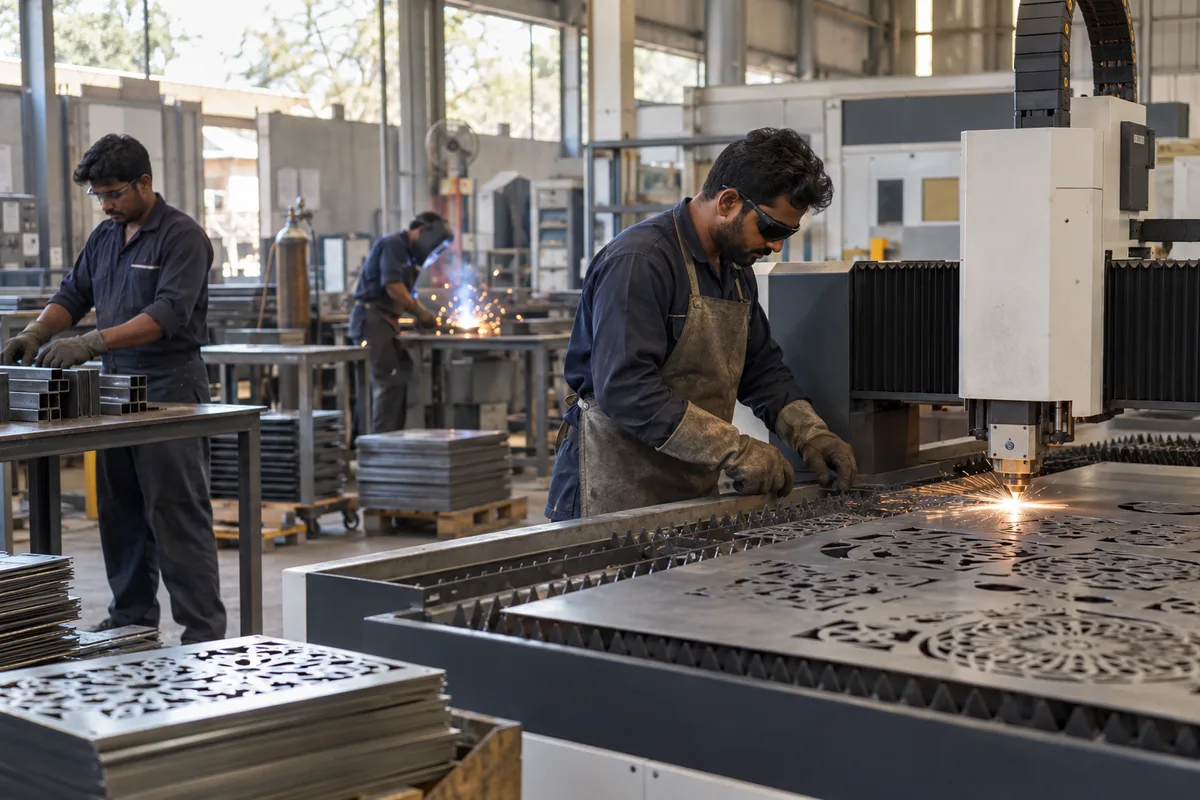
What local SEO means
Local SEO is the work of making your business show up for searches that name your town or locality, such as a service plus an area name. GullySales sets up locality pages, local citations and map listings so nearby customers find you before a competitor across town.
Also for metal fabrication and laser cutting units
- SEO for metal fabrication and laser cutting units
- Website for metal fabrication and laser cutting units
- PPC ads for metal fabrication and laser cutting units
- Lead generation for metal fabrication and laser cutting units
- Digital marketing for metal fabrication and laser cutting units
- Reputation management for metal fabrication and laser cutting units
- Branding for metal fabrication and laser cutting units
- Social media marketing for metal fabrication and laser cutting units
Sales and marketing for metal fabrication and laser cutting units, the overview.
Last updated 13 Nov 2026.
For metal fabrication and laser cutting units
Where it usually goes wrong, and what we would do.
“Brokers with no machines sit above shops with them”
Traders keep complete listings with photographs and fresh reviews. The shed with a fibre laser inside has an empty profile and a wrong phone number.
“The pin decides the industrial estate you show in”
A profile ranks around its own address, so the estate two belts away is won with pages and finished jobs, not by widening a service area.
“One listing is being asked to serve two customers”
Gate photographs and machine photographs on the same profile confuse a purchase engineer, so the categories and services need deciding rather than defaulting.
What we do
What we deliver for metal fabrication and laser cutting units.
The work available for this need. We agree the deliverables and responsibilities for your engagement in writing.
A Business Profile completed for a workshop
Primary business type set to the process you want, services listed, working hours matched to the gate, and the pin dropped on the shed itself.
Result: You show up in the searches made from nearby plants and streets.
Photographs of the machines and finished jobs
The laser, the press brake, the welding bay, a fitted gate and a finished panel, added on a routine rather than once at setup.
Result: A buyer sees a working shop before deciding to call.
Area pages for the belts you deliver to
A page for each industrial area naming the plants there and the parts they send out for cutting, bending and coating.
Result: Buyers beyond the reach of your pin still find you.
A review routine for local metal work
A request made when a gate or railing is fitted, worded so the customer names the area and the work.
Result: The listing carries proof of jobs done nearby.
Posts when a machine or a big job goes in
A profile post when a new machine arrives or a large structure is erected, published while it is still news.
Result: The profile looks live rather than abandoned.
A Maps report
Calls, direction requests and clicks from the profile, split between industrial and local enquiries, against the baseline recorded before work starts.
Result: You can tell what the listing is worth in orders.
How the result is measured
- Map pack ranking
- Local search visibility
- Enquiries by locality
Recorded as a baseline before work starts, so every later report has an honest comparison.
What Google weighs here
How a plant or a builder finds a fabrication shop nearby, and what to fix first.
- Workshop type
- Choose metal fabricator or laser cutting service by what brings the most income. A broker with no machines uses the same type, so the photographs have to show the machines.
- Materials and processes as services
- List mild steel, stainless steel and aluminium laser cutting, bending, welding and powder coating separately. A buyer searches the material and the process.
- Machine details
- Say the machine type, the sheet size it takes and the thickness it cuts in the units the trade uses. An engineer checks the bed size before sending a drawing.
- Estate and gate
- Give the estate name, the shed number and the gate. Trucks with sheets arrive and leave through the gate, and drivers lose an hour finding a shed.
- IndiaMART and Justdial
- Single-piece buyers use both, so state the minimum job size plainly. Keep name, address and phone the same as the profile.
Who it is for
This is written for these metal fabrication and laser cutting units.
- CNC laser cutting job shops
- Sheet metal fabrication units
- Structural steel fabricators
- Precision sheet metal and enclosure makers
- Decorative and architectural metal work studios
- Gate, grill, railing and shed fabricators
- Stainless steel kitchen and equipment fabricators
- Powder coating and finishing units
Not for
It is not the right fit if.
- The profile address is a billing office and not the shed, so the pin would send a driver to the wrong place.
- You do not want walk-in homeowner work, and a local profile would bring it.
Before you decide
Agree the work. Know how to judge it.
Local SEO for metal fabrication and laser cutting units: use these checks to prepare, choose the scope, and review what changes.
Bring the right evidence
Confirm the real business address, service area, contact details, and who controls the business listings. Keep examples of calls that came from the wrong location or asked for a service you do not provide.
Make the scope clear
Choose the locations you actually serve and the information each needs. Agree who approves listing changes, responds to enquiries, and keeps opening hours accurate.
Check the work in use
Check the journey from a local search to a call or enquiry on a phone. The address, service area, and description should agree across your website and listings.
Know when to change course
Do not create an office claim for a place where you only serve customers remotely. Clear service coverage is more useful than a misleading local presence.
These are discussion points, not a fixed package. GullySales confirms the deliverables, responsibilities, fee, and term in writing after reading your brief and speaking with you.
Before we start
What to have ready before the work starts.
The records, access and decisions this work needs from metal fabrication and laser cutting units. Anything missing is noted in the written scope, with who will supply it.
- Ownership of the Business Profile
- The listing may sit under a former employee's account, or be unclaimed. We need the owner's Google account to claim and verify it. If verification fails because of an old pin, the plan waits on that process.
- Your real working address and gate
- The exact entrance a transporter or visitor should use, with the estate and plot number as printed on the signboard. Maps sends people to what is written; a wrong plot sends a driver to a neighbour. If the signboard is unreadable, replace it first.
- A list of estates and belts you supply
- The industrial areas where your delivery vehicle regularly goes. Area pages are written only for places you actually serve, so a list from the dispatch book is enough. If you have not delivered outside your estate, one page covers the home belt.
- Photos you are allowed to publish
- Machines, stock, finished jobs and the entrance, with confirmation that no customer-owned drawing or part is identifiable. Photographs lead the profile. If permission is uncertain, we use the floor and the machines only.
- A rule for drawings sent from the profile
- Decide who reads a drawing that arrives on the profile's WhatsApp and replies. Maps brings people who message at once; a silent number loses them. If no rule exists, we write a short one with the estimator.
How it works
How the local SEO work runs
The work itself, in order. How an engagement starts, from your brief to a written scope, is set out on our method page.
- 1
Choose the pin that matches the workshop
We start with the address on the Maps listing and compare it with where the machines stand. Some shops are listed at an office or a home. You decide which address is the working one, and whether a second pin is justified. The profile is then claimed or corrected so one place is shown.
- 2
Check each fact on the profile with you
Hours, phone, business types, services and the area served are read out to you line by line. The primary type is chosen for the work you want more of, not for the widest reach. You confirm every item, because a wrong detail on Maps leads to wasted visits. Where a service is listed that you only subcontract, such as powder coating, we ask you to remove it from the profile.
- 3
Search as a buyer from three places
We search for laser cutting and fabrication from your gate, from the nearest industrial estate and from the neighbouring town, and note who appears and why. Brokers and shops without machines sometimes rank above you. You see the list of rivals and decide where to compete.
- 4
Photograph the floor and finished work
A visit on a working day to photograph machines, stacked sheet, finished parts and the signboard. We take a handful of clear pictures and label them. You approve what may be shown, since some jobs belong to customers who do not allow publication.
- 5
Write the area pages and the first posts
For each estate or town you supply, we write a short page naming what you cut and how drawings are sent. First Maps posts announce a new machine or a large job. You read them for facts before they go live.
- 6
Read calls and directions against the baseline
We note the calls, direction requests and WhatsApp starts from the profile before the work and compare them afterwards. We separate industrial from household contacts where the record allows. You then decide whether a second area page or another machine photograph is worth the effort.
Where this fits
Three pieces of sales work, in this order.
This work sits inside sales process design, at stage 1, prospecting and lead generation. The audit comes before it, and sales management keeps it running.
Step 1
Sales audit
Find where deals are being lost and what to fix first.
Start here if you cannot say where orders are lost.
Step 2 · you are here
Sales process design
One written way to sell, from first enquiry to repeat order.
Start here if every salesperson sells differently.
Step 3
Sales management
A target, a review routine and someone who owns the number.
Start here if the team has targets and no routine.
FAQ
Questions owners ask before they call.
Not here? More answers, or ask on WhatsApp.
Can we put a second pin in the next industrial area?
Which primary business type should a laser cutting shop pick?
Should we put the machine make and bed size on the profile?
Customers send drawings on WhatsApp from the profile. How should we handle them?
Should we list as a manufacturer or a fabricator?
Will a second pin in another estate help?
How much does it cost?
How long is the contract?
How soon will we see results?
Who will actually do the work?
From the blog
Further reading for metal fabrication and laser cutting units.
 7 min read · 18 Feb 2026Local SEO for a fabrication business in India: the benefits and the strategyLocal SEO puts a fabrication unit in front of the purchase officer searching a city and a capability with a drawing in hand, and how to set it up.
 7 min read · 21 Sept 2026How to advertise to purchase managersPurchase managers only listen once an indent lands. Get into the vendor file, the specification and the search results before that day.
 7 min read · 21 Sept 2026How to advertise to engineers, who buy from the specificationAn engineer writes the specification and purchase buys from it. Get your make on the approved list before the tender, or the budget goes elsewhere.
More for metal fabrication and laser cutting units
Related work to consider.
Closest to this: search and visibility
Also for metal fabrication and laser cutting units
- PPC ads for metal fabrication and laser cutting units
- Lead generation for metal fabrication and laser cutting units
- Digital marketing for metal fabrication and laser cutting units
- Reputation management for metal fabrication and laser cutting units
- Branding for metal fabrication and laser cutting units
- Social media marketing for metal fabrication and laser cutting units
Or start from the overview: sales and marketing for metal fabrication and laser cutting units.
Your next practical step
Tell us what you are trying to grow, and we will read it before we call.
Eight short steps, mostly taps. Skip anything you would rather answer on the call.