Metal fabrication and laser cutting units · Reputation management
A missed delivery date is what a purchase engineer tells the next one.
Reputation for a job shop is what buyers hear about your dates, your tolerances and how you behaved when a batch came back. Homeowners say it on Maps, purchase engineers say it to each other. GullySales sets up the monitoring, the reply routine and the review asks that actually suit each trade.
Scope, fee, reporting and term are agreed in writing after we have read your brief and spoken to you.
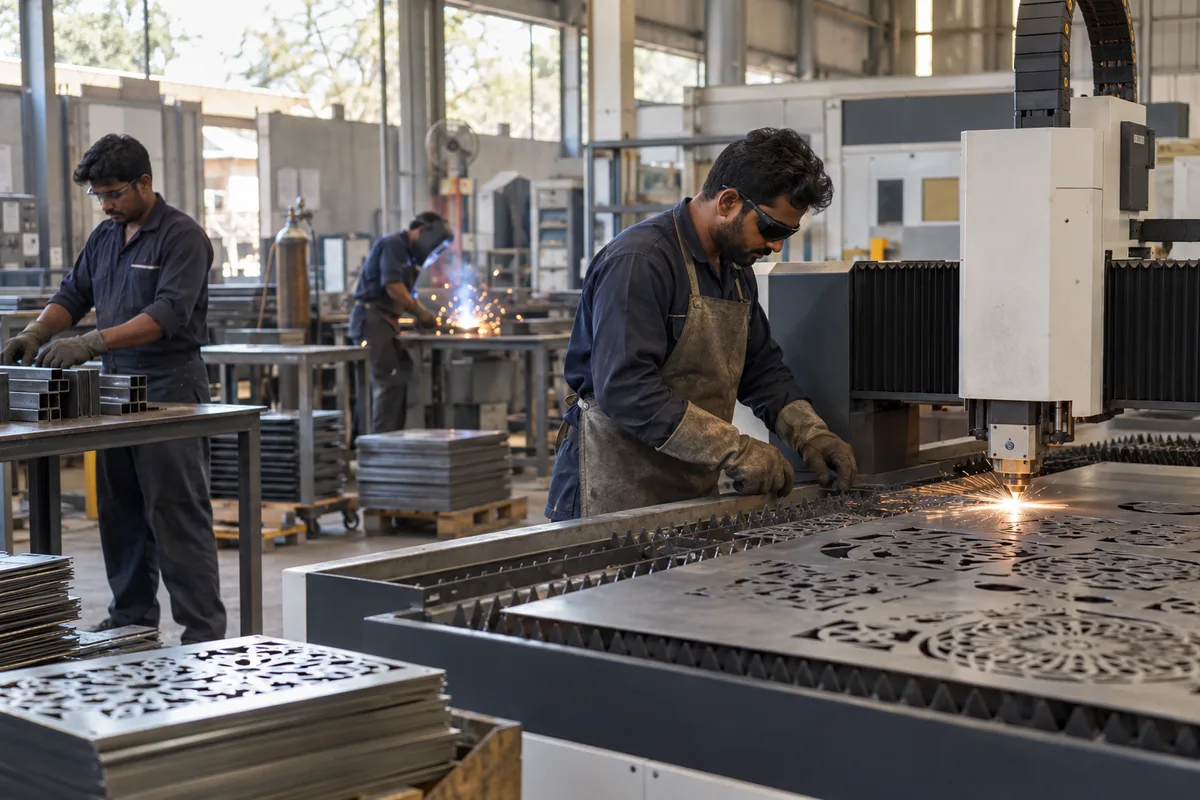
What reputation management means
Reputation management is watching what is said about your business across Google, social media and review sites, and responding to it before it changes a buyer's mind. GullySales monitors mentions, drafts responses to negative reviews and flags recurring complaints back to your team.
Also for metal fabrication and laser cutting units
- SEO for metal fabrication and laser cutting units
- PPC ads for metal fabrication and laser cutting units
- Lead generation for metal fabrication and laser cutting units
- Digital marketing for metal fabrication and laser cutting units
- Local SEO for metal fabrication and laser cutting units
- Branding for metal fabrication and laser cutting units
- Social media marketing for metal fabrication and laser cutting units
- Content marketing for metal fabrication and laser cutting units
Sales and marketing for metal fabrication and laser cutting units, the overview.
Last updated 13 Nov 2026.
For metal fabrication and laser cutting units
Where it usually goes wrong, and what we would do.
“Industrial buyers never leave reviews, they just stop calling”
A rejected batch rarely becomes a comment online. It becomes silence, and the drawing goes to another shop with no explanation offered.
“Homeowners review gates and grills in detail”
A railing job brings a review naming the rate, the delay and the welding finish, and the next family in that street reads it.
“A rework handled well is worth more than a clean job”
Buyers already know parts come back sometimes. Who replaced it without argument is the story a purchase engineer repeats to a counterpart.
What we do
What we deliver for metal fabrication and laser cutting units.
The work available for this need. We agree the deliverables and responsibilities for your engagement in writing.
Monitoring on Maps, JustDial and marketplaces
Regular checks of reviews and ratings across the places local buyers and marketplace buyers leave comments.
Result: A bad review is answered while it is still one review.
Reply wording for delay, finish and rework
Factual prepared replies for the three complaints a fabrication shop gets, each saying what was checked and what was done.
Result: The next reader sees a shop that handles problems.
A review ask built into job handover
A short request made at the point the gate is fitted or the batch is accepted, while the customer is looking at the work.
Result: Reviews come from finished jobs instead of from memory.
Written references from industrial accounts
A short note collected from purchase heads who have used you for years, kept for vendor registration and outreach.
Result: You have proof from buyers who would never post publicly.
A rework and rejection record
Every returned part logged with the job card, the cause and the action, so a reply can name a fact and a pattern can be seen.
Result: Quality complaints get fixed at the machine, not in the reply.
A reputation summary
New reviews, replies sent, references collected and items still open, reported against the baseline recorded before work starts.
Result: Nothing sits unanswered for a month.
How the result is measured
- Average rating
- Response time to reviews
- Negative mentions resolved
Recorded as a baseline before work starts, so every later report has an honest comparison.
What to do with each review
How to answer a purchase engineer, a contractor or a homeowner who has posted about a job.
- Praise for a drawing-to-part job
- Thank the buyer and name the work, such as 3mm MS brackets or a stainless enclosure. Ask the engineer to note the material and finish. Others searching want to see that you read drawings correctly.
- Complaint about dimensions out of tolerance
- Ask for the drawing revision and the part, then check your inspection sheet. If you were wrong, offer a remake. If the drawing changed late, show the revision date politely.
- Complaint about burrs, rust or finish
- Say which stage, such as cutting, bending or powder coat, and reply that the part is being re-inspected. Keep a photograph of the finished lot before dispatch.
- Delay in a gate, grill or shed
- Own the date, say what is pending, such as paint or hardware, and give a day when you will call. Check the order sheet for the promised date before you answer.
- Review about price against another unit
- Reply that your quote lists the material grade, thickness, finish and fixing, and invite a comparison on the same basis. Do not match a quote that cuts the thickness.
- A review that seems fake or planted by a rival
- Match the name against your job cards. If nothing matches, report it through the platform's own process and reply once, stating you cannot find a job.
Who it is for
This is written for these metal fabrication and laser cutting units.
- CNC laser cutting job shops
- Sheet metal fabrication units
- Structural steel fabricators
- Precision sheet metal and enclosure makers
- Decorative and architectural metal work studios
- Gate, grill, railing and shed fabricators
- Stainless steel kitchen and equipment fabricators
- Powder coating and finishing units
Not for
It is not the right fit if.
- You have unresolved complaints from past gate or panel jobs, and replying online before settling them would invite more reviews.
- No one at the shop can answer a review factually, and a defensive reply would do more harm than silence.
Before you decide
Agree the work. Know how to judge it.
Reputation management for metal fabrication and laser cutting units: use these checks to prepare, choose the scope, and review what changes.
Bring the right evidence
Collect recurring public feedback and the internal record of how the issue was handled. Separate factual corrections from genuine complaints that need a response.
Make the scope clear
Agree who checks facts, approves replies, and resolves problems outside marketing. Any request for reviews or testimonials must fit the trade's rules and the customer's permission.
Check the work in use
Read the response from the customer's point of view. It should address the issue without exposing private information or promising an outcome the team cannot provide.
Know when to change course
Do not buy or invent reviews. If the same complaint keeps returning, resolve its cause before publishing more positive material.
These are discussion points, not a fixed package. GullySales confirms the deliverables, responsibilities, fee, and term in writing after reading your brief and speaking with you.
Before we start
What to have ready before the work starts.
The records, access and decisions this work needs from metal fabrication and laser cutting units. Anything missing is noted in the written scope, with who will supply it.
- Logins for the Maps and directory listings
- Whoever created each listing holds the login, which may be a former employee. We need owner access to reply and correct. Without it, we can only write replies for you to post, and mistakes on the profile remain.
- A record of rejected and reworked batches
- A simple register of parts that came back, with the cause and what was done. It lets us write honest replies and shows whether a pattern exists. If it was never kept, we begin one on the first day and replies stay general until it fills. The register can be a notebook kept by the stores clerk, as long as each line names the part, the buyer and the reason.
- Two plant accounts willing to write a letter
- A purchase engineer or quality head who will put on paper that you deliver to drawing. Industrial buyers do not post reviews, so these letters stand in for them. If none agree, the plan relies on your approved vendor listings.
- A decision on who may reply publicly
- The owner chooses whether the quotation clerk, the production head or the owner answers. A public reply speaks for the whole shop, and a hasty one can make a complaint worse. Until it is settled, we draft replies and hold them for your approval.
How it works
How the reputation management work runs
The work itself, in order. How an engagement starts, from your brief to a written scope, is set out on our method page.
- 1
Find every listing that carries your name
We search Maps, JustDial, IndiaMART and other directories for the shop, including old names and duplicate pins from a former address. You tell us which are yours and which belong to someone else. Each one is written on a single sheet that shows who can log in and reply.
- 2
Sort the existing reviews by trade
We read each review and mark whether it came from a household buyer, a contractor or an industrial account. You tell us which complaints were fair and which refer to a job you never did. The sorted list shows what the household side says openly and what the plant side only says by leaving.
- 3
Write replies for delay, finish and rework
Together with the owner, we draft short answers for the situations that come up in metal work: a missed date, a finish that peeled, a part returned for tolerance. You approve the wording. Each reply names the part and says what the shop will do, without blaming the buyer or promising a result.
- 4
Add the review ask to handover
We place a short request into the delivery challan routine or the gate handover, so a homeowner is asked while the gate is still fresh. For plants, we ask for a reference letter rather than a Google review. You decide who makes the ask, and a test handover is run before the step counts as done.
- 5
Read open complaints against the baseline
We compare the number of unanswered reviews, the rework record and the reference letters collected with what was noted at the start. We look at which complaints repeated. You then decide whether a process on the floor, such as inspection before dispatch, needs to change.
Where this fits
Three pieces of sales work, in this order.
This work sits inside sales management. A target, a review routine and someone who owns the number.
Step 1
Sales audit
Find where deals are being lost and what to fix first.
Start here if you cannot say where orders are lost.
Step 2
Sales process design
One written way to sell, from first enquiry to repeat order.
Start here if every salesperson sells differently.
Step 3 · you are here
Sales management
A target, a review routine and someone who owns the number.
Start here if the team has targets and no routine.
FAQ
Questions owners ask before they call.
Not here? More answers, or ask on WhatsApp.
Should we ask an OEM purchase engineer for a Google review?
A homeowner has posted about a delayed gate. What do we do?
Do buyers from factories read Google reviews?
A homeowner left a one-star review over a quote they did not accept. What do we write?
Can we remove a bad review?
Do we thank every five-star review?
How much does it cost?
How long is the contract?
How soon will we see results?
Who will actually do the work?
From the blog
Further reading for metal fabrication and laser cutting units.
 7 min read · 21 Sept 2026How to advertise to purchase managersPurchase managers only listen once an indent lands. Get into the vendor file, the specification and the search results before that day.
 7 min read · 21 Sept 2026How to advertise to engineers, who buy from the specificationAn engineer writes the specification and purchase buys from it. Get your make on the approved list before the tender, or the budget goes elsewhere.
 7 min read · 8 Jul 2026How to get plastic moulding job work and CNC machining ordersJob work orders go to shops buyers can find and check. How moulders and machine shops get on RFQ lists and win repeat orders.
More for metal fabrication and laser cutting units
Related work to consider.
- SEO for metal fabrication and laser cutting units
- PPC ads for metal fabrication and laser cutting units
- Lead generation for metal fabrication and laser cutting units
- Digital marketing for metal fabrication and laser cutting units
- Local SEO for metal fabrication and laser cutting units
- Branding for metal fabrication and laser cutting units
Or start from the overview: sales and marketing for metal fabrication and laser cutting units.
Your next practical step
Tell us what you are trying to grow, and we will read it before we call.
Eight short steps, mostly taps. Skip anything you would rather answer on the call.