Metal fabrication and laser cutting units · Pay per click advertising
Buy the search a purchase engineer makes from inside the plant.
Paid search puts a job shop in front of buyers looking for a process near them, on a phone and in a hurry. GullySales runs the campaigns around your delivery radius, blocks the machine and scrap searches that drain the budget, and reports on drawings received rather than clicks.
Scope, fee, reporting and term are agreed in writing after we have read your brief and spoken to you.
What pay per click advertising means
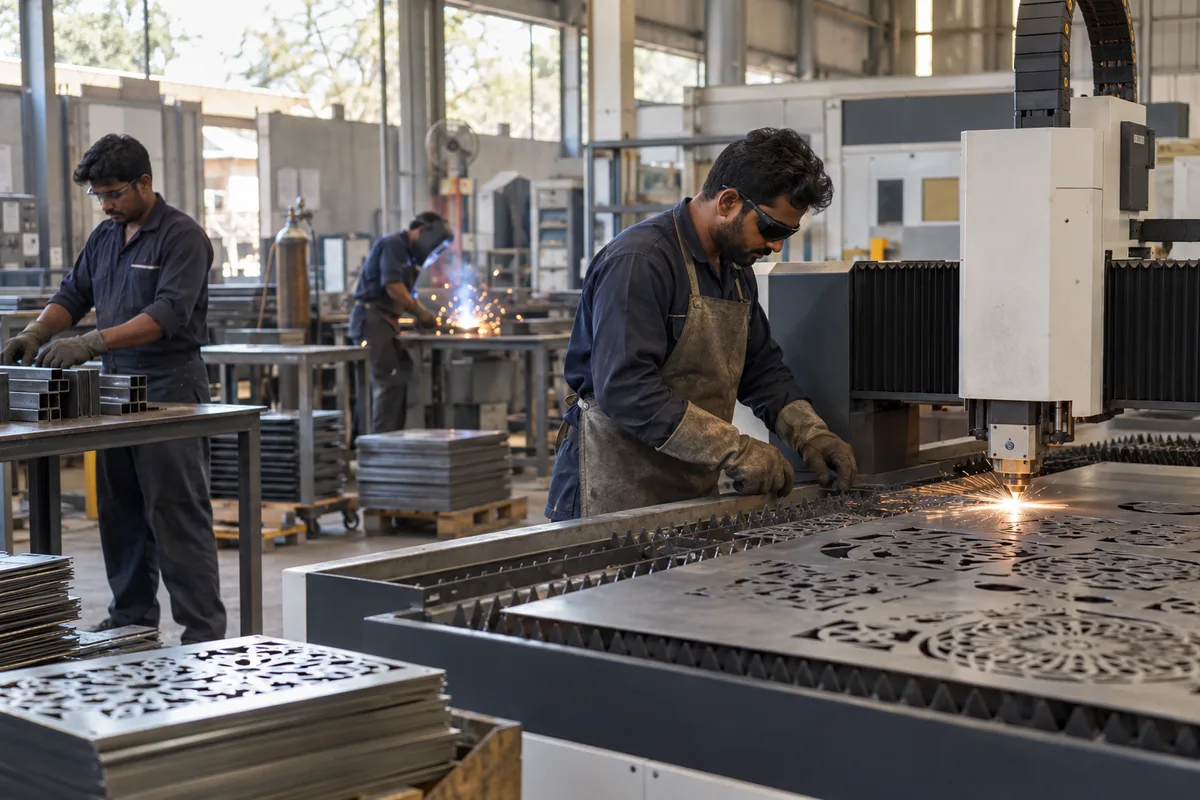
Pay per click advertising (PPC) is paying a fee each time someone clicks your advert on Google or another platform. It puts you at the top of a search page immediately, instead of waiting for ranking to build. GullySales sets the targeting, writes the ad text and checks spend against enquiries received.
Also for metal fabrication and laser cutting units
- SEO for metal fabrication and laser cutting units
- Lead generation for metal fabrication and laser cutting units
- Digital marketing for metal fabrication and laser cutting units
- Reputation management for metal fabrication and laser cutting units
- Local SEO for metal fabrication and laser cutting units
- Branding for metal fabrication and laser cutting units
- Social media marketing for metal fabrication and laser cutting units
- Content marketing for metal fabrication and laser cutting units
Sales and marketing for metal fabrication and laser cutting units, the overview.
Last updated 13 Nov 2026.
For metal fabrication and laser cutting units
Where it usually goes wrong, and what we would do.
“Machine buyers outnumber job buyers on the same words”
Laser cutting machine price and CNC machine dealer sit beside laser cutting job work. Without a block list you pay for people selling to you.
“The radius matters more than the keyword”
Sheet metal is heavy and freight decides the rate, so a click from four hundred kilometres away is money gone.
“The ad has to survive a ten-second look”
A purchase engineer standing on a shop floor wants the material, the thickness and a number to call, not a form asking for a designation.
What we do
What we deliver for metal fabrication and laser cutting units.
The work available for this need. We agree the deliverables and responsibilities for your engagement in writing.
Campaigns drawn to your delivery radius
Search campaigns set around the estates you can economically deliver to, with bids weighted towards the belts your existing buyers sit in.
Result: The budget goes where a job is worth taking.
A block list for machines, scrap and courses
Negative keywords for machine sales, second-hand plant, scrap dealers, training courses and job seekers, reviewed as new terms appear.
Result: You stop paying for searches that could never become a drawing.
Separate campaigns for industrial and domestic work
One campaign for job work and panel fabrication, another for gates, grills and railings, each with its own page, budget and hours.
Result: House enquiries stop eating the money meant for OEM work.
Landing pages built for a phone on a shop floor
A short page with the process, the materials, the thickness range, a call button and an upload field for a drawing.
Result: A drawing arrives without a phone call being needed.
Call and WhatsApp tracking on each campaign
Every call and message from an ad recorded against its campaign, so a busy week can be traced back to the spend that caused it.
Result: Ad performance is judged on enquiries, not impressions.
Monthly cost per drawing received
Spend compared with drawings received and jobs won, by campaign and by area, against the baseline recorded before work starts.
Result: You can see what a new customer actually cost.
How the result is measured
- Cost per click
- Cost per enquiry
- Enquiries from paid search
Recorded as a baseline before work starts, so every later report has an honest comparison.
Searches to bid on and block
The searches a buyer with a drawing types, and the ones that bring only machine buyers and gate hunters.
- Laser cutting service near me, plus material such as MS, SS or aluminium sheet
- Bid. A buyer who types a service and a material has a part to make. Put your sheet thickness range and bed size in the advert, so a buyer with a larger job knows to call.
- Sheet metal fabrication, bending and enclosure making
- Bid, in an ad group of its own. These buyers send a drawing and want bending and welding too. Ask for the DXF or PDF on the form before the call back.
- Laser cutting machine price, CNC machine and fibre laser
- Block. These searchers want to buy a machine, not a part. Add machine, price, fibre laser, CNC, second hand, buy and manufacturer as negatives.
- Laser cutting course, job and operator
- Block. Operators and trainees search the same words. Add job, vacancy, operator, course, training, salary and institute as negatives.
- Where the click lands
- Send it to a page that accepts a drawing upload and asks material, thickness, quantity and delivery town. An engineer with a file wants a place to drop it, not a services page.
- Counting a real enquiry
- Count a drawing uploaded or WhatsApped with quantity, or a call that asks for a quote on a named part. Log each against the campaign and mark the ones that became a quote and a job.
Who it is for
This is written for these metal fabrication and laser cutting units.
- CNC laser cutting job shops
- Sheet metal fabrication units
- Structural steel fabricators
- Precision sheet metal and enclosure makers
- Decorative and architectural metal work studios
- Gate, grill, railing and shed fabricators
- Stainless steel kitchen and equipment fabricators
- Powder coating and finishing units
Not for
It is not the right fit if.
- Nobody reads the enquiries from the advert, so paid clicks would turn into unanswered calls.
- You have not decided the delivery radius, so the budget would pay for clicks from places you cannot serve at a viable freight cost.
Before you decide
Agree the work. Know how to judge it.
PPC ads for metal fabrication and laser cutting units: use these checks to prepare, choose the scope, and review what changes.
Bring the right evidence
Bring search-term reports, conversion definitions, and the sales outcome of past enquiries where available. Identify products, locations, and enquiries you cannot serve.
Make the scope clear
Choose the offer and landing page before setting a media budget. Agree who pays the platform, which actions count as conversions, and how unsuitable searches will be reviewed.
Check the work in use
Trace a test enquiry from the advert to the sales record. Review qualified enquiries and orders alongside spend, and separate duplicates or spam from genuine buyer demand.
Know when to change course
If the advert generates enquiries that do not fit, revise targeting and qualification before increasing spend. If suitable enquiries are lost after contact, work on the sales process.
These are discussion points, not a fixed package. GullySales confirms the deliverables, responsibilities, fee, and term in writing after reading your brief and speaking with you.
Before we start
What to have ready before the work starts.
The records, access and decisions this work needs from metal fabrication and laser cutting units. Anything missing is noted in the written scope, with who will supply it.
- Access to the Google Ads account
- If an earlier agency or a relative created the account, the owner must be able to prove ownership and give us manager access. Old accounts carry history and wasted keywords that we must read before changing anything. Without access, we start a new account and lose the record of what was tried.
- A list of the sites you refuse to serve
- Name the towns, estates or distances where freight or travel makes the job unprofitable. The map of campaigns is built from this list, and paid clicks from outside it are money gone with no order. If you have no firm limit, we start narrow and widen only when drawings from the edge turn into orders.
- One person to answer phone and WhatsApp
- A paid enquiry that waits for the owner to return from the floor is wasted. Name the person who picks up during working hours and checks the drawing. If nobody is free, we cut the budget to what you can answer, because a click that meets a busy phone loses to the next shop.
- Photos of the machines and finished jobs
- Landing pages for a phone need real pictures of your floor, a part on the bed and a finished batch. A stock picture of a laser tells a buyer you have no machine. If photographs are missing, the owner takes them on a phone during the first visit and we use those.
How it works
How the pay per click advertising work runs
The work itself, in order. How an engagement starts, from your brief to a written scope, is set out on our method page.
- 1
Draw the delivery radius on a map
We sit with you and mark the industrial estates, towns and sites you will really deliver to, and the ones where freight eats the job. The radius is set from your transporter experience, not from a default. You tell us the distance beyond which you prefer to decline. The campaigns are then drawn to that map and nothing else.
- 2
Sort past searches into jobs and noise
We list the phrases a buyer types when they want a part cut, then mark the ones that bring machine sellers, scrap dealers and training seekers. You look at the list and strike what you would never serve. The struck words become the block list, which is checked again whenever new searches appear in the account.
- 3
Set up the phone and WhatsApp tracking
Before any money is spent, we put call tracking and a WhatsApp click counter on the landing pages, and test each with a drawing sent from your own phone. Someone in the office must be able to say which campaign a drawing came from. If that test fails, we correct it first and delay the launch.
- 4
Write ads with the estimator
Your estimator tells us what a good enquiry sounds like: sheet, thickness, quantity and delivery site. We write ads and a landing page that attract that and put off one-piece curiosity. You approve every claim about material and tolerance. Industrial and gate work get separate ads, so a plant buyer is never shown a railing.
- 5
Review the drawings that arrived
After the campaigns start we sit with your quotation clerk and go through each drawing received, checking which were quoted, which were declined and which were never real jobs. The block list and radius are adjusted from that. You see the cost against drawings, and from that you decide whether the budget moves or stays.
Where this fits
Three pieces of sales work, in this order.
This work sits inside sales process design, at stage 1, prospecting and lead generation. The audit comes before it, and sales management keeps it running.
Step 1
Sales audit
Find where deals are being lost and what to fix first.
Start here if you cannot say where orders are lost.
Step 2 · you are here
Sales process design
One written way to sell, from first enquiry to repeat order.
Start here if every salesperson sells differently.
Step 3
Sales management
A target, a review routine and someone who owns the number.
Start here if the team has targets and no routine.
FAQ
Questions owners ask before they call.
Not here? More answers, or ask on WhatsApp.
Are Google ads worth it for a job shop?
Should we advertise for gate and grill work?
Should we run a call-only advert for laser cutting?
How far from the shop should the adverts reach?
Can we pause the ads when the shop is full?
Will you manage the ad account in our name?
How much does it cost?
How long is the contract?
How soon will we see results?
Who will actually do the work?
From the blog
Further reading for metal fabrication and laser cutting units.
 7 min read · 21 Sept 2026How to advertise to purchase managersPurchase managers only listen once an indent lands. Get into the vendor file, the specification and the search results before that day.
 7 min read · 21 Sept 2026How to advertise to engineers, who buy from the specificationAn engineer writes the specification and purchase buys from it. Get your make on the approved list before the tender, or the budget goes elsewhere.
 7 min read · 8 Jul 2026How to get plastic moulding job work and CNC machining ordersJob work orders go to shops buyers can find and check. How moulders and machine shops get on RFQ lists and win repeat orders.
More for metal fabrication and laser cutting units
Related work to consider.
- SEO for metal fabrication and laser cutting units
- Lead generation for metal fabrication and laser cutting units
- Digital marketing for metal fabrication and laser cutting units
- Reputation management for metal fabrication and laser cutting units
- Local SEO for metal fabrication and laser cutting units
- Branding for metal fabrication and laser cutting units
Or start from the overview: sales and marketing for metal fabrication and laser cutting units.
Your next practical step
Tell us what you are trying to grow, and we will read it before we call.
Eight short steps, mostly taps. Skip anything you would rather answer on the call.