Rubber manufacturers · Sales management
Track every RFQ from drawing received to signed purchase order.
Sales management for a rubber manufacturer means tracking every RFQ through technical review, quotation, negotiation and, for larger contracts, factory audit. This pipeline can run for months and is easy to lose track of informally. GullySales sets up this tracking around your actual sales team's process.
Scope, fee, reporting and term are agreed in writing after we have read your brief and spoken to you.
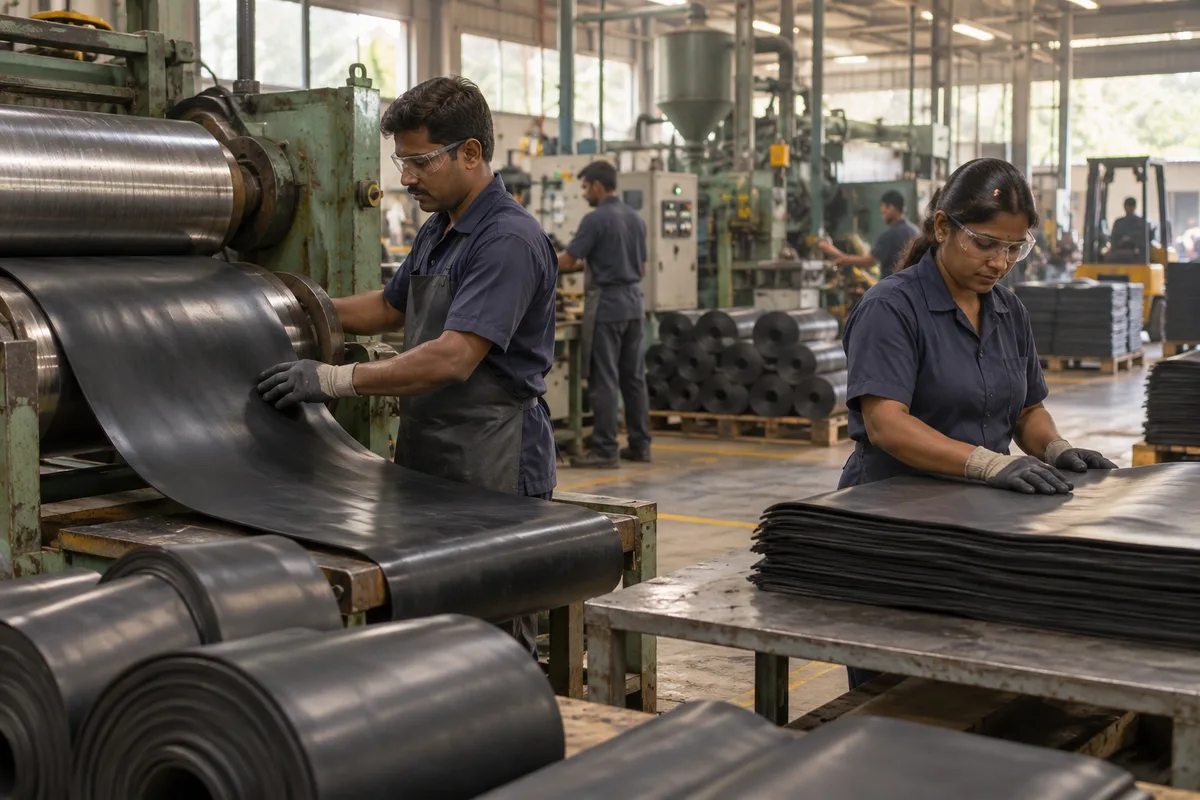
What sales management means
Sales management is the ongoing work of reviewing a sales team's pipeline, calls and targets, and stepping in on deals that are stuck. GullySales sets the review rhythm and the reports a sales manager needs to run this without relying on gut feel.
Also for rubber manufacturers
- Sales metrics for rubber manufacturers
- Sales strategy for rubber manufacturers
- Sales training for rubber manufacturers
- Answer engine optimisation for rubber manufacturers
- Branding for rubber manufacturers
- Content marketing for rubber manufacturers
- Digital marketing for rubber manufacturers
- Email marketing for rubber manufacturers
Sales and marketing for rubber manufacturers, the overview.
Last updated 5 Oct 2026.
For rubber manufacturers
Where it usually goes wrong, and what we would do.
“Technical review is a distinct pipeline stage worth tracking”
An RFQ that needs engineering input before quoting can stall silently if there is no visibility into which drawings are still awaiting review.
“Factory audits are a milestone, not an afterthought”
A large OEM opportunity often depends on passing a factory audit, and tracking this stage separately shows where a promising deal might actually be stuck.
“Raw material cost changes need to be reflected in pipeline value”
A quoted price based on last month's rubber cost may no longer be accurate, and sales management should flag quotes that need repricing before they are accepted.
What we do
What we deliver for rubber manufacturers.
Every deliverable, what it covers for you, and the result it is there to produce. Nothing here is an extra.
Pipeline tracked from drawing to purchase order
Every RFQ tracked through technical review, quotation, negotiation and, for larger contracts, factory audit, instead of managed informally.
Result: A deal is not lost simply because a stage went unwatched.
Technical review stage tracked separately from quoting
RFQs awaiting engineering input flagged and visible on their own, instead of stalling silently inside a combined process.
Result: A drawing is not left waiting because no one noticed it was stuck.
Factory audit tracked as its own milestone
Large OEM opportunities tracked with the factory audit as a visible stage, so a stuck audit is caught rather than assumed to be progressing.
Result: A promising deal is not quietly lost at the audit stage.
Quotes flagged when raw material cost moves
A check against current raw material cost added to the pipeline, flagging a quote that needs repricing before it is accepted.
Result: An old quote does not get accepted at a price that no longer holds.
Review with sales, quality and production
A working session using the pipeline record to review stuck accounts, run with your sales, quality and production teams together.
Result: Everyone with a stake in an order knows exactly where it stands.
How the result is measured
- Target achievement
- Pipeline coverage
- Stuck deals resolved
Recorded as a baseline before work starts, so every later report has an honest comparison.
What the sales head reviews
Read these six things in the RFQ register before you meet the purchase managers.
- Drawings waiting for compound selection
- List RFQs where the compound, such as EPDM, nitrile, silicone or neoprene, and the hardness are not yet decided. Get the buyer's application, temperature and fluid contact before engineering picks one.
- Quotes made at an old rubber rate
- Check quotes priced before the last natural or synthetic rubber price move. Revise them before the buyer issues a PO, and tell the buyer why the rate changed.
- Samples and PPAP files pending
- Read samples dispatched with no approval from the OEM's quality team. Call with the test reports, such as hardness and compression set, and ask what is still open.
- Moulds ready, buyer approval pending
- Find new parts where the mould is ready but the buyer has not approved the drawing revision or paid the tooling advance. Chase the purchase contact with a clear list of what is needed.
- Repeat orders by part number
- Compare repeat gasket, seal and moulded part orders with each buyer's usual pattern in the sales ledger. A part that has stopped coming may have moved to another supplier, so ask.
- Rejections and returns
- Check parts returned by customers for flash, porosity or dimension issues. A buyer with an open rejection will not place the next order, so close the root cause first.
Who it is for
This is written for these rubber manufacturers.
- Custom moulded rubber component manufacturers
- Industrial gasket and seal manufacturers
- Conveyor belt manufacturers
- Tyre retreading material suppliers
- Rubber-to-metal bonded parts manufacturers
- Export-oriented OEM suppliers
Not for
It is not the right fit if.
- You want a guaranteed Google ranking or a guaranteed number of leads. Nobody honest can promise either.
- You need enquiries by next week and have nobody to answer them.
- You want posts and reach reported, not enquiries and orders.
How it works
From your first message to the first report.
No open-ended retainer. Every step gives you something in writing.
First
Your brief
You tell us what you need in a few short steps: your business, what you want, where enquiries come from and how they are handled.
After the brief
A conversation and a written scope
We read it, then talk with whoever handles your enquiries. If you want our help, the scope, the fee and the reporting come in writing, and nothing starts before you have read them.
Before work starts
Baseline recorded
Enquiries by source, reply time, conversion and cost per order, written down so every later report has an honest comparison.
After the baseline
The first fix goes live
The fix we agreed to start with is put in place and measured against the baseline, whether that is reply time, a follow-up sequence, the page buyers land on or the handover between marketing and sales.
As agreed
Report against the baseline
What moved, what did not, and what changes next, in plain words. How often you get it is set in writing before work starts.
At renewal
Renew on the numbers
The term ends and you decide whether to continue from the results. The length is agreed in writing before anything starts.
How the sales management work runs
- 1
Assess current management practice
We look at what cadence, if any, currently exists and where it breaks down.
- 2
Set the rhythm
The touchpoints are agreed and scheduled in writing before the first review.
- 3
Run or coach the cadence
We either run the reviews and one-on-ones directly, or coach your manager to run them.
- 4
Address performance directly
Issues are raised as they appear, not left until a review period.
- 5
Report to the owner
A summary keeps ownership informed without needing to sit in every review.
Why us
Why owners pick GullySales over an agency.
Marketing and sales, as one job
Most agencies stop at the enquiry. We also fix what happens after it: the reply, the follow-up, the quote and the CRM.
The person on the first call does the work
No account managers in between. You are never handed to someone you have not met.
A baseline before anything starts
Your numbers are written down on day one, so every later report compares against something honest.
The fee in writing, split three ways
Our time, your media spend and production on separate lines. You always see what goes to us.
No guarantees we cannot keep
The term is agreed in writing and never a default twelve months. We never promise a ranking or a lead count, because nobody controls those.
One office, and we say so
Nagarbhavi, Bengaluru. We work across India by call and WhatsApp and travel when a session needs to be in person.
#257, 3rd floor, Sri Nanjundeshwara Complex, Nagarbhavi 8th Block, Outer Ring Road. How we work.
Your brief
Tell us what you need, and we will read it before we call.
Eight short steps about your business, what you want and who decides. Most questions are a tap, and you can skip any you would rather answer on the call.
FAQ
Questions owners ask before they call.
Not here? More answers, or ask on WhatsApp.
Do we need special software for this?
Who should own this tracking?
Should the QC head attend the sales review?
How do I set targets for a salesperson when OEM approvals take so long?
Do we need to advertise?
Should we list every compound we mould, like EPDM, nitrile and silicone?
How much does it cost?
How long is the contract?
How soon will we see results?
Who will actually do the work?
From the blog
Further reading for rubber manufacturers.

More for rubber manufacturers
Everything else we would do for you.
Closest to this: sales craft
Also for rubber manufacturers
- Answer engine optimisation for rubber manufacturers
- Branding for rubber manufacturers
- Content marketing for rubber manufacturers
- Digital marketing for rubber manufacturers
- Email marketing for rubber manufacturers
- Google Business Profile for rubber manufacturers
- Influencer marketing for rubber manufacturers
- Lead generation for rubber manufacturers
- Marketing strategy for rubber manufacturers
- PPC for rubber manufacturers
- Reputation management for rubber manufacturers
- SEO for rubber manufacturers
- Social media for rubber manufacturers
- Website design for rubber manufacturers
- WhatsApp marketing for rubber manufacturers
Or start from the overview: sales and marketing for rubber manufacturers.
Your next practical step
Tell us what you are trying to grow, and we will read it before we call.
Eight short steps, mostly taps. Skip anything you would rather answer on the call.