Rubber manufacturers · Social media
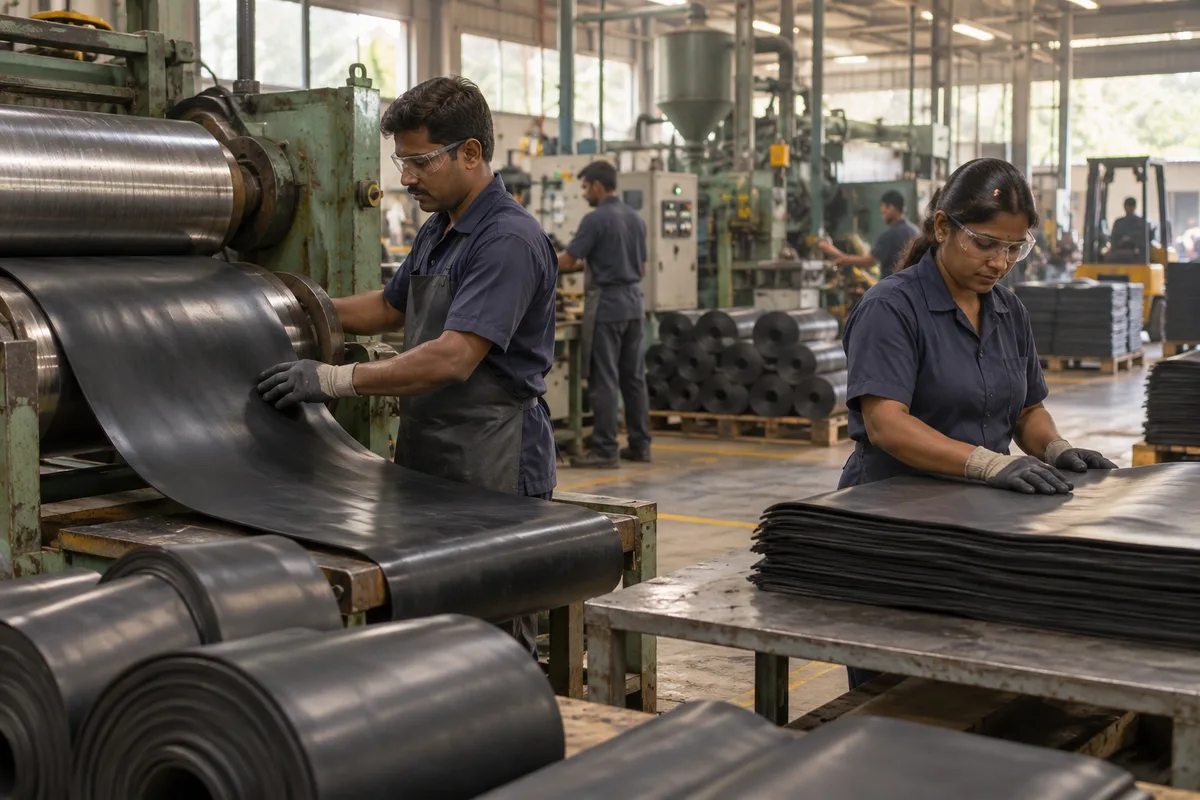
Post the production line running, not a stock photo of a rubber sheet.
Social media for a rubber manufacturer means LinkedIn content showing real production capability, quality processes and completed projects, aimed at purchase managers and design engineers rather than a consumer audience. GullySales builds this as a steady, professional presence rather than a high-frequency posting schedule.
Scope, fee, reporting and term are agreed in writing after we have read your brief and spoken to you.
What social media means
Social media is the ongoing posting your business does on platforms such as Instagram, Facebook and LinkedIn to stay visible to customers and prospects between purchases. GullySales plans a posting calendar, writes captions and designs the images so the page looks active and answers what a visitor would ask.
Also for rubber manufacturers
- Content marketing for rubber manufacturers
- Influencer marketing for rubber manufacturers
- Answer engine optimisation for rubber manufacturers
- Branding for rubber manufacturers
- Digital marketing for rubber manufacturers
- Email marketing for rubber manufacturers
- Google Business Profile for rubber manufacturers
- Lead generation for rubber manufacturers
Sales and marketing for rubber manufacturers, the overview.
Last updated 5 Oct 2026.
For rubber manufacturers
Where it usually goes wrong, and what we would do.
“LinkedIn reaches the actual buyer, not Instagram”
A purchase manager or design engineer researching suppliers professionally is far more likely to be reached on LinkedIn than on a consumer-focused platform.
“Production and quality footage builds credibility directly”
A short video of a quality check or a moulding process in action demonstrates capability more convincingly than a written claim about quality standards.
“Trade fair participation is worth its own content”
A short recap post from an industry exhibition, showing your stand and the products displayed, extends the reach of that investment beyond the people who actually attended.
What we do
What we deliver for rubber manufacturers.
Every deliverable, what it covers for you, and the result it is there to produce. Nothing here is an extra.
LinkedIn calendar built on production footage
A posting plan showing real moulding, quality checks and completed projects, aimed at purchase managers and design engineers.
Result: The people deciding on a supplier see the work, not an announcement.
Short video of a quality check or process
A brief video of a real production or quality-check moment, edited for a professional audience rather than a promotional tone.
Result: The claim about quality standards is shown instead of just stated.
Trade fair recap extending the exhibition's reach
A short recap post showing your stand and displayed products after an exhibition, reaching people beyond those who actually attended.
Result: The trade fair investment reaches an audience beyond the show floor.
A realistic, low-frequency posting schedule
A few posts a month planned around what production and quality footage is actually available, rather than a high-frequency schedule.
Result: Posting continues steadily instead of stopping after a busy stretch.
Engagement connected to RFQs in your report
A report against your baseline linking social media activity to RFQs received, rather than counting views alone.
Result: You know whether the posting brings in real enquiries.
How the result is measured
- Posts published
- Engagement rate
- Enquiries from social profiles
Recorded as a baseline before work starts, so every later report has an honest comparison.
Platform for this buyer
Where design engineers and purchase managers look, and what to post.
- LinkedIn posts from the moulding and curing shop
- Post one job: the part, the compound such as EPDM, nitrile or silicone, the hardness and the standard it was tested to. A design engineer reads for these details.
- LinkedIn after a trade fair
- Post the kinds of parts visitors asked about and thank the people you met, naming the product lines shown. Buyers who met you search your page before replying.
- YouTube for the quality check
- Film a tensile or hardness test, a dimensional check or a first-off approval, with the instrument named. A buyer visiting your plant wants to know that testing is real.
- IndiaMART listings with real photographs
- Update the photographs with real parts, the compounds and the sizes you make. Many RFQs begin here, so a listing with a clear photograph and a request for the drawing gets read.
- What not to post
- Do not post a customer's drawing or part number, or a compound formulation. The recipe is your know-how; share the compound family and the tested properties and keep the formula private.
Who it is for
This is written for these rubber manufacturers.
- Custom moulded rubber component manufacturers
- Industrial gasket and seal manufacturers
- Conveyor belt manufacturers
- Tyre retreading material suppliers
- Rubber-to-metal bonded parts manufacturers
- Export-oriented OEM suppliers
Not for
It is not the right fit if.
- You want a guaranteed Google ranking or a guaranteed number of leads. Nobody honest can promise either.
- You need enquiries by next week and have nobody to answer them.
- You want posts and reach reported, not enquiries and orders.
How it works
From your first message to the first report.
No open-ended retainer. Every step gives you something in writing.
First
Your brief
You tell us what you need in a few short steps: your business, what you want, where enquiries come from and how they are handled.
After the brief
A conversation and a written scope
We read it, then talk with whoever handles your enquiries. If you want our help, the scope, the fee and the reporting come in writing, and nothing starts before you have read them.
Before work starts
Baseline recorded
Enquiries by source, reply time, conversion and cost per order, written down so every later report has an honest comparison.
After the baseline
The first fix goes live
The fix we agreed to start with is put in place and measured against the baseline, whether that is reply time, a follow-up sequence, the page buyers land on or the handover between marketing and sales.
As agreed
Report against the baseline
What moved, what did not, and what changes next, in plain words. How often you get it is set in writing before work starts.
At renewal
Renew on the numbers
The term ends and you decide whether to continue from the results. The length is agreed in writing before anything starts.
How the social media work runs
- 1
Understand your audience and platforms
We identify which platforms your specific buyers actually use and what kind of content they respond to.
- 2
Audit current presence
We review existing pages, past content performance and any gaps in consistency.
- 3
Build the content calendar
A plan is created, balancing genuine value with occasional direct offers.
- 4
Implement and post
Content is created and published consistently on the agreed schedule.
- 5
Measure and optimise
We track enquiries alongside engagement and adjust the content mix based on what actually performs.
Why us
Why owners pick GullySales over an agency.
Marketing and sales, as one job
Most agencies stop at the enquiry. We also fix what happens after it: the reply, the follow-up, the quote and the CRM.
The person on the first call does the work
No account managers in between. You are never handed to someone you have not met.
A baseline before anything starts
Your numbers are written down on day one, so every later report compares against something honest.
The fee in writing, split three ways
Our time, your media spend and production on separate lines. You always see what goes to us.
No guarantees we cannot keep
The term is agreed in writing and never a default twelve months. We never promise a ranking or a lead count, because nobody controls those.
One office, and we say so
Nagarbhavi, Bengaluru. We work across India by call and WhatsApp and travel when a session needs to be in person.
#257, 3rd floor, Sri Nanjundeshwara Complex, Nagarbhavi 8th Block, Outer Ring Road. How we work.
Your brief
Tell us what you need, and we will read it before we call.
Eight short steps about your business, what you want and who decides. Most questions are a tap, and you can skip any you would rather answer on the call.
FAQ
Questions owners ask before they call.
Not here? More answers, or ask on WhatsApp.
How often should we post?
Do we need a large following for this to work?
Should the owner's profile post more than the company page?
Should we show test reports on social media?
Do we need to advertise?
Should we list every compound we mould, like EPDM, nitrile and silicone?
How much does it cost?
How long is the contract?
How soon will we see results?
Who will actually do the work?
From the blog
Further reading for rubber manufacturers.

More for rubber manufacturers
Everything else we would do for you.
Closest to this: content and social
Also for rubber manufacturers
- Answer engine optimisation for rubber manufacturers
- Branding for rubber manufacturers
- Digital marketing for rubber manufacturers
- Email marketing for rubber manufacturers
- Google Business Profile for rubber manufacturers
- Lead generation for rubber manufacturers
- Marketing strategy for rubber manufacturers
- PPC for rubber manufacturers
- Reputation management for rubber manufacturers
- Sales management for rubber manufacturers
- Sales metrics for rubber manufacturers
- Sales strategy for rubber manufacturers
- Sales training for rubber manufacturers
- SEO for rubber manufacturers
- Website design for rubber manufacturers
- WhatsApp marketing for rubber manufacturers
Or start from the overview: sales and marketing for rubber manufacturers.
Your next practical step
Tell us what you are trying to grow, and we will read it before we call.
Eight short steps, mostly taps. Skip anything you would rather answer on the call.