Rubber manufacturers · Marketing strategy
Decide which product lines and buyers are worth chasing before spreading effort thin.
Marketing strategy for a rubber manufacturer means deciding which product categories, buyer types and markets, domestic or export, to prioritise, rather than promoting every capability equally. GullySales works through this with you so limited marketing effort goes toward the highest-value, most winnable business.
Scope, fee, reporting and term are agreed in writing after we have read your brief and spoken to you.
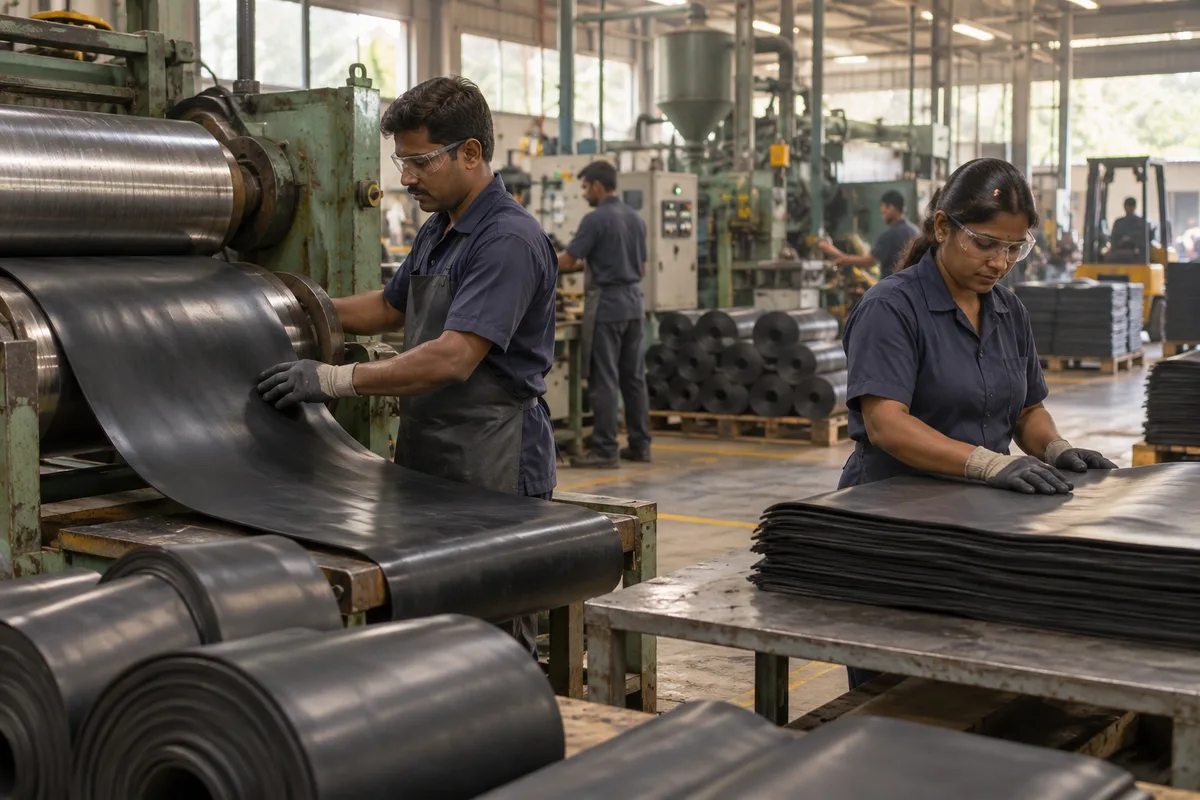
What marketing strategy means
Marketing strategy is the plan for which channels to use, in what order and with what budget. This way, marketing spend is aimed at a goal instead of tried one channel at a time. GullySales sets this plan after the first conversation, based on where your buyers actually search and decide.
Also for rubber manufacturers
- Digital marketing for rubber manufacturers
- Answer engine optimisation for rubber manufacturers
- Branding for rubber manufacturers
- Content marketing for rubber manufacturers
- Email marketing for rubber manufacturers
- Google Business Profile for rubber manufacturers
- Influencer marketing for rubber manufacturers
- Lead generation for rubber manufacturers
Sales and marketing for rubber manufacturers, the overview.
Last updated 5 Oct 2026.
For rubber manufacturers
Where it usually goes wrong, and what we would do.
“Not every product line deserves equal marketing investment”
A high-margin custom moulding capability often deserves more content and search investment than a commodity product where price is the only real differentiator.
“Domestic and export strategies need to be planned separately”
Export buyers move through different channels, timelines and compliance requirements than a domestic OEM, and a single combined strategy usually serves neither well.
“Capacity should shape which leads you actually chase”
Generating enquiries beyond what your production capacity can service on time damages the reputation you need for the next RFQ, so lead generation should be sized to capacity.
What we do
What we deliver for rubber manufacturers.
Every deliverable, what it covers for you, and the result it is there to produce. Nothing here is an extra.
Priority list of product lines by margin
A written ranking of which product categories deserve the most marketing investment, based on margin, capacity and current enquiry patterns.
Result: Effort goes toward the product lines actually worth pursuing.
Separate plans for domestic and export markets
Two distinct plans, since export buyers move through different channels, timelines and compliance requirements than a domestic OEM.
Result: Neither market is served by a plan built for the other.
Lead generation sized to your production capacity
A stated limit on how many enquiries to pursue, so demand generated does not exceed what the factory can service on time.
Result: Your reputation is not damaged by promising more than the plant can deliver.
One document naming budget and priority
A single strategy document setting out which product lines, channels and markets get budget, and who owns each part.
Result: Your plant head and your sales manager work off the same priority list.
Review tied to cost or capacity change
The plan checked in the report against the baseline, or sooner if raw material costs or capacity change significantly.
Result: The strategy does not drift far from the factory's real position.
How the result is measured
- Enquiries against target
- Cost per enquiry
- Channel contribution to revenue
Recorded as a baseline before work starts, so every later report has an honest comparison.
What to decide first
What a rubber manufacturer decides about products, industries and tooling before promoting the range.
- The product line to lead with
- Rank moulded parts, gaskets, seals, belts and sheets by margin after material and by how often they reorder. Lead with the line you can deliver reliably, and keep the others as additions.
- The industries to go deep in
- Look at past orders by sector, such as automobile, pharma, food, pumps or oil and gas. Choose the one or two where you have repeat orders, and describe your compounds and approvals for them.
- The tooling you will open
- A new mould or die costs money before a part ships. Decide the order size and payment terms for which you will open one, and who owns it, and say that on the first reply.
- The sample rule
- Choose when a sample is free, when it is charged and who pays the courier. A written rule helps your team respond to a drawing without a debate on each one.
- The buyers you keep and the ones to add
- List current buyers by last order and note which have gone quiet. Decide who calls them before you look for new ones, and what new buyer type you want next.
- Which RFQs you will not quote
- Write the compounds, hardness ranges and sizes you cannot make, and the quantities that are too small. A short reply declining the job keeps the buyer's time and your own.
Who it is for
This is written for these rubber manufacturers.
- Custom moulded rubber component manufacturers
- Industrial gasket and seal manufacturers
- Conveyor belt manufacturers
- Tyre retreading material suppliers
- Rubber-to-metal bonded parts manufacturers
- Export-oriented OEM suppliers
Not for
It is not the right fit if.
- You want a guaranteed Google ranking or a guaranteed number of leads. Nobody honest can promise either.
- You need enquiries by next week and have nobody to answer them.
- You want posts and reach reported, not enquiries and orders.
How it works
From your first message to the first report.
No open-ended retainer. Every step gives you something in writing.
First
Your brief
You tell us what you need in a few short steps: your business, what you want, where enquiries come from and how they are handled.
After the brief
A conversation and a written scope
We read it, then talk with whoever handles your enquiries. If you want our help, the scope, the fee and the reporting come in writing, and nothing starts before you have read them.
Before work starts
Baseline recorded
Enquiries by source, reply time, conversion and cost per order, written down so every later report has an honest comparison.
After the baseline
The first fix goes live
The fix we agreed to start with is put in place and measured against the baseline, whether that is reply time, a follow-up sequence, the page buyers land on or the handover between marketing and sales.
As agreed
Report against the baseline
What moved, what did not, and what changes next, in plain words. How often you get it is set in writing before work starts.
At renewal
Renew on the numbers
The term ends and you decide whether to continue from the results. The length is agreed in writing before anything starts.
How the marketing strategy work runs
- 1
Understand business goals
We start with what the business needs to achieve this year, in revenue and growth terms, not marketing terms.
- 2
Audit current activity
We review every current marketing activity and what it has actually produced.
- 3
Strategise the plan
Channels, messaging and budget are set based on the goals and what we find in your business, not habit or competitor imitation.
- 4
Implement the roadmap
The plan is broken into an execution roadmap, either run by GullySales, your own team, or both.
- 5
Measure against milestones
Progress is checked against the plan's milestones, with adjustments made as the year unfolds.
Why us
Why owners pick GullySales over an agency.
Marketing and sales, as one job
Most agencies stop at the enquiry. We also fix what happens after it: the reply, the follow-up, the quote and the CRM.
The person on the first call does the work
No account managers in between. You are never handed to someone you have not met.
A baseline before anything starts
Your numbers are written down on day one, so every later report compares against something honest.
The fee in writing, split three ways
Our time, your media spend and production on separate lines. You always see what goes to us.
No guarantees we cannot keep
The term is agreed in writing and never a default twelve months. We never promise a ranking or a lead count, because nobody controls those.
One office, and we say so
Nagarbhavi, Bengaluru. We work across India by call and WhatsApp and travel when a session needs to be in person.
#257, 3rd floor, Sri Nanjundeshwara Complex, Nagarbhavi 8th Block, Outer Ring Road. How we work.
Your brief
Tell us what you need, and we will read it before we call.
Eight short steps about your business, what you want and who decides. Most questions are a tap, and you can skip any you would rather answer on the call.
FAQ
Questions owners ask before they call.
Not here? More answers, or ask on WhatsApp.
How do we decide what to prioritise?
How often should this strategy be revisited?
Should we aim for OEMs or for distributors?
We make to drawing. How can we show a product range?
Do we need to advertise?
Should we list every compound we mould, like EPDM, nitrile and silicone?
How much does it cost?
How long is the contract?
How soon will we see results?
Who will actually do the work?
From the blog
Further reading for rubber manufacturers.

More for rubber manufacturers
Everything else we would do for you.
Closest to this: strategy and research
Also for rubber manufacturers
- Answer engine optimisation for rubber manufacturers
- Branding for rubber manufacturers
- Content marketing for rubber manufacturers
- Email marketing for rubber manufacturers
- Google Business Profile for rubber manufacturers
- Influencer marketing for rubber manufacturers
- Lead generation for rubber manufacturers
- PPC for rubber manufacturers
- Reputation management for rubber manufacturers
- Sales management for rubber manufacturers
- Sales metrics for rubber manufacturers
- Sales strategy for rubber manufacturers
- Sales training for rubber manufacturers
- SEO for rubber manufacturers
- Social media for rubber manufacturers
- Website design for rubber manufacturers
- WhatsApp marketing for rubber manufacturers
Or start from the overview: sales and marketing for rubber manufacturers.
Your next practical step
Tell us what you are trying to grow, and we will read it before we call.
Eight short steps, mostly taps. Skip anything you would rather answer on the call.