Temples · Buyer persona
Know the four kinds of devotee before writing a single line for the temple.
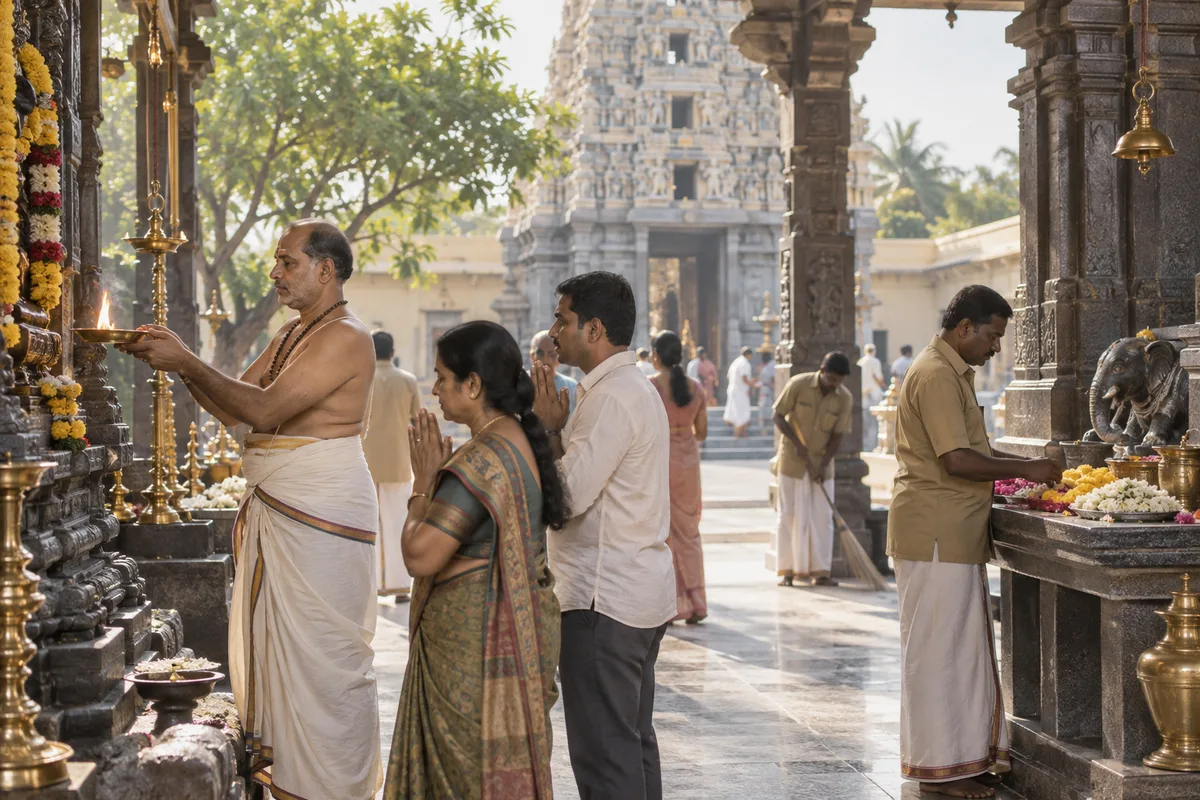
A buyer persona for a temple is a written portrait of one kind of devotee, covering what they search for, what worries them and what they need before they book or give. The temple has several such devotees, and each needs different words. GullySales works with the trust to draw those portraits from the questions the office already hears.
Scope, fee, reporting and term are agreed in writing after we have read your brief and spoken to you.
What buyer persona means
A buyer persona is a plain description of the kind of customer who actually buys from you. It includes what they search, what worries them and who else they ask before deciding. GullySales builds this from real enquiries and past sales rather than a generic template, then uses it to write every page and advert.
Last updated 14 Nov 2026.
For temples
Where it usually goes wrong, and what we would do.
“The local regular wants an unchanged routine”
A family living near the temple visits on fixed days and wants the day's pooja timings and any change to them. They do not need a history lesson. A short notice on the page and the map is worth more to them than a long introduction.
“The family abroad acts on an occasion”
An overseas devotee returns to the temple through a birthday, a death anniversary or a vow. They want to name the person, choose a date and receive proof that the seva was performed. The page should say who performs it and how the family will be told.
“The first-time pilgrim needs practical answers”
A pilgrim from another state asks about dress, footwear, queue, photography and the nearest stay. Each unanswered question is a reason to postpone. Write the answers plainly and in the order the journey unfolds.
“The institutional giver asks for paperwork”
A company, a school or a society considering support for an annadanam or a renovation will ask who to write to and what record will follow. That person needs a named contact at the office, not a general address.
What we do
What we deliver for temples.
The work available for this need. We agree the deliverables and responsibilities for your engagement in writing.
Four one-page persona sheets
One sheet each for the local regular, the family abroad, the first-time pilgrim and the institutional giver, written in plain words from real office questions.
Result: The trust can read, edit and agree on who each page is for.
A question list from the office
The queries the priests, the counter and the phone actually receive, grouped under each persona.
Result: The pages answer what devotees really ask.
A page map by persona
A plan showing which page speaks to which devotee, what that devotee should do next and who at the office replies.
Result: Every page has one reader and one next step.
Language and tone notes
A short guide on respectful wording, the regional terms to use and the phrases the temple avoids, such as any promise of blessing or result.
Result: Everyone who writes for the temple follows the same register.
A review with the temple office
A session where the office corrects the sheets against what they see at the counter.
Result: The personas reflect the temple as it is, not as an agency imagines it.
How the result is measured
- Enquiry match to persona
- Conversion rate by persona
- Content aligned to persona
Recorded as a baseline before work starts, so every later report has an honest comparison.
Who is asking
Four kinds of devotee ask four different questions before they come or give.
- The local regular
- Comes for the daily routine and wants nothing changed. They want to know the timings and any change on a festival day, and notice a wrong board at once.
- A family abroad marking an occasion
- Plans around a birthday, an anniversary or a festival. They want to know which seva can be booked from a distance and how the prasad or the acknowledgement reaches them.
- The first-time pilgrim
- Arrives from another town and needs practical answers: the route, the queue, the dress rule, the footwear stand and the nearest place to stay.
- The institutional giver
- A firm or an association asking about sponsoring a day or a programme. They want to see what the day involves and how the offering will be acknowledged.
Who it is for
This is written for these temples.
- Ancient and heritage temples with high pilgrim footfall
- Neighbourhood and community temples
- Temple trusts managing more than one shrine
- Shrines with a strong NRI devotee base overseas
- A temple known for one festival or utsavam
- Temples running annadanam and community welfare programmes
Before you decide
When this may not be the right fit.
- You have not yet asked the priests and the office who actually writes in and calls, so any persona would be imagined.
- You wish to record devotees' beliefs or finances, which a temple has no need to hold.
- The temple is small enough that the office already knows every regular by name and nothing is lost.
Before you decide
Agree the work. Know how to judge it.
Buyer persona for temples: use these checks to prepare, choose the scope, and review what changes.
Bring the right evidence
Write the decision the research must support, such as entering a market or choosing a buyer group. Separate what you know from sales records from what the team currently assumes.
Make the scope clear
Agree which buyers to speak to, which sources to review, and what access you can provide. Include lost enquiries and people who chose another supplier, where they are willing to take part.
Check the work in use
Look for source dates, sample limitations, and evidence that disagrees with the preferred answer. A recommendation should show how it follows from the findings.
Know when to change course
Do not treat a few positive conversations as proof of demand. Test the proposed offer with an actual buying decision before committing to a wider launch.
These are discussion points, not a fixed package. GullySales confirms the deliverables, responsibilities, fee, and term in writing after reading your brief and speaking with you.
Before we start
What to have ready before the work starts.
The records, access and decisions this work needs from temples. Anything missing is noted in the written scope, with who will supply it.
- Two or more years of seva records
- Personas drawn from the ledger need a long record. If only a year exists, we describe the groups with less confidence and say so.
- Time with a counter clerk and a priest
- Both see different devotees. A conversation with each is needed. Without the priest the personas lean towards bookers; without the clerk they lean towards regulars.
- The trust's view of whom to serve
- Decide whether the temple wishes to reach more overseas families, young people or local residents. Without a choice, the personas describe the present mix and nothing more.
- Notes on festival crowd patterns
- Which groups come on which days. The office knows. Without this, the pages ignore the difference between ordinary days and utsavam days.
- Any visitor or devotee survey already done
- If the temple has collected comments or forms, bring them. Without any, the personas rest on the ledger and our counter time only.
How it works
How the buyer persona work runs
The work itself, in order. How an engagement starts, from your brief to a written scope, is set out on our method page.
- 1
List who actually comes to the temple
With the clerk and a priest we write the kinds of people who come: local families on festival days, elderly devotees who come every morning, pilgrims by coach, families abroad who book for relatives. You tell us which groups the trust wants to serve first. We stop at the groups the office can recognise by name.
- 2
Sit at the counter on a busy morning
We spend time at the booking counter and the information desk listening to what each group asks. Do they want timings, a seva date, a place to stay, the rules for the queue? We note the words they use. These words become the persona notes, taken from real speech.
- 3
Read the ledger for each group
The seva ledger shows which groups book what and when. We tally by group and festival with the clerk checking our reading. You decide if a group is too small to plan for. The tally gives each persona a booking habit and a season.
- 4
Write one page for each group
For each group we write a page covering what they look for, where they search, what worries them about a visit and what the temple can offer. A priest checks that nothing assumes a belief. The trust reads each page. What exists is a short set of personas the office recognises.
- 5
Put the pages to use in the next notice
We apply the pages to the next festival notice, the booking page and the WhatsApp replies, showing the clerk what changed and why. The trust decides which change to keep. The personas are then used in the temple's own writing, not left in a folder.
- 6
Check the groups against the first tally
We compare the next festival's bookings with the tally taken at the start, group by group. We note whether the groups identified appear as expected and whether a group we missed has shown itself. The pages are adjusted to match what the office records, and the clerk keeps a copy at the counter.
Where this fits
Three pieces of sales work, in this order.
This work sits inside sales process design, at stage 0, foundation. The audit comes before it, and sales management keeps it running.
Step 1
Sales audit
Find where deals are being lost and what to fix first.
Start here if you cannot say where orders are lost.
Step 2 · you are here
Sales process design
One written way to sell, from first enquiry to repeat order.
Start here if every salesperson sells differently.
Step 3
Sales management
A target, a review routine and someone who owns the number.
Start here if the team has targets and no routine.
FAQ
Questions owners ask before they call.
Not here? More answers, or ask on WhatsApp.
Do we need personas if we are a small neighbourhood temple?
Should personas include donor details like names and income?
How do we avoid stereotyping devotees?
How do we find out what each kind of devotee asks?
Why does a temple need personas at all?
Do the personas change how the deity is described?
How much does it cost?
How long is the contract?
How soon will we see results?
Who will actually do the work?
From the blog
Further reading for temples.
 5 min read · 12 Oct 2026Tax receipts, FCRA and registrations: how an NGO should present credentials without overclaimingDonors look for registrations before they give. State what you hold in plain words, avoid implying more, and have your adviser confirm the wording.
- 5 min read · 14 Sept 2026Website for an NGO: the pages donors look for before they giveA first-time donor checks your website before paying. The pages and details they look for, in the order they look, and what a small NGO can leave out.
- 6 min read · 2 Jul 2026How an NGO builds a donor database it can actually useA donor database starts as one row per donor, a few columns and a named owner. The layout, the rules that keep it clean and when to move to a CRM.
More for temples
Related work to consider.
Closest to this: strategy and research
Also for temples
Or start from the overview: sales and marketing for temples.
Your next practical step
Tell us what you are trying to grow, and we will read it before we call.
Eight short steps, mostly taps. Skip anything you would rather answer on the call.