Temples · Pay per click advertising
Reach devotees planning a visit before the festival, not after it starts.
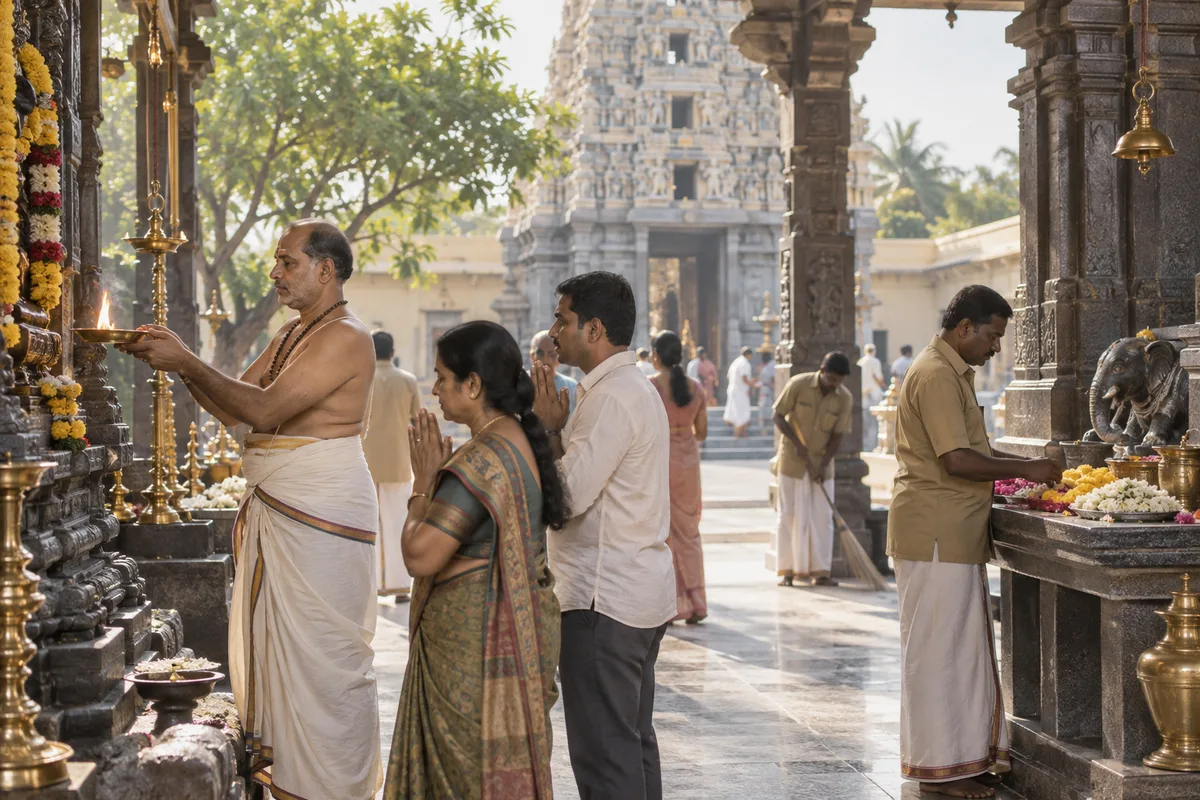
Temple advertising is a short, targeted spend in the weeks before one festival or seva, aimed at the devotees already planning their visit and their donation. GullySales scopes the spend against the trust's own calendar and sends the advertisement straight to that seva's booking page.
Scope, fee, reporting and term are agreed in writing after we have read your brief and spoken to you.
What pay per click advertising means
Pay per click advertising (PPC) is paying a fee each time someone clicks your advert on Google or another platform. It puts you at the top of a search page immediately, instead of waiting for ranking to build. GullySales sets the targeting, writes the ad text and checks spend against enquiries received.
Last updated 14 Nov 2026.
For temples
Where it usually goes wrong, and what we would do.
“The spend is timed to the festival”
Search demand spikes weeks before the main utsavam and drops after, so the spend matches that window.
“Geography follows the devotee base”
A temple with a following in one city, say where migrant devotee families settled, targets that city.
“The advertisement leads to a booking page”
An advertisement for one seva during a festival sends the devotee straight to that seva's booking page.
“Stop the spend when the festival ends”
After the car festival, searches for that seva fall away. Pause the campaign and restart it ahead of the next date.
What we do
What we deliver for temples.
The work available for this need. We agree the deliverables and responsibilities for your engagement in writing.
A spend timed to one festival's search window
A short advertising spend scoped to the weeks before a specific utsavam, when search demand for it actually rises.
Result: The spend runs only while devotees are actually searching for it.
Advertising geography matched to the devotee base
Targeting set to a city where the temple has a known following, say where migrant devotee families settled, instead of a broad spread.
Result: The spend reaches devotees already inclined to travel for the temple.
Advertisements linked to the relevant booking page
An advertisement for one seva during a festival set to lead directly to that seva's booking page, not the homepage.
Result: A devotee who clicks can book immediately, without searching further.
Spend scoped in writing before it begins
A written scope for the advertising spend, agreed with the trust before any budget is committed.
Result: The trust knows exactly what is being spent and why, in advance.
A time-boxed spend, not a standing campaign
A campaign set to run only around the festival window it was built for, then switched off rather than left running.
Result: Advertising stays limited to what the trust actually approved.
A festival campaign plan with start and stop dates
For one utsavam: the searches to bid on, the towns and regions abroad to reach, the booking page each advertisement opens, and the day the campaign is paused.
Result: The temple spends only in the weeks devotees are planning.
How the result is measured
- Cost per click
- Cost per enquiry
- Enquiries from paid search
Recorded as a baseline before work starts, so every later report has an honest comparison.
Searches to bid on and block
The searches worth paying for as a temple, and the ones to keep out.
- Seva booking searches, such as abhishekam booking online
- Bid in the weeks before the festival, when devotees plan. Send each advert to that seva's booking page, showing the date, the offering and how the receipt reaches the devotee.
- Timing and festival date searches, such as Navaratri darshan timings
- Do not pay for these. Answer them on your own page and Maps listing, where they already find you. Pay only when a booking opens and there is something to book.
- Donation searches, such as temple donation online or annadanam donation
- Bid with care. State the trust's name, what the donation funds and how the receipt is issued. Describe any tax benefit only as your trust's own registration allows.
- Stay, travel and wallpaper searches, such as hotels near the temple
- Block. These searchers want a room, a taxi or a picture, and you sell none of them. Add bhajan lyrics, mantra download and temple history, which are readers, not visitors.
- Where the click lands
- Send the click to the page for that seva or donation, in the language the searcher used, with a booking form and a WhatsApp number for questions. Do not send them to the temple's home page.
- Counting a real enquiry
- Count a completed booking or donation that carries a receipt, not a click on the Book button. Log WhatsApp questions about dates separately, since they show interest but have not yet become a seva.
Who it is for
This is written for these temples.
- Ancient and heritage temples with high pilgrim footfall
- Neighbourhood and community temples
- Temple trusts managing more than one shrine
- Shrines with a strong NRI devotee base overseas
- A temple known for one festival or utsavam
- Temples running annadanam and community welfare programmes
Before you decide
When this may not be the right fit.
- The temple site does not yet show timings and the seva page, so a paid click would land on a page with nothing to answer it.
- There is no one to answer the call or message that an advert brings, especially in the days before a festival.
- You want to advertise for donations without the trust having settled how offerings are received and acknowledged.
Before you decide
Agree the work. Know how to judge it.
Paid advertising for temples: use these checks to prepare, choose the scope, and review what changes.
Bring the right evidence
Bring search-term reports, conversion definitions, and the sales outcome of past enquiries where available. Identify products, locations, and enquiries you cannot serve.
Make the scope clear
Choose the offer and landing page before setting a media budget. Agree who pays the platform, which actions count as conversions, and how unsuitable searches will be reviewed.
Check the work in use
Trace a test enquiry from the advert to the sales record. Review qualified enquiries and orders alongside spend, and separate duplicates or spam from genuine buyer demand.
Know when to change course
If the advert generates enquiries that do not fit, revise targeting and qualification before increasing spend. If suitable enquiries are lost after contact, work on the sales process.
These are discussion points, not a fixed package. GullySales confirms the deliverables, responsibilities, fee, and term in writing after reading your brief and speaking with you.
Before we start
What to have ready before the work starts.
The records, access and decisions this work needs from temples. Anything missing is noted in the written scope, with who will supply it.
- The trust's approval of advertising at all
- Some trusts do not advertise the deity at all. A trustee must confirm that paid promotion is acceptable and set any limits. Without it, we do not start, and any earlier setup stays unused.
- A fixed spend limit from the trust
- The trust decides the total it is willing to spend on this one festival or seva. We run within it. If the figure is not set, the campaign stays paused after setup.
- A working booking page
- Ads need somewhere to send devotees. The booking page or donation form must be live and tested. If it is not, we advise on the order of work and the advertising follows once the page is ready.
- The visitor book or origin records
- Any record of where devotees come from, such as the darshan registration sheet or the accommodation register, tells us where to show ads. Without it we begin with the town and the nearest cities only.
- Ad account access in the trust's name
- The advertising account should belong to the temple, not to an individual volunteer. A trustee must create it or give us access. If it sits with a person who has moved on, we cannot see or change the campaign.
How it works
How the pay per click advertising work runs
The work itself, in order. How an engagement starts, from your brief to a written scope, is set out on our method page.
- 1
Choose which festival or seva to promote
We sit with the trust and pick the one thing worth paying to promote, such as the brahmotsavam, a particular seva or the online darshan booking. You tell us what the temple can take in terms of crowds and bookings. A single clear target is chosen before any campaign exists, because a temple cannot absorb every devotee at once.
- 2
Check the landing page works on a phone
Before spending anything we open the page a devotee would reach and try to book on a mid-range phone with a poor connection. The trust's office is asked to complete a booking too. You decide whether the page is ready. If the booking button fails, advertising waits until the page is fixed.
- 3
Write ads in the temple's own words
We draft headlines from the way devotees search: deity, town, seva name. The priests read each ad and remove anything that sounds like a promise of blessings or outcomes. Your adviser or trustees decide whether any wording on donations needs care. What exists is a set of approved ads and the places they link to.
- 4
Set the places and audiences
We choose where the ads show: the town and nearby districts for day visitors, and cities with a large community of the temple's devotees for those travelling or booking from afar. You tell us where devotees come from, using the office's visitor book. The audience list is limited to those places.
- 5
Watch the first clicks with the office
When the ads run, we check with the booking desk whether new bookings or enquiries match the clicks. If devotees search for terms we did not expect, we add or remove words. You approve any change to the spend limit in writing, and the trustees see what was spent.
- 6
Compare spend to bookings the office recorded
Before the campaign we recorded the usual number of online seva bookings and visitor enquiries in the same festival window. Afterwards the clerk's records are set beside the spend and the clicks. We report what was booked, what was not, and which ads drew visits that never turned into bookings.
Where this fits
Three pieces of sales work, in this order.
This work sits inside sales process design, at stage 1, prospecting and lead generation. The audit comes before it, and sales management keeps it running.
Step 1
Sales audit
Find where deals are being lost and what to fix first.
Start here if you cannot say where orders are lost.
Step 2 · you are here
Sales process design
One written way to sell, from first enquiry to repeat order.
Start here if every salesperson sells differently.
Step 3
Sales management
A target, a review routine and someone who owns the number.
Start here if the team has targets and no routine.
FAQ
Questions owners ask before they call.
Not here? More answers, or ask on WhatsApp.
Would a campaign run all year?
How much should a temple spend on this?
Should the advert be in the local language or in English?
Can we advertise to devotees abroad?
Is Google Ads worth it for a temple festival?
Can a temple run ads for online donations?
How long is the contract?
How soon will we see results?
Who will actually do the work?
What do you need from us?
From the blog
Further reading for temples.
 5 min read · 12 Oct 2026Tax receipts, FCRA and registrations: how an NGO should present credentials without overclaimingDonors look for registrations before they give. State what you hold in plain words, avoid implying more, and have your adviser confirm the wording.
- 5 min read · 14 Sept 2026Website for an NGO: the pages donors look for before they giveA first-time donor checks your website before paying. The pages and details they look for, in the order they look, and what a small NGO can leave out.
- 6 min read · 2 Jul 2026How an NGO builds a donor database it can actually useA donor database starts as one row per donor, a few columns and a named owner. The layout, the rules that keep it clean and when to move to a CRM.
More for temples
Related work to consider.
Or start from the overview: sales and marketing for temples.
Your next practical step
Tell us what you are trying to grow, and we will read it before we call.
Eight short steps, mostly taps. Skip anything you would rather answer on the call.