Temples · Social media
Share the festival as it happens, for devotees who could not travel.
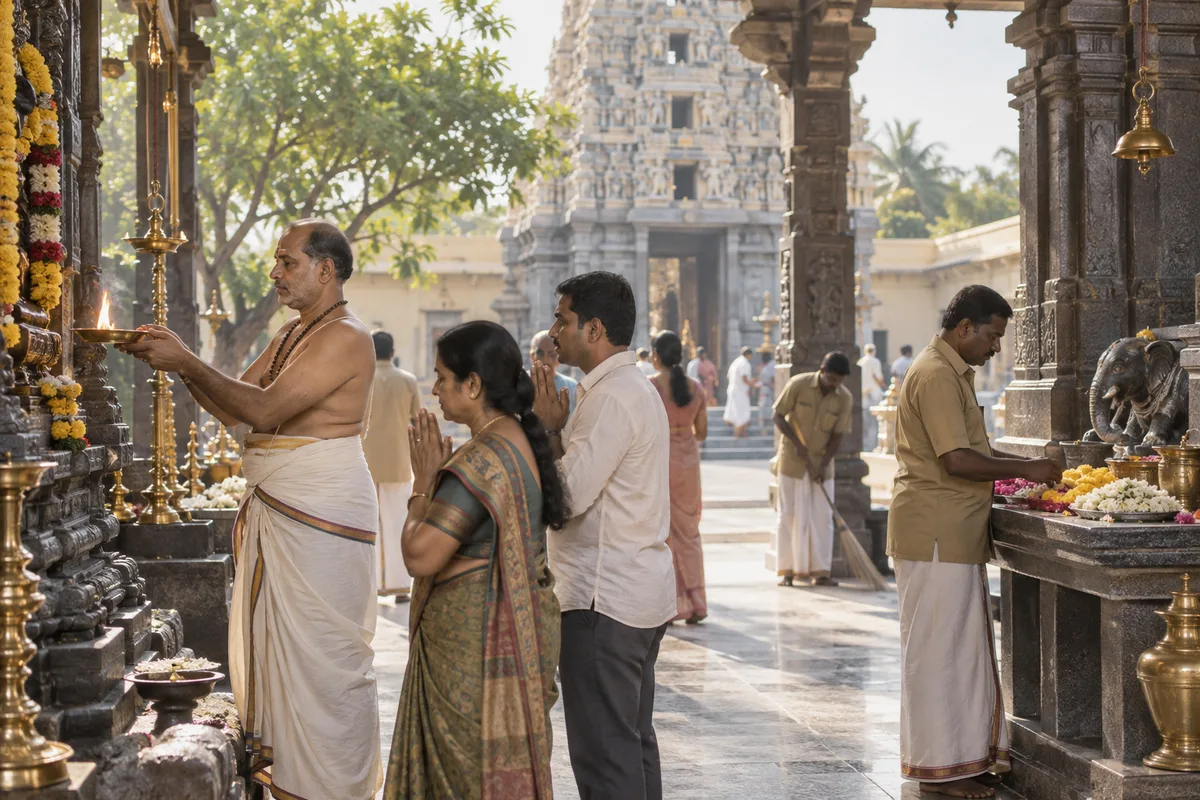
Social media for a temple covers festival coverage, seva reminders and daily rituals, aimed at devotees who cannot visit in person. GullySales builds the posting calendar around your festival dates and trains whoever holds the phone on the day.
Scope, fee, reporting and term are agreed in writing after we have read your brief and spoken to you.
What social media means
Social media is the ongoing posting your business does on platforms such as Instagram, Facebook and LinkedIn to stay visible to customers and prospects between purchases. GullySales plans a posting calendar, writes captions and designs the images so the page looks active and answers what a visitor would ask.
Last updated 14 Nov 2026.
For temples
Where it usually goes wrong, and what we would do.
“Same-day festival coverage matters more than polish”
A devotee abroad wants to see the procession that evening, even on a phone camera, over an edited video a week later.
“Daily darshan photos build a following”
A short daily post of the deity's alankara keeps the page active outside festival season.
“Two reminders, a week and a day before”
This catches both the early planner and the last-minute booker without repeating the same post daily.
“Festival season is one campaign, not a month of posts”
For Navaratri or a brahmotsavam, plan the announcement, the seva reminder, the live stream and the thank-you as one run, each carrying the booking link.
What we do
What we deliver for temples.
The work available for this need. We agree the deliverables and responsibilities for your engagement in writing.
Same-day festival coverage posted as it happens
A procession or ritual filmed and posted the same evening, even on a phone camera, for a devotee abroad who could not attend.
Result: A devotee who missed the festival still feels part of it.
Darshan photo posted outside festival season
A short post of the deity's alankara, kept up between festivals to hold the following's attention.
Result: The page stays active for devotees checking in outside festival season.
Two-stage seva reminders before the date
A reminder posted a week before a seva or festival, then a second one a day before, without repeating the same message daily.
Result: Both the early planner and the last-minute booker are reminded.
A posting calendar built around festival dates
A calendar planned against the trust's own festival dates, so posts go up ahead of each occasion rather than being decided last minute.
Result: The temple's social presence keeps pace with its own calendar.
Training for whoever posts on festival days
A short training for the staff member or volunteer who films and posts on festival days, covering what to capture and when.
Result: Festival coverage does not depend on one person remembering what to do.
A festival-season post plan for one utsavam
For a single festival such as Vaikunta Ekadashi: the announcement, the seva reminder, the live stream notice, the day's photographs and a thank-you post, each pointing to the trust's booking page.
Result: The temple posts from one plan instead of deciding on the morning.
How the result is measured
- Posts published
- Engagement rate
- Enquiries from social profiles
Recorded as a baseline before work starts, so every later report has an honest comparison.
Platform for this buyer
Where devotees look, and what a temple posts on each platform.
- Instagram reels of festival moments
- Post the alankaram, the deepa aarti or the procession, with the festival and date in the caption. The action is to save it and share with family planning a visit.
- WhatsApp channel or broadcast for devotees
- Send seva reminders and darshan timings to those who joined. The action is to reply to book a seva. Keep it to notices, not chat, and add devotees only with their consent.
- YouTube live for the abhishekam or aarti
- Stream a ritual for devotees who cannot come, such as NRIs. Put the trust's official seva booking page in the description. The action is to book a seva online.
- Facebook for older devotees
- Post the day's panchanga, the festival notice and a notice of timing changes in large clear text. The action is to share with the family group.
- Google Business Profile
- Keep darshan timings, holiday changes and the entrance photograph current. Pilgrims search before travelling. The action is directions.
- What not to post
- Devotees' faces in queues without permission, the sanctum where photography is barred, appeals without the trust's registration details, and miracle stories nobody can verify.
Who it is for
This is written for these temples.
- Ancient and heritage temples with high pilgrim footfall
- Neighbourhood and community temples
- Temple trusts managing more than one shrine
- Shrines with a strong NRI devotee base overseas
- A temple known for one festival or utsavam
- Temples running annadanam and community welfare programmes
Before you decide
When this may not be the right fit.
- The trust has no policy on photographing devotees, so posts from a festival could expose families who did not agree.
- Nobody can respond to comments, and a question about the festival would sit unanswered beside the post.
- You want to post the donation account details openly before the trust has agreed a safe way to share them.
Before you decide
Agree the work. Know how to judge it.
Social media for temples: use these checks to prepare, choose the scope, and review what changes.
Bring the right evidence
Review the posts that produced useful conversations, not only the ones with the most views. Gather buyer questions and decide which team member can contribute credible material.
Make the scope clear
Choose the audience and channel before setting a posting volume. Agree who supplies material, approves posts, and handles messages, including complaints or questions the agency cannot answer.
Check the work in use
Follow a post through to the profile, website, and response. A useful report explains the quality of conversations and enquiries, alongside reach and engagement.
Know when to change course
If publishing takes time away from unanswered buyer messages, fix the response routine first. Do not expand to another channel without a clear reason for being there.
These are discussion points, not a fixed package. GullySales confirms the deliverables, responsibilities, fee, and term in writing after reading your brief and speaking with you.
Before we start
What to have ready before the work starts.
The records, access and decisions this work needs from temples. Anything missing is noted in the written scope, with who will supply it.
- A trustee who approves every post
- Posts about the deity cannot wait for a committee meeting. Name one person who can say yes within the festival period. If nobody is named, we publish only visitor information and leave all devotional content unposted.
- Admin rights on the existing pages
- The page must be owned by the temple, with at least two trusted admins. If an individual volunteer controls it, the trust should recover control first, because we cannot post to a page we cannot reach.
- Rules on photographs and filming
- Tell us what the trust permits in the sanctum, the queue and the kitchen. We follow it exactly. Without clear rules we use only exterior shots and festival decorations.
- A list of authorised volunteers
- Name the people who may speak or appear on behalf of the temple, including the priest who may be filmed. We never post anyone who has not agreed. Without this list, people appear only as crowd scenes.
- The festival calendar with days to avoid
- Mark the days when the trust prefers silence, such as certain observances or a bereavement. We place no scheduled post on those dates. If the calendar is not shared, a scheduled post may go out at the wrong moment.
How it works
How the social media work runs
The work itself, in order. How an engagement starts, from your brief to a written scope, is set out on our method page.
- 1
Decide who speaks for the temple online
We start by asking the trust who may post in the temple's name. Plenty of pages are run by a devout volunteer with no authority. You name one trustee as the approver and one person as the publisher. We write this as a short note that the priests and the trust both see, so posts about the deity never go out unreviewed.
- 2
Find the pages already using the temple's name
We search the platforms for pages, groups and channels that carry the deity's name or photographs, some run by devotees, some copying content. You tell us which are authorised. We make a list of the official pages, the ones to claim and the ones to leave alone, and the trust decides how to deal with the rest.
- 3
Plan posts around the temple's own day
We lay out the posts against the pooja timings, the festival calendar and the shrine's quiet days. The priests mark days when posting would be inappropriate, such as during a period of mourning for the trust. You pick which events are worth live coverage. What exists is a plan matched to the temple's day, not to a posting schedule.
- 4
Photograph and record with permission
On a festival or ordinary day we take photographs and short clips only where the trust allows. The priests approve each image before it is published. Devotees' faces are not shown without their consent. By the end of the visit you hold a folder of approved material and a list of what was refused.
- 5
Reply to devotees on the same rules
We write the standard replies to common messages and comments: timings, how to book, where to park. Any question on rituals or blessings goes to the priest. You decide who answers in the temple's name. The reply sheet is short enough for a volunteer to follow without our help.
- 6
Read the followers against office queries
Before posting began, we noted the followers on each page and the queries the office handled about timings and booking. We now set those side by side with the later numbers and with the seva bookings, and tell you what the posts appear to have changed and what stayed as it was.
Where this fits
Three pieces of sales work, in this order.
This work sits inside sales process design, at stage 0, foundation. The audit comes before it, and sales management keeps it running.
Step 1
Sales audit
Find where deals are being lost and what to fix first.
Start here if you cannot say where orders are lost.
Step 2 · you are here
Sales process design
One written way to sell, from first enquiry to repeat order.
Start here if every salesperson sells differently.
Step 3
Sales management
A target, a review routine and someone who owns the number.
Start here if the team has targets and no routine.
FAQ
Questions owners ask before they call.
Not here? More answers, or ask on WhatsApp.
Who manages this day to day?
Which platforms matter most for a temple?
Can we post photographs of devotees during festivals?
Should we put the temple's bank account for donations in a post?
How do we promote a temple festival on social media?
Can we take seva bookings and donations through Instagram and WhatsApp?
How much does it cost?
How long is the contract?
How soon will we see results?
Who will actually do the work?
From the blog
Further reading for temples.
 5 min read · 12 Oct 2026Tax receipts, FCRA and registrations: how an NGO should present credentials without overclaimingDonors look for registrations before they give. State what you hold in plain words, avoid implying more, and have your adviser confirm the wording.
- 5 min read · 14 Sept 2026Website for an NGO: the pages donors look for before they giveA first-time donor checks your website before paying. The pages and details they look for, in the order they look, and what a small NGO can leave out.
- 6 min read · 2 Jul 2026How an NGO builds a donor database it can actually useA donor database starts as one row per donor, a few columns and a named owner. The layout, the rules that keep it clean and when to move to a CRM.
More for temples
Related work to consider.
Closest to this: content and social
Also for temples
Or start from the overview: sales and marketing for temples.
Your next practical step
Tell us what you are trying to grow, and we will read it before we call.
Eight short steps, mostly taps. Skip anything you would rather answer on the call.