Temples · Content marketing
Write the pages a devotee searches for before a visit or a festival.
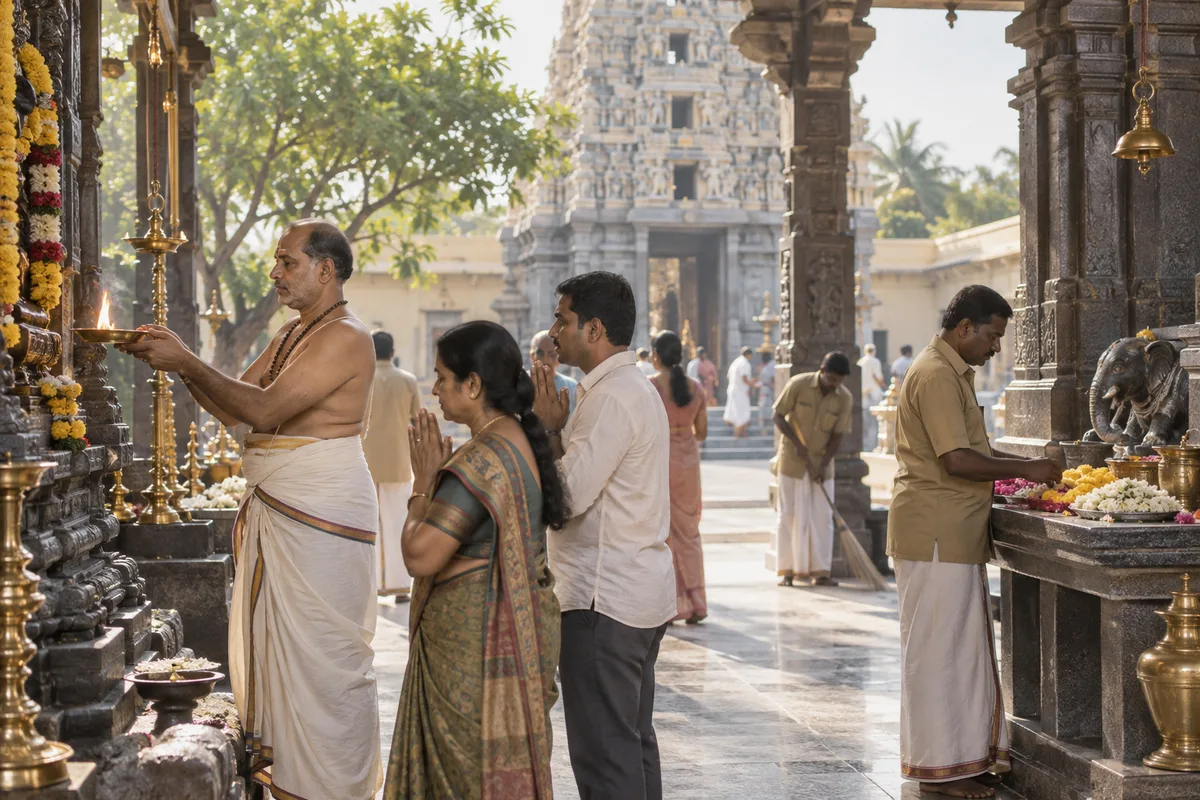
Content marketing for a temple is a page for each seva, festival and darshan timing, written for what a devotee looks up before setting out. GullySales writes each page with the trust and priests, and publishes festival content ahead of the dates devotees are already planning around.
Scope, fee, reporting and term are agreed in writing after we have read your brief and spoken to you.
What content marketing means
Content marketing is writing articles, guides and pages that answer the questions buyers search before they are ready to enquire. This makes your business visible and trusted before the first call. GullySales plans this content from the first conversation onward, choosing topics that match real search demand rather than guesses.
Last updated 14 Nov 2026.
For temples
Where it usually goes wrong, and what we would do.
“A page per seva, with the cost”
A devotee choosing between an archana and an abhisheka needs both explained in one place, not listed by name.
“Festival content goes up weeks ahead”
Devotees planning a brahmotsavam visit from another city search weeks ahead, so late content misses them.
“Real photographs, not stock imagery”
A family comparing temples for a wedding trusts real photos of the mandapam over a generic image.
“A festival guide outlives the festival”
A page on what happens each day of the brahmotsavam, with the booking link, is read again the next year. Update the dates and keep the page.
What we do
What we deliver for temples.
The work available for this need. We agree the deliverables and responsibilities for your engagement in writing.
A page per seva stating cost and coverage
A page for each seva, such as an archana or an abhisheka, stating what it covers and its cost, written with the trust and priests.
Result: A devotee decides between sevas without having to call and ask.
Festival pages published weeks ahead
A page for each major festival, such as a brahmotsavam, published weeks before the date, timed for a devotee planning to travel.
Result: A devotee from another city finds the page while still planning.
Real photographs replacing stock temple imagery
Photographs of the actual mandapam, deity and premises used across seva and festival pages, instead of a generic temple image.
Result: A family comparing temples for an occasion trusts what they see.
A reusable template handed to volunteer writers
A written template for a seva or festival page, handed to trust volunteers who know the history, so they can keep it updated.
Result: New pages can be written after the first ones without outside help.
An annual festival calendar page kept current
One page listing the festival dates, updated once a year and briefly refreshed before each major one.
Result: A devotee checking the calendar finds current dates, not an old list.
A festival guide page for each major utsavam
One page per festival: what happens on each day, which sevas are open, how to reach the temple on the crowded day, and a link to the trust's booking page.
Result: A devotee planning from another city has one page to read and one to book from.
How the result is measured
- Pages published
- Organic traffic
- Enquiries from content pages
Recorded as a baseline before work starts, so every later report has an honest comparison.
Questions buyers ask first
What a devotee looks up before setting out for the temple, and the page that answers it.
- What time is darshan, and what are the special days?
- A timings page for darshan, abhisheka, aarti and closing, with the special days marked and a date on the page. Make the same timings appear on the Maps listing.
- What is the dress code, and what can I carry in?
- A visitor rules page. Cover dress, footwear, mobile phones, photography, prasadam and offerings, with a photograph of the cloakroom and the footwear counter.
- How do I reach the temple, and where do I park or stay?
- A reach and stay page. List the nearest railway station and bus stand, parking, dharmashala and room booking, with a map pin and a short route written for first-timers.
- Can I book a seva or receive prasadam from abroad?
- A page for devotees who cannot come. Explain how an online seva is booked, who performs the sankalpa, how prasadam is sent and how the receipt reaches them.
- Where does my donation go, and do I get a receipt?
- A donation page. Say what the funds are used for, how a receipt is issued, and the trust's registration details. Mention tax exemption only if the trust actually holds it.
- What is the story of this temple?
- A history page. Give the sthala purana, the sources and any inscriptions, with the text approved by the head priest and the credit shown. Where tradition has two versions, tell both.
Who it is for
This is written for these temples.
- Ancient and heritage temples with high pilgrim footfall
- Neighbourhood and community temples
- Temple trusts managing more than one shrine
- Shrines with a strong NRI devotee base overseas
- A temple known for one festival or utsavam
- Temples running annadanam and community welfare programmes
Before you decide
When this may not be the right fit.
- No priest or trustee is available to confirm the sthala purana, so published pages would carry unchecked stories.
- Nobody in the office can keep the festival pages current, and last year's dates would stay up after the utsavam ends.
- You plan to copy text from another temple's site because yours has little written down yet.
Before you decide
Agree the work. Know how to judge it.
Content marketing for temples: use these checks to prepare, choose the scope, and review what changes.
Bring the right evidence
Bring questions from sales calls and examples of objections that delay a decision. Choose a subject expert who can check the substance, and identify evidence that can be published.
Make the scope clear
Agree the reader, buying question, format, and distribution route for each piece. Set the approval process and distinguish new research from rewriting material you already have.
Check the work in use
Ask a colleague to use the draft in a real buyer conversation. It should answer the question, support its claims, and make the next step clear without requiring a sales pitch to explain it.
Know when to change course
If the same unanswered question appears in several articles, improve the strongest page before commissioning another. More words are not a substitute for missing evidence.
These are discussion points, not a fixed package. GullySales confirms the deliverables, responsibilities, fee, and term in writing after reading your brief and speaking with you.
Before we start
What to have ready before the work starts.
The records, access and decisions this work needs from temples. Anything missing is noted in the written scope, with who will supply it.
- The year's festival and pooja calendar
- A printed or handwritten calendar from the priests, with the dates the temple observes, is what the content plan hangs on. A photograph is enough. If the dates are not fixed yet, we plan only evergreen guides and add festival pieces once the calendar settles.
- A priest available for interviews
- At least one priest must be willing to explain rituals in their own words for recording. We write nothing about rites from outside sources. If no priest can spare the time, content stays limited to visitor logistics, which the office can supply.
- A list of what the office is asked
- The staff at the counter know the questions better than any keyword tool. A short list scribbled on paper works. Without it the first articles are guesses, and we may write about a topic devotees never ask about.
- The trust's rules on what may be published
- Tell us whether the trust allows photographs of the sanctum, names of donors, the recording of chants and the sharing of seva rates. These rules shape every piece. Where the trust has not decided, we leave those items out and mark them for the trustees to settle.
- Approved photographs and video clips
- Gather the images and clips the trust is happy to see published, with notes on who took them and whether permission was given. Each article needs a picture. If the folder is empty we schedule a photo visit, and publishing waits until the trust approves the images.
How it works
How the content marketing work runs
The work itself, in order. How an engagement starts, from your brief to a written scope, is set out on our method page.
- 1
Read the festival calendar with the priests
We begin with the panchanga-based calendar the temple actually follows: the regular poojas, the major utsavams, the days the sanctum is closed and the seasons of heavy footfall. The priests mark which events devotees ask about at the office counter more than anything else. That calendar becomes the spine of everything we write, so no post is planned against a date the temple does not observe.
- 2
List questions from the enquiry desk
We sit with the staff who answer phones and counters and write down the questions devotees really ask: dress rules, queue timings, parking, which seva needs prior booking, whether prasadam is posted. You supply the register or WhatsApp history if there is one. These questions decide the first articles, ahead of any topic we might have chosen ourselves.
- 3
Interview a priest for each article
For every piece about a ritual or a seva we take the priest's own explanation, record it with permission and write from it. The priest reads the draft and corrects terminology. You decide whether the temple's voice speaks of belief in plain statements or in descriptive terms. We never write what a ritual will do for a devotee's life.
- 4
Write the visitor guides first
The practical pages come ahead of devotional essays: how to reach the temple, what to wear, how a seva booking works and what the rules are around the sanctum. A family travelling from another city reads these before leaving. Each guide is checked against the office counter's current practice before it goes live.
- 5
Prepare festival content before each utsavam
For the next major festival we draft the story of the event, the order of rituals as the priests describe it, and a short notice for WhatsApp and social pages. The trust reviews and approves. Posts are queued behind that approval, so nothing about the festival goes out in a form the priests have not read.
- 6
Check which pieces devotees actually read
We take the page visit counts and the office's count of seva bookings and visitor enquiries recorded before the work began, and compare them with what came after. We note which guides were opened, which questions stopped coming to the counter and which topics drew no interest. The next set of articles follows the pieces that were read.
Where this fits
Three pieces of sales work, in this order.
This work sits inside sales process design, at stage 0, foundation. The audit comes before it, and sales management keeps it running.
Step 1
Sales audit
Find where deals are being lost and what to fix first.
Start here if you cannot say where orders are lost.
Step 2 · you are here
Sales process design
One written way to sell, from first enquiry to repeat order.
Start here if every salesperson sells differently.
Step 3
Sales management
A target, a review routine and someone who owns the number.
Start here if the team has targets and no routine.
FAQ
Questions owners ask before they call.
Not here? More answers, or ask on WhatsApp.
How often does festival content need updating?
Can volunteers write this instead of an agency?
Who checks that the sthala purana we publish is correct?
Should photographs of devotees appear on the site?
What should a temple write about before a festival?
How do we write about online donations without sounding like an appeal?
How much does it cost?
How long is the contract?
How soon will we see results?
Who will actually do the work?
From the blog
Further reading for temples.
 5 min read · 12 Oct 2026Tax receipts, FCRA and registrations: how an NGO should present credentials without overclaimingDonors look for registrations before they give. State what you hold in plain words, avoid implying more, and have your adviser confirm the wording.
- 5 min read · 14 Sept 2026Website for an NGO: the pages donors look for before they giveA first-time donor checks your website before paying. The pages and details they look for, in the order they look, and what a small NGO can leave out.
- 6 min read · 2 Jul 2026How an NGO builds a donor database it can actually useA donor database starts as one row per donor, a few columns and a named owner. The layout, the rules that keep it clean and when to move to a CRM.
More for temples
Related work to consider.
Closest to this: content and social
Also for temples
Or start from the overview: sales and marketing for temples.
Your next practical step
Tell us what you are trying to grow, and we will read it before we call.
Eight short steps, mostly taps. Skip anything you would rather answer on the call.