Temples · Lead generation
Reach the devotees who want to book a seva, plan a visit or sponsor an utsavam.
Lead generation for a temple means finding the families and groups who are ready to take a step, such as booking a seva, planning a darshan trip or sponsoring a festival day. It is a different job from raising the temple's name in general. GullySales works on the pages, forms and records that turn a devotee's interest into a named enquiry the temple office can answer.
Scope, fee, reporting and term are agreed in writing after we have read your brief and spoken to you.
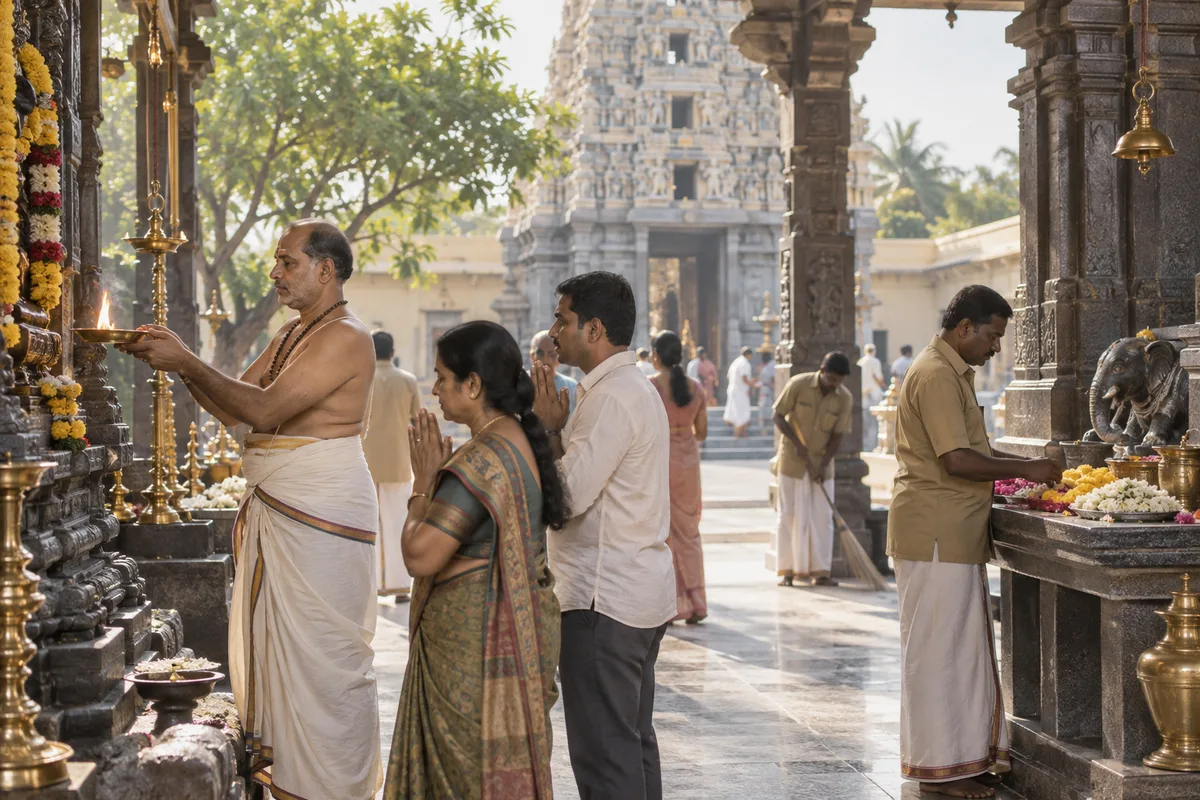
What lead generation means
Lead generation is the combined work of every channel that brings in a new enquiry, whether from search, adverts, referrals or a stall at an exhibition. GullySales runs these channels together and reports the number of enquiries each one produced, not the activity behind it.
Plan the next part of the work
Last updated 21 Nov 2026.
For temples
Where it usually goes wrong, and what we would do.
“The enquiry is a seva, not a general question”
A devotee abroad does not write to ask about the temple. They want an archana in a parent's name on a particular star day, or an abhisheka for a family occasion. A page built around that single wish collects a far better enquiry than a general contact form.
“Group visits come from one organiser”
A pilgrim bus, a school trip or a company outing is arranged by one person who needs timings, queue arrangements and parking before saying yes. If those answers are missing online, the organiser picks a different temple and the whole group goes with them.
“Sponsors want to see what a day involves”
A family or business considering the sponsorship of an alankaram, an annadanam day or a festival lamp wants to know what the offering covers and who will contact them. Without a clear page, the idea stays a conversation at the gate and nothing is recorded.
“An enquiry with no owner goes cold”
A form submitted at night reaches an inbox the temple office opens rarely. Someone on the trust must own each enquiry, reply in the devotee's language and note the outcome, or the devotee assumes the temple has no interest.
What we do
What we deliver for temples.
The work available for this need. We agree the deliverables and responsibilities for your engagement in writing.
Seva and sponsorship enquiry pages
One page for each seva or sponsorship the temple offers, stating what it covers, the dates it is performed and what the devotee should send.
Result: The office receives enquiries that already name the seva and the date.
A group-visit enquiry form
A short form for organisers asking for the group size, the preferred day and a contact, with the queue and parking notes on the same page.
Result: A tour organiser can send details without a phone call.
A single enquiry sheet
Every enquiry from the site, from WhatsApp and from the counter goes into one shared sheet with a name, a seva, a date and an owner.
Result: The trust can see who asked for what and who replied.
Language-matched replies
Short reply templates in the languages the temple's devotees use, written in the respectful register the office already follows.
Result: A devotee gets an answer in the language they wrote in.
Source labels on every link
Each page, poster and QR code carries a label, so the sheet shows whether an enquiry came from search, a festival poster or a priest's recommendation.
Result: The trust can see which channel actually brings enquiries.
How the result is measured
- Unanswered enquiries by purpose
- Enquiries with a responsible team member
- Follow-ups with recorded permission
- Open commitments awaiting a decision
Recorded as a baseline before work starts, so every later report has an honest comparison.
What to capture or send
Record each enquiry as a seva, a date and a family, so someone can answer it.
- Seva or offering asked about
- Note the exact seva named, because the enquiry is a request for one thing on one date. The office then replies with that seva's details and not a general note.
- Date or festival in mind
- Capture the day, the occasion or the utsavam the family has in view. It tells the office whether a slot exists and when the reply must be sent.
- Size and origin of a group visit
- For a coach or association visit, record the organiser's name, the number arriving and the town. One organiser brings the whole party, so that is the person to keep in touch with.
- Sponsor interest and what they asked to see
- Where a family or firm asks about sponsoring an utsavam day, write down what they asked to see. Show them what the day involves, as the trust confirms it.
- Who in the office owns the reply
- Name the person answering each enquiry on the record. An enquiry with no owner goes cold, especially when it arrives late on a festival evening.
Who it is for
This is written for these temples.
- Ancient and heritage temples with high pilgrim footfall
- Neighbourhood and community temples
- Temple trusts managing more than one shrine
- Shrines with a strong NRI devotee base overseas
- A temple known for one festival or utsavam
- Temples running annadanam and community welfare programmes
Before you decide
When this may not be the right fit.
- There is no one to take a booking or answer a question, so more enquiries would only be missed.
- The sevas and their rules are not yet settled by the trust, and the office could not reply with certainty.
- You wish to bring in sponsors before the trust has agreed what sponsoring a day means.
Before you decide
Agree the work. Know how to judge it.
Lead generation for temples: use these checks to prepare, choose the scope, and review what changes.
Bring the right evidence
Define the organisations or buyers you can serve and the reasons they would consider a conversation. Bring examples of accepted and rejected prospects so the selection rule is visible.
Make the scope clear
Agree the research sources, contact approach, qualification rules, and handover. Clarify which meetings count as accepted and what happens to replies that are not ready to buy.
Check the work in use
Review why a prospect was selected and what was learned from the response. Count held, relevant conversations separately from contacts found, messages sent, or meetings booked.
Know when to change course
If the same objection appears repeatedly, adjust the offer or buyer group before increasing outreach. Respect a request to stop contact and keep the exclusion in the record.
These are discussion points, not a fixed package. GullySales confirms the deliverables, responsibilities, fee, and term in writing after reading your brief and speaking with you.
Before we start
What to have ready before the work starts.
The records, access and decisions this work needs from temples. Anything missing is noted in the written scope, with who will supply it.
- Phone message book and chat history
- These show where enquiries start. Photographs of the book and exported chats are fine. Without them the first count rests on staff memory.
- What the trust wants more of
- Seva bookings, donations to a project or festival visitors: the trust must pick one to begin. Without a choice, the work spreads and shows nothing.
- A person to answer new enquiries
- Someone must reply to each new enquiry on the same working day it arrives, whether through the booking desk or the office chat. If nobody is named, the new path creates enquiries that are left, and devotees feel ignored.
- Access to the website or booking page
- We need to edit the page that receives the enquiries. Without access, we hand over the wording and someone else makes the change, and we cannot test whether the form reaches the office inbox the way it should.
How it works
How the lead generation work runs
The work itself, in order. How an engagement starts, from your brief to a written scope, is set out on our method page.
- 1
Decide what a temple enquiry is
A temple does not have leads in the usual sense, so we settle with the trust what counts: a family asking to book a seva, a donor asking about a project, a devotee abroad asking about a festival. You decide which of these the temple wants more of. We write the list down, and the office keeps a tally of each.
- 2
Find where enquiries come from today
From the booking ledger, the phone book and the WhatsApp chats we mark where each enquiry started: a search, a priest, a relative, a festival notice. The clerk helps us read the entries. The result is a plain table of sources with a rough count of each, including the families who cannot say how they heard and are recorded as unknown rather than guessed.
- 3
Choose the one channel to improve first
The trust picks a single source to strengthen, such as people abroad finding the seva booking page, rather than ten at once. We discuss what the office can answer on a busy day, since a source that sends more enquiries than the counter can reply to does the temple no good. The choice is written down with the reason, so later work is judged against it.
- 4
Build the path from search to booking
We shape the page or message a devotee meets in that channel, the form that asks only for what the priest needs and the reply the office sends. The clerk tests the path with a real booking. What exists is one clear route from a question to a recorded enquiry.
- 5
Count the enquiries against the first table
After a festival we count the enquiries by source again and set them beside the first table. We tell you how many came through the new path, how many were answered and booked, and which sources the office should keep track of next.
Where this fits
Three pieces of sales work, in this order.
This work sits inside sales process design, at stage 1, prospecting and lead generation. The audit comes before it, and sales management keeps it running.
Step 1
Sales audit
Find where deals are being lost and what to fix first.
Start here if you cannot say where orders are lost.
Step 2 · you are here
Sales process design
One written way to sell, from first enquiry to repeat order.
Start here if every salesperson sells differently.
Step 3
Sales management
A target, a review routine and someone who owns the number.
Start here if the team has targets and no routine.
FAQ
Questions owners ask before they call.
Not here? More answers, or ask on WhatsApp.
Is it right to call a devotee an enquiry?
We have only one priest and one office assistant. Can we handle this?
Should we advertise sponsorship amounts online?
Do we need a form for group visit requests?
Is it right for a temple to chase leads?
How much does it cost?
How long is the contract?
How soon will we see results?
Who will actually do the work?
What do you need from us?
From the blog
Further reading for temples.
 5 min read · 12 Oct 2026Tax receipts, FCRA and registrations: how an NGO should present credentials without overclaimingDonors look for registrations before they give. State what you hold in plain words, avoid implying more, and have your adviser confirm the wording.
- 5 min read · 14 Sept 2026Website for an NGO: the pages donors look for before they giveA first-time donor checks your website before paying. The pages and details they look for, in the order they look, and what a small NGO can leave out.
- 6 min read · 2 Jul 2026How an NGO builds a donor database it can actually useA donor database starts as one row per donor, a few columns and a named owner. The layout, the rules that keep it clean and when to move to a CRM.
More for temples
Related work to consider.
Closest to this: leads and follow-up
Also for temples
Or start from the overview: sales and marketing for temples.
Your next practical step
Tell us what you are trying to grow, and we will read it before we call.
Eight short steps, mostly taps. Skip anything you would rather answer on the call.