Livestock technology companies · Other
Plan the pilot, the cooperative introduction and the first week of use before the product reaches the shed.
A start-up built a collar that tells a dairy owner when a cow is in heat. The founder showed it at an agri expo and farmers took leaflets by the handful.
Scope, fee, reporting and term are agreed in writing after we have read your brief and spoken to you.
In one paragraph
Livestock technology company marketing introduces herd software, sensors, tracking collars, traceability and farm apps to dairies, cooperatives, integrators and vets. Sales moves interest into agreed pilots, paid contracts and farmer onboarding. GullySales builds the buyer pages, pilot process and farmer onboarding for livestock tech teams.
Two called. One wanted a free trial on twenty cows and then asked for the money back when the battery ran down in a shed with no phone signal. The product worked. The sale failed because the pilot had no plan for a shed with no phone signal.
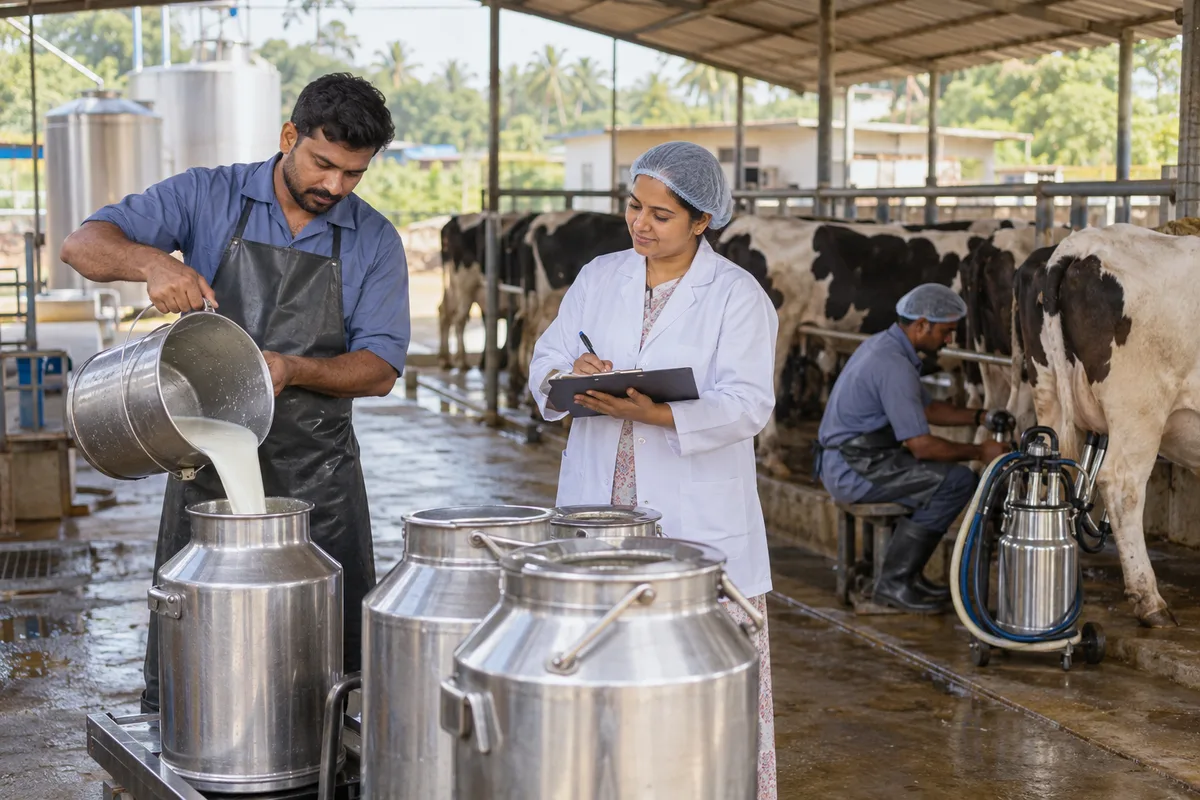
Livestock technology has an unusual buyer problem. The person who pays, a farm owner or a cooperative head, is not the person who uses it, who may be a worker with a basic phone. Adoption depends on language, signal, training and whether the vet trusts the data. A page that talks about artificial intelligence does not help any of them.
Last updated 18 Oct 2026.
How buyers decide
How livestock technology companies are chosen.
Large farms and cooperatives choose technology through a pilot. They agree a small group of animals or farmers, a period, and what counts as success, then decide on cost and on how the product works with the staff they have. The decision is shared between the owner, a manager and the vet.
Individual farmers choose on a neighbour's experience and a demonstration. They want to know the cost in rupees per cow or per farm, whether the app is in their language, what to do when it fails and who will visit.
Vets, feed companies and banks influence the choice. A vet who finds the data useful recommends it. Data and privacy rules, and claims about animal health or milk output, need care. The company states plainly what the product measures and what it does not.
The problem
What usually goes wrong for livestock technology companies.
What owners tell us on the first call, in their words.
“Pilots start without agreed success measures and end in argument”
Neither side defined what a good pilot looks like, so the buyer says it did not work and the company says it did.
“Farmers download the app and stop using it”
There is no onboarding in their language, and the first week of use goes unsupported.
“Our website speaks to investors, not to farmers or cooperative heads”
The page is full of technology terms and has no farm, no cow and no price.
“Distribution is thin”
The team is small and cannot visit all districts, and no local partner is selling the product.
“Buyers ask for references and we have few”
A cooperative head wants to ring a farm already using the product. Without a reference farm that agrees to be named, the conversation stalls.
What we do
What we do for livestock technology companies.
Everything included for livestock technology companies.
A pilot agreement and scorecard
A one-page plan stating herd size, duration, what is measured, who helps on the farm and what a good outcome means to both sides.
A farmer onboarding set
Short videos and a printed card in the local language that cover the first week of use, with a WhatsApp number for help.
Buyer-specific pages
Separate pages for owner, farm manager, cooperative head and vet, each answering the questions that person asks.
A reference farm programme
One or two customers who agree to host visits and share their experience, with a simple consent record.
A partner and distributor kit
A product guide, demo script and margin sheet for local partners such as dairy equipment dealers and vets.
How the result is measured
- Pilots started and pilots converted to paid use
- Farmers still active after onboarding
- Enquiries by buyer type
- Cooperative and federation meetings held
- Partners and distributors active
- Support requests per active farmer
Recorded as a baseline before work starts, so every later report has an honest comparison.
Every service, written for livestock technology companies
Each has its own page: what it involves for livestock technology companies, what you get, and what it is measured on.
- Lead generationBring in dairy owners and cooperative heads who are ready to agree a pilot.
- SEOGet found by the dairy owner who types the problem, not the product name.
- Social media marketingShow the product working in a real shed so farmers recognise their own problem.
- Content marketingWrite for the owner, the manager, the cooperative head and the vet as four separate readers.
- Buyer personasDescribe the owner, the worker, the cooperative head and the vet before writing a page.
- CRMKeep every farm, cooperative and pilot in one record the whole team can read.
- Follow-up systemsFollow up the pilot, the first use and the quiet farm before they drift away.
- WhatsApp marketingUse WhatsApp for what a farmer already does there: ask, send a photo and get a voice reply.
- Digital marketingChoose the few channels that reach farm owners, officers and vets, and run each one properly.
- WebsiteBuild a site that shows a shed, an animal and a price in rupees.
Worth a page and a campaign of their own
A pilot offer with agreed success measures · Onboarding material in local languages · Reference farm and cooperative case studies · Plain pages for owner, manager and vet · Distributor and local partner network · Pricing page in rupees with what is included · A support plan for a farmer's first week of use · Webinar or demo for cooperative leaders · Data and consent notice for farmers
Priority campaigns
Campaigns for what livestock technology companies most want to sell.
Each one planned around when your buyers decide, and measured against the baseline.
Cooperative pilot campaign
Outreach to cooperative heads and federation officials with a pilot offer and demo for their field staff.
Vet recommendation campaign
A programme for vets who see the data, with briefing material that stays within what the product measures.
Large farm demo series
Demonstrations at farms with fifty animals or more, hosted by an existing customer.
Farmer language video series
Short videos in local languages that show the product in a shed.
Beyond search
Where we reach buyers of livestock technology companies, beyond Google.
Search matters, but it is rarely the only way this industry's buyers find a supplier.
Dairy cooperatives and milk federations
Cooperative heads and technical officers, each getting an introduction that carries the pilot plan and references.
Large dairy and poultry farms
Farms with fifty animals or more, and large poultry houses, in one target region, with the owner and the manager listed separately.
Veterinarians and animal husbandry advisers
The vet whose advice a farm owner follows before buying any technology, briefed on what the product measures.
Banks, feed companies and input suppliers
Partnership proposals for bodies that already have a person visiting farms, such as a bank field officer or a feed company representative.
Who it is for
This is written for these livestock technology companies.
- Herd management software and farm app companies
- Cow health, heat detection and wearable sensor makers
- Milk quality testing and analyser companies
- Cattle identification and traceability technology providers
- Poultry house climate and monitoring system makers
- Cold chain and milk collection software providers
- Fodder, feed ration and nutrition planning apps
- Drone and remote monitoring service providers for large farms
Not for
It is not the right fit if.
- You want a guaranteed Google ranking or a guaranteed number of leads. Nobody honest can promise either.
- You need enquiries by next week and have nobody to answer them.
- You want posts and reach reported, not enquiries and orders.
How it works
How the work runs for livestock technology companies
The work itself, in order. How an engagement starts, from your brief to a written scope, is set out on our method page.
- 1
Trace the last stalled pilot
Who pays and who uses the product, then one earlier pilot followed to the point it stalled: signal, language, battery or an unclear aim.
- 2
Design the pilot and onboarding
Success measures, farmer support and local language material are made together.
- 3
Build the buyer pages and references
The owner, manager, cooperative and vet pages are written, with the reference farms placed where each reader will meet them.
- 4
Run cooperative, vet and demo campaigns
Cooperative introductions, vet briefings and the host-farm demo are prepared in the order your pilots allow.
- 5
Review pilots and conversions
Which pilots became contracts and why the others ended, read against the scorecard each started with.
Where this fits
Three pieces of sales work, in this order.
GullySales builds every engagement from three pieces of sales work. This page is not one of them, but the same three steps apply to the business behind it.
Step 1
Sales audit
Find where deals are being lost and what to fix first.
Start here if you cannot say where orders are lost.
Step 2
Sales process design
One written way to sell, from first enquiry to repeat order.
Start here if every salesperson sells differently.
Step 3
Sales management
A target, a review routine and someone who owns the number.
Start here if the team has targets and no routine.
FAQ
Questions livestock technology companies ask before they call.
Not here? More answers, or ask on WhatsApp.
Can you help us raise funds or find investors?
Will you make claims about milk yield or animal health?
How do you handle farmer data?
Our users have basic phones. Can you help?
Do you run the pilots for us?
How much does it cost?
How long is the contract?
How soon will we see results?
Who will actually do the work?
What do you need from us?
Part of Other. See the other industries in the sector.
Your next practical step
Tell us what you are trying to grow, and we will read it before we call.
Eight short steps, mostly taps. Skip anything you would rather answer on the call.