Livestock technology companies · Lead generation
Bring in dairy owners and cooperative heads who are ready to agree a pilot.
Lead generation for a livestock technology company means finding the farm owners, cooperative officers and vets who can say yes to a pilot, and recording what each one asked. GullySales works on the sources, the enquiry form and the hand-off so a lead arrives with a herd size, a district and a reason for asking.
Scope, fee, reporting and term are agreed in writing after we have read your brief and spoken to you.
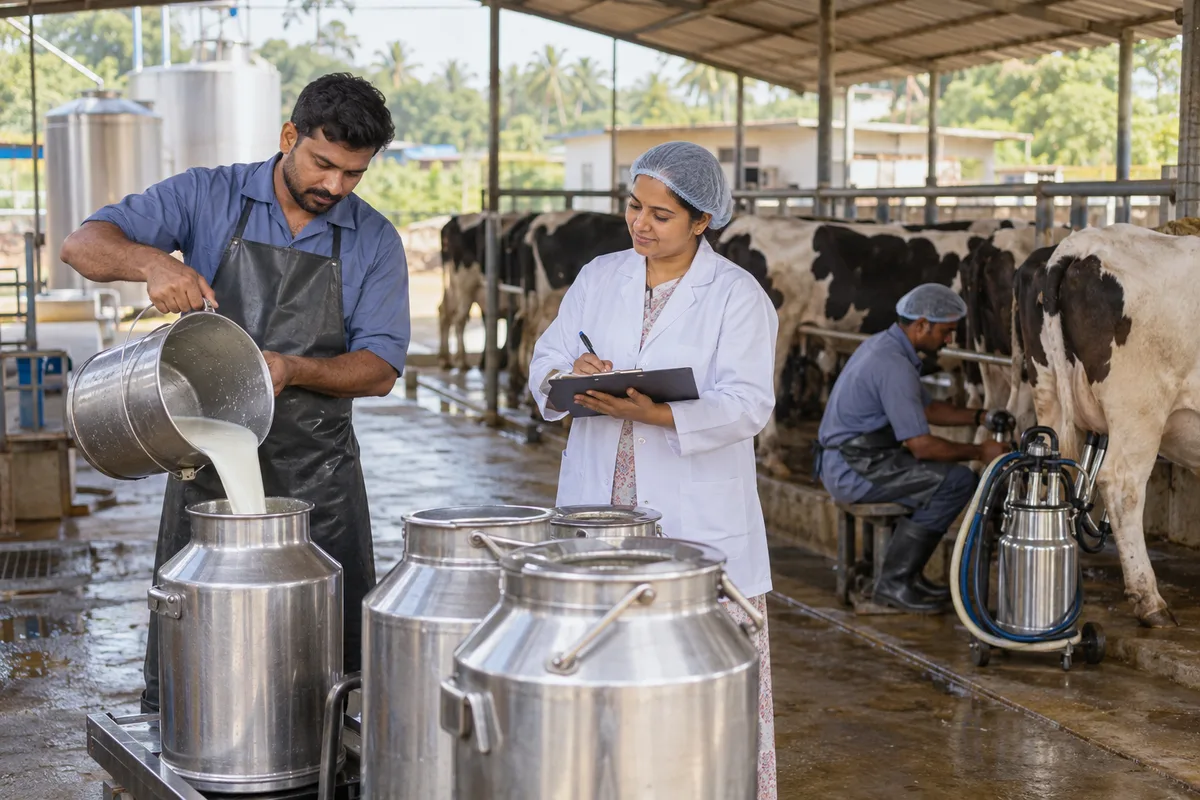
What lead generation means
Lead generation is the combined work of every channel that brings in a new enquiry, whether from search, adverts, referrals or a stall at an exhibition. GullySales runs these channels together and reports the number of enquiries each one produced, not the activity behind it.
Also for livestock technology companies
- CRM for livestock technology companies
- Follow-up systems for livestock technology companies
- SEO for livestock technology companies
- Social media marketing for livestock technology companies
- Content marketing for livestock technology companies
- Buyer personas for livestock technology companies
- WhatsApp marketing for livestock technology companies
- Digital marketing for livestock technology companies
Sales and marketing for livestock technology companies, the overview.
Last updated 18 Oct 2026.
For livestock technology companies
Where it usually goes wrong, and what we would do.
“An expo leaflet is not a lead”
A farmer who takes a leaflet at an agri expo has shown mild curiosity and nothing more. Without a note of the herd size, the district and the problem the farmer wants solved, the follow-up call starts from zero and the name sits in a bag.
“The payer and the user are different people”
The owner pays, the worker with a basic phone uses the product, and the vet vouches for the data. A lead that records only the owner's name hides the two people who decide whether the pilot survives its first fortnight in the shed.
“Cooperatives bring many farms through one door”
A single cooperative head who agrees to a pilot opens a route to every member farm. That lead needs a different record from an individual farmer: the federation, the number of milk collection centres and the field staff who would run the demo.
“A lead from a distant district needs a partner”
Enquiries arrive from districts the team cannot visit. If no dealer or vet partner is listed for that area, the lead waits for a trip that never gets scheduled and goes to a competitor who has someone nearby.
What we do
What we deliver for livestock technology companies.
Every deliverable, what it covers for you, and the result it is there to produce. Nothing here is an extra.
An enquiry form for farm buyers
A short form asking herd size, breed, district, current record keeping and who would use the product on the farm.
Result: Every enquiry reaches the team with enough detail to decide the next step.
Lead sources sorted by buyer type
Separate routes for individual farmers, large farms, cooperatives and vets, each with its own message and its own record.
Result: You can see which buyer type each enquiry came from.
A district map of partners
A list of dealers, vets and field officers who can hold a demo where the team cannot travel.
Result: Each enquiry from a distant district has a named person to hand to.
Expo and demo capture sheets
A sign-in sheet and a card for events that record what the visitor wants to solve, not only a name.
Result: A visitor's problem is written down while they are still standing at the stall.
How the result is measured
- Enquiries generated
- Cost per enquiry
- Enquiries by source
Recorded as a baseline before work starts, so every later report has an honest comparison.
Who it is for
This is written for these livestock technology companies.
- Herd management software and farm app companies
- Cow health, heat detection and wearable sensor makers
- Milk quality testing and analyser companies
- Cattle identification and traceability technology providers
- Poultry house climate and monitoring system makers
- Cold chain and milk collection software providers
- Fodder, feed ration and nutrition planning apps
- Drone and remote monitoring service providers for large farms
How it works
How the lead generation work runs
The work itself, in order. How an engagement starts, from your brief to a written scope, is set out on our method page.
- 1
Understand your capacity
We agree how many enquiries your sales team can actually handle well, so the system is not built to overwhelm it.
- 2
Audit current sources
We check what already brings in enquiries today, even informally, before adding anything new.
- 3
Strategise the channel mix
Content, search and paid channels are chosen based on where your buyers already look.
- 4
Implement capture and follow-up
Pages, forms and a follow-up process are built and connected end to end.
- 5
Measure and optimise
We track enquiry volume and quality and adjust the channel mix to match.
Where this fits
Three pieces of sales work, in this order.
This work sits inside sales process design, at stage 1, prospecting and lead generation. The audit comes before it, and sales management keeps it running.
Step 1
Sales audit
Find where deals are being lost and what to fix first.
Start here if you cannot say where orders are lost.
Step 2 · you are here
Sales process design
One written way to sell, from first enquiry to repeat order.
Start here if every salesperson sells differently.
Step 3
Sales management
A target, a review routine and someone who owns the number.
Start here if the team has targets and no routine.
FAQ
Questions owners ask before they call.
Not here? More answers, or ask on WhatsApp.
Which sources work best for livestock technology leads?
Can you buy a list of dairy farmers for us?
Do you promise a number of leads?
How much does it cost?
How long is the contract?
How soon will we see results?
Who will actually do the work?
What do you need from us?
What if we are not happy with the work?
More for livestock technology companies
Everything else we would do for you.
Closest to this: leads and follow-up
Also for livestock technology companies
- SEO for livestock technology companies
- Social media marketing for livestock technology companies
- Content marketing for livestock technology companies
- Buyer personas for livestock technology companies
- WhatsApp marketing for livestock technology companies
- Digital marketing for livestock technology companies
Or start from the overview: sales and marketing for livestock technology companies.
Your next practical step
Tell us what you are trying to grow, and we will read it before we call.
Eight short steps, mostly taps. Skip anything you would rather answer on the call.