Borewell and drilling contractors · Sales process
Take every enquiry from the first call to the signed job sheet in the same steps.
A sales process for a borewell contractor is the fixed order of steps from the first call to the finished bore and the final payment, with a person and a written note at each. GullySales maps the steps you already follow, finds where owners drop out and puts them on paper so the crew can follow them.
Scope, fee, reporting and term are agreed in writing after we have read your brief and spoken to you.
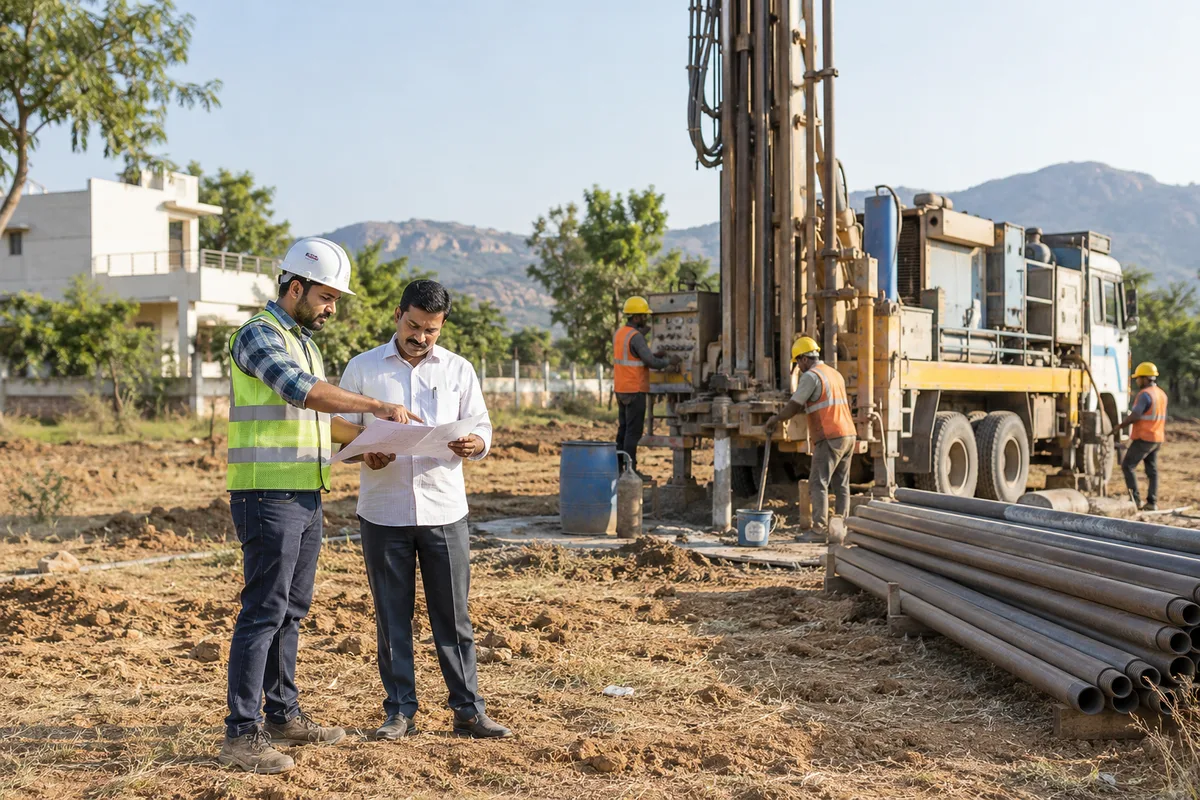
What sales process means
A sales process is the fixed sequence of steps, such as enquiry, site visit, quote and order, that every deal is expected to pass through in the same order. GullySales writes this sequence down for your business and checks that every salesperson actually follows it.
Also for borewell and drilling contractors
- SEO for borewell and drilling contractors
- Local SEO for borewell and drilling contractors
- Lead generation for borewell and drilling contractors
- WhatsApp marketing for borewell and drilling contractors
- CRM for borewell and drilling contractors
- Referral marketing for borewell and drilling contractors
- Website for borewell and drilling contractors
- Reputation management for borewell and drilling contractors
Sales and marketing for borewell and drilling contractors, the overview.
Last updated 11 Oct 2026.
For borewell and drilling contractors
Where it usually goes wrong, and what we would do.
“The rate is quoted before the site is seen”
A rate per foot given on the phone is quoted back after the rock turns out harder than assumed. A visit before the quote avoids the quarrel.
“The risk of a dry bore is never discussed”
The owner assumes water will come. When it does not, the owner feels cheated, though nothing was promised. The step that explains the risk is the one most contractors skip.
“The sale ends when the rig leaves”
Nobody asks for the balance in a planned way, offers the pump set or notes the owner for a flushing call next year.
What we do
What we deliver for borewell and drilling contractors.
Every deliverable, what it covers for you, and the result it is there to produce. Nothing here is an extra.
A written sequence of steps
From first call to site visit, quote, advance, drilling, completion and balance, with the name of the person who owns each step.
Result: A new foreman or office assistant can follow the same routine.
Questions to ask before a visit
The place, the plot size, the number of bores nearby, the use of the water and the budget in mind, asked in a fixed order.
Result: The visit is made with the right information.
Site visit routine
Who goes, what is checked, how the point is marked and what is written on the visit note, with a photograph.
Result: A visit ends with a clear next step.
Quote with the failure terms
A one-page quote that states the rate basis, the extras and what is charged if no water is found, signed by the owner before work begins.
Result: The risk is agreed in writing before drilling.
Completion and handover sheet
Depth, casing, yield observed, the pump fitted and the balance due, signed by both sides at the end of the job.
Result: The job closes with an agreed record.
Reasons for losing a job
A short note on why an owner did not book: rate, a rival contractor, timing or a family decision.
Result: You learn what makes you lose, not only how many.
How the result is measured
- Deals following the process
- Time spent at each step
- Drop-off rate by step
Recorded as a baseline before work starts, so every later report has an honest comparison.
Steps of a sale
The steps of a borewell job in the order a contractor walks them, and what to write at each.
- Enquiry
- Log the name, place, survey number and problem before the call ends. Reply the same day and say when the visit can happen, not what the rate is.
- Site visit and point marking
- Look at the plot, the neighbouring bores and the soil, mark the point, and note it with a photograph. Record who was present and what the owner said about the water they expect.
- Quote and terms
- Give a written quote with the rate basis, extras, the charge if no water is found and the permission they must arrange. Ask the owner to confirm by signing or by a reply on WhatsApp.
- Advance and booking
- Take the agreed advance, note the date and give a receipt. Fix the day the rig arrives and tell the owner what must be ready, such as access, power and a person on site.
- Drilling and the job sheet
- Record the depth at each stage, the casing used and what was found. Have the owner or the owner's representative sign the sheet on site, before the rig moves.
- Balance and after-sale call
- Collect the balance against the sheet and offer the pump set if not sold. Note the date for a call after the monsoon to ask how the bore is doing.
Who it is for
This is written for these borewell and drilling contractors.
- Domestic borewell contractors
- Agricultural borewell and drip-line contractors
- Rotary and DTH rig operators
- Housing society and apartment borewell contractors
- Industrial and commercial borewell contractors
- Borewell flushing, cleaning and repair contractors
- Pump installation and motor repair firms
- Rainwater harvesting and recharge pit contractors
Not for
It is not the right fit if.
- You will not discuss the risk of a dry bore before the job, so any written steps would leave the surprise in place.
- Your rate is not fixed by a basis you can explain, so a step for quoting would give a different answer each time.
- Nobody signs a job sheet, so the steps would end at a handshake.
How it works
How the sales process work runs
The work itself, in order. How an engagement starts, from your brief to a written scope, is set out on our method page.
- 1
Study current deal flow
We trace how deals actually move today, comparing across reps and outcomes.
- 2
Define the stages
Clear stages and criteria are designed to match how deals genuinely progress and close.
- 3
Configure the CRM
The process is built into your CRM so it is enforced structurally, not just documented.
- 4
Train the team
Reps are trained on the new process and why each stage exists.
- 5
Review adoption
We check after rollout whether the process is being followed and adjust where it is not.
Where this fits
Three pieces of sales work, in this order.
This work sits inside sales process design, at stage 1, prospecting and lead generation. The audit comes before it, and sales management keeps it running.
Step 1
Sales audit
Find where deals are being lost and what to fix first.
Start here if you cannot say where orders are lost.
Step 2 · you are here
Sales process design
One written way to sell, from first enquiry to repeat order.
Start here if every salesperson sells differently.
Step 3
Sales management
A target, a review routine and someone who owns the number.
Start here if the team has targets and no routine.
FAQ
Questions owners ask before they call.
Not here? More answers, or ask on WhatsApp.
Should we give a rate on the phone?
How do we explain a dry bore without losing the job?
What should the job sheet contain?
When should we offer a pump set or a recharge pit?
How long is the contract?
How soon will we see results?
Who will actually do the work?
What do you need from us?
What if we are not happy with the work?
From the blog
Further reading for borewell and drilling contractors.
 6 min read · 23 Jul 2026Local search for niche trades: what to put on the profile and websiteA niche trade is found when its Google profile and website name the exact service, the area served and show photos of real work. This post lists what to write, what to upload and what to leave out.
 6 min read · 2 Jun 2026Why specialist trades lose the enquiry in the first hourAn urgent buyer calls two installers and books whoever picks up first. This post shows how a specialist trade can design the first response, and who answers, before spending on any ad.
 6 min read · 17 Mar 2026Handling price haggling in a trade where every job differsWhen no two jobs are alike, a price cut without a scope change teaches buyers to haggle. How to anchor on scope, what to offer instead of a discount, and exact words for the call.
More for borewell and drilling contractors
Everything else we would do for you.
Or start from the overview: sales and marketing for borewell and drilling contractors.
Your next practical step
Tell us what you are trying to grow, and we will read it before we call.
Eight short steps, mostly taps. Skip anything you would rather answer on the call.