Jewellery retailers · Buyer persona
Know whether the person at the counter is buying, gifting, investing or choosing.
A buyer persona for a jewellery store describes the different people who walk in or message: the bride, the parent paying, the investor in gold, the gift-giver and the returning customer. GullySales works on turning your sales records and counter conversations into personas your pages and your staff can use.
Scope, fee, reporting and term are agreed in writing after we have read your brief and spoken to you.
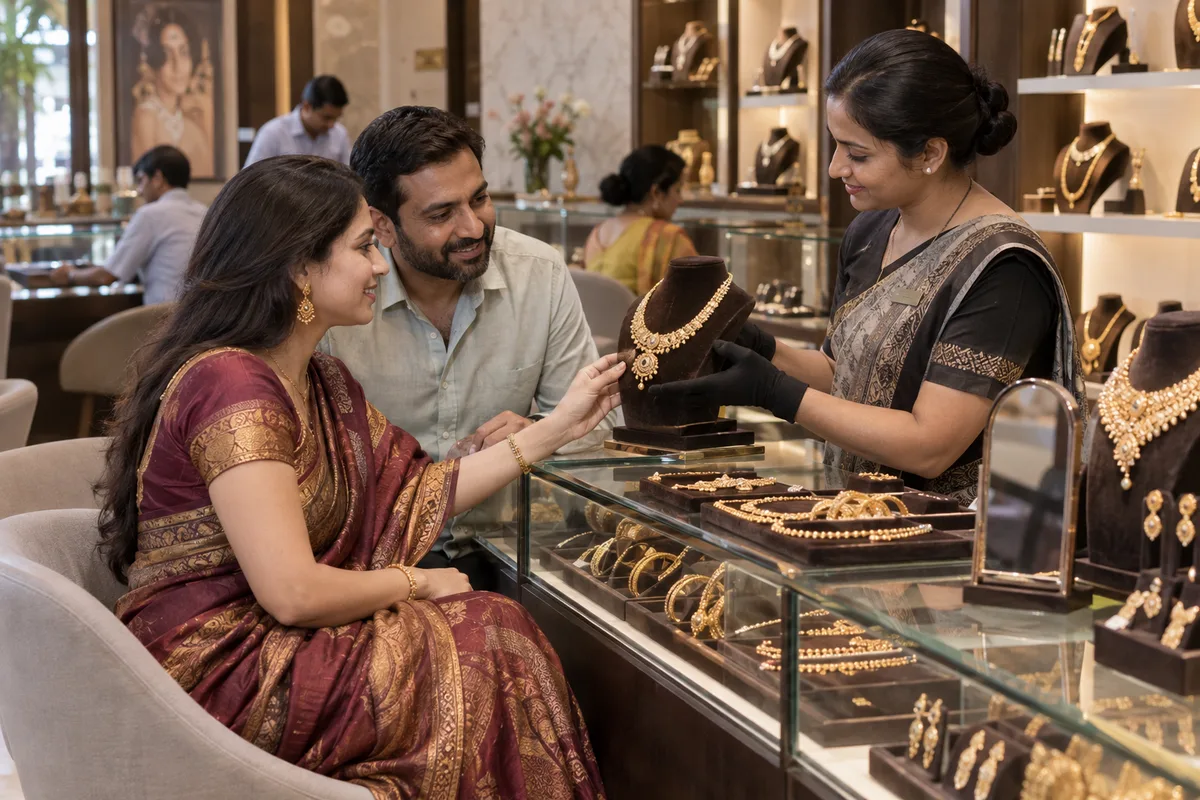
What buyer persona means
A buyer persona is a plain description of the kind of customer who actually buys from you. It includes what they search, what worries them and who else they ask before deciding. GullySales builds this from real enquiries and past sales rather than a generic template, then uses it to write every page and advert.
Also for jewellery retailers
- Sales and marketing strategy for jewellery retailers
- Buyer journey for jewellery retailers
- Digital marketing for jewellery stores
- Cinema advertising for jewellery retailers
- Google Ads for jewellery retailers
- Newspaper advertising for jewellery retailers
- Outdoor advertising for jewellery retailers
- Radio advertising for jewellery retailers
Sales and marketing for jewellery retailers, the overview.
Last updated 5 Oct 2026.
For jewellery retailers
Where it usually goes wrong, and what we would do.
“The person choosing is rarely the person paying”
A bride picks the design, a parent or in-law settles the bill, and a relative advises. The page and the counter must speak to all three, because any one of them can end the sale.
“The gold investor wants weight, not design”
A buyer putting savings into coins or plain bars asks about purity, buyback terms and the day's rate. Showing that buyer a bridal catalogue wastes the visit, and a page for them is rarely written.
“The gift buyer is short of time and short of knowledge”
Someone buying for a colleague's wedding wants a safe choice within a budget. Ready gift ranges by price band, with a clear exchange policy, win that visit.
“The returning customer already trusts the shop”
A family that bought the first set now returns for a daughter, an anniversary or a festival. They need to be recognised and shown relevant pieces, not treated as a new enquiry.
What we do
What we deliver for jewellery retailers.
Every deliverable, what it covers for you, and the result it is there to produce. Nothing here is an extra.
Five personas written from your own sales records
The bride, the paying parent, the gold investor, the gift buyer and the returning family, each with their questions and worries.
Result: Staff can name which persona is in front of them.
A question list for each persona
The things each one asks before buying, taken from the enquiries and counter conversations you already hold.
Result: Pages and replies answer the real questions.
A page route for each persona
A starting page for each, such as bridal sets, coins and bars, gifts, and a returning-customer offer.
Result: Each buyer lands on a page meant for them.
A counter guide for greeting each persona
Short notes on what to ask, what to show first and what to avoid saying.
Result: Greeting and first tray fit the person.
A tagging scheme for the customer register
A simple tag on every record for persona and occasion, so later messages match.
Result: Messages go to the right group, not to everyone.
A review of the personas after a festival season
A check of which persona bought and which pages they used, with the personas corrected from what was seen.
Result: The personas reflect what your buyers did.
How the result is measured
- Enquiry match to persona
- Conversion rate by persona
- Content aligned to persona
Recorded as a baseline before work starts, so every later report has an honest comparison.
Who is asking
The people who ask a jeweller a question, and what each wants to know first.
- Bride choosing the set
- Wants to see designs on screen and in the showroom, and to know what can be changed to suit the bride.
- Parent paying for the wedding jewellery
- Wants to know the full cost, the exchange value of old gold and how the bill is broken down.
- Gold investor buying coins or bars
- Wants weight, purity detail and the buy-back terms of the shop before any design.
- Gift buyer on a short deadline
- Wants a few choices within a stated budget, and to know if the piece can be exchanged.
- Returning family with an old set
- Wants to know what the shop will offer for old pieces and what remodelling would involve.
Who it is for
This is written for these jewellery retailers.
- Bridal and wedding jewellery showrooms
- Gold and diamond jewellery retail chains
- Silver and artificial jewellery stores
- Certified diamond and solitaire retailers
- Traditional and antique jewellery stores
- Single-showroom family jewellers
Not for
It is not the right fit if.
- The showroom has no sales records to read from, so each persona would be invented.
- A single owner serves every customer personally and already knows each family by name.
How it works
How the buyer persona work runs
The work itself, in order. How an engagement starts, from your brief to a written scope, is set out on our method page.
- 1
Understand the current view
We start with how your team currently describes the customer, since the gap between belief and reality is the finding itself.
- 2
Audit past enquiries and sales
We look at recent enquiries and closed deals to see who actually bought, not who was assumed to buy.
- 3
Interview customers and staff
Structured conversations with recent buyers, held as talk about the last purchase and not a questionnaire. We ask what happened before they called, who else was involved and what they compared. Customers agree before we contact them, and their answers are reported without names.
- 4
Build the personas
Findings are written into short, usable persona documents rather than a long report.
- 5
Apply to your marketing
We show where each persona should change a page, an ad or a script you already have. The sales team reads the drafts and says which ring true. A persona they do not recognise is rewritten.
Where this fits
Three pieces of sales work, in this order.
This work sits inside sales process design, at stage 0, foundation. The audit comes before it, and sales management keeps it running.
Step 1
Sales audit
Find where deals are being lost and what to fix first.
Start here if you cannot say where orders are lost.
Step 2 · you are here
Sales process design
One written way to sell, from first enquiry to repeat order.
Start here if every salesperson sells differently.
Step 3
Sales management
A target, a review routine and someone who owns the number.
Start here if the team has targets and no routine.
FAQ
Questions owners ask before they call.
Not here? More answers, or ask on WhatsApp.
Do we need to survey customers to build personas?
Is it right to assume the bride decides?
How many personas should a single showroom keep?
Should personas include the age and city of the buyer?
How much does it cost?
How long is the contract?
How soon will we see results?
Who will actually do the work?
What do you need from us?
What if we are not happy with the work?
From the blog
Further reading for jewellery retailers.
 8 min read · 21 Sept 2026Tamil advertising creative: what actually changesTamil is written one way and spoken another, and its script cannot tell b from p. What that means for your line, voice artist and brand spelling.
 8 min read · 21 Sept 2026Radio advertising in BengaluruWho is actually listening in this city, and where. The evening crawl, the auto driver's choice, the shop counter with FM on all day, and a signal that reaches past the city limits.
 8 min read · 21 Sept 2026Premium audience advertising strategyNo platform in India sells you verified income. Everything offered as affluence targeting is inference, and the cheapest filter you own is putting the price in the first frame.
More for jewellery retailers
Everything else we would do for you.
Closest to this: strategy and research
Also for jewellery retailers
Or start from the overview: sales and marketing for jewellery retailers.
Your next practical step
Tell us what you are trying to grow, and we will read it before we call.
Eight short steps, mostly taps. Skip anything you would rather answer on the call.