Jewellery retailers · Wedding season advertising
Advertise to the family choosing the bridal set, before the date is fixed.
Wedding season advertising for a jewellery retailer plans paid media around the weeks families choose bridal ornaments, not only the wedding dates themselves. GullySales uses your booking and sales records to set the campaign window, compare media, coordinate bookings, and record which enquiries become confirmed orders.
Scope, fee, reporting and term are agreed in writing after we have read your brief and spoken to you.

What wedding season advertising means
Wedding season advertising plans paid media around when families choose wedding suppliers, rather than only around the wedding dates themselves. GullySales uses your booking records and available capacity to set the campaign window, compare media options, coordinate bookings, and record which enquiries become confirmed business.
Also for jewellery retailers
- Cinema advertising for jewellery retailers
- Google Ads for jewellery retailers
- Newspaper advertising for jewellery retailers
- Outdoor advertising for jewellery retailers
- Radio advertising for jewellery retailers
- Billboard advertising for jewellery stores
- Facebook and Instagram ad copywriting for jewellery retailers
- Retargeting ad copywriting for jewellery retailers
Sales and marketing for jewellery retailers, the overview.
Last updated 14 Nov 2026.
For jewellery retailers
Where it usually goes wrong, and what we would do.
“The buying window opens long before the wedding”
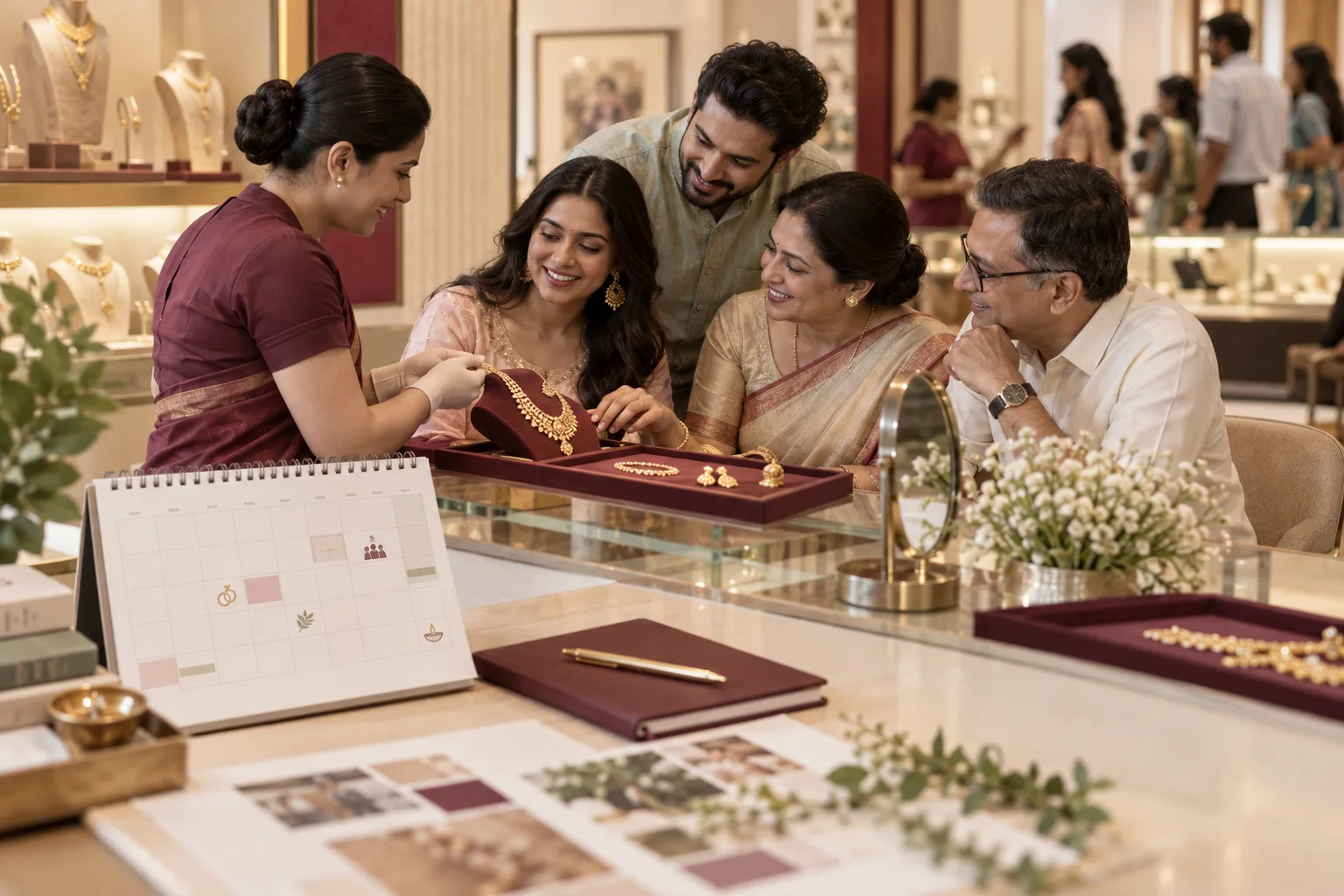
A bridal set is chosen across several visits, with elders, the bride and the groom's side each weighing in. By the muhurat, the main purchase is already made and only small additions remain. An advertisement timed to the wedding date reaches families after the decision. The campaign should start when the date is being discussed and the shortlist of showrooms is forming.
“Capacity at the counter is limited in peak weeks”
A showroom crowded in the busiest weeks cannot give a bridal family the time a large purchase needs. Pulling in more enquiries than the counter can serve loses the sales the advertising paid for. The campaign should be set against the number of appointments staff can handle, with ranges of the collection and a team ready for fittings, and should pause or narrow when the diary is full.
“Several people decide, so several people must be addressed”
The advertisement may be seen by a mother, a prospective bride, an aunt who funds part of the purchase or a groom's family comparing showrooms. Each asks different questions about design, weight, certification and exchange. A single message aimed at the bride alone misses the elder who holds the purse. The creative should answer what each decider asks, and the media should reach the places they read and listen.
“Rates and offers move while the season runs”
The gold rate and any making-charge offer can change during the weeks of wedding buying, and a printed or recorded figure goes out of date. Families who arrive quoting an old advertisement test the staff's patience. Keep rates and dated offers out of fixed placements, state the date a given offer ends, and brief the counter on what the advertisements actually said.
What we do
What we deliver for jewellery retailers.
The work available for this need. We agree the deliverables and responsibilities for your engagement in writing.
Bridal buying calendar
A calendar connecting the wedding dates you wish to serve with the weeks families visit showrooms, drawn from your earlier appointment and sales records. It marks the peaks, the advance-booking weeks and the gaps. You check it against past seasons and correct it where memory differs.
Result: The calendar shows when earlier bridal enquiries began, drawn from your own records.
Showroom capacity brief
A short record of how many bridal appointments the counter can take at a time, which collections are in stock and which designs need ordering. The booking manager checks it before release, so the campaign does not invite more families than the showroom can serve.
Result: The brief states appointment capacity and stock position, signed by the booking manager.
Catchment and media recommendation
The plan names the localities worth reaching and the placements within them, with a reason for each: a newspaper edition, an outdoor site, a radio band, a cinema screen or a search campaign. It also names the options to leave out and why.
Result: Each placement has a reason, and each excluded option has one too.
Quote comparison and booking sheet
Available placements compared with their dates and quoted terms, including cut-off dates for artwork. The owner chooses the spend and the sites. We book only against the approved choice, and an early conversation does not hold space for you.
Result: You hold a single sheet showing every quote, date and cut-off.
Bridal creative and response route
Artwork and copy for the bridal collection, with a response route that works: a phone line, a message number or an appointment link. The person handling enquiries receives the questions to ask before quoting a price or reserving a time.
Result: The response route has been tested by a person outside the team before the campaign starts.
Enquiry log and sales reading
A log that records, for each enquiry, how the family heard of the showroom and whether it ended in a visit or an order. After the season, the log is read against the figures recorded before the work began, and the reading says what it cannot show.
Result: You can count enquiries, visits and orders for each placement.
How the result is measured
- Enquiries by recorded source against the pre-campaign baseline
- Enquiries matching available dates and service capacity
- Reply time and enquiry-to-booking conversion
Recorded as a baseline before work starts, so every later report has an honest comparison.
Who it is for
This is written for these jewellery retailers.
- Bridal and wedding jewellery showrooms
- Gold and diamond jewellery retail chains
- Silver and artificial jewellery stores
- Certified diamond and solitaire retailers
- Traditional and antique jewellery stores
- Single-showroom family jewellers
Before you decide
Agree the work. Know how to judge it.
Wedding season advertising for jewellery retailers: use these checks to prepare, choose the scope, and review what changes.
Bring the right evidence
State the buyer group, catchment, and dates that matter to the offer. Ask for the proposed inventory and available evidence about its audience, with the source and date shown.
Make the scope clear
Agree the exact placements, formats, booking period, and proof of delivery. Separate media charges from design, production, permissions, and installation where these apply.
Check the work in use
Compare delivery evidence with the agreed booking and record enquiries through a distinct response route where practical. Treat audience estimates separately from measured responses.
Know when to change course
Do not buy a placement only because it is discounted. If the location or audience does not fit the buyer, revisit the plan before committing production costs.
These are discussion points, not a fixed package. GullySales confirms the deliverables, responsibilities, fee, and term in writing after reading your brief and speaking with you.
Before we start
What to have ready before the work starts.
The records, access and decisions this work needs from jewellery retailers. Anything missing is noted in the written scope, with who will supply it.
- Appointment diary and sales records
- Earlier bridal appointments and sales show when families first walk in and when they buy. We build the window from them. Without these records, the campaign starts on the date the wedding calendar suggests, which is too late.
- Counter capacity figures
- We need to know how many bridal appointments the team can handle and which staff speak with families. A campaign that fills a diary the showroom cannot serve loses the very sales it was bought to win.
- Collection and stock list
- A list of bridal sets in stock, designs available to order and those being brought in. The creative must show what the showroom can supply. Missing this list, an advertisement may promise a design that is not on the floor.
- Certification and exchange details
- Hallmark details, stone certificates and your exchange policy give the wording a firm base. Your adviser decides what may be said, since rules differ by place. Without them, claims in the advertisement may not match what the counter will honour.
- A person who owns the enquiry line
- One named person should answer calls and messages during the campaign, record where each enquiry came from and book appointments. If nobody owns the line, enquiries cool before anyone replies and the spend is lost.
How it works
How the wedding season advertising work runs
The work itself, in order. How an engagement starts, from your brief to a written scope, is set out on our method page.
- 1
Past seasons and booking records
You share earlier appointment diaries, sales records and notes on when bridal families first came in. We propose the campaign window from those records and your capacity, and your booking lead confirms which collections and appointment slots need enquiries.
- 2
Capacity and stock decision
Before spending is discussed, we set the number of families the counter can serve against stock on hand and designs that need ordering. If the showroom cannot take more bridal appointments, the campaign is narrowed or timed to the weeks that remain open.
- 3
Media plan and spend approval
We compare placements in the agreed catchment and show you what each costs on the media owner's own terms. You choose the spend and the preferred placements. Nothing is booked until you approve in writing, and the platform's current rules and your own figures decide the final mix.
- 4
Creative and response check
You approve the artwork, the wording on purity and exchange, and the number or link families will use. Your adviser clears claims. We test the response route ourselves, so a dead number or a missing appointment slot is found before the campaign goes live.
- 5
Live campaign watch
While the placements run, we read the enquiry log and the appointment diary together. If enquiries outrun the counter, or a placement brings nothing, we tell you and propose a change for your decision. We do not alter spend without your approval.
- 6
Season reading against the baseline
After the season we compare enquiries, visits and orders with the figures recorded before the work began. The reading names which placements the log connects to orders and says plainly where the records cannot decide. You use it to plan the next bridal season.
Where this fits
Three pieces of sales work, in this order.
This work sits inside sales process design, at stage 1, prospecting and lead generation. The audit comes before it, and sales management keeps it running.
Step 1
Sales audit
Find where deals are being lost and what to fix first.
Start here if you cannot say where orders are lost.
Step 2 · you are here
Sales process design
One written way to sell, from first enquiry to repeat order.
Start here if every salesperson sells differently.
Step 3
Sales management
A target, a review routine and someone who owns the number.
Start here if the team has targets and no routine.
FAQ
Questions owners ask before they call.
Not here? More answers, or ask on WhatsApp.
When should a jeweller start advertising for the wedding season?
Is it better to use newspaper, outdoor, radio or search?
What if the showroom is full in peak weeks?
Should the advertisement quote the gold rate?
Can you promise how many bridal enquiries we will get?
How is a wedding season campaign different from festive advertising?
How much does it cost?
How long is the contract?
How soon will we see results?
Who will actually do the work?
From the blog
Further reading for jewellery retailers.
 7 min read · 21 Sept 2026NRI jewellery advertisingAn NRI jewellery buyer is two customers: one flying in for a wedding, one paying from abroad for a mother who collects. Timing and payment differ.
 6 min read · 6 Feb 2025How to increase jewellery store footfallJewellery footfall follows a calendar you already own. Plan against the buying seasons and the wedding dates, and sell to the family that decides together.
 8 min read · 21 Sept 2026Tamil advertising creative: what actually changesTamil is written one way and spoken another, and its script cannot tell b from p. What that means for your line, voice artist and brand spelling.
More for jewellery retailers
Related work to consider.
Closest to this: paid and media
- Cinema advertising for jewellery retailers
- Google Ads for jewellery retailers
- Newspaper advertising for jewellery retailers
- Outdoor advertising for jewellery retailers
- Radio advertising for jewellery retailers
- Billboard advertising for jewellery stores
- Facebook and Instagram ad copywriting for jewellery retailers
- Retargeting ad copywriting for jewellery retailers
Also for jewellery retailers
Or start from the overview: sales and marketing for jewellery retailers.
Your next practical step
Tell us what you are trying to grow, and we will read it before we call.
Eight short steps, mostly taps. Skip anything you would rather answer on the call.