Retailers · Email marketing
For most shops WhatsApp wins, and email earns its place in two cases.
Email for a shop matters where the purchase is big enough to be thought about, such as furniture, electronics or jewellery, and where nearby offices buy in bulk. GullySales works out whether your store is one of those, builds the list from billing and writes what gets opened.
Scope, fee, reporting and term are agreed in writing after we have read your brief and spoken to you.
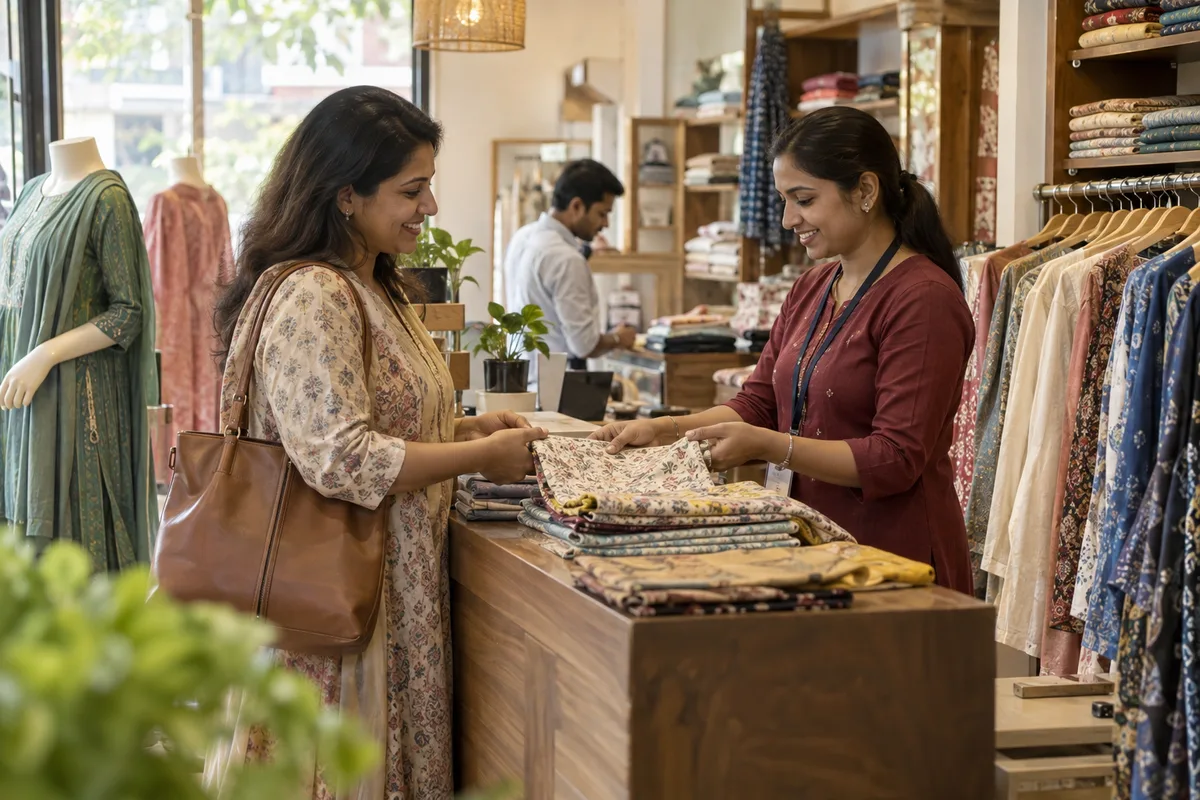
What email marketing means
Email marketing is sending planned messages to a list of past and prospective customers who have agreed to hear from you. It suits offers, updates and staying in touch with someone who is not ready to buy yet. GullySales writes and schedules these emails and tracks who opens, clicks and enquires.
Last updated 14 Nov 2026.
For retailers
Where it usually goes wrong, and what we would do.
“A daily needs shop should not be sending email”
If the basket is small and the visit is weekly, WhatsApp and the counter do everything. Better to say so than to build a list nobody reads.
“A considered purchase leaves a gap to fill”
Somebody comparing a washing machine or a sofa takes a week to decide. Email is where the price, the warranty and a comparison can wait for them.
“Offices a kilometre away buy in bulk”
A company buying Diwali gifts, uniforms or appliances works in an inbox and will not be reached on a WhatsApp status.
“An address outlives a phone number”
A business number can be restricted or blocked. An address collected with consent belongs to the shop and survives a change of phone.
What we do
What we deliver for retailers.
The work available for this need. We agree the deliverables and responsibilities for your engagement in writing.
An honest decision about whether this is for you
A look at basket size, how many times a customer buys and whether you hold any addresses at all, made before anything is built.
Result: You do not spend months on a channel your shop does not need.
A list collected with consent at billing
Addresses taken at the counter or at delivery for the purchases worth following up, with the permission recorded against each.
Result: The list belongs to the shop and is safe to use.
A follow-up for considered purchases
A short mail after a visit with the models compared, the price, the warranty and the exchange terms, for shoppers who left to think.
Result: The comparison happens with your figures in front of them.
A bulk offer written for nearby offices
A one-page offer for gifting, uniforms or appliances, sent to the admin contacts at companies within a few kilometres.
Result: Bulk orders come from buyers who never walk in.
Service, warranty and reminder mails
Notes when a service is due, a warranty is ending or a product needs a check, for the categories where that applies.
Result: The customer comes back to you and not to a service shop.
Opens, replies and returning customers tracked
What was opened, what was answered and who came back into the shop, read against the position before the list existed.
Result: The channel is kept or dropped on evidence.
How the result is measured
- Open rate
- Click rate
- Enquiries from email
Recorded as a baseline before work starts, so every later report has an honest comparison.
What must be in place first
What a shop needs in place before it sends a single email to a customer.
- A reason the shopper gave an email address
- Ask at billing and write down why they gave it: warranty, a bill copy or an offer. Only mail for that reason. A number given for a delivery is not permission for offers.
- Billing records that hold the purchase
- The mail must know what was bought, the date and the invoice value. Without that, a follow-up for a sofa or a fridge reads like a broadcast and is ignored.
- A list split by product line
- Keep furniture, electronics, jewellery and bulk office buyers apart. Someone who bought a wardrobe wants a note about a mattress, not about a phone sale.
- A sender name the customer knows
- Send from the shop name or the owner, on a domain you control, with SPF and DKIM set. Mail from a free address with a long forwarding chain lands in spam.
- A route out in every mail
- A visible unsubscribe link, honoured when asked. India's data protection law expects you to collect only what you need and to stop when someone says stop.
- A WhatsApp rule for the same customer
- Decide which messages go by email and which by WhatsApp, so one customer does not receive the same offer twice on two channels.
Who it is for
This is written for these retailers.
- Apparel and footwear stores
- Electronics and appliance retailers
- Grocery and kirana stores
- Home decor and furnishing stores
- Jewellery and gifting retailers
- Multi-brand outlet stores
Before you decide
When this may not be the right fit.
- Your shoppers give a mobile number at billing and almost never an email, so a list would be too thin to use.
- Your purchases are small and quick, and WhatsApp reaches the shopper where they already read.
- Nobody can write a short mail when a considered purchase, such as furniture, needs a follow-up.
Before you decide
Agree the work. Know how to judge it.
Email marketing for retailers: use these checks to prepare, choose the scope, and review what changes.
Bring the right evidence
Describe how the contact list was collected, what people asked to receive, and which messages are currently sent. Include opt-outs and replies when reviewing campaign performance.
Make the scope clear
Agree the audience, message purpose, sending system, and response owner. Separate promotional communication from order or service updates, and check current platform requirements before launch.
Check the work in use
Test the message with a small appropriate audience before wider use. Check links, reply handling, opt-outs, and whether the response leads to a relevant conversation or order.
Know when to change course
Do not use an unexplained contact list as a shortcut to demand. If recipients do not expect the message, resolve the permission and relevance questions before sending.
These are discussion points, not a fixed package. GullySales confirms the deliverables, responsibilities, fee, and term in writing after reading your brief and speaking with you.
Before we start
What to have ready before the work starts.
The records, access and decisions this work needs from retailers. Anything missing is noted in the written scope, with who will supply it.
- A list of addresses and their source
- Bring every email list the shop holds, with a note on where each came from. Only those collected with a reason and consent can be used. If the source is unknown, the address is not added. If addresses came from a bought list or a business card swap, tell us, and we will not use them without a fresh reason to write.
- A warranty and service reminder list
- Customers with items due for service or warranty expiry are the easiest to write to. A register or the billing export with item and date is acceptable. Without it, reminder mail cannot be set up.
- Offer terms for bulk buyers
- Decide the minimum order, the discount structure you can honour and the person who handles it. Without that, the office mail can be written but not sent.
- A sending address on your own domain
- Mail from a free personal address may land in spam. We need to set one on the shop's domain, which needs access to the domain settings. If you cannot reach them, the person who can must be involved.
- Product photographs sized for mail
- Sharp but light photographs of the lines to be featured. Large files slow mail and trigger spam filters. Without them, mail is text only.
How it works
How the email marketing work runs
The work itself, in order. How an engagement starts, from your brief to a written scope, is set out on our method page.
- 1
Decide if email suits this shop
We begin with an honest look at what the store sells: furniture, electronics or jewellery ask for thought before purchase, while a kirana basket does not. You tell us about nearby offices and bulk buyers. If email does not fit, we say so and send you to WhatsApp instead.
- 2
Check what addresses already exist
We see where the shop already holds email addresses: warranty forms, bulk orders, the billing software, old enquiries. You tell us which were given freely. Only addresses collected with a clear reason are kept, and the rest are left out. We also look for addresses held only on the owner's phone, because those are the easiest to lose when a device changes.
- 3
Write the consent line for the counter
A short sentence, printed beside the billing screen and spoken by staff, asks for an email address for a warranty reminder or a service note. You approve the words. The consent is recorded against the bill, so the list can be proved later.
- 4
Draft the considered-purchase follow-up
For a sofa, a television or a ring, the buyer looks at it more than once. We write a short note that answers the questions that stand between interest and a visit. You supply the facts about delivery, installation and exchange. You choose which lines get a note, since a mail that promotes goods not on the floor loses the reader.
- 5
Write the offer for nearby offices
We draft a single bulk offer for offices and institutions near the shop, with a named contact. You decide the minimum quantity and what you can honour. We also write service and warranty reminders, which existing customers value highly.
- 6
Test, send and read the replies
We send test copies to your own phone and mailbox, look at the images and links, then release to the list. Opens, replies and returning shoppers are compared with figures recorded before the first send. You tell us what staff heard, and no response is promised in advance.
Proof
Published examples of our work.
Real clients and the work recorded for each engagement. These examples may cover related services or industries. They show the method, not a guaranteed result.
Bon Millette
- Situation
- A new food brand has to look trustworthy before anyone will try it, and Bon Millette had nothing online for a first-time buyer to weigh up.
- What we did
- A site that matches the food
- The story in a trust-building order
- Product sections with full disclosure
- A short path from reading to buying
- Result
- No numbers were recorded for this engagement. The work is described in full in the case study.
Also worked with
Chord Road Hospital · Curtain Label · Difesa Security Services · Felicity Inn · Hands On CSR · Implevista · Kambar Group · Kalessi · Kerur Pain Clinic · LL Trust · Lucky Deals · Natural Gases · NavaShakthi Souhardha · NewCom Logistics · Proton Technical Services · SB Engineering · Shakthi Foundation · Shakthi Group · Urbanest · Insyde Studio · Venkateshwara Laser Tech · Vivara Studios
Where this fits
Three pieces of sales work, in this order.
This work sits inside sales process design, at stage 0, foundation. The audit comes before it, and sales management keeps it running.
Step 1
Sales audit
Find where deals are being lost and what to fix first.
Start here if you cannot say where orders are lost.
Step 2 · you are here
Sales process design
One written way to sell, from first enquiry to repeat order.
Start here if every salesperson sells differently.
Step 3
Sales management
A target, a review routine and someone who owns the number.
Start here if the team has targets and no routine.
FAQ
Questions owners ask before they call.
Not here? More answers, or ask on WhatsApp.
Is email dead for retail in India?
Can we send the same message on WhatsApp and email?
Do we need to ask for an email address at the counter?
Will our mail land in spam if it has big offer images?
Is it worth emailing a small kirana store's customers?
How much does it cost?
How long is the contract?
How soon will we see results?
Who will actually do the work?
What do you need from us?
From the blog
Further reading for retailers.
 7 min read · 21 Sept 2026NRI jewellery advertisingAn NRI jewellery buyer is two customers: one flying in for a wedding, one paying from abroad for a mother who collects. Timing and payment differ.
 7 min read · 21 Sept 2026Local audience targeting strategyThree people are local to you: the one who lives near, the one who works near and the one searching near. The settings that reach each differ.
 8 min read · 21 Sept 2026How to advertise to retail business ownersA shop owner cannot leave the counter from ten to nine. Reach them in the afternoon lull, through the distributor's salesman and on WhatsApp.
More for retailers
Related work to consider.
Closest to this: messaging and automation
Also for retailers
Or start from the overview: sales and marketing for retailers.
Your next practical step
Tell us what you are trying to grow, and we will read it before we call.
Eight short steps, mostly taps. Skip anything you would rather answer on the call.