Retailers · WhatsApp marketing
Put the new stock in the pocket of the shopper who bought from you last.
WhatsApp marketing for a retail store is sending catalogue, arrival and festival messages to shoppers who agreed to hear from you, and answering their questions in the same app. GullySales builds the consented list, the catalogue and the reply routine.
Scope, fee, reporting and term are agreed in writing after we have read your brief and spoken to you.

What WhatsApp marketing means
WhatsApp marketing is sending updates, offers and reminders to customers on the app most Indian buyers already check daily. GullySales sets up business WhatsApp, writes the message templates and keeps the list consented and current.
Last updated 14 Nov 2026.
For retailers
Where it usually goes wrong, and what we would do.
“Shoppers already message shops before they visit”
A buyer sends a photograph and asks if you have this in stock. The store that answers on WhatsApp with a price and a time to come is the store they visit. A slow or missing reply sends them to the next name on the screen.
“A broadcast to strangers loses the number”
Adding anyone whose number you can find, or buying a list, gets messages reported and the account restricted. A list built from billing, with a spoken yes, protects the number that carries your regulars.
“The catalogue is the shop window on a phone”
A photograph, a name, a price and a note on sizes or colours, set out in the app's catalogue, answers half the questions before they are asked. A catalogue left empty or stale makes the shop look closed.
“Festive timing decides whether the message is read”
A note about new arrivals sent when the shopper is deep in festival buying is opened. The same note sent in a dull week is ignored. The calendar of your own selling season drives the plan, not a fixed day each period.
What we do
What we deliver for retailers.
The work available for this need. We agree the deliverables and responsibilities for your engagement in writing.
A WhatsApp Business account set up properly
Profile, hours, address, a greeting and an away message, all matching your Maps listing.
Result: The number looks like a real shop.
A catalogue of what you really sell
Your best-selling lines with clear photographs, prices and short descriptions, grouped the way a shopper looks for them.
Result: A shopper can browse without calling.
A consented broadcast list
A way to add shoppers at billing with a spoken yes, split into groups such as regulars, festival buyers and wedding enquiries.
Result: You message only people who agreed.
Message templates for your season
Wording for new arrivals, festival timings, sale days and thank-you notes, in the language your shoppers use.
Result: Staff send consistent, clear messages.
Quick replies for the questions you always get
Saved answers on price, stock, exchange and timings, with a person named to answer each day.
Result: Enquiries receive an answer from the shop, not silence.
Click-to-chat links on your listing and posts
Links from Maps, Instagram and your website that open a chat with your catalogue ready.
Result: Every online touchpoint leads to a conversation.
How the result is measured
- Messages delivered
- Reply rate
- Enquiries from WhatsApp
Recorded as a baseline before work starts, so every later report has an honest comparison.
What to capture or send
What a store sends and records on WhatsApp with its own shoppers.
- Shopper's first message
- Save the enquiry, the item and the shopper's name. A store that answers with a photograph and a price from the shelf gives the shopper a reason to visit.
- New arrivals for a past buyer
- Send a few photographs matched to the shopper's earlier purchase, not the whole catalogue. Relevance keeps the shopper reading.
- Order or reservation confirmation
- Message the item, the hold period and the shop's hours. It records what the store agreed.
- Festival opening hours
- Send changed timings before the occasion to shoppers who opted in. It prevents a wasted visit.
- A stop option in every broadcast
- Tell the shopper how to leave the list. Honouring it keeps the number from being reported.
Who it is for
This is written for these retailers.
- Apparel and footwear stores
- Electronics and appliance retailers
- Grocery and kirana stores
- Home decor and furnishing stores
- Jewellery and gifting retailers
- Multi-brand outlet stores
Before you decide
When this may not be the right fit.
- Shoppers have not agreed to receive messages from the store, and the list is only numbers copied from bills.
- One person owns the phone, and when they are on the floor no one replies to a chat.
- You expect broadcasts to replace a good display and counter service, which they cannot.
Before you decide
Agree the work. Know how to judge it.
WhatsApp marketing for retailers: use these checks to prepare, choose the scope, and review what changes.
Bring the right evidence
Describe how the contact list was collected, what people asked to receive, and which messages are currently sent. Include opt-outs and replies when reviewing campaign performance.
Make the scope clear
Agree the audience, message purpose, sending system, and response owner. Separate promotional communication from order or service updates, and check current platform requirements before launch.
Check the work in use
Test the message with a small appropriate audience before wider use. Check links, reply handling, opt-outs, and whether the response leads to a relevant conversation or order.
Know when to change course
Do not use an unexplained contact list as a shortcut to demand. If recipients do not expect the message, resolve the permission and relevance questions before sending.
These are discussion points, not a fixed package. GullySales confirms the deliverables, responsibilities, fee, and term in writing after reading your brief and speaking with you.
Before we start
What to have ready before the work starts.
The records, access and decisions this work needs from retailers. Anything missing is noted in the written scope, with who will supply it.
- A dedicated shop number
- A number that belongs to the shop and not to a staff member's personal phone. It must be able to receive an activation code. Without it, the account is tied to a person who may leave. Keep the SIM active and the phone in the shop's keeping, with the recovery PIN written somewhere safe.
- The customer numbers with their consent
- A list of numbers with a note of how each agreed to hear from you. Numbers with no record are not messaged. Without any, the list begins at the counter. Add the date and place of consent where you can, such as a billing slip, so the list can be defended if a shopper asks.
- Product photographs and short names
- Clear photographs and a plain name for each product in the catalogue. Phone pictures are fine. Without them, the catalogue is thin.
- The questions you answer all the time
- A list of repeated questions and the answers staff give. It becomes the quick replies. Without it, the replies are generic. Write them in the language your shoppers use, mixing Hindi, Kannada or English as the counter does.
- A person to answer during shop hours
- Name who watches the chat when the floor is busy. Without them, replies lag and shoppers go to the next shop.
How it works
How the whatsapp marketing work runs
The work itself, in order. How an engagement starts, from your brief to a written scope, is set out on our method page.
- 1
Read how shoppers already message you
We read a week of the chats the shop receives: price questions, stock checks, photo requests. You tell us which number staff use and who answers. The setup begins from how shoppers already write, not from a template. We note the hours messages arrive, the questions that repeat and the ones left unanswered, so the quick replies cover real gaps.
- 2
Decide between the app and the API
We compare the WhatsApp Business app with the paid API for your volume and your staff. You decide, with the costs and limits explained and checked against the platform's current rules. For a single shop the app is enough, and we say so. If you choose the API, we also name who pays for message charges and who watches the account, since both are decisions only the owner can make.
- 3
Collect the list with a clear reason
We write the consent line spoken at billing and printed near the counter. You decide what the list will receive: arrivals, festive offers, service notes. Only numbers with a recorded yes are added. We also list the groups you will not message at all, such as people who only asked a single price, so the broadcast stays small and welcome.
- 4
Build the catalogue from the shelf
With the manager, we list the products worth showing, photograph them and write short names and prices that you confirm. The catalogue shows what you actually sell. Items you do not stock are kept out of it, however popular they are elsewhere. Prices on the catalogue are marked as indicative where they change with stock, and you decide who updates them after a delivery.
- 5
Write the templates and quick replies
We draft broadcast templates for your season and quick replies for the questions asked all the time: timings, location, exchange. You edit them to your voice, and we mark what the shop must never send, such as a message to a number without consent. Festival templates are written ahead of the rush, with a space for the date, so staff do not draft them under pressure.
- 6
Test, release and read the replies
We send a test to staff phones, check how the catalogue and links open, then release the first broadcast. Replies, visits and opt-outs are read against the figures recorded before, and you decide what changes. No response is promised in advance. We also count how many people asked to stop, since that number tells you whether the messages are welcome.
Proof
Published examples of our work.
Real clients and the work recorded for each engagement. These examples may cover related services or industries. They show the method, not a guaranteed result.
Bon Millette
- Situation
- A new food brand has to look trustworthy before anyone will try it, and Bon Millette had nothing online for a first-time buyer to weigh up.
- What we did
- A site that matches the food
- The story in a trust-building order
- Product sections with full disclosure
- A short path from reading to buying
- Result
- No numbers were recorded for this engagement. The work is described in full in the case study.
Also worked with
Chord Road Hospital · Curtain Label · Difesa Security Services · Felicity Inn · Hands On CSR · Implevista · Kambar Group · Kalessi · Kerur Pain Clinic · LL Trust · Lucky Deals · Natural Gases · NavaShakthi Souhardha · NewCom Logistics · Proton Technical Services · SB Engineering · Shakthi Foundation · Shakthi Group · Urbanest · Insyde Studio · Venkateshwara Laser Tech · Vivara Studios
Where this fits
Three pieces of sales work, in this order.
This work sits inside sales process design, at stage 0, foundation. The audit comes before it, and sales management keeps it running.
Step 1
Sales audit
Find where deals are being lost and what to fix first.
Start here if you cannot say where orders are lost.
Step 2 · you are here
Sales process design
One written way to sell, from first enquiry to repeat order.
Start here if every salesperson sells differently.
Step 3
Sales management
A target, a review routine and someone who owns the number.
Start here if the team has targets and no routine.
FAQ
Questions owners ask before they call.
Not here? More answers, or ask on WhatsApp.
Will WhatsApp ban our number for broadcasts?
Is the paid WhatsApp Business API necessary for a shop?
What should we never send?
What does a store do about price enquiries on WhatsApp?
How many shoppers can we message before the number is blocked?
Is it fine for shop staff to chat with customers from personal phones?
How soon will we see results?
Who will actually do the work?
What do you need from us?
What if we are not happy with the work?
From the blog
Further reading for retailers.
 7 min read · 21 Sept 2026NRI jewellery advertisingAn NRI jewellery buyer is two customers: one flying in for a wedding, one paying from abroad for a mother who collects. Timing and payment differ.
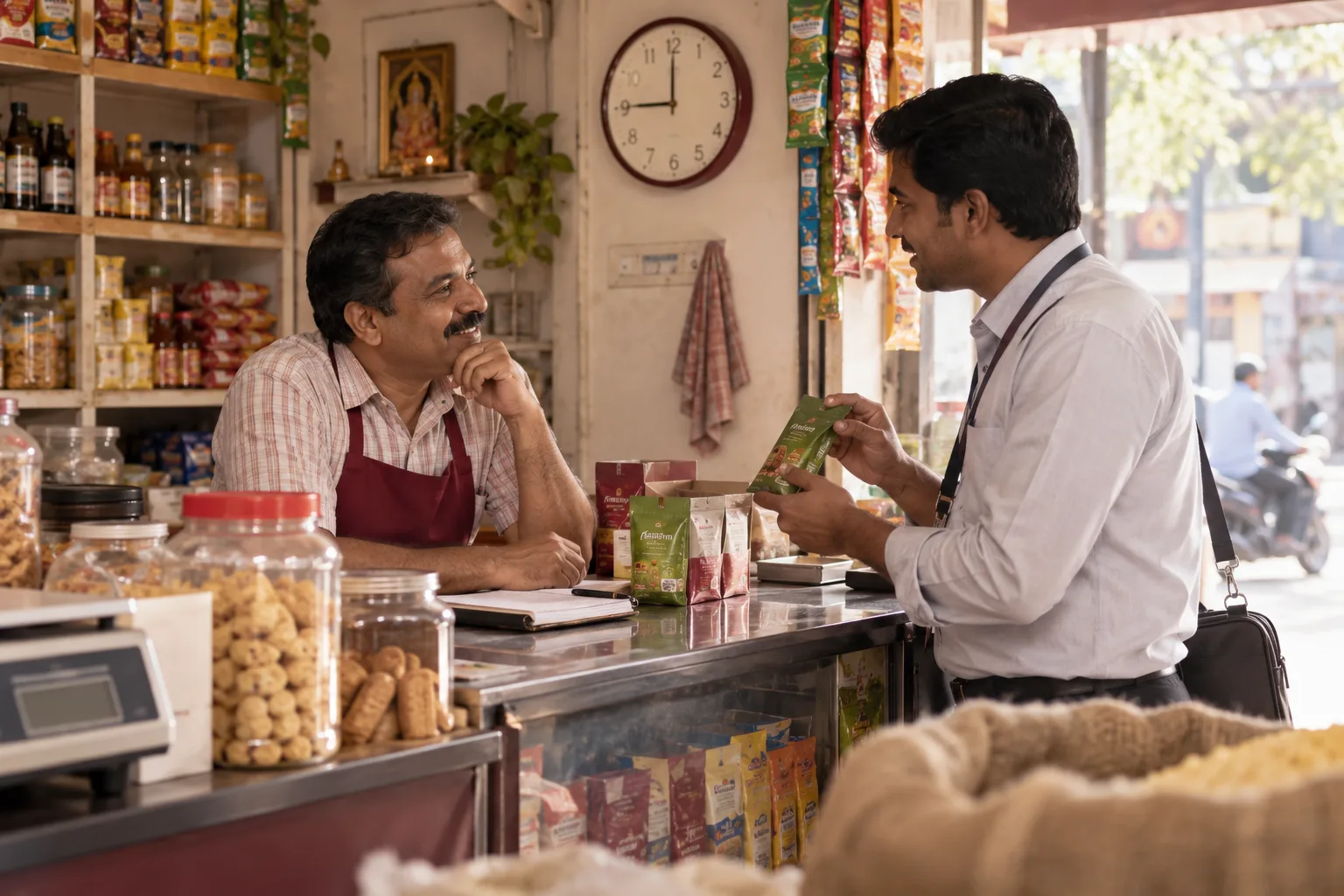 8 min read · 21 Sept 2026How to advertise to retail business ownersA shop owner cannot leave the counter from ten to nine. Reach them in the afternoon lull, through the distributor's salesman and on WhatsApp.
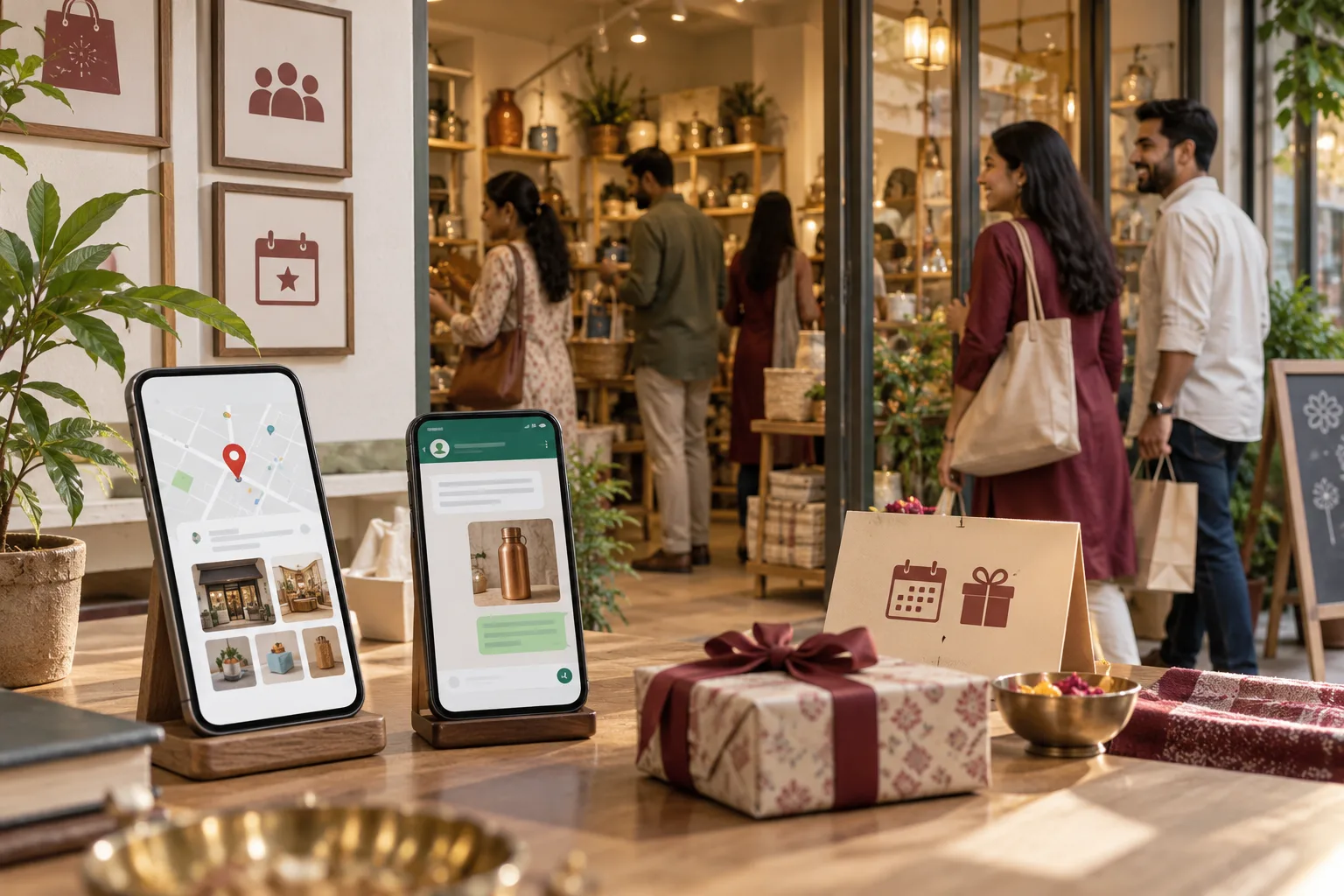 6 min read · 22 May 2026How to increase footfall in a retail storeBe found on Maps for what you stock, give past customers a reason to come back on WhatsApp, and run promotions tied to dates people already shop for.
More for retailers
Related work to consider.
Closest to this: messaging and automation
Also for retailers
Or start from the overview: sales and marketing for retailers.
Your next practical step
Tell us what you are trying to grow, and we will read it before we call.
Eight short steps, mostly taps. Skip anything you would rather answer on the call.