AR, VR and XR development studios · Content marketing
Write the guide that tells a buyer what a pilot costs in effort, not in jargon.
Content marketing for an immersive studio means publishing guides, build notes and films that help a buyer decide on a first project. GullySales plans and edits content on devices, scoping and use cases that your team can stand behind.
Scope, fee, reporting and term are agreed in writing after we have read your brief and spoken to you.
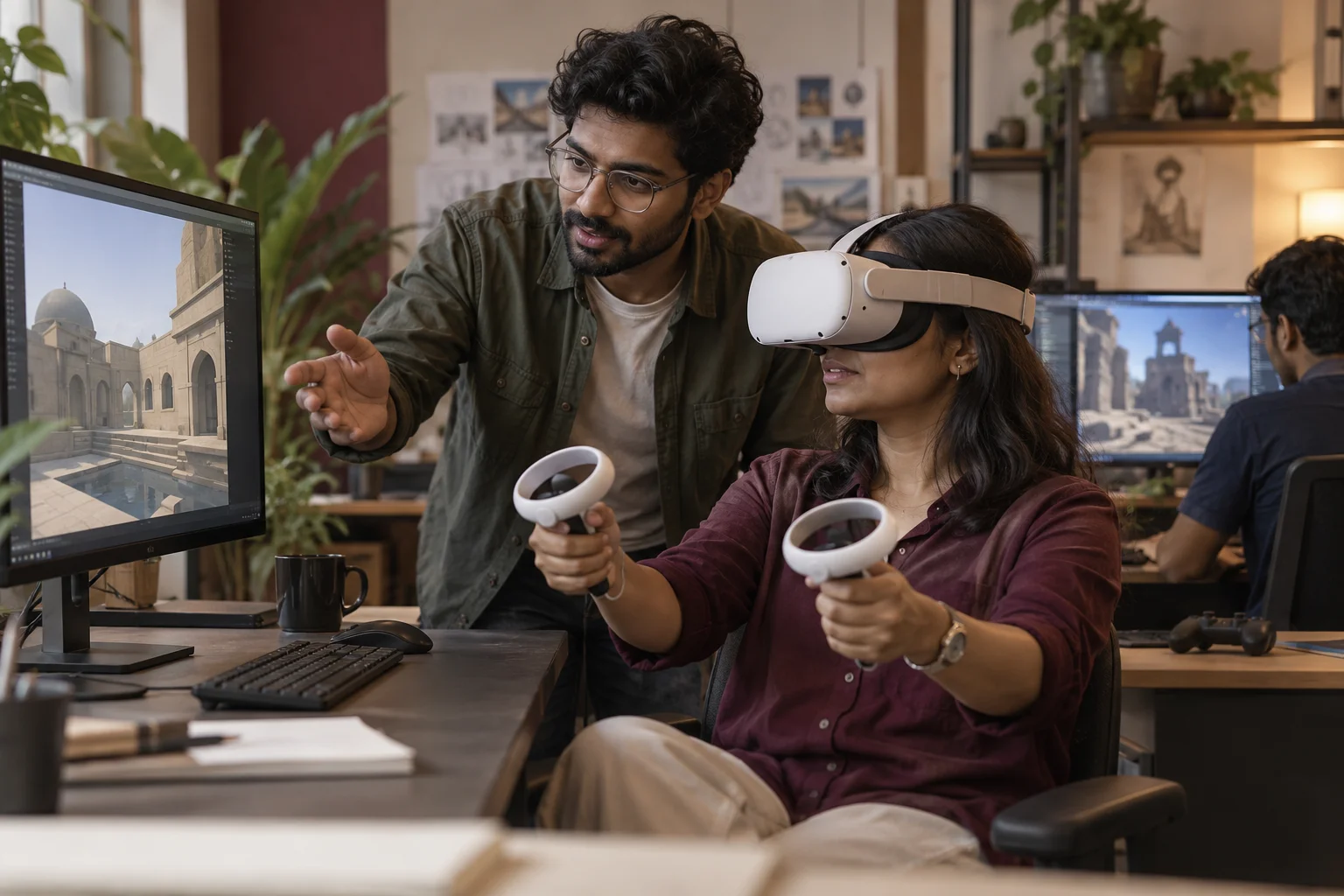
What content marketing means
Content marketing is writing articles, guides and pages that answer the questions buyers search before they are ready to enquire. This makes your business visible and trusted before the first call. GullySales plans this content from the first conversation onward, choosing topics that match real search demand rather than guesses.
Also for AR, VR and XR development studios
- Social media marketing for AR, VR and XR studios
- Lead generation for AR, VR and XR studios
- SEO for AR, VR and XR studios
- Buyer persona for AR, VR and XR studios
- CRM for AR, VR and XR studios
- Follow-up systems for AR, VR and XR studios
- WhatsApp marketing for AR, VR and XR studios
- Digital marketing for AR, VR and XR studios
Sales and marketing for AR, VR and XR development studios, the overview.
Last updated 22 Oct 2026.
For AR, VR and XR development studios
Where it usually goes wrong, and what we would do.
“Buyers have not bought this before”
A school principal or a showroom head has never commissioned an immersive build. They do not know the questions to ask. A guide that lists them, from device to ownership to update, makes the studio the one who explained.
“Technical posts reach the wrong reader”
A post on shader performance interests developers but not the marketing head of a builder. Content should be sorted by the reader, with a plain version for the buyer and a depth page for the technical reviewer.
“Case notes need permission and numbers they do not have”
Clients seldom share results, and the studio may not hold any figures. A case note can describe the brief, the device, the room and what was built, and leave outcomes out unless the client supplies and approves them.
“Device changes make old content wrong”
A guide that names a headset that has been replaced misleads. Dated pages and a regular review of device information keep the library trustworthy.
What we do
What we deliver for AR, VR and XR development studios.
Every deliverable, what it covers for you, and the result it is there to produce. Nothing here is an extra.
Buyer's guide to a first pilot
A guide covering use, device, venue, scope, ownership and support, written for a non-technical reader.
Result: A buyer can walk into a meeting with a list of questions.
Build notes
Short notes on how a sample was made, what limit was hit on which device and what was changed.
Result: An engineer-minded reviewer sees honest work.
Case notes without invented results
Each note describes the brief, the setting and the build, with outcomes only if the client approved them.
Result: Notes carry only what can be backed.
Device comparison page
A plain page on the headsets and phones the studio has tested, what each suits and what it cannot do.
Result: A buyer chooses a device with the studio's evidence.
Film library
Short films recorded through the lens and from outside, indexed by use on a single page.
Result: One page lets a prospect watch the right film for their need.
Review schedule for facts
A list of pages that mention devices or software versions, with a reviewer named for each.
Result: Out-of-date facts are found and corrected.
How the result is measured
- Pages published
- Organic traffic
- Enquiries from content pages
Recorded as a baseline before work starts, so every later report has an honest comparison.
Who it is for
This is written for these AR, VR and XR development studios.
- Property developers and real estate marketing teams
- Brand and advertising agencies running launches
- Schools, colleges and ed-tech companies
- Corporate training and skilling teams
- Museums, tourism boards and heritage bodies
- Retail and showroom brands with a product to place at home
- Industrial and manufacturing firms needing equipment walkthroughs
- Event and exhibition organisers
How it works
How the content marketing work runs
The work itself, in order. How an engagement starts, from your brief to a written scope, is set out on our method page.
- 1
Confirm the plan
Topics and formats for the coming month are confirmed against the content strategy.
- 2
Produce and review
Content is written or filmed, then reviewed by someone who knows your trade before it goes out.
- 3
Publish and distribute
Finished content is published to the site and pushed through the channels your buyers actually use.
- 4
Track enquiries
Enquiries are traced back to content where a direct line exists, and reported honestly where it does not.
- 5
Report and adjust
We report results and adjust the next topics based on what actually worked.
Where this fits
Three pieces of sales work, in this order.
This work sits inside sales process design, at stage 0, foundation. The audit comes before it, and sales management keeps it running.
Step 1
Sales audit
Find where deals are being lost and what to fix first.
Start here if you cannot say where orders are lost.
Step 2 · you are here
Sales process design
One written way to sell, from first enquiry to repeat order.
Start here if every salesperson sells differently.
Step 3
Sales management
A target, a review routine and someone who owns the number.
Start here if the team has targets and no routine.
FAQ
Questions owners ask before they call.
Not here? More answers, or ask on WhatsApp.
How many posts should the studio write?
Can the founder write the technical posts?
Should we publish prices?
How long is the contract?
How soon will we see results?
Who will actually do the work?
What do you need from us?
What if we are not happy with the work?
More for AR, VR and XR development studios
Everything else we would do for you.
Closest to this: content and social
Also for AR, VR and XR development studios
Or start from the overview: sales and marketing for AR, VR and XR development studios.
Your next practical step
Tell us what you are trying to grow, and we will read it before we call.
Eight short steps, mostly taps. Skip anything you would rather answer on the call.