AR, VR and XR development studios · CRM
Record which device a buyer tried, and the next step that was agreed.
A CRM for an immersive studio is the record of every buyer, demo and pilot, with the device and date attached. GullySales sets up the fields, stages and views so a demo does not vanish into a founder's phone.
Scope, fee, reporting and term are agreed in writing after we have read your brief and spoken to you.
What CRM means
A CRM is the record where every enquiry, call and quote is kept against a customer, replacing separate notebooks, spreadsheets and memory. GullySales sets up or cleans an existing CRM and reports from it by enquiry outcome rather than by activity logged.
Also for AR, VR and XR development studios
- Lead generation for AR, VR and XR studios
- Follow-up systems for AR, VR and XR studios
- SEO for AR, VR and XR studios
- Social media marketing for AR, VR and XR studios
- Content marketing for AR, VR and XR studios
- Buyer persona for AR, VR and XR studios
- WhatsApp marketing for AR, VR and XR studios
- Digital marketing for AR, VR and XR studios
Sales and marketing for AR, VR and XR development studios, the overview.
Last updated 22 Oct 2026.
For AR, VR and XR development studios
Where it usually goes wrong, and what we would do.
“Demos happen on devices and in places”
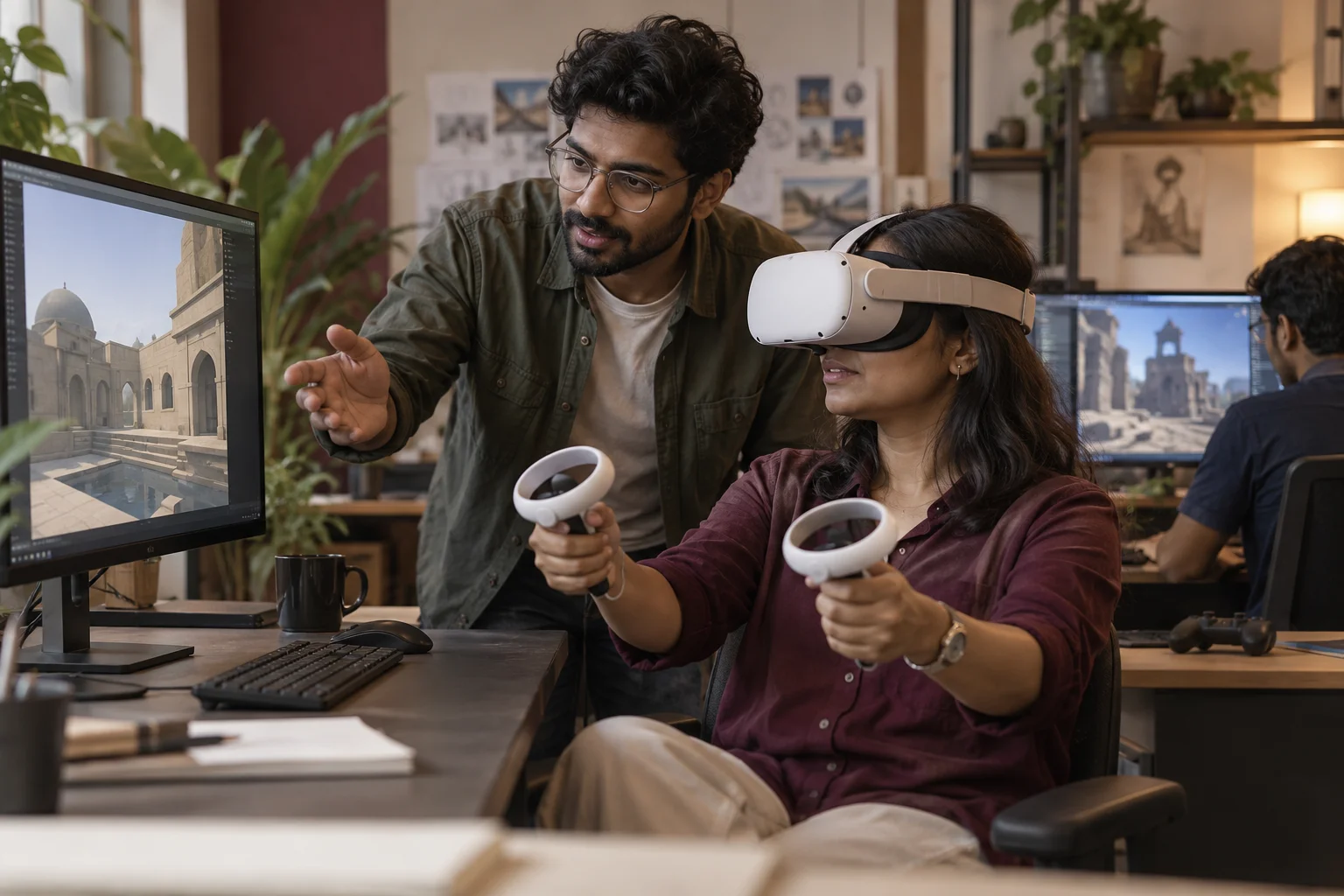
A demo at an expo, a gallery or a college leaves no trace unless someone writes down the device, the scene shown and the reaction. The CRM should hold those details so the follow-up refers to them.
“Agencies and clients are two records”
An agency brings a client's brief. If the studio records only the agency, the end client's name, the launch date and the agency's repeat history are lost.
“Pilot to project is a long stage”
A pilot ends, the buyer talks to a committee and nothing is heard for a while. A CRM stage with an owner and a next date stops the lead from fading.
“Founders hold the relationships”
If the studio's founder keeps contacts in a phone, a sick day or a departure takes them away. A shared record protects the relationship.
What we do
What we deliver for AR, VR and XR development studios.
Every deliverable, what it covers for you, and the result it is there to produce. Nothing here is an extra.
Fields that matter
Device tried, scene shown, use, venue, budget holder, launch date and consent status for each contact.
Result: A record shows the buyer, the use and the next date at a glance.
Stage design
Stages from enquiry to demo, pilot, project and repeat, each with a rule for moving in and out.
Result: Everyone knows where a lead stands.
Agency and end-client linking
A way to link an agency record to each client it brings, with dates.
Result: Repeat sources are visible.
Next-step discipline
A rule that each open lead carries a dated next step and an owner.
Result: Leads without a next step are listed for review.
Import of existing contacts
Contacts from phones, spreadsheets and email cleaned and loaded with source noted.
Result: Past enquiries sit in one place.
Consent and permission notes
A field for what a client allowed the studio to show.
Result: The sales team sees what is cleared before sending a sample.
How the result is measured
- Enquiries logged in the CRM
- Data completeness
- Reports generated from CRM data
Recorded as a baseline before work starts, so every later report has an honest comparison.
Who it is for
This is written for these AR, VR and XR development studios.
- Property developers and real estate marketing teams
- Brand and advertising agencies running launches
- Schools, colleges and ed-tech companies
- Corporate training and skilling teams
- Museums, tourism boards and heritage bodies
- Retail and showroom brands with a product to place at home
- Industrial and manufacturing firms needing equipment walkthroughs
- Event and exhibition organisers
How it works
How the CRM work runs
The work itself, in order. How an engagement starts, from your brief to a written scope, is set out on our method page.
- 1
Map the sales process
We record how a deal actually moves from enquiry to close in your business today.
- 2
Configure stages and fields
The CRM's pipeline and fields are built to match that process exactly, not a generic template.
- 3
Set up automations
Reminders, assignment rules and follow-up triggers are configured so routine steps happen without manual effort.
- 4
Test with real deals
We run the configuration against actual current deals to catch gaps before the whole team relies on it.
Where this fits
Three pieces of sales work, in this order.
This work sits inside sales management. A target, a review routine and someone who owns the number.
Step 1
Sales audit
Find where deals are being lost and what to fix first.
Start here if you cannot say where orders are lost.
Step 2
Sales process design
One written way to sell, from first enquiry to repeat order.
Start here if every salesperson sells differently.
Step 3 · you are here
Sales management
A target, a review routine and someone who owns the number.
Start here if the team has targets and no routine.
FAQ
Questions owners ask before they call.
Not here? More answers, or ask on WhatsApp.
Which CRM should a small studio use?
Can the CRM store the demo files?
Who should own the data?
How much does it cost?
How long is the contract?
How soon will we see results?
Who will actually do the work?
What do you need from us?
What if we are not happy with the work?
More for AR, VR and XR development studios
Everything else we would do for you.
Closest to this: leads and follow-up
Also for AR, VR and XR development studios
Or start from the overview: sales and marketing for AR, VR and XR development studios.
Your next practical step
Tell us what you are trying to grow, and we will read it before we call.
Eight short steps, mostly taps. Skip anything you would rather answer on the call.