AR, VR and XR development studios · Technology
Put a headset or a phone in the buyer's hand before the proposal goes out.
A property developer in Whitefield is two months from launching a tower. The marketing head has seen a walkthrough on a laptop and wants buyers to stand in the living room before the building exists.
Scope, fee, reporting and term are agreed in writing after we have read your brief and spoken to you.
In one paragraph
AR, VR and XR development studios build immersive experiences for brands, property developers, schools, colleges and training teams, on headsets, phones and large screens. The sale rests on a demo the buyer can try. GullySales works on demo-first pages, device-specific proof and small paid pilots with a clear scope.
Three studios reply. Two send a showreel link. One asks which headset the sales gallery owns, whether visitors will wear it or stand at a tablet, and offers to bring a phone-based sample of a single flat to the next meeting.
The third studio gets the second call, because the buyer could try something. A showreel proves the studio can make nice pictures. A demo on the device the audience will actually use proves the build will run in the gallery, the classroom or the stall, and that is the doubt the buyer is trying to settle.
Last updated 22 Oct 2026.
How buyers decide
How AR, VR and XR development studios are chosen.
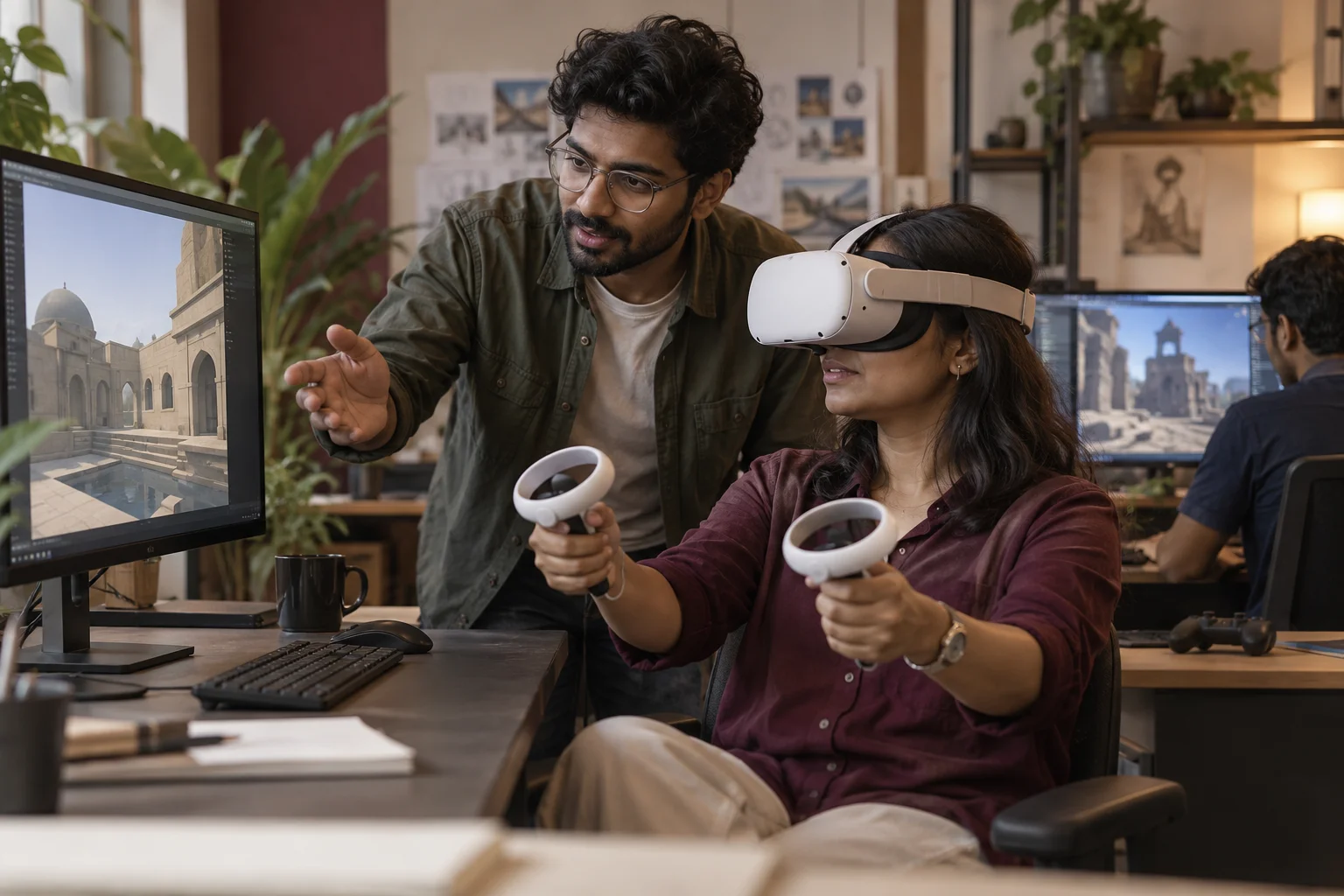
The buyer wants to try something within the first meeting. A branded filter on a phone, a short headset scene or a model that sits on the table through a tablet tells the buyer more than a deck. Studios that arrive with nothing to hold lose to the ones that bring a device.
Device is the second question. A school will not buy twenty headsets for a pilot, a showroom wants something a visitor can use with no help, and a training head wants to know whether the build runs on the headsets already in the store. Proof that names the device, the room and who ran it carries more weight than a general claim of capability.
Scope decides the signing. Buyers have been burnt by experiences that took longer and cost more than the first quote, so a written pilot with what is built, what the client supplies, who owns the files and what happens when the headset model changes is what an agency head or a college dean can approve.
The problem
What usually goes wrong for AR, VR and XR development studios.
What owners tell us on the first call, in their words.
“The showreel wins praise and no purchase order”
Buyers enjoy the video and then ask for a quote on something they never tried, so the enquiry stalls at the first internal meeting.
“Every demo is built from scratch”
The team spends days on a sample for each prospect, and the work cannot be reused for the next one in a different industry.
“Buyers compare us with a freelancer's price”
A single developer quotes a fraction of our figure, and the buyer cannot see the testing, device support and handover behind ours.
“Proof runs on one headset and the client owns another”
A build that looks fine on our test device behaves differently on the model the college bought, and that surprise is remembered.
“Brand clients expect a campaign, not a product”
An agency wants the filter live for a launch date, and our process was planned for a longer project.
“Pilots end without a next step”
The classroom or sales gallery trial goes well, but nobody on the client side owns the decision to buy more.
What we do
What we do for AR, VR and XR development studios.
Everything included for AR, VR and XR development studios.
A demo for each kind of buyer
A property walkthrough sample, a classroom lesson scene and a product-placement sample, each small enough to run on a phone, a tablet or a headset a prospect already owns.
Device-wise proof pages
A page for each device family a client may own, showing the build running on it, the room it was tested in and any limits found.
A scoped pilot offer
A written first project covering what is built, what the client supplies, how many users try it, who owns the source files and what ends the pilot.
Through-the-lens film set
Short films recorded as the user sees the scene, plus one filmed from outside showing how visitors queue, wear the headset and exit.
Agency partner kit
A sheet for advertising and event agencies covering lead times for a filter, what the client must supply and how the asset is handed over after the event.
Ownership and update note
A one-page note on who owns the build, what happens when a headset or phone update breaks it and how long support is offered.
How the result is measured
- Demos tried in person versus links viewed
- Enquiries by buyer type: developer, agency, education, training
- Pilots signed and users per pilot
- Pilots that become a full project
- Agency partners who bring a second brief
- Buyers who ask about devices before price
Recorded as a baseline before work starts, so every later report has an honest comparison.
Every service, written for AR, VR and XR development studios
Each has its own page: what it involves for AR, VR and XR development studios, what you get, and what it is measured on.
- Lead generationFind the buyers with a launch date or a classroom batch, and put a device in their hands.
- SEORank for the use the buyer describes, not for the letters AR and VR.
- Social media marketingPost the visitor's face inside the headset, not only the render.
- Content marketingWrite the guide that tells a buyer what a pilot costs in effort, not in jargon.
- Buyer personaKnow who signs the pilot, who tries the demo and who worries about the headset.
- CRMRecord which device a buyer tried, and the next step that was agreed.
- Follow-up systemsFollow the demo with the clip of the buyer's own scene, not a generic thank-you.
- WhatsApp marketingSend the filter link on WhatsApp so the buyer opens it on the phone in hand.
- Digital marketingSpend where an agency head or a dean is already looking for a demo.
- WebsiteBuild the site so a buyer can try a filter on the phone in their pocket.
Worth a page and a campaign of their own
Demo files per buyer type · Device-specific proof pages · A scoped paid pilot · Walkthrough films filmed through the lens · Handover and file ownership terms · Agency partner kit · Education and training case notes with permission · Support and device-update promise in writing
Priority campaigns
Campaigns for what AR, VR and XR development studios most want to sell.
Each one planned around when your buyers decide, and measured against the baseline.
Demo-in-hand outreach to developers
A short note to marketing heads of property developers in Bengaluru, Pune and Hyderabad, offering to bring a sample of one flat to the sales gallery.
Classroom pilot invitations
Offers to colleges and ed-tech teams for a single lesson scene tried with one batch, with the device list agreed first.
Agency introductions
Meetings with creative and activation agencies where the studio shows filters and event builds on the phones in the room.
Trade show and expo presence
A stand at property, education or training expos where visitors try one scene and leave a number.
Beyond search
Where we reach buyers of AR, VR and XR development studios, beyond Google.
Search matters, but it is rarely the only way this industry's buyers find a supplier.
Marketing heads at developers
A launch calendar is the trigger. The material opens with a sample of the flat type being sold and a note on where it runs.
Agency creative and activation leads
Agencies want assets that behave on the day. Pages cover supported phones, file size and handover, because those decide whether the agency brings the studio back.
School and college decision makers
A principal, dean or ed-tech lead wants to know the device cost and who runs the session, so the material states both.
Training and L&D heads
A plant or hospital training head reads about one procedure scene, the headset it needs and how a trainer sets it up.
Tourism and heritage bodies
Departments deciding on a heritage walkthrough read about visitor flow, device hygiene and the languages supported.
Who it is for
This is written for these AR, VR and XR development studios.
- Property developers and real estate marketing teams
- Brand and advertising agencies running launches
- Schools, colleges and ed-tech companies
- Corporate training and skilling teams
- Museums, tourism boards and heritage bodies
- Retail and showroom brands with a product to place at home
- Industrial and manufacturing firms needing equipment walkthroughs
- Event and exhibition organisers
Not for
It is not the right fit if.
- You want a guaranteed Google ranking or a guaranteed number of leads. Nobody honest can promise either.
- You need enquiries by next week and have nobody to answer them.
- You want posts and reach reported, not enquiries and orders.
How it works
How the work runs for AR, VR and XR development studios
The work itself, in order. How an engagement starts, from your brief to a written scope, is set out on our method page.
- 1
Collect what has really been built
Every shipped build is listed with the device it ran on, the setting it ran in and whether the client allows it to be shown.
- 2
Turn builds into demo files
The strongest builds become small samples that open fast on a phone or a headset, one per buyer type.
- 3
Write the pilot and ownership terms
The scoped pilot, the file ownership note and the update promise are written in plain words before any outreach.
- 4
Take the demo to the buyer
Developer visits, agency meetings and expo stands go live in the chosen cities, with the sample on a device in hand.
- 5
Log pilots to purchase
Each pilot is followed until it becomes a project or stops, with the reason noted for the ones that stall.
Where this fits
Three pieces of sales work, in this order.
GullySales builds every engagement from three pieces of sales work. This page is not one of them, but the same three steps apply to the business behind it.
Step 1
Sales audit
Find where deals are being lost and what to fix first.
Start here if you cannot say where orders are lost.
Step 2
Sales process design
One written way to sell, from first enquiry to repeat order.
Start here if every salesperson sells differently.
Step 3
Sales management
A target, a review routine and someone who owns the number.
Start here if the team has targets and no routine.
FAQ
Questions AR, VR and XR development studios ask before they call.
Not here? More answers, or ask on WhatsApp.
Can we show client work under NDA?
Should we list every headset we support?
How do we answer a freelancer's lower quote?
Does a showreel still matter?
How is this different from software development companies?
How much does it cost?
How long is the contract?
How soon will we see results?
Who will actually do the work?
What do you need from us?
Part of Technology. See the other industries in the sector.
Your next practical step
Tell us what you are trying to grow, and we will read it before we call.
Eight short steps, mostly taps. Skip anything you would rather answer on the call.