Industries · Beauty, Fitness & Lifestyle
A salon sells hours, and an empty Wednesday hour cannot be sold again on Sunday.
On a Sunday morning the barbershop in the lane has six men on the bench and a phone ringing in the drawer. Three of them leave. On Wednesday at three the same chairs are empty and nobody has told the regulars that the afternoon is quiet.
Scope, fee, reporting and term are agreed in writing after we have read your brief and spoken to you.
In one paragraph
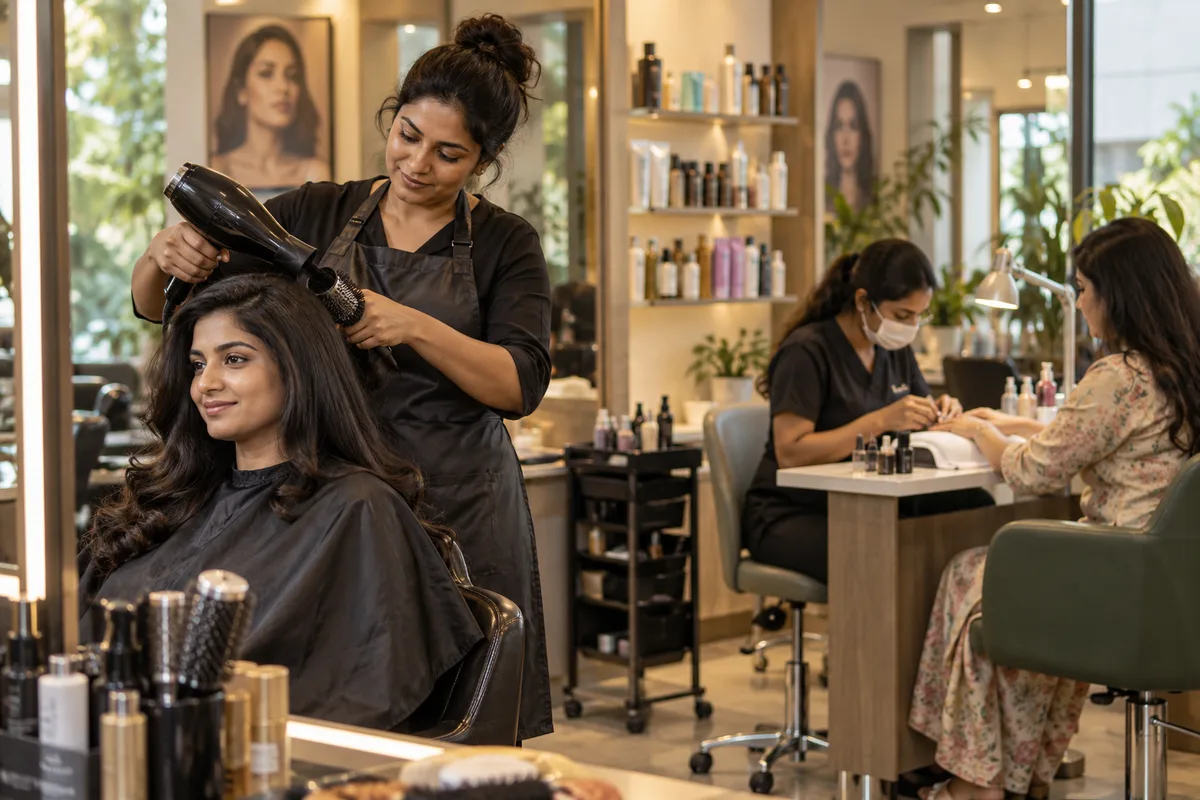
Salons and grooming is the group of men's, women's, unisex and premium salons, barbershops, beauty parlours and spa centres that sell a seat or a table for a set time. GullySales looks at how a nearby customer finds you on Maps, how a booking is made, and how a regular is reminded when the next visit is due.
A spa sells a table, a parlour sells a chair in a ground floor room, a premium salon sells one stylist's afternoon. The thing sold is the same in every one: time that expires at closing. Customers in all of them judge from a Maps listing, a price card and photographs of finished work, and come back when reminded, not when due.
Last updated 18 Oct 2026. Rules on what you may advertise differ by trade and change. This page describes them in general terms only, so check the current position with your own adviser or regulator.
7 kinds of business
Each kind of business in salons & grooming sells a little differently.
Open the page closest to yours for how its buyers choose and what we would fix first.
Men's salons
Sunday is crowded and Wednesday is dead, and the haircut alone is the sale until the menu shows beard, colour and facial. A quieter midweek slot offered to regulars comes before any discount.
Read the page for men's salonsWomen's salons
A colour or keratin appointment holds a stylist for an afternoon, which makes a cancellation on the day the costliest gap. Customers book from a clear price list and photographs of finished hair, not of the interior.
Read the page for women's salonsUnisex salons
Men's walk-ins can take the chairs that women have booked, and a Maps listing that says only salon does not tell a family who the shop is for. Peak hours are packed and the rest of the day is slow.
Read the page for unisex salonsPremium salons
The stylist's name is the brand, and it can leave with the stylist. A portfolio as good as the work and a private list of best clients carry more weight here than a discount, which brings the wrong customers.
Read the page for premium salonsBarbershops
With a razor in hand the barber cannot answer the phone, and a queue sends passers-by elsewhere. A lane shop of one or two chairs needs a Maps listing with real photographs and a register of when each regular is due.
Read the page for barbershopsBeauty parlours
Run from a ground floor room or a home, a parlour fills on recommendation from threading and waxing regulars. Short services fill the day, so the work is to make room for facials and festival looks between them.
Read the page for beauty parloursSpa centres
Weekends are full and weekday afternoons are empty. A walk-in fills today's table, a package fills next month's, and a corporate wellness tie-up can take the quiet slots.
Read the page for spasWhat they share
What usually goes wrong across salons & grooming.
Whichever of these you run, you will probably recognise most of them.
“Busy days turn people away and quiet days sit empty”
Sunday, festival weeks and the evening before a function fill every chair, and the queue sends passers-by elsewhere. Weekday afternoons stay empty. The hour lost on Wednesday is gone for good, and nobody has offered it to a regular.
“Our Maps listing does not match the shop”
The photographs show the signboard or the reception, the closing time is wrong, and the listing does not say who the shop is for or what it charges. A customer deciding from the pavement chooses the listing that is current.
“Regulars come when they remember, not when they are due”
We do not write down what a customer had or when it will need doing again. The haircut, the threading, the colour touch-up or the monthly massage is booked only if the customer thinks of it first.
“The phone goes unanswered with hands full”
A razor, a foil, a wax strip or a massage is in progress, so the call or WhatsApp waits. The customer who asked about price or a slot books wherever someone replied first.
“The person doing the work holds the customer”
Regulars ask for a stylist, a barber, a therapist or the owner by name. When that person leaves or falls ill, the booking diary has no record of those customers to call.
“Customers cannot see the cleanliness, privacy or price before they walk in”
Fresh towels, clean tools, a curtained room for a facial or massage and a printed price list are all in the shop and none is on the listing. A first-time customer settles the doubt by going elsewhere.
Where to start
What to fix first in salons & grooming.
In the order we would look at them. Your own enquiry records may change the order, and we would say so.
- Correct the Maps listing first: current hours, a phone that is answered, photographs of finished hair, skin or rooms, and the full service and price list.
- Write a saved reply for the questions callers ask, with prices, a free slot and a way to book in the same message, so anyone in the shop can send it between customers.
- Keep one register of every customer with what they had and the date, and give one person the job of messaging those who are due.
- Offer the quiet weekday hours by name to your regulars before any public discount.
- Photograph the shop for the customer's doubts: tools, towels, the private room, the price board.
- For each regular, note who they book each time, so a departure does not take the list with it.
Related services
The work that usually comes up.
Which of these you need is decided after we have read your brief.
- Local SEOShow up on the map when someone searches near your shop.
- Google Business Profile managementBe the pin on the map that shows correct hours and actually answers reviews.
- Appointment reminders and no-show reductionStop losing the four o'clock slot to someone who forgot they booked it.
- WhatsApp sales processThe deal lives in a salesperson's personal WhatsApp and leaves when he does.
- Customer reactivationWin back the customers who stopped ordering and were never asked why.
- Online review generation and managementYour customers are happy, and your Google page still shows only a few reviews.
- Instagram and Facebook page managementA buyer asks the price at ten at night and nobody opens the inbox until Monday.
FAQ
Questions about salons & grooming.
Not here? More answers, or ask on WhatsApp.
Should a salon take bookings or walk-ins?
How do I fill weekday afternoons without cutting prices?
Does a barber or a parlour owner need Google Maps?
What do I do when a stylist leaves and the clients follow?
How do I know when a customer is due back?
What should the first reply to a price question say?
How long is the contract?
How soon will we see results?
Who will actually do the work?
What do you need from us?
More in Beauty, Fitness & Lifestyle
Looking for a single trade? See every industry.
Your brief
Tell us what you need, and we will read it before we call.
Eight short steps about your business, what you want and who decides. Most questions are a tap, and you can skip any you would rather answer on the call.
Your next practical step
Tell us what you are trying to grow, and we will read it before we call.
Eight short steps, mostly taps. Skip anything you would rather answer on the call.